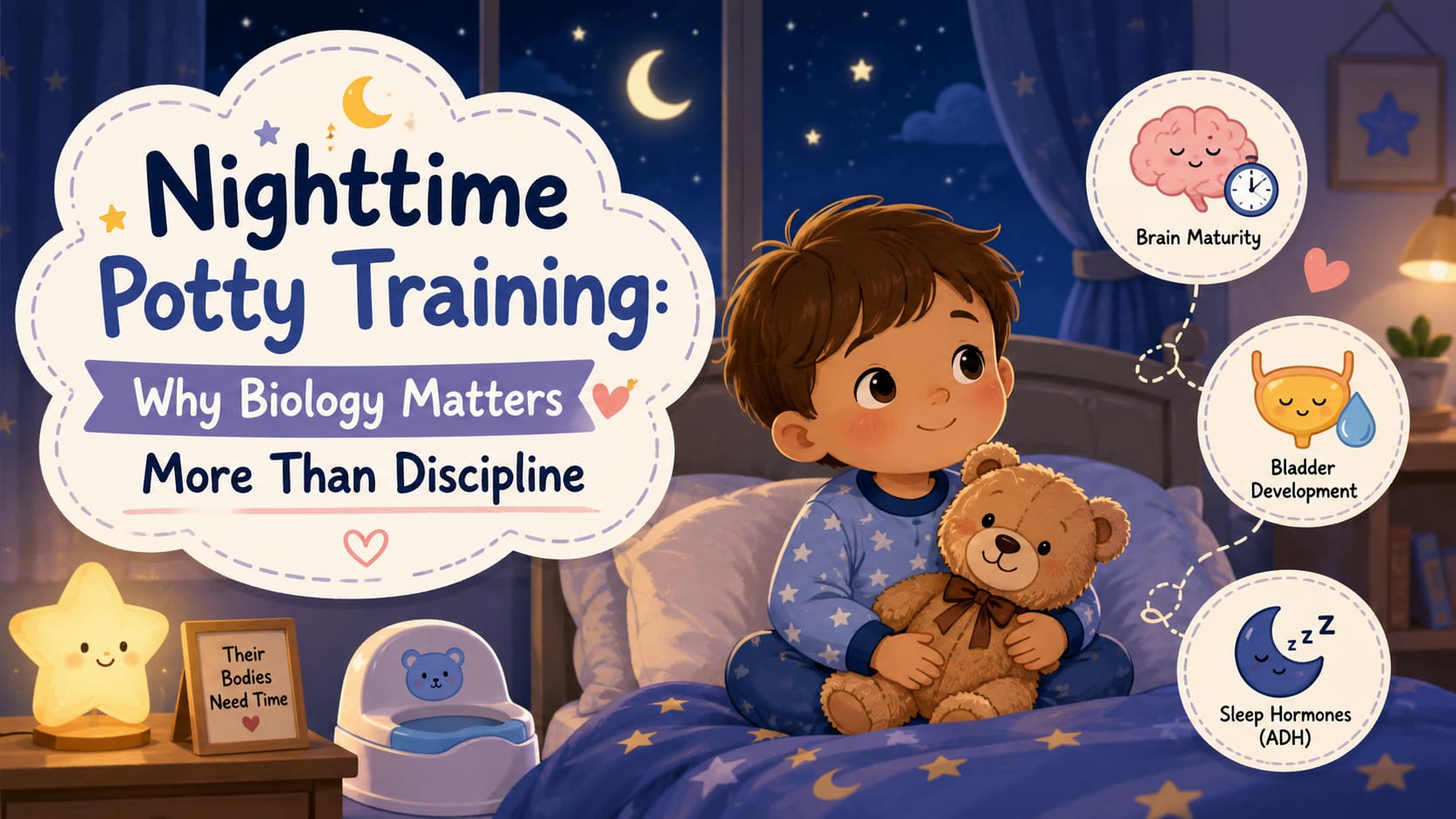
Unlike daytime learning, nighttime potty training is an involuntary biological process governed by hormonal and neurological development, meaning parents should abandon stressful behavioral tactics and instead use gentle strategies to protect their child's sleep until the body naturally matures.