
infant stranger anxiety
Infant Stranger Anxiety: When & Why Babies Fear New Faces
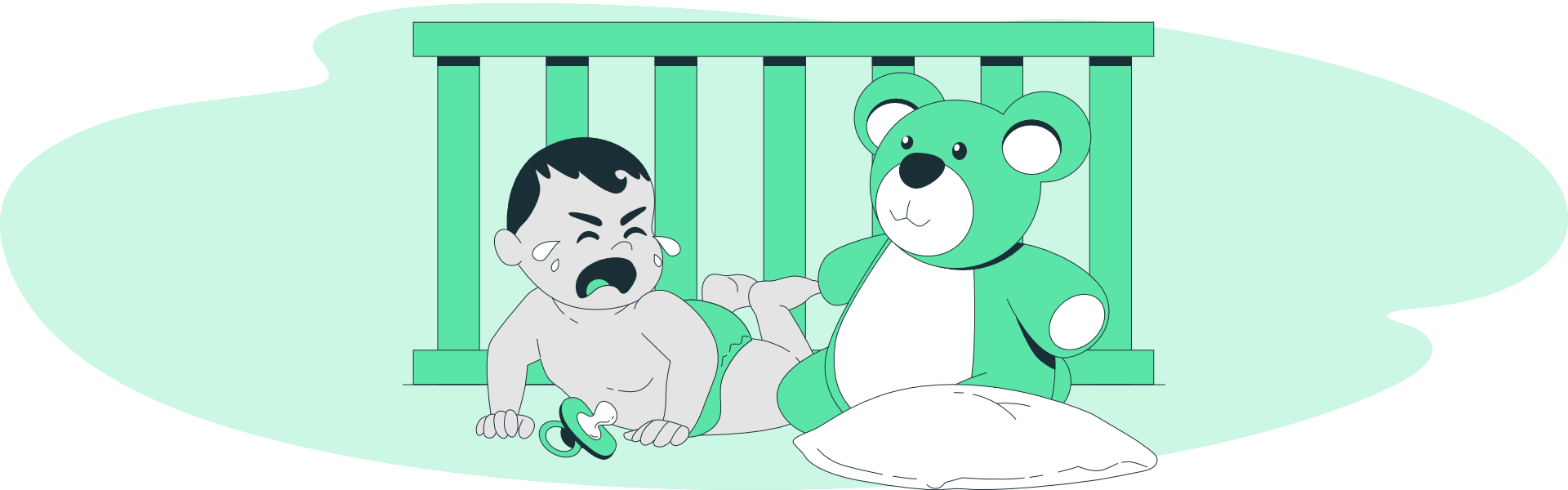
Have you ever noticed how your once-happy, smiling baby suddenly bursts into tears when a well-meaning relative or friend tries to hold them? One moment your little one is cooing contentedly in your arms, and the next they’re clinging to you like velcro at the mere approach of an unfamiliar face. If this scenario sounds familiar, you’re witnessing a normal developmental milestone called infant stranger anxiety.
What exactly is stranger anxiety?
Simply put, it’s when babies begin to distinguish between familiar people (like parents and regular caregivers) and unfamiliar people (everyone else) – and show a clear preference for the familiar faces. This preference often manifests as fear, distress, or wariness around new people.
This developmental phase typically emerges around 6-8 months of age, though you might notice early signs as young as 4 months or first symptoms appearing closer to 9 months. What many parents don’t realize is that this seemingly challenging behavior is actually a positive sign – it indicates your baby’s brain is developing right on schedule!
To put this in perspective, consider this: In the first few months of life, many babies smile readily at almost anyone. That’s not because they’re naturally more sociable than older babies – it’s because they haven’t yet developed the cognitive ability to distinguish between familiar and unfamiliar faces. When your baby starts showing stranger anxiety, they’re demonstrating new, sophisticated brain capabilities.
Infant stranger anxiety is remarkably universal, appearing across cultures and throughout human history. While its intensity varies significantly from child to child, researchers estimate that approximately 80% of babies display some form of stranger anxiety during their development.
For many parents, this phase can feel frustrating or embarrassing, especially when well-meaning relatives or friends feel rejected by a formerly friendly baby. However, understanding the “why” behind this behavior can transform these challenging moments into opportunities to support your baby’s emotional development.
Stranger Anxiety vs. Separation Anxiety
It’s easy to confuse stranger anxiety with separation anxiety, as they often overlap, like two sides of the same coin. However, there’s a key distinction:
- Stranger Anxiety: This is the fear of unfamiliar people, even when the primary caregiver (usually the parent) is present. Example: A baby might cry when a grandparent they haven’t seen in a while tries to hold them, even if the parent is right there, holding their hand. It’s like being nervous at a party even when you’re with a friend – the new faces are still unsettling.
- Separation Anxiety: This is the distress a baby experiences when separated from their primary caregiver. Example: A baby might cry when the parent leaves the room, even if a familiar babysitter is present. It’s like feeling lost when your guide disappears in a new city.
Often, a baby will experience both simultaneously. The sight of a stranger might trigger both the fear of the unfamiliar and the fear of being separated from the comforting presence of the parent – a double whammy of anxiety!
Why Does Stranger Anxiety Happen?
To understand baby stranger anxiety, it helps to think about your baby’s rapidly developing brain. Around 6-8 months, several critical cognitive skills emerge simultaneously, creating the perfect conditions for stranger anxiety to appear.
Object permanence
Object permanence is one of these key skills. Before developing this ability, when something disappears from a baby’s sight, it essentially ceases to exist in their mind. Think of it like this: when you hide behind your hands during peek-a-boo with a 3-month-old, they’re genuinely surprised when you reappear – because in their mind, you temporarily vanished!
By 6-8 months, babies begin to understand that objects (and people) continue to exist even when out of sight. As developmental psychologist Jean Piaget described it, this is like turning on a light switch in your baby’s brain. Suddenly they can hold mental images of you and other familiar caregivers in their mind, which leads to the next important skill.
Face recognition abilities dramatically improve during this period. While newborns have a remarkable ability to recognize their mother’s face shortly after birth, the sophisticated neural networks needed to categorize faces as “familiar” or “unfamiliar” develop around 6-7 months.
Dr. Charles Nelson of Harvard Medical School explains this with a computer analogy: “In the early months, babies are collecting data and building a facial recognition database. By 6-7 months, they’ve developed enough processing power to quickly run a comparison between the face they’re seeing and the faces stored in their memory bank. When there’s no match, the ‘stranger alert’ gets triggered.”
Memory capabilities are also expanding rapidly during this time. Your baby is now able to not only recognize faces but remember them over time. This means they can now distinguish between the “safe, familiar people” in their daily lives and everyone else.
Think of it this way: In the early months, your baby’s social world was like watching a movie with very poor facial recognition – everyone was just a friendly supporting character. Now, they’re watching with crystal clarity and can distinguish the main characters (familiar caregivers) from new characters who haven’t earned their trust yet.
Attachment Theory
Attachment theory, a cornerstone of developmental psychology, explains the profound emotional bond that forms between a baby and their primary caregiver (usually the mother, but it can be any consistent caregiver). This bond provides the baby with a secure base – a safe haven from which to explore the world. Think of it like a mountain climber tethered to a secure anchor – they can explore the heights knowing they have a safe point to return to. Stranger anxiety is a direct manifestation of this attachment. The baby recognizes the caregiver as their source of safety, and the presence of an unfamiliar person disrupts that sense of security.
Dr. Ross Thompson, developmental psychologist at the University of California, explains: “When babies show preference for familiar caregivers and wariness toward strangers, they’re demonstrating that they’ve formed specific, important emotional bonds. It’s not rejection of others – it’s affirmation of their primary relationships.”
Evolutionary Perspective
From an evolutionary standpoint, stranger anxiety is a brilliant survival adaptation. Throughout most of human history, unfamiliar adults could potentially represent danger to a vulnerable infant. The baby who stayed close to known, protective caregivers had a survival advantage.
Anthropological studies across diverse cultures show remarkably similar patterns of stranger anxiety emerging around the same age, suggesting this is a deeply ingrained part of human development rather than a culturally learned behavior.
Dr. Sarah Hrdy, anthropologist and author of “Mothers and Others,” puts it plainly: “Infant stranger anxiety likely evolved as a safety mechanism during periods of human history when unknown individuals might have posed genuine threats. It coincides with the age when babies become mobile enough to potentially stray from caregivers, but aren’t yet verbally equipped to judge who is safe.”
Think of stranger anxiety as nature’s version of a security system that activates precisely when babies need it most – when they’re becoming mobile enough to encounter new people but aren’t yet sophisticated enough to assess who is safe.
Timeline and Progression of Baby Stranger Anxiety
While every baby develops at their own pace – like flowers blooming at different times in a garden – there’s a general timeline for stranger anxiety:
Early Signs (4-5 months)
The journey toward full-fledged stranger anxiety often begins with subtle changes in your baby’s behavior. Around 4-5 months, you might notice your previously easy-going infant becoming more discriminating in their social responses.
Early signs can include:
- More serious observation of new faces (the “solemn stare”)
- Taking longer to warm up to visitors
- Showing clear preference for primary caregivers
- Growing quiet or watchful when unfamiliar people approach
These behaviors don’t necessarily involve crying or distress yet – they’re more like your baby becoming a careful social observer. Think of it as the difference between a person who immediately hugs everyone they meet versus someone who takes time to assess new acquaintances before warming up.
These early signs are often overlooked because they’re not disruptive. A baby who simply studies a new person intently for a minute before interacting doesn’t trigger parental concern the way tears do. But this serious observation is actually the beginning of the stranger anxiety process.
Peak Period (8-12 months)
Between 8-12 months, stranger anxiety typically reaches its peak intensity. This coincides with significant advances in mobility for many babies (crawling, cruising, and for some, early walking), making the protective function of stranger anxiety particularly relevant.
During this peak period, you might observe:
- Clear distress when approached by unfamiliar people
- Crying, whimpering, or clinging when strangers attempt interaction
- Strong preference for being held by primary caregivers
- Difficulty in childcare drop-offs or transitions
- Protests when being handed to less familiar relatives or friends
The intensity varies dramatically between babies. For some, stranger anxiety might mean simply turning away or becoming serious around new people. For others, it might involve intense crying or even screaming when approached by someone unfamiliar.
To visualize this variation, imagine a spectrum: On one end is the baby who merely becomes quiet and watchful around new people, in the middle is the baby who needs 5-10 minutes to warm up before accepting interaction, and on the other end is the baby who strongly protests any approach from unfamiliar people.
A longitudinal study published in the Journal of Child Psychology and Psychiatry found that by 10 months, over 90% of infants displayed some form of stranger anxiety, though the range of reactions varied widely.
Gradual Resolution (18-24 months)
For most children, stranger anxiety gradually diminishes between 18-24 months. This resolution isn’t usually a sudden change, but rather a gradual process where wariness becomes less intense and warm-up periods become shorter.
Several factors contribute to this natural resolution:
- Language development allows toddlers to better understand social situations
- Increased cognitive ability helps them predict social interactions
- Greater independence and mobility gives them more control over social distance
- Accumulated positive experiences with new people build social confidence
Dr. Eleanor Thompson, child psychologist, explains this transition with a traffic light analogy: “Early stranger anxiety is like a red light – full stop with new people. The middle phase is like a yellow light – proceed with caution and take time to assess. The resolution phase is more like a green light with occasional yellow moments – generally comfortable but still cautious in some situations.”
It’s important to note that some degree of social caution often remains appropriate throughout childhood. Complete absence of social wariness isn’t necessarily the goal. Many children maintain a healthy level of initial reserve with new people while still developing normal social relationships.
Individual Differences
Several things might influence when stranger anxiety starts, how strong it is, and how long it lasts. Scientists are still studying this, so we don’t have all the answers, but here are some possibilities:
- Temperament: A baby’s natural personality, or temperament, can play a role. Some babies are naturally more cautious or sensitive, and they might experience stranger anxiety more intensely. Think of it like this: some people are naturally more outgoing, while others are more reserved. It’s the same with babies.
- Exposure to Strangers: Some experts believe that babies who have regular, positive experiences with different people might have less intense stranger anxiety. But this isn’t a sure thing, and forcing interactions is never a good idea.
- Parental Anxiety: Babies are incredibly good at picking up on their parents’ feelings. If a parent is anxious about their baby’s reaction to strangers, the baby might sense that anxiety and become more anxious themselves.
- Previous Experiences: A negative experience with a stranger, like a painful shot at the doctor’s office, could potentially make a baby more anxious around new people, but this isn’t always the case.
Signs and Symptoms of Stranger Anxiety in Babies
Recognizing the signs of stranger anxiety is crucial for responding appropriately and providing the baby with the support they need. The manifestations can vary in intensity and presentation, like different shades of a color, but some common clues include:
Behavioral Signs (What You Can See)
- Crying or Fussing: This is the most obvious and common sign. The crying can range from a whimper to a full-blown wail, depending on the baby’s temperament and the situation. It’s their way of saying, “I’m scared!”
- Clinging to Caregiver: The baby will tightly grip the parent or familiar person, seeking physical closeness and reassurance. It’s like holding onto a life raft in a stormy sea.
- Turning Away or Hiding: The baby might turn their head away from the stranger, bury their face in the caregiver’s shoulder, or try to hide behind them. It’s a natural instinct to avoid something that feels threatening.
- Visual Checking: The baby might repeatedly look back and forth between the stranger and the caregiver, assessing the situation and seeking reassurance from the familiar face. It’s like checking the exits in a new building – they’re making sure they know where safety is.
- Reaching for Caregiver: The baby might extend their arms towards the caregiver, signaling a desire to be picked up and held. It’s a clear plea for comfort and protection.
- Stiffening or Freezing: Some babies might become tense and immobile, almost frozen in place, when confronted with a stranger. It’s a “freeze” response, a common reaction to fear.
- Quietness or Withdrawal: Instead of crying, some babies might become unusually quiet and withdrawn, losing their usual animation and engagement. It’s like they’re shutting down to conserve energy and avoid further stimulation.
Physical Signs (Less Obvious, But Still There)
While less readily observable, some physical signs might accompany stranger anxiety:
- Increased Heart Rate: The baby’s heart rate might increase due to the stress response – their body is preparing for “fight or flight.”
- Changes in Breathing: Breathing might become faster or more shallow – another sign of the body’s stress response.
- Flushed Face: The baby’s face might become red or flushed – blood is rushing to the surface.
Intensity Variation (Not All Reactions Are the Same)
It’s important to note that the intensity of the reaction can vary significantly. One baby might have a mild reaction, simply staring intently at the stranger and clinging slightly to the caregiver. Another baby might have a much more dramatic response, screaming and crying inconsolably. The intensity can also depend on factors like the baby’s overall mood (tired, hungry, etc.) and the stranger’s approach – a sudden, loud approach is more likely to trigger a strong reaction than a slow, gentle one.
Meanwhile, both the environment and the baby’s current state can influence the response.
- Tired or Hungry Baby: A baby who is tired, hungry, or overstimulated is more likely to have a stronger reaction to a stranger.
- Unfamiliar Environment: Being in an unfamiliar place, like a crowded party or a doctor’s office, can exacerbate stranger anxiety. Everything feels new and potentially threatening.
- Familiar Environment: A baby is generally more comfortable in a familiar environment, like their own home, which can lessen the intensity of the reaction. They feel safer and more secure.
How to Help Your Baby Through Stranger Anxiety (Practical Tips & Strategies)
Navigating stranger anxiety requires patience, understanding, and a gentle approach. The goal isn’t to eliminate the anxiety entirely (as it’s a normal developmental phase), but to help the baby feel safe and secure while gradually adapting to new people. Think of it as helping a seedling grow strong roots – you provide the right environment and support, but you don’t force it to grow faster than it’s ready.
For Parents/Caregivers
- Respect Your Baby’s Feelings: This is paramount. Never force the baby to interact with someone they’re afraid of. Forcing interaction will only increase their anxiety and damage their trust in the caregiver. It’s like forcing someone to jump into a pool when they’re afraid of water – it will only make them more fearful.
- Validate Their Feelings: Acknowledge the baby’s fear, even if it seems irrational to you. Saying something like, “I see you’re feeling scared. It’s okay to be a little scared of new people,” can be surprisingly comforting. It shows the baby that their feelings are understood and accepted.
- Provide Comfort and Reassurance: Hold the baby close, offer soothing words (“It’s okay, Mommy’s here”), and provide gentle physical touch. This physical presence and reassurance are crucial for calming the baby. It’s like providing a warm blanket on a cold night.
- Gradual Introductions: Don’t thrust the baby into the arms of a stranger. Instead, introduce new people slowly and gently. Start by having the stranger stay at a distance and gradually move closer as the baby shows signs of becoming more comfortable. It’s like dipping your toes in the water before jumping in.
- Stay Close: Remain physically close to the baby during introductions. The caregiver’s presence provides a secure base, allowing the baby to explore the new situation from a safe vantage point. It’s like having a safety net when learning a new skill.
- Model Positive Interactions: Babies are incredibly perceptive. They pick up on the caregiver’s cues. If the caregiver is relaxed, smiling, and interacting positively with the stranger, the baby is more likely to feel at ease. It’s like showing the baby that the “water is fine” – your positive attitude is contagious.
- Create a Safe Space: If the baby becomes overwhelmed, take them to a quiet, familiar place to calm down. This might be a separate room or simply a quiet corner. It’s like providing a refuge from the storm.
- Use Familiar Objects: A favorite toy, blanket, or pacifier can provide comfort and a sense of security in a new situation. It’s like having a piece of home with you when you travel.
- Practice “Peek-a-Boo”: This classic game is more than just fun; it helps reinforce the concept of object permanence and can make the appearance and disappearance of faces less frightening. It’s a playful way to teach the baby that things (and people) can reappear even after they disappear.
- Don’t Label Your Baby: Avoid labeling the baby as “shy” or “difficult.” These labels can become self-fulfilling prophecies and can make the baby feel like there’s something wrong with them. Instead, focus on their feelings and provide support.
- Be Patient: This is a phase, and it will pass. Don’t get discouraged if the baby doesn’t warm up to someone immediately. Consistency and patience are key. It’s like planting a seed – you need to water it consistently and wait patiently for it to grow.
For Strangers
It’s helpful to educate family and friends about stranger anxiety so they can interact with the baby in a way that minimizes distress. Share these tips with them:
- Approach Slowly and Gently: Avoid sudden movements or loud noises, which can startle the baby. Think of approaching a shy animal – you wouldn’t rush at it, would you?
- Get Down to Baby’s Level: Crouching down or sitting on the floor makes the stranger appear less intimidating. It’s like meeting the baby on their own terms.
- Let the Baby Initiate Contact: Don’t reach out to touch or pick up the baby immediately. Wait for the baby to show signs of interest, such as reaching out or making eye contact. It’s like letting the baby be the one to “extend the olive branch.”
- Talk to the Caregiver First: Engage in conversation with the parent before interacting directly with the baby. This allows the baby to observe the interaction and feel more secure. It’s like watching a demonstration before trying something new yourself.
- Offer a Toy (with Parent’s Permission): A toy can be a good way to build rapport and distract the baby from their anxiety. It’s like offering a gift to break the ice.
- Respect the Baby’s Signals: If the baby cries, turns away, or shows other signs of distress, back off and give them space. Don’t force interaction. It’s like respecting someone’s boundaries – if they say “no,” you stop.
- Avoid Strong Perfumes or Scents: Babies can be sensitive to strong smells, which can be overwhelming.
- Be Patient and Understanding: Don’t take it personally if the baby doesn’t warm up to you right away. It’s not about you; it’s about the baby’s developmental stage.
The Role of Play
Play can be a powerful tool for helping babies overcome stranger anxiety. It’s like using a spoonful of sugar to help the medicine go down.
- Caregiver-Mediated Play: The caregiver can engage in playful interactions with the stranger, gradually involving the baby. Example: The caregiver and the stranger could play peek-a-boo together, with the caregiver initially hiding and then revealing the stranger. This creates a positive association with the stranger’s face.
- Interactive Games: Simple games like “Where’s the [object]?” or gentle, interactive songs can help desensitize the baby to the stranger’s presence. The key is to keep the interactions positive and fun, with the caregiver always present and involved. It’s like making learning a game instead of a chore.
- Gradual Exposure: Start with short play sessions and gradually increase the duration as the baby becomes more comfortable. It’s like slowly increasing the intensity of an exercise program.
When to Be Concerned About Baby Stranger Anxiety
While stranger anxiety is a normal developmental phase, there are certain situations where it’s wise to seek professional guidance. Think of it like knowing when to call a doctor for a cold – most colds are harmless, but sometimes you need expert help.
- Extreme or Prolonged Anxiety: If the baby’s stranger anxiety is exceptionally intense, lasts for an unusually long time (well beyond the typical age range), or significantly interferes with daily life (e.g., making it impossible to leave the baby with anyone else), it’s a good idea to consult a doctor or child development specialist.
- Regression: If the baby suddenly develops stranger anxiety after a period of being comfortable with new people, it could indicate stress, a change in routine, or another underlying issue. It’s like a sudden change in behavior that needs to be investigated.
- Other Developmental Concerns: If there are any other concerns about the baby’s development, such as speech delays, difficulties with social interaction, or unusual repetitive behaviors, it’s important to discuss them with a healthcare professional. These could be signs of a broader issue.
- Impact on Caregiver Well-being: If the baby’s stranger anxiety is causing significant stress or anxiety for the caregiver, it’s crucial to seek support. Parenting is challenging, and it’s okay to ask for help. It’s like recognizing that you need a co-pilot on a long flight.
Complete absence of preference for familiar caregivers (indiscriminate friendliness) in babies over 8 months can sometimes be a concern, particularly in children who have experienced institutional care or frequent changes in primary caregivers.
Who to Consult
Several types of professionals can offer guidance for concerns about infant emotional development:
- Pediatricians: serve as first-line resources, offering developmental screening and referrals if needed. Modern pediatric practice increasingly incorporates social-emotional assessment into well-child visits.
- Infant mental health specialists: psychologists or therapists with specific training in early childhood provide specialized assessment and intervention for more complex situations. These professionals understand the unique developmental needs of babies and young children.
- Family therapists: may be helpful when stranger anxiety creates significant family stress or when it occurs in the context of family transitions like divorce or remarriage. They can address the family system rather than focusing solely on the child.
- Early intervention programs: in many communities offer free developmental assessments and support services for young children. These programs typically use a team approach, bringing together different specialists to address developmental concerns.
Cultural Perspectives on Stranger Anxiety
Western parenting often emphasizes early socialization and independence, with social smiles and engagement with strangers frequently celebrated as developmental achievements. Parents may worry if their baby seems “too shy” or takes “too long” to warm up to others.
In contrast, some cultures place greater value on close family circles during infancy, with less emphasis on early social interactions outside the family. In these contexts, a reserved response to unfamiliar people might be viewed positively as appropriate caution rather than concerning shyness.
This cultural difference can be seen in contrasting parental responses to a baby who turns away from an unfamiliar person:
- In some Western contexts: “I’m sorry, she’s being shy today!”
- In some East Asian contexts: “She is observing carefully because she is thoughtful.”
Dr. Meredith Small, anthropologist and author of “Our Babies, Ourselves,” notes that “what’s considered healthy social development varies greatly across cultures. Western emphasis on early sociability reflects cultural values about independence, while other traditions prioritize deep bonding within a smaller circle before expanding social connections.”
Conclusion
Infant stranger anxiety represents not a problem to be solved, but a meaningful developmental milestone to be understood and supported. This universal phase signals cognitive advancement, secure attachment, and healthy caution in new situations—all positive indicators of development.
For parents navigating this sometimes challenging period, remember that your baby’s anxiety around new people actually reflects their strong bond with you. By responding sensitively to their cues, introducing new situations gradually, and communicating clearly with others about your baby’s needs, you support not just current comfort but future social confidence.
The stranger anxiety phase is temporary, typically resolving naturally as children develop language skills, social understanding, and confidence through repeated positive experiences. While its expression varies widely between children, the underlying developmental purpose remains the same: helping babies navigate an expanding social world while maintaining the security of trusted relationships.
When your baby reaches for you in the presence of someone new, they’re not just showing fear—they’re demonstrating their trust in you as their secure base. Each time you respond with understanding, you strengthen that trust and build the foundation for future social relationships.
Additional Resources
- “The Whole-Brain Child” by Daniel J. Siegel and Tina Payne Bryson
- “The Emotional Life of the Toddler” by Alicia F. Lieberman
- “What’s Going On in There?” by Lise Eliot
- “The Wonder Weeks” by Frans X. Plooij and Hetty van de Rijt
Sources & Further Reading:
- Emotional and Social Development: 8 to 12 Months
- Harvard University Center on the Developing Child — Serve & Return Interaction Shapes Brain Circuitry
- UNICEF — Early Childhood Development