
From Newborn to One Year
Baby Development Milestones: From Newborn to One Year
The first year of a baby’s life is truly miraculous. In just 12 months, your little one will transform from a helpless newborn into an active, curious toddler. Let’s explore this amazing journey together, looking at each stage of development and what you can expect as a parent. As development unfolds, parents can also follow the newborn social smile, quiet-alert state, and newborn cues described in related guides.
Newborn (0-2 months)
When you first hold your newborn, you might be surprised by how tiny and fragile they seem. But don’t be fooled – these little beings are remarkably resilient and come equipped with some impressive abilities.
Physical Development
Your newborn’s physical development at this stage is all about reflexes. These automatic responses help your baby survive and interact with the world.
Reflexes
- Rooting Reflex: When you touch a baby’s cheek, they will turn their head toward the touch and open their mouth. This helps them find the nipple for feeding.
- Sucking Reflex: When the roof of a baby’s mouth is touched, they begin to suck. This reflex is crucial for feeding.
- Moro Reflex: Also known as the startle reflex, when a baby is startled by a loud sound or sudden movement, they will throw back their head, extend their arms and legs, cry, and then pull their arms and legs back in.
- Grasp Reflex: When you touch the palm of a baby’s hand, they will close their fingers around it. This is a primitive reflex that will eventually evolve into voluntary grasping.
Motor Skills
- Head Control: Newborns have weak neck muscles and need support when you hold them. By the end of the second month, they may start to lift their heads briefly while lying on their stomachs.
- Movements: Initially, movements are mostly reflexive and uncoordinated. Gradually, babies start to make smoother, more purposeful movements with their arms and legs.
Sensory Development
- Vision: Newborns can see objects best when they are 8-12 inches away. They are particularly attracted to high-contrast patterns and human faces. Over time, their visual focus improves, and they start to track moving objects.
- Hearing: Babies have a well-developed sense of hearing at birth. They can recognize familiar voices and may turn their heads toward sounds.
- Touch: Touch is a critical sense for newborns. Gentle, loving touch helps them feel secure and can promote physical and emotional development.
Cognitive Development
Even at this early stage, babies are learning about their world. Their senses are already working, though not yet at full capacity.
Attention and Learning
- Observation: Newborns spend a lot of time observing their surroundings. They are particularly drawn to faces, especially their parents’.
- Recognition: By the end of the second month, babies may start to recognize familiar faces and voices. They may show excitement or calm down when they see or hear something familiar.
Dr. Charles Nelson, a developmental cognitive neuroscientist, explains, “Newborns prefer to look at faces over other shapes, demonstrating an innate social orientation. This preference for faces is a crucial building block for social development.”
Memory
- Short-Term Memory: Even at this early stage, babies can remember simple things like the smell of their mother or the sound of a familiar lullaby.
Social and Emotional Development
Bonding
- Attachment: Newborns form strong emotional bonds with their primary caregivers. This attachment is crucial for their emotional well-being and development.
- Eye Contact: Making eye contact with your baby during feeding, diaper changes, and playtime helps strengthen this bond.
Crying and Comforting
- Communication: Crying is the primary way newborns communicate their needs. Over time, parents learn to differentiate between different types of cries (hunger, discomfort, tiredness).
- Soothing: Techniques like rocking, swaddling, and gentle shushing can help soothe a crying baby. Responding promptly to their cries helps them feel secure.
Smiling
- Social Smile: Around 6-8 weeks, many babies start to smile in response to social interactions. This is a major milestone and a sign of emotional development.
Tips for Supporting Newborn Development
- Skin-to-Skin Contact: Holding your baby skin-to-skin helps regulate their body temperature, heart rate, and breathing. It also promotes bonding and can be soothing for both baby and parent.
- Responsive Feeding: Look for hunger cues such as rooting, sucking on hands, or making sucking noises. Feeding on demand helps ensure your baby gets the nutrition they need and fosters a sense of security.
- Tummy Time: Placing your baby on their stomach while they are awake and supervised helps strengthen their neck and shoulder muscles, which is important for future milestones like rolling over and crawling. Start with short sessions (a few minutes) and gradually increase the duration as your baby becomes more comfortable.
- Language Development: Engaging with your baby through talking, singing, and reading helps stimulate their cognitive development and fosters early language skills. Even though they can’t understand words yet, they are learning about the rhythm and patterns of speech.
- Comforting and Soothing: Responding promptly to your baby’s cries helps them feel secure and builds trust. Techniques like rocking, swaddling, and gentle shushing can be very soothing.
Daily Life Challenges and Solutions
- Feeding: Whether breast or bottle-feeding, establishing a good latch is crucial. Lactation consultant Kelly Bonyata advises, “Look for signs of a good latch: wide-open mouth, lips flanged out, and rhythmic sucking.” For bottle-feeding, pediatrician Dr. Alan Greene recommends, “Hold the baby in a semi-upright position and let them pace the feeding.”
- Crying: Newborns cry to communicate all their needs, from hunger to discomfort to the need for sleep. Pediatrician Dr. Harvey Karp recommends the “5 S’s” for soothing:
- Swaddling: Wrapping the baby snugly in a blanket
- Side/Stomach position: Holding the baby on their side or stomach (for soothing, not sleeping)
- Shushing: Making a continuous “shh” sound
- Swinging: Gently rocking or swinging the baby
- Sucking: Offering a pacifier or clean finger to suck on
- Diaper Changes: Frequent diaper changes are necessary to prevent diaper rash. Keep supplies within reach and maintain a calm demeanor during changes. Use diaper changes as an opportunity for bonding. Talk to your baby, sing songs, or play simple games like ‘This Little Piggy’ with their toes.
Early Infancy (2-4 months)
As your baby moves into early infancy, you’ll start to see some exciting changes.
Physical Development
Babies start to gain more control over their bodies during this period.
Motor Skills
- Head Control: By 3 months, babies usually have better head control. They can hold their head up for longer periods when placed on their stomachs (tummy time).
- Arm and Leg Movements: Movements become more coordinated. Babies start to bat at objects and may begin to bring their hands to their mouths.
- Grasping: The grasp reflex evolves into voluntary grasping. Babies may start to hold onto toys or your fingers for short periods.
This is when babies start to discover their hands and feet, leading to improved coordination. This self-discovery is a crucial step in understanding their body and its relationship to the environment.
Reflexes
- Diminishing Reflexes: Reflexes like the Moro (startle) reflex begin to fade. This indicates that the baby’s nervous system is maturing.
Sensory Development
- Vision: Babies’ vision continues to improve. They can follow moving objects with their eyes and are attracted to bright colors and high-contrast patterns.
- Hearing: Babies start to respond more to sounds, turning their heads toward voices and other noises. They may show a preference for familiar voices and sounds.
- Touch: Babies enjoy different textures and may start to explore objects with their hands and mouths.
Cognitive Development
Attention and Learning
- Curiosity: Babies become more curious about their surroundings. They spend more time observing people and objects, which helps them learn.
- Cause and Effect: They begin to understand simple cause-and-effect relationships. For example, they might realize that kicking a mobile makes it move.
Memory
- Recognition: Babies can recognize familiar faces and voices. They may show excitement or calm down when they see or hear someone they know.
Social and Emotional Development
Bonding and Attachment
- Social Smiles: By around 2-3 months, babies start to smile in response to social interactions. This is known as a social smile and is a significant milestone in emotional development.
- Emotional Expression: Babies begin to express a wider range of emotions, including joy, sadness, and frustration.
The emergence of social smiling marks a key point in social-emotional development. It’s the baby’s first tool for actively engaging with others and forms the foundation for future social interactions.
Interaction
- Engagement: Babies become more interactive. They may coo, gurgle, and make other sounds to get attention and engage with caregivers.
- Imitation: Babies start to imitate facial expressions and sounds. This is an early form of communication and social learning.
Tips for Supporting Early Infancy Development
Tummy Time
- Importance: Continue to provide tummy time to strengthen neck and shoulder muscles. This is crucial for future milestones like rolling over and sitting up.
- Engagement: Use toys and mirrors to make tummy time more engaging and enjoyable for your baby.
Talking and Singing
- Language Development: Talk, sing, and read to your baby regularly. This helps with language development and strengthens the bond between you and your baby.
- Response: Respond to your baby’s coos and babbles. This encourages them to continue vocalizing and helps them learn about communication.
Playtime
- Toys and Games: Introduce age-appropriate toys that encourage reaching, grasping, and exploration. Soft toys, rattles, and activity gyms are great options.
- Interaction: Play simple games like peek-a-boo or pat-a-cake to stimulate social interaction and cognitive development.
Comforting and Soothing
Continue to use techniques like rocking, swaddling, and gentle shushing to soothe your baby. Holding and cuddling your baby helps them feel secure and loved.
Routine
- Consistency: Establish a consistent routine for feeding, sleeping, and playtime. This helps your baby feel secure and understand what to expect.
Daily Life Challenges and Solutions
- Sleep Routines: Establishing a bedtime routine can help regulate sleep patterns. A consistent routine signals to the baby that it’s time to sleep. This might include a warm bath, gentle massage, reading a story, or singing a lullaby.
- Tummy Time: Regular tummy time strengthens neck and shoulder muscles, crucial for later motor development. Pediatric occupational therapist Rachel Coley advises, “Aim for short, frequent sessions throughout the day. Start with just a minute or two and gradually increase as your baby tolerates it.”
- Responding to Cries: Babies develop different cries for different needs. Learning to distinguish these can help parents respond more effectively. Responding consistently to your baby’s cries builds trust and security, laying the foundation for healthy emotional development.
Mid-Infancy (4-6 months)
The period from 4 to 6 months is a time of significant growth and development. Babies become more physically active, socially interactive, and cognitively aware.
Physical Development
Babies typically start sitting with support and reaching for objects during this period. These milestones mark significant progress in motor skills development.
Motor Skills
- Rolling Over: Many babies start to roll over from their tummy to their back and vice versa. This is an important milestone that shows increasing muscle strength and coordination.
- Sitting Up: By around 6 months, many babies can sit up with support and may even start to sit independently for short periods.
- Grasping and Reaching: Babies become more adept at reaching for and grasping objects. They can transfer items from one hand to the other and bring them to their mouth.
Reflexes
- Mature Reflexes: Primitive reflexes continue to fade, making way for more voluntary movements. The palmar grasp reflex, for example, evolves into a voluntary grasp.
Sensory Development
- Vision: Babies’ vision sharpens, allowing them to see more clearly across the room. They can track moving objects more smoothly and recognize familiar faces from a distance.
- Hearing: Babies respond more actively to sounds and may turn their heads toward voices and noises. They enjoy listening to music and may show preferences for certain songs or sounds.
- Touch: Babies explore different textures with their hands and mouths, which helps them learn about their environment.
Cognitive Development
Attention and Learning
- Object Permanence: Babies start to develop an understanding of object permanence, realizing that objects continue to exist even when they are out of sight. This is a fundamental cognitive milestone.
- Exploration: They show increased curiosity about their surroundings and enjoy exploring new objects and environments.
Memory
- Recognition: Babies can recognize familiar people and objects, showing excitement or comfort when they see them. They may also remember simple routines and anticipate what comes next.
Social and Emotional Development
Bonding and Attachment
- Stranger Anxiety: Around this age, some babies begin to show signs of stranger anxiety, becoming more clingy with familiar caregivers and wary of unfamiliar people.
- Emotional Expression: Babies express a wider range of emotions, including joy, excitement, frustration, and discomfort. They may laugh out loud and show delight in social interactions.
Interaction
- Communication: Babies become more vocal, making a variety of sounds, including cooing, babbling, and laughing. They enjoy “conversations” with caregivers and may try to imitate sounds.
- Social Play: Babies enjoy interactive play, such as peek-a-boo and other simple games. They respond to facial expressions and may mimic them.
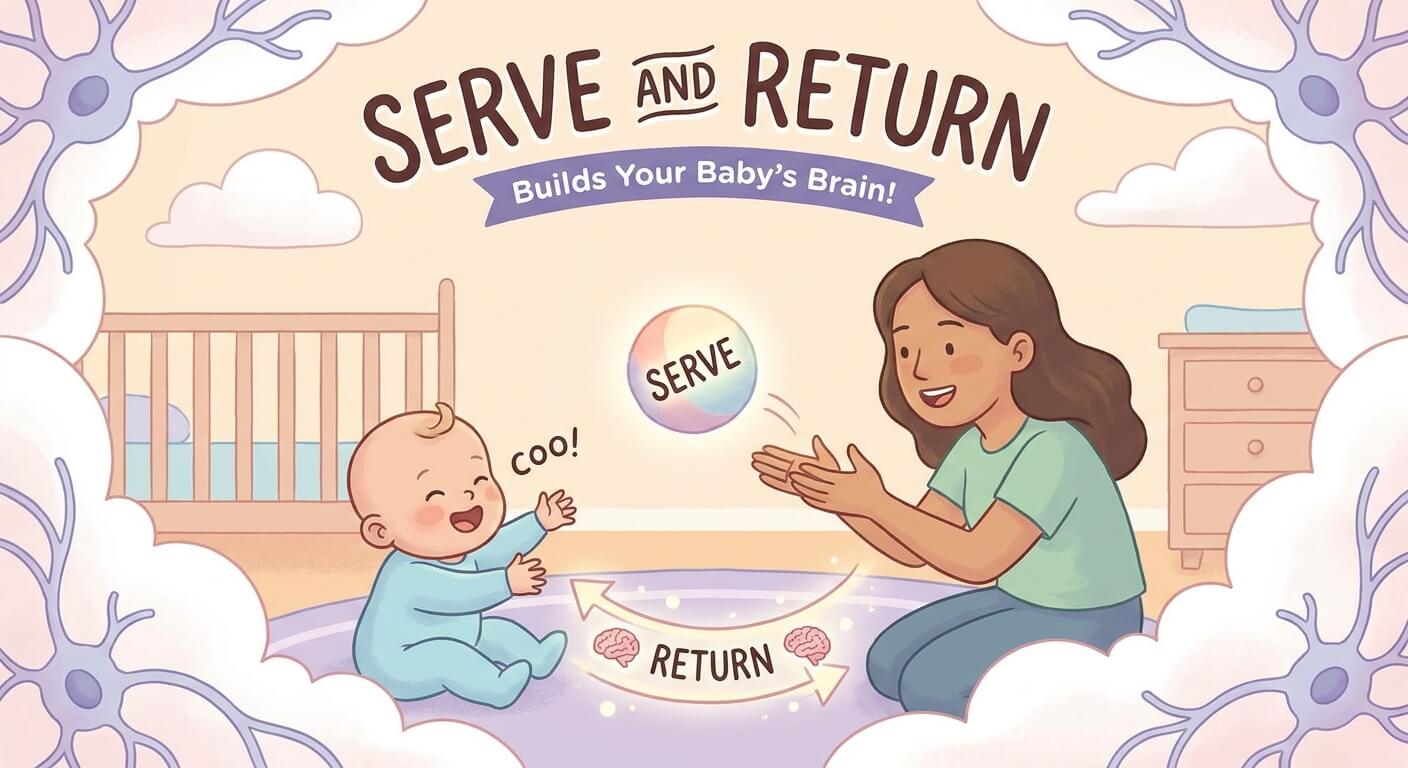
Responding to your baby’s babbles encourages language development. This back-and-forth interaction, known as serve and return, is crucial for building neural connections related to communication.
Tips for Supporting Mid-Infancy Development
Tummy Time and Physical Activity
- Continued Tummy Time: Keep providing tummy time to strengthen muscles needed for crawling and sitting. Make it fun with toys and mirrors to keep your baby engaged.
- Safe Exploration: Create a safe space for your baby to explore. Encourage reaching, grasping, and rolling with age-appropriate toys.
Talking and Singing
- Language Development: Continue to talk, sing, and read to your baby. Use simple words and phrases, and describe what you’re doing to help build their vocabulary.
- Responsive Interaction: Respond to your baby’s vocalizations and expressions. This encourages communication and helps them understand the give-and-take of conversations.
Playtime and Toys
- Interactive Toys: Introduce toys that make sounds, have different textures, or involve simple cause-and-effect actions (e.g., pressing a button to make a sound). These toys stimulate cognitive and motor development.
- Social Games: Play simple social games like peek-a-boo, which help develop object permanence and social skills.
Comforting and Soothing
- Consistent Routines: Maintain consistent routines for feeding, sleeping, and playtime. Predictable routines help your baby feel secure and understand what to expect.
- Soothing Techniques: Use gentle rocking, cuddling, and soothing sounds to comfort your baby. Holding and comforting your baby helps build a strong emotional bond.
Daily Life Challenges and Solutions
- Starting Solid Foods: The American Academy of Pediatrics recommends introducing solid foods around 6 months. Pediatric nutritionist Dr. Tanya Altmann advises, “Start with single-ingredient purees and wait 3-5 days between introducing new foods to watch for allergic reactions. Iron-rich foods like pureed meat or iron-fortified cereals are good first choices.”
- Teething: Teething can cause discomfort and irritability. Cold teething rings or a clean, wet washcloth can provide relief. Gentle gum massage can also be soothing. Avoid teething gels with benzocaine, as they can have side effects.
- Encouraging Play: Provide age-appropriate toys and engage in interactive play to support cognitive development. Simple games like peekaboo help develop object permanence, while reading board books together supports language development and bonding.
Late Infancy (6-9 months)
The late infancy stage (6-9 months) is a time of significant growth and exploration. Babies are becoming more mobile, curious, and socially engaged.
Physical Development
Motor Skills
- Sitting Up: Most babies can sit up independently by 6 to 9 months. This skill allows them to engage more with their environment.
- Crawling: Many babies begin to crawl during this stage, which enhances their ability to explore. Some may also start scooting or rolling to move around.
- Pulling Up: By 9 months, babies may pull themselves up to a standing position while holding onto furniture or other supports.
Fine Motor Skills
- Pincher Grasp: Babies develop a pincher grasp, allowing them to pick up small objects using their thumb and forefinger. This skill is crucial for feeding themselves and exploring their environment.
- Manipulating Objects: They enjoy dropping and throwing objects, which helps them understand cause and effect.
Cognitive Development
Problem-Solving Skills
- Exploration: Babies become curious explorers, using their senses to learn about the world. They may shake, bang, and mouth objects to understand their properties.
- Object Permanence: By this age, babies have a better grasp of object permanence, understanding that objects continue to exist even when they are out of sight. This can lead to increased interest in games like peek-a-boo.
Psychologist Dr. Jean Piaget identified object permanence as a key cognitive milestone. He explained, “This understanding is crucial for the development of abstract thinking and problem-solving skills.”
Memory and Learning
- Recognition: Babies can recognize familiar faces and objects, showing excitement when they see them. They also begin to remember simple routines and actions.
- Imitation: Babies may start to imitate sounds, gestures, and actions they observe in others, which is a key part of learning.
Social and Emotional Development
Attachment and Bonding
- Stranger Anxiety: Many babies show signs of stranger anxiety, becoming wary of unfamiliar people. This is a normal part of developing attachment to caregivers.
- Social Smiles: Babies become more socially engaged, smiling and laughing during interactions with familiar people.
Communication
- Babbling: Babies will babble more frequently, combining different sounds and syllables. They may also respond to their names and understand simple words like “no” or “bye-bye.”
- Expressing Emotions: Babies express a wider range of emotions, including frustration, joy, and excitement. They may show preferences for certain toys or activities.
Tips for Supporting Late Infancy Development
Encouraging Movement
- Safe Exploration: Create a safe space for your baby to crawl and explore. Remove any hazards and provide soft surfaces for them to practice their movements.
- Encourage Sitting and Crawling: Place toys just out of reach to motivate your baby to crawl. Sit with them and engage in activities that promote balance and coordination.
Interactive Play
- Engaging Toys: Offer toys that encourage exploration, such as stacking blocks, soft balls, and toys with different textures. These can help develop fine motor skills and cognitive abilities.
- Play Together: Engage in interactive games like peek-a-boo or roll a ball back and forth. These activities promote social interaction and cognitive development.
Language Development
- Talk and Sing: Continue talking and singing to your baby. Use simple language and descriptive words to help build their vocabulary.
- Read Together: Share age-appropriate books with colorful pictures. Reading fosters language skills and encourages an early love of books.
Building Emotional Security
- Consistent Routines: Maintain consistent daily routines for feeding, sleeping, and playtime. Predictability helps babies feel secure.
- Comfort and Reassurance: Offer comfort during times of distress. Responding to your baby’s needs builds trust and strengthens your bond.
Daily Life Challenges and Solutions
- Babyproofing: As mobility increases, ensuring a safe environment becomes crucial. Cover electrical outlets, secure furniture to walls to prevent tipping, and remove small objects that could be choking hazards. Create safe spaces for exploration.
- Separation Anxiety: This is common at this stage. Short, positive goodbyes and consistent returns help build trust. Gradually increase separation times to help your baby adjust.
- Self-Feeding: Encourage self-feeding with soft finger foods under close supervision. Pediatric feeding specialist Melanie Potock recommends, “Offer a variety of textures and flavors to promote oral motor skill development and prevent picky eating.”
Approaching One Year (9-12 months)
Approaching one year (9-12 months) is an exciting and transformative time for both babies and their caregivers.
Physical Development
This period often sees the emergence of early walking skills.
Motor Skills
- Crawling and Cruising: Most babies are proficient at crawling by 9 months. Many will start “cruising,” which means moving around while holding onto furniture for support.
- Standing and Walking: By 12 months, some babies may take their first independent steps. They may pull themselves up to a standing position and stand without support for short periods.
Fine Motor Skills
- Improved Grasp: Babies refine their pincher grasp, allowing them to pick up smaller objects. They may also start to point at things, showing interest and curiosity.
- Exploring with Hands: They enjoy manipulating toys, stacking blocks, and exploring objects by shaking, banging, or throwing them.
Cognitive Development
Problem-Solving Skills
- Understanding Cause and Effect: Babies begin to understand that their actions can cause reactions, such as shaking a rattle to make noise.
- Object Permanence: Their understanding of object permanence continues to strengthen, leading to more complex play, such as hiding toys and finding them.
Memory and Learning
- Imitation: Babies will imitate more complex actions, like clapping hands or waving goodbye. This is an essential part of learning.
- Increased Attention Span: They can focus on activities for longer periods, allowing for more in-depth exploration and learning.
Social and Emotional Development
Attachment and Bonding
- Separation Anxiety: Many babies experience separation anxiety as they become more attached to their caregivers. They may become upset when a familiar person leaves the room.
- Social Engagement: Babies start to show preferences for familiar people and may exhibit shyness around strangers.
Communication
- Babbling and First Words: Babies often begin to say their first words around 12 months, commonly “mama” or “dada.” They also continue to babble and experiment with sounds.
- Understanding Words: They may start to understand simple commands like “come here” or “no.”
Tips for Supporting Development from 9 to 12 Months
Encourage Movement
- Safe Exploration: Create a safe environment for your baby to explore. Use soft mats and remove sharp objects to encourage crawling and cruising.
- Support Walking: Encourage walking by providing sturdy furniture for support. You can also hold their hands as they practice taking steps.
Interactive Play
- Engaging Toys: Offer toys that promote fine motor skills, like stacking rings, shape sorters, and soft blocks. These help with hand-eye coordination and problem-solving.
- Play Together: Engage in interactive games that promote social skills, such as peek-a-boo or pat-a-cake.
Language Development
- Talk to Your Baby: Continue to talk to your baby throughout the day. Describe your activities, name objects, and ask questions to encourage language development.
- Read Together: Share books with colorful pictures and simple text. Encourage your baby to point at pictures and turn pages.
Building Emotional Security
- Respond to Needs: Be attentive to your baby’s needs and emotions. Responding consistently helps them feel secure and builds trust.
- Foster Independence: Allow your baby to explore independently while ensuring a safe environment. This helps them develop confidence in their abilities.
Daily Life Challenges and Solutions
- Transitioning to Whole Milk: The American Academy of Pediatrics recommends transitioning to whole milk at one year. This transition should be gradual over a few weeks. Mix whole milk with formula or breast milk, slowly increasing the proportion of whole milk.
- Establishing Discipline: Setting consistent, age-appropriate boundaries becomes important. Discipline at this age is about teaching, not punishment. Use simple, clear language and redirect unwanted behavior to more appropriate activities.
- Encouraging Independence: Allow babies to try things on their own while providing a safe, supportive environment. Offer choices when possible, such as between two snacks or outfits. This helps develop decision-making skills and a sense of autonomy.
Conclusion
The first year of a baby’s life is filled with rapid changes and exciting milestones. From the early days of reflexive behaviors to the emergence of language and mobility, each stage brings new joys and challenges. While this guide provides a general timeline, it’s important to remember that each baby develops at their own pace. Pediatrician Dr. Benjamin Spock’s famous advice still holds true: “Trust yourself. You know more than you think you do.”
Sources & Further Reading:

October 25, 2026
October 25, 2026

October 25, 2026