Positive Tolerable and Toxic Stress in Children
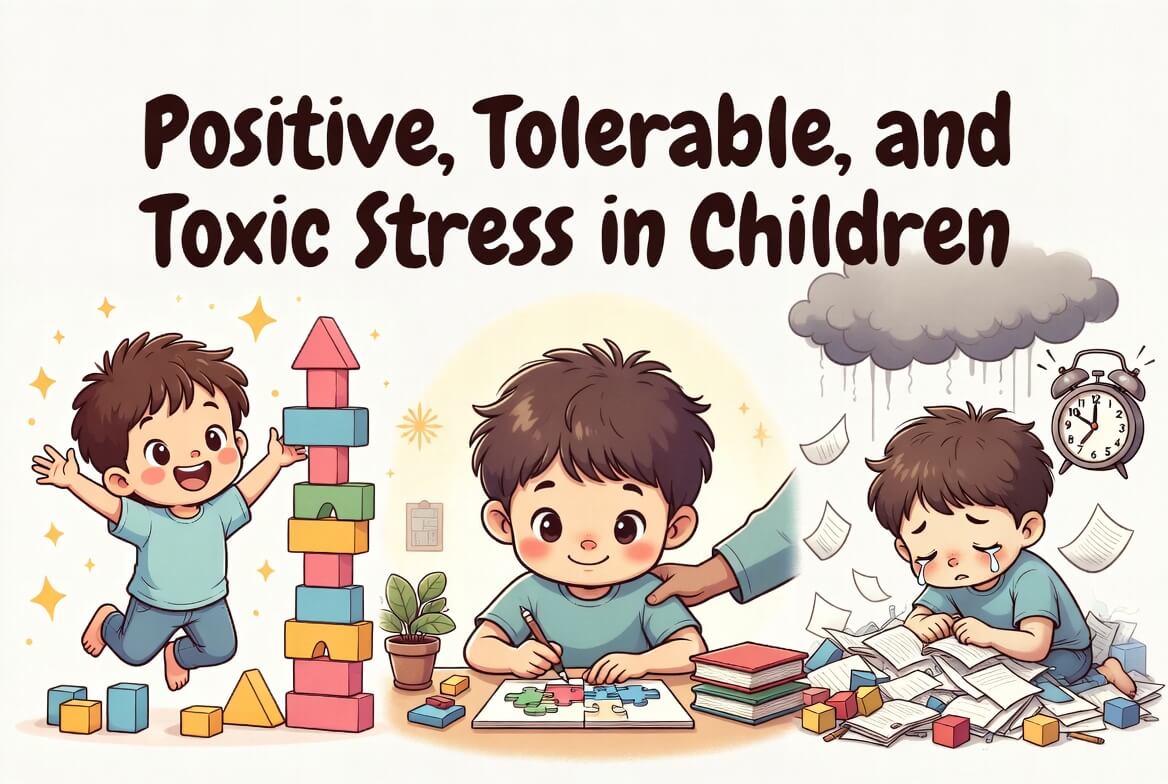
Positive, Tolerable, and Toxic Stress in Children
Not all childhood stress is created equal. Understanding the three types — and the one factor that determines which category a child falls into — is among the most important things a caregiver will ever learn.
Picture two scenes from a single Tuesday afternoon.
In the first, a four-year-old stands at the threshold of a new preschool classroom. Her backpack is nearly as large as she is. Her lower lip trembles. She grips her father’s hand with a force that seems biologically impossible for someone who weighs thirty-two pounds. He kneels, tells her he will be back after snack time, kisses her forehead, and walks away. She cries for four minutes. Then she sees the Play-Doh table, and the crying stops.
In the second, a seven-year-old lies rigid in his bed in a darkened apartment. Downstairs, the shouting has started again — the same shouting that has occurred every night for as long as he can remember. No one comes to check on him. No one has come to check on him in a very long time. He does not cry. He learned months ago that crying changes nothing.
Both children are experiencing stress. Both of their brains are producing the same chemical — a hormone called cortisol — in response to a perceived threat. But the similarity ends there. What is happening inside the brain and body of these two children is so fundamentally different that developmental scientists have given their experiences entirely separate names. The first child is experiencing what researchers call positive stress — a brief, manageable challenge that will actually make her brain stronger. The second child is experiencing toxic stress — a prolonged, unrelenting assault on his nervous system that, without intervention, will alter the physical structure of his brain and cast a shadow across every decade of his life.
Between these two poles lies a third category — tolerable stress — which occupies a critical middle ground that every caregiver should understand.
This distinction is not academic hair-splitting. It is, according to the American Academy of Pediatrics, one of the most consequential frameworks in modern child development science. Getting it right — understanding which type of stress a child is under and what to do about it — is a skill that can genuinely change the trajectory of a life.
First, a Brief Primer: What Actually Happens in a Child’s Brain Under Stress
Before diving into the three categories, it helps to understand the basic machinery that drives all stress responses. This is not a neuroscience textbook — just a quick tour of the relevant circuitry, explained in terms that do not require a medical degree.
The Brain’s Built-In Smoke Detector
Deep in the center of the brain sits a small, almond-shaped structure called the amygdala. Think of it as the brain’s smoke detector. Its job is simple but vital: scan the environment continuously for threats and, the instant one is detected, sound the alarm.
When the amygdala fires, it triggers what most people know as the “fight, flight, or freeze” response — a cascade of physiological changes designed to prepare the body to survive immediate danger. The heart pounds faster to push blood to the muscles. Breathing quickens to pull in more oxygen. Digestion shuts down because the body has no time for lunch when it thinks a predator is nearby. Pupils dilate for sharper vision.
This response is ancient — it evolved hundreds of thousands of years ago, when the most common threats were physical (a predator, a fall, a territorial conflict). The remarkable thing is that it fires in exactly the same way whether the threat is a charging animal or a first day at a new school. The amygdala does not distinguish between physical danger and social anxiety. It simply detects “something unfamiliar or threatening” and pulls the alarm.
The Chemical Messengers: Cortisol and Adrenaline
Two chemicals drive the stress response:
- Adrenaline is the fast-acting messenger. It surges within seconds, producing that immediate jolt — the racing heart, the shallow breathing, the burst of energy. It is designed for the short term.
- Cortisol is the slower, more sustained messenger. It takes minutes to build, but it lasts much longer — sometimes hours. Cortisol keeps the body in a state of high alert, maintaining elevated heart rate and blood pressure, suppressing non-essential functions like immune response and growth, and keeping the brain hyper-focused on the perceived threat.
In a healthy stress response, the threat passes, the cortisol clears, and the body returns to its resting state — a condition scientists call homeostasis, which simply means the body’s normal, balanced baseline. This return to baseline is the critical endpoint. Everything in child development hinges on whether the stress response system can successfully complete this cycle: alarm on, threat resolved, alarm off, baseline restored.
The Thermostat Analogy
A useful way to understand the stress response is to think of it as a thermostat. A well-functioning thermostat detects that the temperature has risen (threat detected), turns on the air conditioning (stress response), brings the temperature back down (cortisol clears), and then switches off. The system works perfectly — self-regulating, responsive, efficient.
Now imagine a thermostat that gets stuck in the “on” position. The air conditioning runs nonstop, regardless of the actual temperature. Energy is wasted. The system is under constant strain. Components wear out prematurely. That is, in essence, what happens to a child’s stress response system under conditions of toxic stress: the alarm never turns off, the cortisol never clears, and the brain never returns to baseline. The machinery that was designed to protect the child begins, instead, to damage it.
With this foundation in place, the three types of stress come into much sharper focus.
Positive Stress in Children: The Workout That Builds a Stronger Brain
What Positive Stress Means
Positive stress is the mildest, most common, and — this is the part that surprises many parents — the most necessary form of stress in a child’s life. It involves a brief, mild-to-moderate increase in heart rate and cortisol, triggered by an everyday challenge that is unfamiliar or slightly uncomfortable but not overwhelming.
The key features of positive stress are:
- It is short-lived. The stress response activates, the child navigates the challenge, and the system returns to baseline within minutes to hours.
- It is proportional. The intensity of the response matches the scale of the challenge. The body does not overreact.
- Recovery is complete. Once the moment passes, the child bounces back fully, often without any conscious effort.
What Positive Stress Looks Like in Daily Life
Positive stress hides in the most ordinary corners of childhood. It rarely looks dramatic. In fact, it often looks like exactly the kind of small struggle that a well-meaning parent might be tempted to eliminate:
- The first day of daycare or a new school year. The child clings, cries, and then — once the parent is out of sight — joins the group and adjusts.
- A routine immunization. The anticipation is worse than the needle, and the fear dissolves within minutes.
- Learning to ride a bicycle. The wobbling, the falling, the frustration of a skill that the body has not yet mastered.
- A spelling test. The mild anxiety of preparation and performance, followed by relief.
- Meeting new peers at a party or a playground. The social discomfort of approaching unfamiliar children.
In each of these cases, the child’s smoke detector fires a brief alarm, the stress response activates to sharpen focus and motivation, and then — once the challenge is navigated — the system powers down. Baseline is restored. And crucially, something important has been encoded in the brain: I encountered something that felt threatening. I managed it. I am okay.
Why Positive Stress Is Neurologically Essential
This last point deserves emphasis, because it runs counter to a powerful instinct in modern parenting culture.
Over the past two decades, a well-intentioned trend has emerged — sometimes called “snowplow parenting” or “lawnmower parenting” — in which caregivers preemptively clear every obstacle from a child’s path. The broken cracker is replaced before the child can express frustration. The playground conflict is resolved by an adult before the children can attempt negotiation. The difficult homework problem is answered by a parent before the child can sit with the discomfort of not knowing.
The impulse behind this behavior is pure love. But the neurological consequence is the opposite of what is intended. A child who has never been allowed to experience the small, manageable discomfort of positive stress has not had the opportunity to practice the recovery cycle — the alarm-on, challenge-met, alarm-off sequence — that builds the brain’s capacity for future resilience. It is the neurological equivalent of carrying a child everywhere and then expecting strong legs. The brain’s coping architecture, like muscular strength, develops only through use.
Stuart Brown, a psychiatrist and founder of the National Institute for Play, has observed that the deliberate absence of appropriate challenge in childhood does not produce a calm, well-adjusted adult — it produces an adult who is poorly equipped to handle the inevitable stresses of life. Positive stress is not something to endure despite its discomfort. It is the training ground on which resilience is built. Without it, the muscle never develops.
Tolerable Stress in Children: Surviving the Hard Things — Together
What Tolerable Stress Means
If positive stress is a light workout, tolerable stress is a serious physical challenge — the equivalent of running a marathon or recovering from a difficult surgery. The body is pushed far beyond its comfort zone. The stress response activates powerfully and for a sustained period. Cortisol levels spike significantly and remain elevated for days, weeks, or even longer.
What makes tolerable stress tolerable — rather than toxic — is not the nature or the severity of the event. It is a single, decisive variable that developmental scientists return to again and again: the presence of a supportive, responsive adult who helps the child’s stress system return to baseline.
This is the single most important sentence in this entire article. It bears repeating: the difference between a stress response that heals and one that harms is not the trauma itself. It is whether the child has someone to go through it with.
The Science of the “Buffer”
The concept of the adult “buffer” is not a metaphor or a piece of feel-good parenting advice. It is grounded in measurable neurobiology.
When a caregiver holds, soothes, and remains emotionally present with a distressed child, a cascade of neurochemical events occurs. The caregiver’s calm voice, steady heartbeat, and physical warmth trigger the release of oxytocin — sometimes called the “bonding hormone” — in the child’s brain. Oxytocin directly suppresses the activity of the amygdala and reduces cortisol production. In essence, the child’s brain borrows the adult’s regulatory capacity to dial down its own alarm system.
The American Academy of Pediatrics describes this buffering relationship as the child’s “most important resource” in the face of adversity. With it, even severe stressors become survivable at the neurological level. Without it, those same stressors can become destructive.
What Tolerable Stress Looks Like
Tolerable stress arises from events that are genuinely serious — experiences that no parent would choose for a child, but that life delivers regardless:
- The death of a family member or a beloved pet. A child’s first encounter with loss — devastating, confusing, and disorienting.
- A natural disaster or community crisis. Hurricanes, wildfires, pandemics — events that disrupt every routine and signal to the child that the world is not predictable.
- A frightening medical event. An emergency room visit, a surgery, a prolonged hospitalization with unfamiliar people and painful procedures.
- Parental divorce or separation. The fracturing of the family unit, which to a young child represents the foundational structure of reality itself.
- A major relocation. Moving to a new city, a new school, a new country — the loss of every familiar landmark and relationship simultaneously.
Consider the example of divorce. A child whose parents are separating will experience genuine distress. Sleep may suffer. Appetite may change. Behavioral regressions may appear. Cortisol levels will be elevated, sometimes significantly. But — and this distinction is everything — a child whose divorcing parents continue to show up with warmth, honesty, and consistency; who maintain routines; who hold the child and name the child’s feelings without dismissing them; who make clear through daily action that the child is not abandoned — that child’s brain is being buffered. The stress is real, but the recovery is possible, because the alarm system is being gently helped back to its resting state by someone the child trusts.
A Reassuring Truth
The implication for caregivers is both humbling and profoundly reassuring: no one can shield a child from every painful experience life delivers. Loss, illness, upheaval, and grief are not optional features of the human condition — they are guaranteed. But the research consistently shows that what determines the outcome is not whether the painful thing happened. It is whether the child had someone beside them when it did.
A caregiver does not need to fix the situation, provide all the answers, or eliminate the pain. The caregiver simply needs to be there — present, warm, and steady — while the child’s nervous system does the difficult work of processing and recovering. That presence, neurobiologically speaking, is the difference between a wound that heals and a wound that festers.
Toxic Stress in Children: When the Alarm Never Turns Off
What Toxic Stress Means
Toxic stress is the most severe and most consequential category on the stress spectrum. Harvard University’s Center on the Developing Child — the foremost research institution on this topic — defines it as “strong, frequent, or prolonged activation of the body’s stress response systems in the absence of the buffering protection of a supportive, adult relationship”.
Every word in that definition matters:
- Strong — the stress response is intense, not mild.
- Frequent — it occurs repeatedly, not once.
- Prolonged — it lasts weeks, months, or years, not hours.
- In the absence of buffering support — no stable, caring adult is helping the child’s system recover.
It is this final element — the absence of the buffer — that transforms severe stress from tolerable to toxic. The same event (say, exposure to community violence) can produce tolerable stress in a child who has a strong, attuned caregiver and toxic stress in a child who does not. The event is identical. The neurological outcome is opposite.
What Toxic Stress Does to the Developing Brain
To understand why toxic stress is so damaging, return to the thermostat analogy. In positive and tolerable stress, the thermostat works: it turns on, does its job, and turns off. In toxic stress, the thermostat is stuck. The alarm blares without cease. Cortisol floods the brain continuously, day after day, week after week, with no period of recovery.
This chronic cortisol exposure does not merely exhaust the brain. It physically reshapes it.
Research published in the Proceedings of the National Academy of Sciences has documented measurable structural changes in the brains of children exposed to severe early adversity. Three changes are particularly significant:
- The hippocampus shrinks. The hippocampus is the brain region responsible for memory, learning, and emotional regulation. Think of it as the brain’s filing cabinet and emotional thermostat combined. Chronic cortisol exposure reduces its volume, impairing the child’s ability to learn new information, form stable memories, and manage emotional responses. This is one reason children under toxic stress often struggle academically — not because they lack intelligence, but because the hardware responsible for learning has been physically compromised.
- The amygdala enlarges and becomes hyperactive. Remember the smoke detector? Under chronic stress, it does not merely stay switched on — it actually grows larger and becomes more sensitive. The result is a child (and later, an adult) who perceives threat in neutral situations, who startles at harmless sounds, who is perpetually on guard even in safe environments. The world feels dangerous not because it is dangerous, but because the brain’s threat-detection system has been permanently recalibrated.
- The prefrontal cortex is weakened. The prefrontal cortex, located just behind the forehead, is the brain’s executive control center. It is responsible for planning, impulse control, logical reasoning, and — critically — the ability to override the amygdala’s alarm signals. Chronic stress impairs the development of this region, which means the child has a louder alarm and a weaker ability to turn it off. It is, biologically, the worst possible combination.
The Causes of Toxic Stress: Adverse Childhood Experiences (ACEs)
Toxic stress does not typically arise from a single event. It arises from chronic, ongoing, or repeated adversity — particularly when that adversity occurs within the child’s primary caregiving environment, the one place that should represent safety.
In the 1990s, the Centers for Disease Control and Prevention (CDC) partnered with Kaiser Permanente to conduct what became one of the most influential public health studies in history: the Adverse Childhood Experiences (ACE) Study. Surveying over 17,000 adults about their childhood histories, the study identified specific categories of adverse experience — now known as ACEs — and found a direct, dose-dependent relationship between the number of ACEs a person had endured and their risk of physical disease, mental illness, and early death in adulthood.
The original ACE categories include:
- Physical, emotional, or sexual abuse — sustained mistreatment by a caregiver or authority figure.
- Physical or emotional neglect — the chronic absence of basic physical needs (food, shelter, hygiene) or emotional needs (affection, attention, validation).
- Household dysfunction — living with a caregiver who abuses substances, suffers from untreated mental illness, is incarcerated, or is a perpetrator or victim of domestic violence.
Subsequent research has expanded the framework to include broader systemic adversities that disproportionately affect certain communities:
- Extreme, prolonged poverty and housing instability — chronic uncertainty about where the next meal or the next month’s rent will come from.
- Exposure to community violence and systemic racism — living in an environment where the threat is not inside the home but surrounds it.
- Forced family separation — through immigration enforcement, foster care placement, or parental incarceration.
The Numbers That Changed Public Health
The ACE Study’s findings were staggering in their clarity and their implications. Among the most striking:
- Adults with four or more ACEs were 4 to 12 times more likely to develop alcoholism, drug abuse, depression, and suicidality than adults with none.
- Adults with six or more ACEs had their life expectancy reduced by nearly 20 yearson average.
- The relationship was dose-dependent, meaning each additional ACE increased the risk incrementally. This was not an all-or-nothing phenomenon; it was a gradient.
Toxic Stress Is Not Just a Brain Problem
Perhaps the most underappreciated dimension of toxic stress is its impact beyond cognition and behavior. Chronic cortisol exposure does not limit its damage to the brain. It disrupts virtually every major organ system:
- The immune system becomes chronically suppressed, leaving the child (and later, the adult) more vulnerable to infections and autoimmune disorders.
- The cardiovascular system is subjected to persistent high blood pressure and inflammation, dramatically increasing the risk of heart disease and stroke in adulthood.
- The metabolic system is dysregulated, contributing to insulin resistance, obesity, and type 2 diabetes.
- The inflammatory response becomes chronically elevated — a condition now recognized as a significant risk factor for cancer, arthritis, and other chronic diseases.
This is why the CDC describes childhood toxic stress not as a psychological problem, but as a public health crisis. The ACE Study demonstrated, with the rigor of a large-scale epidemiological study, that what happens in the first years of life does not stay in the first years of life. It echoes through every subsequent decade, manifesting as disease, disability, and premature death.
A Side-by-Side Comparison: Positive, Tolerable, and Toxic Stress
To crystallize the distinctions, here is a comparative overview of the three types:
| Dimension | Positive Stress | Tolerable Stress | Toxic Stress |
|---|---|---|---|
| Trigger | Everyday challenges (new school, a test, a minor conflict) | Serious but time-limited adversity (death, disaster, divorce) | Severe, chronic adversity (abuse, neglect, household dysfunction) |
| Intensity | Mild to moderate | High | Very high |
| Duration | Minutes to hours | Days to weeks | Weeks, months, or years |
| Frequency | Occasional, normative | Episodic, non-normative | Repeated or continuous |
| Adult Support | Helpful but not critical for recovery | Essential — this is what makes it tolerable | Absent, inconsistent, or itself the source of threat |
| Cortisol Pattern | Brief spike → quick return to baseline | Significant elevation → gradual return with buffering | Chronic elevation → no return to baseline |
| Brain Impact | Strengthens stress-response circuitry | Temporary disruption → full recovery | Structural changes to hippocampus, amygdala, prefrontal cortex |
| Developmental Outcome | Resilience, confidence, coping skills | Recovery, adaptation, deepened trust | Learning difficulties, behavioral issues, chronic disease risk |
How to Recognize Overwhelming Stress in Children — An Age-by-Age Guide
One of the greatest challenges caregivers face is that children do not express stress the way adults do. An adult under extreme pressure might say, “I am overwhelmed.” A three-year-old under extreme pressure might start biting. A twelve-year-old might simply vanish — retreating into silence, screens, and a locked bedroom door.
Recognizing the signs of an overloaded stress system requires understanding how those signs manifest at each developmental stage.
Infants and Toddlers (Birth to Age 3)
The youngest children have the fewest tools for communicating distress. Because they cannot name what they feel, their bodies speak for them. Warning signs include:
- Inconsolable crying that does not respond to usual comfort measures
- Regression in milestones — a toddler who was beginning to walk or talk may stop
- Sleep and feeding disruption — refusal to eat, frequent night waking, or inability to settle
- Withdrawal — reduced eye contact, diminished babbling, a flat or unresponsive affect that feels distinctly different from their typical temperament
- Heightened startle response — flinching or crying at sudden sounds or movements
Preschoolers (Ages 4–5)
At this age, the hallmark of overwhelming stress is regression — the reappearance of behaviors the child had previously outgrown:
- Bedwetting after months or years of dry nights
- Thumb-sucking or security-blanket dependence that had been abandoned
- Intensified separation anxiety — clinging, screaming, or panicking at drop-off in ways that exceed the typical developmental range
- Aggressive outbursts — biting, hitting, or throwing that seems disproportionate to the triggering event
- Nightmares and sleep terrors of new or increasing frequency
- Somatic complaints — “my tummy hurts” becoming a daily occurrence without any identifiable medical cause
School-Age Children (Ages 6–12)
In middle childhood, stress migrates into the cognitive and social realms. Common indicators include:
- Academic decline — falling grades, difficulty concentrating, or a sudden inability to complete work that was previously manageable
- Social withdrawal — a previously outgoing child who retreats from friendships and group activities
- New and specific fears — of the dark, of being alone, of something catastrophic happening to a parent
- Persistent somatic complaints — recurring headaches or stomach aches for which no medical explanation can be found
- Irritability and emotional volatility — rapid mood swings, tearfulness, or explosive anger over minor triggers
- Behavioral changes at school — reports from teachers of inattention, defiance, or social conflict that represent a departure from the child’s baseline
Teenagers (Ages 13–18)
Adolescence layers additional complexity onto the stress response, in part because the teenager’s brain is undergoing its own massive period of reorganization. Indicators of toxic or overwhelming stress in this age group include:
- Self-isolation — withdrawing from family, abandoning long-held friendships, spending increasing amounts of time alone
- Abrupt changes in peer group — gravitating toward peers engaged in risky or destructive behavior
- Substance use — experimenting with or regularly using alcohol, drugs, or nicotine as a coping mechanism
- Self-harm or expressions of suicidality — cutting, burning, or verbalizing feelings of hopelessness and worthlessness
- Disordered eating — restriction, binging, purging, or a preoccupation with body image that dominates daily life
- Pervasive apathy — a flat, affectless presentation; the sense that nothing matters and nothing will improve
A note for caregivers: The presence of any one of these signs does not necessarily indicate toxic stress. Children exhibit a wide range of behaviors for a wide range of reasons. What warrants concern — and professional consultation — is a cluster of these signs, or a sustained change from a child’s established baseline, particularly following known adversity or disruption.
The Power of Rupture and Repair: Why Imperfect Parenting Is Not Toxic
At this point in the article, it is worth pausing to address a concern that may be building in many readers’ minds — a concern that the research on toxic stress, paradoxically, can itself become a source of parental anxiety.
The internal monologue goes something like this: I yelled at my child yesterday. I was impatient last week. I have been distracted and short-tempered for months because of work stress. Am I causing toxic stress?
The answer, supported by decades of developmental research, is almost certainly no. And understanding why it is no reveals one of the most important and least discussed concepts in child development: the rupture-and-repair cycle.
What Rupture and Repair Actually Means
In the 1970s, developmental psychologist Edward Tronick conducted a now-famous experiment at the University of Massachusetts called the “Still Face Experiment.” In it, a mother playing normally with her infant was instructed to suddenly freeze her face into a blank, unresponsive expression. The infant, accustomed to the mother’s animated responses, immediately became distressed — attempting eye contact, reaching out, and eventually crying.
But here is the part of the experiment that is often overlooked: when the mother resumed her normal, warm responsiveness, the infant recovered rapidly. The distress was real, but it was also temporary and fully reversible — because the connection was restored.
Tronick’s research, and the decades of study that followed, revealed a profound insight: healthy relationships are not defined by the absence of disconnection. They are defined by the pattern of disconnection followed by reconnection — what clinicians call “rupture and repair.”
Every caregiver will, inevitably, have moments of rupture. The raised voice. The distracted response. The moment of impatience that, in retrospect, feels disproportionate. These ruptures are not merely normal; they are, in a sense, necessary. When a parent ruptures the connection (by losing patience, for example) and then repairs it (by returning to the child, acknowledging the outburst, and re-establishing warmth), the child learns something of enormous developmental value: Relationships can break and be mended. Distress is temporary. The people I depend on may falter, but they come back.
This is not toxic stress. This is the exact opposite — it is the process by which children learn that the world is imperfect, that people are imperfect, and that connection can survive imperfection. The repair is where the resilience is built.
What Does Create Toxic Stress
The critical distinction is between occasional rupture with consistent repair and chronic rupture with no repair at all. Toxic stress does not come from an imperfect parent. It comes from the complete and sustained absence of a reparative relationship — a caregiver who never returns, never reconnects, never acknowledges the child’s distress. The toxicity lies not in the failure, but in the abandonment of the repair.
Co-Regulation: How Children Borrow a Caregiver’s Calm
This naturally leads to a concept that underpins virtually every strategy for buffering childhood stress: co-regulation.
The term sounds clinical, but the idea is intuitive. Young children — and, to a significant degree, adolescents — are neurobiologically incapable of regulating their own stress responses independently. The prefrontal cortex, the brain region responsible for impulse control, emotional modulation, and logical reasoning, does not reach full maturity until approximately age twenty-five. Until then, children rely on the adults around them to help manage emotional states that they cannot yet manage alone.
Co-regulation is the process by which a child’s nervous system attunes to, and is calmed by, the nervous system of a nearby adult. It is not a technique or a strategy — it is a biological mechanism. When a caregiver holds a distressed child, speaks in a low and steady voice, breathes slowly and visibly, and maintains calm, warm eye contact, the child’s brain responds at a physiological level. Mirror neurons — brain cells that fire both when an individual performs an action and when they observe someone else performing it — cause the child’s nervous system to begin synchronizing with the caregiver’s. Heart rate slows. Breathing deepens. Cortisol production begins to taper.
This is why telling a dysregulated child to “calm down” is almost always ineffective. The child does not yet possess the internal wiring to comply with that instruction independently. What is effective is the caregiver becoming calm — not for the child to imitate consciously, but for the child’s nervous system to entrain with unconsciously. The adult does not tell the child to regulate. The adult becomes the regulation.
How to Be the Buffer: Six Evidence-Based Strategies for Caregivers
The research is unambiguous: the single most powerful protective factor against toxic stress is a stable, responsive, attuned adult relationship. But what does “being the buffer” actually look like in the unscripted chaos of daily life with children? Here are six strategies grounded in developmental science.
1. Name the Feeling to Tame the Feeling
When a child is overwhelmed by emotion, one of the simplest and most neurologically effective interventions is to help them label what they are feeling. “It looks like your body is feeling very scared right now.” “That sounds like frustration — is that right?”
This is not merely comforting. Research by psychologist Matthew Lieberman at UCLA demonstrated that the act of labeling an emotion — what he termed “affect labeling” — activates the prefrontal cortex and measurably reduces amygdala activation. Putting a word to the feeling creates neurological distance from it. The emotion shifts from something that is happening to the child to something the child can observe and begin to understand. In clinical shorthand: “Name it to tame it.”
2. Prioritize Physical Connection
Touch is not merely comforting — it is neurochemistry. When a caregiver hugs, rocks, or holds a stressed child, the physical contact triggers the release of oxytocin, which directly suppresses cortisol production and calms the amygdala. For infants and young children especially, skin-to-skin contact, being carried, or simply sitting in close physical proximity to a trusted adult can reduce physiological stress markers faster than any verbal intervention.
Even for older children and teenagers — who may resist overt physical affection — small gestures of physical connection (a hand on the shoulder, sitting side by side, a brief hug before bed) maintain the neurobiological channel through which co-regulation occurs.
3. Maintain Radical Routine
During periods of upheaval — a divorce, a bereavement, a move, a pandemic — the most stabilizing thing a caregiver can do is also the most mundane: keep the routines. The same breakfast. The same bedtime story. The same Tuesday-night pasta. The same goodbye ritual at school drop-off.
This works because routine communicates safety at a level deeper than words. The amygdala does not understand explanations (“Everything will be fine, I promise”). But it does understand patterns. When patterns remain predictable, even in the midst of chaos, the smoke detector receives a steady stream of data suggesting that not everything has fallen apart — and it dials the alarm down accordingly.
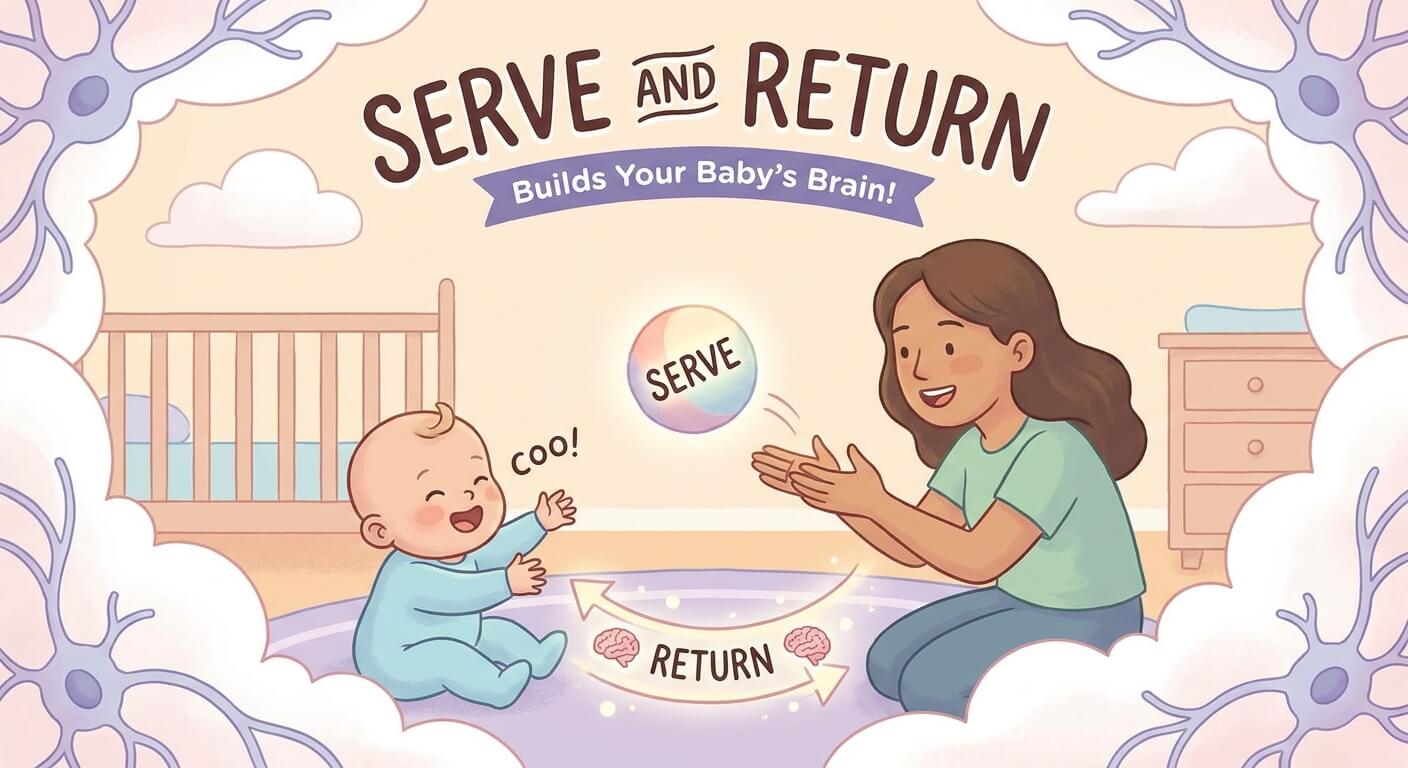
4. Invest in “Serve and Return” Interactions
Harvard’s Center on the Developing Child identifies a specific type of caregiver-child interaction as the single most important driver of healthy brain development: the “serve and return” exchange.
The concept is drawn from tennis. A child “serves” — by babbling, pointing, asking a question, making a facial expression, or reaching out. The adult “returns” — by responding with eye contact, words, a smile, or engagement. The child serves again. The adult returns again. Back and forth, thousands of times a day, across the years of early childhood.
These micro-moments of responsive interaction do not look dramatic. They look like a parent narrating a diaper change, or answering a toddler’s seventeenth “why?” of the afternoon, or pausing a task to look at the leaf a child is holding up. But cumulatively, they wire the neural circuits responsible for communication, emotional regulation, social competence, and — critically — the child’s foundational belief that the world is a responsive, predictable place where their signals matter.
When serve-and-return interactions are consistently absent — when the child serves and no one returns — the brain begins to wire itself around a different assumption: My signals do not matter. The world does not respond. I am alone. This is one of the core mechanisms through which neglect, even in the absence of overt abuse, can produce toxic stress.
5. Restore and Protect Unstructured Play
In the modern landscape of scheduled activities, academic enrichment, and screen time, unstructured play — the kind with no agenda, no adult direction, and no learning objective — has become an endangered species. This is a significant loss, because play is not a frivolous accessory to childhood development. It is a primary mechanism through which children process experience, discharge stress energy, and restore their sense of agency in a world where they control very little.
When a child builds a block tower and knocks it down, assigns roles in an imaginary scenario, or chases a friend across a park for no reason beyond the sheer physical joy of running, the brain is doing critical regulatory work. Cortisol levels drop. The prefrontal cortex practices decision-making and impulse control. The social brain rehearses negotiation, empathy, and conflict resolution.
For children who have experienced significant stress, play takes on an additional function: it becomes the medium through which the unprocessed is processed. A child may not be able to articulate that a recent hospital visit was terrifying, but that child may play “doctor” for weeks afterward — replaying the experience, assigning it narrative structure, and gradually mastering the fear. This is not avoidance. It is the brain’s native language for healing.
The prescription is straightforward: protect time for free, unstructured, ideally outdoor play. Resist the urge to fill every hour with structured enrichment. For a stressed child, an hour of imaginative play in a backyard may be more neurologically restorative than an hour of any organized activity.
6. Apply the Oxygen Mask Rule
Every commercial flight begins with the same instruction: In the event of a loss of cabin pressure, secure your own oxygen mask before assisting others. The logic is cold but irrefutable — an unconscious adult cannot help a conscious child.
The same principle applies, with striking precision, to the neurobiology of co-regulation. A caregiver who is chronically stressed, sleep-deprived, anxious, or depressed has a nervous system that is itself dysregulated. And because children co-regulate by attuning to the adult’s physiological state, a dysregulated adult cannot provide the calm that the child’s brain needs to borrow. The very mechanism that makes the caregiver a buffer — the child’s tendency to synchronize with the adult’s nervous system — becomes, under these conditions, a pathway for transmitting stress rather than absorbing it.
This is not an indictment of struggling parents. It is a recognition that caregiver well-being is not a luxury or an indulgence — it is a direct investment in the child’s neurological health. A parent who seeks therapy, asks for help, takes a break, prioritizes sleep, or leans on community support is not being selfish. That parent is maintaining the single most important piece of infrastructure in the child’s developmental environment: a regulated, responsive adult brain.
The implication for communities and policymakers is equally clear. Programs that support parental mental health — accessible therapy, parental leave, respite care, peer support groups — are not merely social services. They are, in the most literal neurobiological sense, child development interventions.
When Professional Help Becomes Necessary
There are circumstances in which a caregiver’s love, presence, and best efforts are not sufficient to address what a child has endured. Recognizing this is not a failure of parenting — it is an act of profound parental competence. Some neurological wounds require clinical expertise, just as some physical injuries require a surgeon, no matter how attentive the first aid.
Evidence-Based Therapies That Work
Several therapeutic approaches have demonstrated strong efficacy in helping children recover from toxic stress and trauma:
- Trauma-Focused Cognitive Behavioral Therapy (TF-CBT) is a structured, evidence-based treatment designed specifically for children and adolescents who have experienced significant trauma. It involves both the child and the caregiver, teaching skills for processing traumatic memories, managing distressing emotions, and rebuilding a sense of safety. Research consistently shows it reduces symptoms of PTSD, depression, and anxiety in young people.
- Parent-Child Interaction Therapy (PCIT) takes a different approach by coaching the caregiver in real time — often through an earpiece while the parent and child play together in a therapy room. The therapist guides the parent toward specific interaction patterns that strengthen the serve-and-return cycle, increase warmth, and reduce coercive or ineffective discipline. PCIT is particularly effective for children ages two through seven who exhibit behavioral difficulties rooted in disrupted attachment or early adversity.
- Child-Centered Play Therapy provides young children with a safe, therapeutic environment in which they can process experiences through their most natural medium — play. A trained clinician observes and gently guides the child’s play, helping them work through traumatic material at their own pace and in their own language.
Where to Start
The first step does not need to be dramatic. A conversation with the child’s pediatricianis often the most accessible starting point. Pediatricians can screen for ACEs, assess developmental concerns, and provide referrals to qualified child psychologists or family therapists. School counselors are another underutilized resource, particularly for school-age children whose stress is manifesting as academic decline or behavioral change. Many communities also offer early intervention programs — publicly funded services for children from birth to age three who show developmental delays or are at risk due to environmental factors.
Breaking the cultural stigma around seeking mental health support — for children and for the adults who care for them — is itself a public health intervention. A family in which a caregiver seeks help, stabilizes, and restores their own regulatory capacity is a family in which the child’s most important buffer is renewed.
Conclusion
If the science of toxic stress is sobering — and it is — then the science of recovery is its necessary counterweight, and it is genuinely hopeful.
Neuroscientists use the term neuroplasticity to describe the brain’s lifelong capacity to reorganize itself, form new neural connections, and recover from disruption. The developing brain is not a stone tablet on which early experience is permanently carved. It is more like a living landscape — shaped by its conditions, yes, but capable of extraordinary regeneration when those conditions change.
Research from Harvard’s National Scientific Council on the Developing Child has consistently demonstrated that children who have experienced significant early adversity — including toxic stress — can show remarkable developmental recovery when a stable, warm, and responsive caregiving relationship is introduced or restored. The brain, even a brain that has been structurally altered by chronic cortisol exposure, retains the capacity to heal — particularly when the healing agent is the same thing that prevents the damage in the first place: a consistent, loving human relationship.
This is, ultimately, the central message of four decades of research into childhood stress.
Positive stress is not something to fear or eliminate. It is the developmental workout that builds the architecture of resilience — the necessary friction that teaches a growing brain it can face challenges and survive.
Tolerable stress is not something that can be prevented. Loss, illness, upheaval, and grief are woven into the fabric of every life. But when a child faces these storms with a steady, attuned adult beside them — someone who holds them, names their feelings, maintains the routines, and simply stays — the brain is protected. The alarm turns on, does its work, and is gently helped back to silence.
Toxic stress is the genuine crisis — the condition in which the alarm rings without cease because no one is there to help turn it off. It is a public health emergency that demands both individual awareness and systemic action: stronger support systems for families, more accessible mental health care, and a collective commitment to ensuring that no child navigates chronic adversity entirely alone. Families may also benefit from trauma-informed parenting, self-compassion, and support for postpartum emotions.
And for any caregiver reading this — whether in the early, exhausting years of parenting or in the turbulent terrain of adolescence — the most important takeaway from the entire body of research is disarmingly simple:
The single most influential factor in a child’s stress outcome is not the size of the house. It is not the quality of the school district. It is not the number of enrichment activities or the perfection of the parenting. It is the quality, consistency, and warmth of the relationship between child and caregiver — maintained imperfectly, repaired frequently, and sustained across the thousand unremarkable moments of ordinary life.
It is never too late to be the buffer. And no one needs to be perfect to be one.
Sources and Further Reading:
- Harvard University — Center on the Developing Child: — Excessive Stress Disrupts the Architecture of the Developing Brain
- American Academy of Pediatrics: — The Lifelong Effects of Early Childhood Adversity and Toxic Stress

October 25, 2026

October 25, 2026
October 25, 2026