How to Prevent Toxic Stress in Newborns
How to Prevent Toxic Stress in Newborns
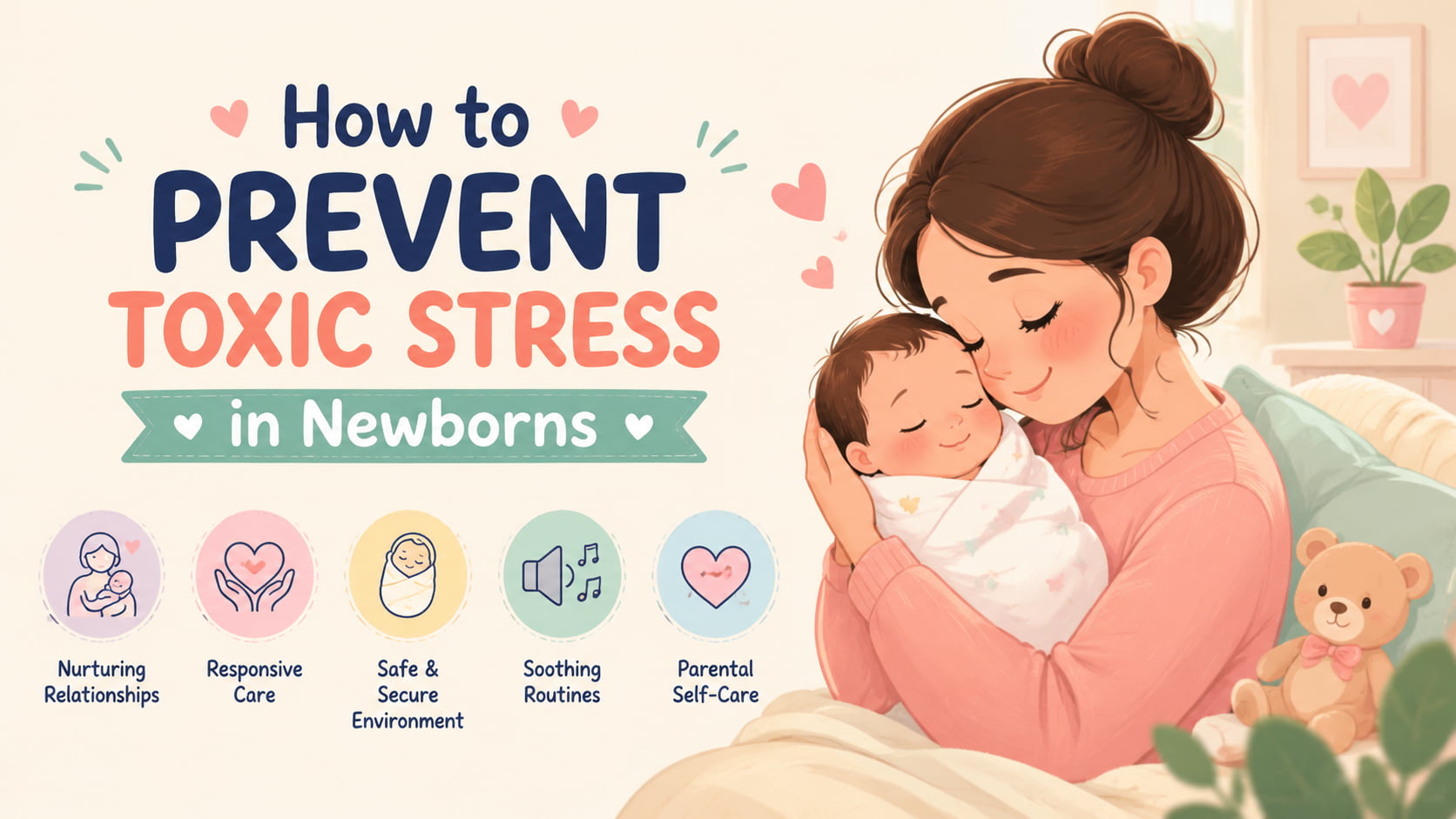
The most powerful way to prevent toxic stress in newborns is not to create a perfectly stress-free environment, but to provide a consistent, responsive, and loving presence that buffers the infant’s developing brain from harm, while simultaneously prioritizing your own mental wellbeing. Responsive care helps build secure attachment; the Circle of Security offers another way to understand this protective relationship.
There is a moment — usually around the third night home from the hospital — when the full weight of parenthood lands. The baby is crying again. The feeding went sideways. The swaddle came undone for the fifth time. And somewhere in the fog of sleep deprivation and half-read parenting books, a question surfaces that nearly every new caregiver has whispered in the dark: Am I already getting this wrong?
It is a question born of love. And it is a question that, in recent years, the field of developmental neuroscience has been working hard to answer — not with another set of conflicting parenting rules, but with a remarkably clear body of evidence about what newborn brains actually need, what genuinely threatens them, and what caregivers can do about it.
At the centre of that evidence sits a concept called toxic stress. The phrase sounds clinical, perhaps even alarming — exactly the kind of term designed to make an already anxious parent feel worse. But understanding what toxic stress actually means, how it differs from the normal stresses every baby encounters, and how to prevent toxic stress in newborns does not add another burden to the parenting load.
If anything, it lightens it. Because the research points, again and again, to a single, elegant truth: the most powerful thing a caregiver can do for a newborn’s developing brain is not complicated, expensive, or reserved for experts. It is something most loving parents are already doing — they just do not know how important it is.
The Hidden Story of Early Brain Development
Before diving into the details of toxic stress, it helps to understand why the newborn period is so uniquely sensitive — and why what happens during these early months can echo across an entire lifetime.
The Most Extraordinary Construction Project in Nature
Consider this: when a baby is born, their brain contains roughly 100 billion neurons — approximately the same number as stars in the Milky Way. But these neurons are, at birth, largely unconnected. They are like the components of an extraordinarily complex electrical system that has been delivered but not yet wired.
Over the first three years of life, the brain begins wiring itself at a pace that defies easy comprehension. According to UNICEF, a newborn’s brain forms more than one million new neural connections every single second. These connections — called synapses— are the pathways through which all thought, emotion, memory, and learning will eventually flow. They are the brain’s circuitry, and the first years of life are when the most foundational circuits are laid down.
Here is the critical insight: this wiring process is not genetically predetermined. It is experience-dependent. The brain builds itself based on what happens to the baby — the sounds it hears, the faces it sees, the touch it feels, and, above all, the quality of the caregiving it receives. Every interaction — every lullaby, every soothing touch after a cry, every moment of sustained eye contact — sends an electrical signal down a neural pathway, strengthening it, making it faster and more efficient.
Think of it as a trail through a forest. The first time someone walks a particular path, it is faint and overgrown. But if that same path is walked again and again, it becomes worn, clear, and easy to follow. Eventually, it becomes a road. The newborn brain works the same way: repeated experiences strengthen specific neural pathways, while unused connections are gradually pruned away — a process neuroscientists call synaptic pruning.
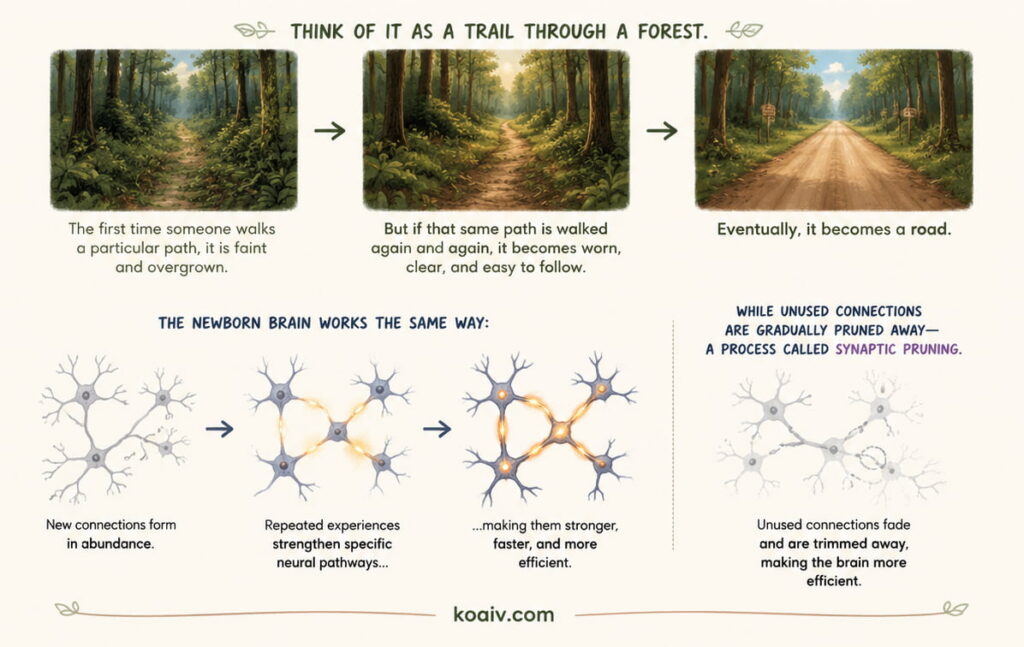
This means that the caregiving environment a newborn inhabits is not merely providing comfort. It is literally shaping the physical architecture of the brain — determining which pathways get reinforced and which fade away. And this is precisely why stress, when it reaches a certain intensity and duration, can cause such lasting harm: it does not just feel bad in the moment; it alters the blueprint of the brain itself.
Not All Stress Is the Enemy: Understanding the Three Critical Categories
With that foundation in place, the next — and perhaps most important — distinction becomes possible. Because when parents hear the phrase “toxic stress in newborns,” the instinct is often to try to eliminate all stress from a baby’s life. Ironically, that impulse, while understandable, is both impossible and counterproductive. Some stress is not just harmless — it is essential.
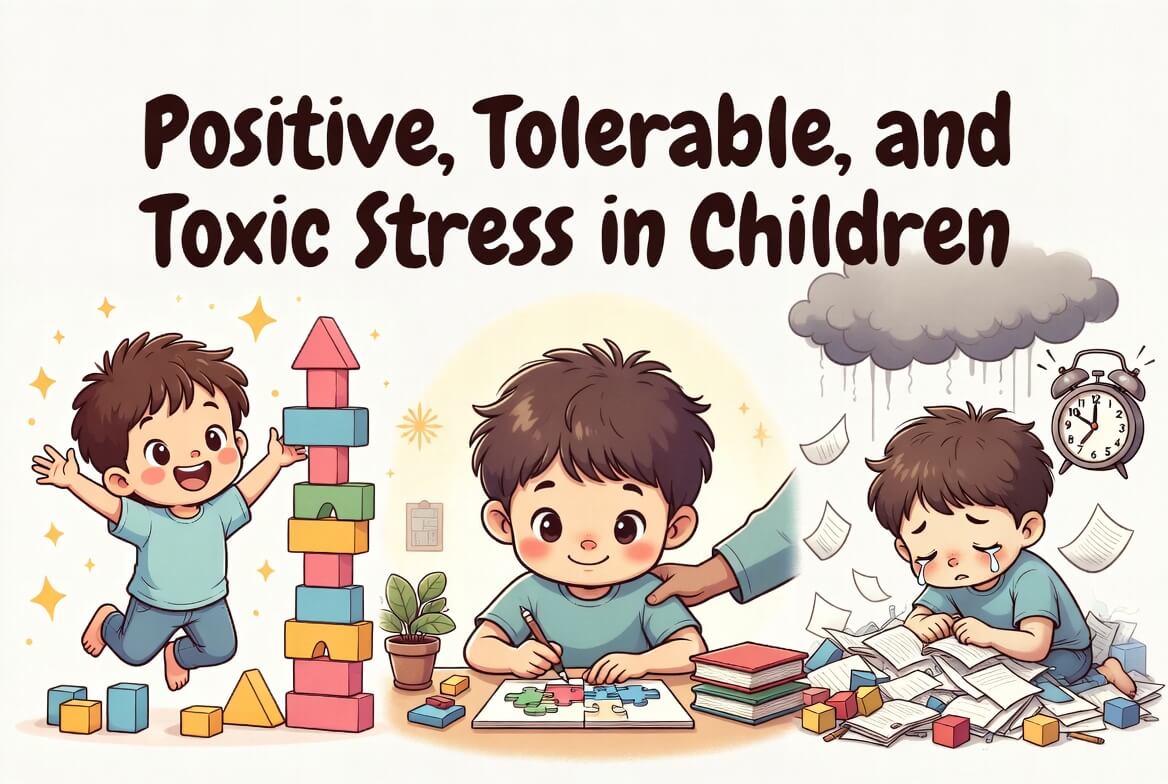
Researchers at Harvard University’s Center on the Developing Child have developed a framework that divides the infant stress response into three categories. Understanding these categories is the single most clarifying thing a caregiver can learn, because it separates the normal and necessary from the genuinely dangerous.
Category 1: Positive Stress — The Gentle Teacher
A brief, mild stress response triggered by ordinary life challenges.
What it looks like: A baby startled by a dog barking. The mild frustration of a tummy-time session. A brief separation from a parent when handed to a grandparent for the first time. The momentary sting of a routine vaccination.
What happens inside: The baby’s heart rate increases slightly. Cortisol — a hormone the body produces to mobilize energy during stressful moments (more on this shortly) — rises a small amount. The baby may cry or fuss. But then, with the swift comfort of a caregiver nearby, the system returns to baseline.
This cycle — mild stress, followed by comfort, followed by recovery — is the molecular foundation of resilience. Each time a baby goes through this loop successfully, the brain learns something invaluable: Discomfort is temporary. Help is available. The alarm can be turned off. These lessons are encoded in the very circuitry being built during this period. Without them, a child would have no framework for handling the inevitable challenges of life.
positive stress is not something caregivers should try to prevent. It is something they should help a baby move through.
Category 2: Tolerable Stress — The Storm, Weathered Together
A significantly more intense stress response caused by a serious event, but one that is buffered by the presence of a supportive adult.
What it looks like: A baby born prematurely who spends weeks in a neonatal intensive care unit. A family going through a disruptive move. An infant whose parent is briefly hospitalized. A natural disaster that disrupts the household.
What happens inside: The stress response activates more forcefully and for a longer duration. Cortisol levels rise substantially, and the baby’s entire physiology enters a state of heightened alarm.
The variable that determines whether this level of stress becomes damaging is not the severity of the event itself — it is whether a consistent, caring adult is present to help the baby navigate through it. When a caregiver holds the baby, maintains as much routine as possible, and continues to respond to cues with warmth and consistency, the brain’s stress system eventually returns to a healthy baseline. The event is weathered, but the foundation remains intact.
Think of it this way: a thunderstorm can be terrifying for a small child standing alone in a field. But the same thunderstorm, experienced while being held in a parent’s arms under a solid roof, becomes a tolerable experience — maybe even an adventurous one. The storm is the same. The presence of the caregiver is what changes everything.
Category 3: Toxic Stress — The Alarm That Never Turns Off
A prolonged, severe activation of the stress response in the absence of consistent, supportive caregiving.
What it looks like: An infant living in a household with ongoing domestic violence, where no stable adult provides comfort. A newborn whose primary caregiver struggles with severe, untreated substance addiction and is unable to respond to the baby’s needs consistently. A baby in a neglectful situation where cries go unanswered for extended periods, day after day. Chronic, grinding poverty without adequate support systems, combined with caregiver overwhelm.
What happens inside — and why it is different: The stress response system activates and stays activated. The alarm does not turn off — not because the baby lacks the ability, but because no external force is helping to turn it off. (Newborns, it must be understood, are biologically incapable of regulating their own stress. That capacity develops gradually, over years, and only through the repeated experience of being regulated by someone else first.)
The result is a brain marinating in its own stress chemicals, day after day, during the most sensitive window of its construction. The consequences — which will be explored in detail in the next section — are serious and far-reaching.
But here is the crucial insight that shapes everything that follows: toxic stress is defined not by the presence of adversity alone, but by the absence of a buffering relationship. A baby born into extremely difficult circumstances who has one consistent, responsive caregiver may never experience toxic stress at all. Conversely, a baby in a materially comfortable home whose caregiver is so incapacitated by untreated depression or trauma that responsiveness collapses entirely may be at significant risk.
The relationship is the intervention. Understanding this changes the entire conversation about prevention.
What Toxic Stress Actually Does
Every human body comes equipped with a built-in alarm system designed to respond to threats. Scientists call it the HPA axis — which stands for hypothalamic-pituitary-adrenal axis, a chain of communication between three structures that runs from the brain down to the adrenal glands, which sit atop the kidneys. For the purposes of understanding, it is useful to think of it as the body’s fire alarm.
When the brain perceives danger — even the “danger” of being hungry or cold — it pulls the alarm. The adrenal glands respond by flooding the body with stress hormones, the most significant of which is cortisol. Cortisol is not inherently harmful; it is, in fact, a survival tool. It raises heart rate, sharpens focus, redirects blood flow to muscles, and prepares the body to respond to a threat. In short bursts, cortisol is the body’s turbo button.
But here is where the fire alarm analogy becomes essential: a fire alarm that rings for two minutes, alerts everyone, and then turns off when the fire is extinguished is doing its job perfectly. A fire alarm that rings continuously, for days and weeks and months, with no one ever coming to put out the fire? That alarm becomes the problem. The constant blaring damages the building it was designed to protect.
In a newborn experiencing toxic stress, the HPA axis is stuck in the “on” position. Cortisol floods the brain continuously. And because the brain is in the midst of its most intensive period of construction — building those one million new connections per second — the cortisol does not merely cause temporary distress. It interferes with the construction itself.
The Specific Damage: A House Built During an Earthquake
Research from multiple institutions, compiled extensively in reviews published by the National Scientific Council on the Developing Child, has identified several specific ways that prolonged cortisol exposure disrupts the newborn brain:
1. The Prefrontal Cortex
The prefrontal cortex is the region of the brain responsible for executive function: planning, decision-making, impulse control, and emotional regulation. In adults, it is the part of the brain that says, “I’m angry, but I’m not going to throw this plate.” In newborns, it is under active construction. Chronic cortisol exposure has been shown to reduce the volume and connectivity of the prefrontal cortex, weakening the very circuits that a child will eventually need to manage emotions and behaviour. It is as if the control tower of an airport is being built with substandard materials — the planes can still land, but the system is fragile and prone to failure under pressure.
2. The Hippocampus
The hippocampus is the brain’s memory centre — the structure responsible for learning, forming new memories, and distinguishing between past threats and present safety. Studies, including a significant 2020 review in Neuroscience & Biobehavioral Reviews, have found that early toxic stress is associated with reduced hippocampal volume. In practical terms, this means the brain may struggle to file experiences properly, leading to difficulties with learning and, troublingly, an impaired ability to distinguish between situations that are genuinely dangerous and those that are safe.
3. The Amygdala
The amygdala is the brain’s threat-detection centre — the structure that decides whether something is scary and how scared to be. Under conditions of chronic toxic stress, the amygdala becomes hyperactive and enlarged. It is like a smoke detector that has been recalibrated to maximum sensitivity: it fires in response to burnt toast, a candle, steam from a shower — everything. A child whose amygdala has been shaped by toxic stress may go through life perceiving threats everywhere, in a state of near-constant anxiety, even when the environment is objectively safe.
4. Epigenetic Changes
Perhaps the most striking finding in recent research involves epigenetics — changes not to DNA itself, but to the chemical markers that determine which genes are switched on or off. The National Institutes of Health (NIH) has published research showing that toxic stress can alter these markers, effectively reprogramming how genes related to stress response, immune function, and inflammation are expressed. Some of these changes can persist for years, and emerging research suggests they may even be transmissible across generations.
The cumulative picture is sobering: toxic stress does not merely make a baby uncomfortable. It rewires the brain, recalibrates its threat-detection systems, and alters gene expression in ways that can affect health, learning, behaviour, and emotional wellbeing for decades.
But the picture is not hopeless. Not remotely. Because the same research that illuminates the damage also illuminates the remedy — and the remedy begins with the simplest of human acts.
The Power of Buffering: The Single Most Important Concept in Infant Brain Development
If there is one idea that deserves to be underlined, bolded, and printed on the wall of every newborn nursery in the world, it is this: a consistently responsive caregiver is the most powerful neuroprotective force available to an infant.
Researchers call this phenomenon buffering — and it is the conceptual key that unlocks the entire prevention framework.
What Buffering Actually Means
Buffering does not mean eliminating stress. It does not mean creating a world where the baby never cries, never feels cold, never hears a loud noise. That world does not exist, and if it did, it would deprive the baby of the positive stress experiences needed to build resilience.
Buffering means something far more specific: a caregiver’s consistent, responsive presence absorbs the toxic potential of a stressor before it can damage the developing brain. The stressor still occurs. The baby still reacts. Cortisol still rises. But because a trusted adult intervenes — with touch, with voice, with calm — the stress response system is brought back to baseline before it can do lasting harm.
It is the difference between a boxer taking a punch with no guard up and a boxer absorbing the same punch behind a raised glove. The force of the blow is the same. The impact is entirely different.
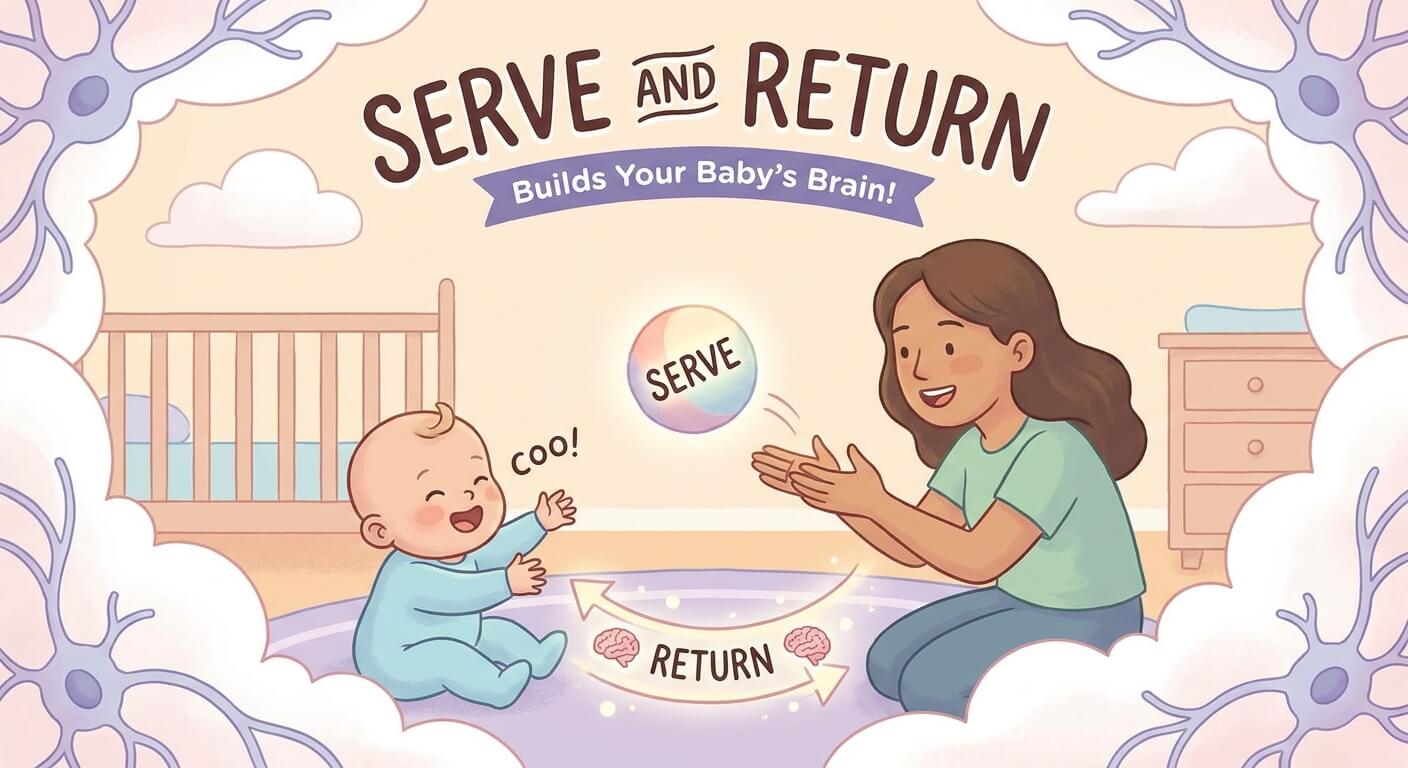
The Mechanics of “Serve and Return”
The most foundational expression of buffering in daily life is what developmental scientists call “serve and return” interactions. The name comes from tennis, and the analogy is intuitive:
- The Serve: The baby initiates communication. This can be a coo, a cry, a facial expression, a reaching gesture, or even sustained eye contact. The baby is, in effect, lobbing a ball across the net.
- The Return: The caregiver responds. Eye contact. A smile. A gentle word. Picking the baby up. Mirroring the baby’s expression. The caregiver sends the ball back.
What makes this interaction so powerful is not any single exchange but the repetition. Each serve-and-return volley sends an electrical signal through the neural pathways associated with social engagement, trust, and stress regulation, strengthening them incrementally. Over thousands of these exchanges — and they happen dozens of times a day in an ordinary caregiving relationship — the baby’s brain builds a robust internal model of how the world works: When I signal distress, help arrives. When I reach out, someone reaches back. The alarm can be turned off.
Dr. Jack P. Shonkoff, Director of Harvard’s Center on the Developing Child, has described serve and return as “one of the most essential contributions a caregiver can make to brain development.” It requires no training, no special equipment, no financial resources. It requires only presence and responsiveness.
And this is precisely why the single most dangerous thing for a newborn is not poverty, illness, or chaos per se — it is the absence of a responsive relationship within those conditions. The relationship is the buffer. Without it, the full force of the stressor reaches the brain unabsorbed.
Dismantling the “Spoiling” Myth
Before moving to practical strategies, one stubborn cultural myth must be addressed directly, because it actively undermines the very behaviour that prevents toxic stress.
The belief that responding quickly to a crying newborn will “spoil” them — teaching them to cry more, creating dependence, or fostering weakness — is not supported by any credible body of scientific evidence. It is a holdover from early twentieth-century behaviourist parenting philosophies that have been comprehensively discredited by decades of subsequent research.
The reality is the opposite. A landmark study published in Infant Behavior and Development found that infants whose cries were responded to promptly and consistently in the newborn period demonstrated better self-regulation, more secure attachment, and greater emotional independence later in childhood — not less. The mechanism is straightforward: a baby who learns through repeated experience that distress will be met with comfort develops the internal neural architecture to eventually comfort itself. A baby who learns that distress goes unheard develops an architecture primed for chronic alarm.
Responding to a newborn’s cries is not indulgence. It is brain-building.
A Practical Roadmap: Daily Habits That Prevent Toxic Stress in Newborns
Understanding the science is essential. Knowing what to do with it is what changes outcomes. The following strategies are grounded in peer-reviewed research, endorsed by leading paediatric authorities, and — critically — accessible to any caregiver, regardless of circumstance.
1. Skin-to-Skin Contact: The Oldest Medicine in the World
Long before there were laboratories, human caregivers discovered instinctively what science has now confirmed: holding a baby against bare skin is one of the most powerful stress-reduction interventions available.
How it works: Skin-to-skin contact triggers the release of oxytocin in both the caregiver and the infant. Oxytocin — sometimes called the “bonding hormone” — directly counteracts cortisol, functioning as a biochemical antidote to the stress response. It also lowers heart rate, stabilises body temperature, deepens breathing, and promotes sleep.
What the evidence says: A landmark study published in The Lancet in 2021, involving over 3,200 preterm infants across five countries, found that immediate kangaroo mother care — skin-to-skin contact begun shortly after birth — reduced infant mortality by 25%compared to conventional incubator care. While these findings related specifically to premature and low-birth-weight infants, the underlying biological mechanisms apply broadly.
For full-term newborns, the benefits include better breastfeeding initiation, more stable physiological markers, reduced crying, and — most relevant here — significantly lower cortisol levels.
Skin-to-skin contact does not require a formal session. It can happen during feeding, while resting on the couch, or during a quiet moment in the morning. It can be practiced by any caregiver — fathers, partners, grandparents — not only the birthing parent. Even 15-20 minutes a day provides measurable benefits.
2. Predictable Rhythms
There is a subtle but important distinction between a schedule and a rhythm, and it matters enormously for newborn stress regulation.
A schedule is rigid and externally imposed: feeding at 2:00 p.m., nap at 3:30 p.m., bath at 6:45 p.m., regardless of the baby’s cues. A rhythm is flexible and relational: a recognisable sequence of events that creates a felt sense of predictability without demanding clockwork precision. The bedtime routine might always involve dim lights, a warm bath, a quiet feed, and a song — but the exact time it begins can flex depending on the day.
Why this matters for the brain: Predictability is, at its core, a signal of safety. When a newborn’s environment follows recognisable patterns, the brain does not need to remain on high alert, scanning constantly for unexpected changes. The stress response system can stand down. When the environment is chaotic and unpredictable — when feeding times are erratic, when the emotional tone of the household swings wildly, when the baby cannot anticipate what will happen next — the nervous system must remain vigilant, and cortisol stays elevated.
Establishing gentle rhythms — a similar wind-down before sleep each night, a consistent response to hunger cues, a familiar pattern of interaction in the morning — is one of the simplest and most effective ways to keep a newborn’s stress response system in healthy territory.
3. Responsive Feeding
The act of feeding a newborn is, biologically, about far more than nutrition. It is one of the most concentrated relational experiences in the infant’s day — a sustained period of close physical contact, eye contact, warmth, and attentiveness. The how of feeding matters as much as the what.
Responsive feeding — sometimes called “cue-based feeding” — means watching for the baby’s hunger signals (rooting, sucking on hands, fussing) and responding promptly, rather than imposing a rigid schedule or waiting for full-throated crying. It means making eye contact during feeds, speaking softly, and treating the feeding as a moment of connection rather than a mechanical task.
This approach applies equally to breastfed and bottle-fed infants. A baby who is bottle-fed with eye contact, warmth, and responsiveness receives the same relational benefits as a breastfed baby. The bottle versus breast debate, while important in nutritional terms, is secondary to the relational dimension when it comes to stress regulation. What matters most is the caregiver’s attentiveness.
4. Infant Massage
Across cultures — from India to Scandinavia, from West Africa to Japan — caregivers have practiced infant massage for centuries. Western research has now caught up with this ancient wisdom.
Gentle, rhythmic touch activates the parasympathetic nervous system — the branch of the autonomic nervous system responsible for “rest and digest” functions. It is the biological counterpart to the “fight or flight” response. When the parasympathetic system is engaged, heart rate slows, breathing deepens, digestion improves, and cortisol levels drop.
A 2022 meta-analysis published in Pediatrics — one of the world’s leading paediatric journals — found that regular infant massage was associated with reduced crying duration, improved sleep quality, lower cortisol levels, and enhanced parent-infant bonding across diverse populations and settings.
Practical application: Infant massage does not require professional training. Gentle, slow strokes on the baby’s legs, arms, back, and tummy — using a small amount of natural oil if desired — for 10 to 15 minutes, ideally during a calm, alert period (not right before or after feeding), can be integrated into a daily routine. Many hospitals and community health centres offer free introductory classes.
5. Environmental Calm
Newborns are, in developmental terms, sensory sponges. They absorb the emotional and physical environment around them with an intensity that adults — whose brains have long since developed filters for irrelevant stimuli — often underestimate.
What this means in practice:
- Noise: Chronically elevated noise levels — not a single dog bark, but the ongoing background of shouting, blaring television, or household chaos — register as stressors in the newborn nervous system. This does not mean the home must be silent; it means that the baseline sensory environment should lean toward calm.
- Light: Bright, artificial lighting during nighttime hours disrupts the developing circadian rhythm and can interfere with sleep quality. Dim, warm lighting during evening and nighttime routines supports both the baby’s physiology and the caregiver’s.
- Emotional tone: Perhaps most significantly, the emotional climate of the home matters. Frequent, intense conflict between adults — raised voices, hostile exchanges — activates the newborn’s stress response even when the conflict is not directed at the baby. Research published in Child Development has found that infants as young as six months show elevated cortisol in response to angry adult voices, even during sleep.
None of this requires perfection. A home with occasional loud moments, a television on in the background, or an argument between tired parents is a normal home. The concern is with chronic exposure to high-intensity sensory and emotional stressors without reprieve.
The Unexpected Insight: Why Parental Wellbeing Is Infant Brain Protection
Here lies what may be the most innovative and underappreciated finding in the entire field of infant stress research — and it is the insight most likely to change how caregivers think about their own needs.
Co-Regulation: The Invisible Neurological Link
A concept introduced earlier — that newborns cannot regulate their own stress — has a critical corollary: if the baby cannot self-regulate, it must co-regulate. And co-regulation is not a metaphor. It is a measurable biological phenomenon.
Research in interpersonal neurobiology, pioneered by Dr. Allan Schore at UCLA, has demonstrated that the infant’s developing limbic system — the network of brain structures governing emotion and arousal — essentially synchronises with the caregiver’s nervous system. The baby’s heart rate, breathing patterns, cortisol rhythms, and emotional states mirror and entrain to those of the adult holding them.
Think of it as two tuning forks placed near each other: when one vibrates, the other begins to hum at the same frequency. A calm, regulated caregiver transmits that calm directly to the baby’s nervous system through tone of voice, heart rate, breathing rhythm, and the quality of touch. A chronically anxious, dysregulated caregiver — through no fault of their own — transmits that dysregulation.
This is not a judgement. It is biology. And it leads to an insight that should reframe how every caregiver thinks about self-care.
Redefining Self-Care as Neuroprotection
In many cultures, caring for one’s own needs as a new parent is framed as selfishness, luxury, or weakness — something to feel guilty about, something that comes only after every possible need of the baby has been attended to. The science of co-regulation inverts this entirely.
When a caregiver seeks treatment for postpartum depression, they are directly preventing toxic stress in their infant. When a caregiver accepts help, takes a walk, gets an hour of sleep, or calls a friend, they are recalibrating the nervous system that their baby is using as a regulatory template. When a caregiver, overwhelmed and at their limit, places the crying baby safely in a crib and steps into the next room for five minutes to breathe — that act is not abandonment. It is one of the most responsible things a parent can do.
Building the Village
There is a well-worn proverb — “It takes a village to raise a child” — that developmental science has now validated with remarkable precision. The presence of multiple supportive adults in a baby’s life is not merely a convenience; it is a structural bufferagainst toxic stress. When one caregiver is exhausted, another can step in. When a parent is overwhelmed, a grandparent, partner, friend, or community health worker can maintain the responsive caregiving that the baby’s brain depends on.
Building this village — actively, intentionally, and without shame — is one of the most effective prevention strategies available. It might look like:
- Accepting a neighbour’s offer to hold the baby for an hour.
- Joining a local new-parent support group.
- Asking a partner to take an overnight feed.
- Calling a postpartum doula for support during the first weeks.
- Accessing community resources like home-visiting programmes (such as Nurse-Family Partnership or Parents as Teachers), which have been shown in randomised controlled trials to reduce child maltreatment and improve developmental outcomes.
No caregiver is meant to do this alone. The belief that they should is itself a risk factor.
Recognising When to Seek Professional Help
Prevention is the goal of this article, but honest guidance also requires acknowledging the situations in which professional support is not optional — it is urgent.
When to Consult a Paediatrician About the Baby
- Persistent, inconsolable crying that extends well beyond typical colic (generally defined as crying for more than three hours a day, more than three days a week, for more than three weeks) and does not respond to standard soothing techniques.
- Extreme withdrawal or apathy — a baby who seems shut down, does not make eye contact, and shows little interest in faces or interaction. (This can be misread as having an “easy” or “calm” baby, making it particularly important to recognise.)
- Failure to gain weight or persistent feeding difficulties after medical causes have been evaluated and ruled out.
- Consistently absent developmental milestones in social-emotional engagement — the baby does not smile responsively, does not track faces, or does not react to voices by the expected developmental windows.
When to Seek Support for the Caregiver
- Persistent feelings of disconnection from the baby lasting more than two weeks — a sense of going through the motions without emotional engagement.
- Intrusive thoughts — unwanted, distressing mental images involving harm to the baby. (These are a hallmark symptom of postpartum anxiety and OCD, they do notmean the caregiver is dangerous, and they are highly treatable.)
- An inability to respond to the baby’s cries due to overwhelming rage, numbness, or despair.
- Awareness that the home environment includes active substance use, domestic violence, or untreated severe mental illness that is affecting caregiving capacity.
Conclusion
The science of toxic stress, when all its clinical layers are peeled away, delivers a message of extraordinary simplicity and power. The most important variable in a newborn’s developmental trajectory — more important than socioeconomic status, more important than access to the latest baby products, more important than whether the nursery is Pinterest-ready — is the consistent, responsive presence of a caring adult.
Not a perfect adult. Not an adult who never feels overwhelmed, never raises their voice, never cries in the bathroom while the baby cries in the other room. A present adult. A responsive adult. An adult who, when the baby reaches out, reaches back.
Every time a caregiver picks up a crying newborn, rocks them gently, and whispers that everything is going to be all right, something invisible and extraordinary is happening. Neural pathways are strengthening. Cortisol is receding. The brain’s architecture is being reinforced at its foundation. The alarm is being turned off — not permanently, because it will ring again, but reliably, because someone is there to answer it.
The mundane, repetitive, exhausting work of early caregiving — the midnight feedings, the endless rocking, the quiet songs sung to an audience of one — is not just survival. It is neuroscience in action. It is the construction of a human mind. And it is, when viewed through the lens of what we now know about the brain, among the most consequential work any person will ever do.
That truth is worth holding onto. Especially at 3 a.m.
Sources & Further Reading:
- Harvard University — Center on the Developing Child: Toxic Stress | Serve and Return
- Centers for Disease Control and Prevention (CDC): About Adverse Childhood Experiences
- UNICEF: Early Childhood Development
- National Institutes of Health (NIH): The Science of Early Childhood Development
- World Health Organization (WHO): Nurturing Care Framework for Early Childhood Development
October 25, 2026

October 25, 2026
October 25, 2026