
The Circle of Security
The Circle of Security: Nurturing Resilience and Well-Being in Children’s Futures
The Circle of Security is a relationship-based early intervention program designed to enhance attachment security between children and their caregivers. This innovative approach provides a clear, visual roadmap for understanding a child’s emotional needs and how to meet them effectively.
At its core, the Circle of Security represents the dynamic interplay between a child’s needs for exploration and attachment. It illustrates how children move from their secure base (the caregiver) to explore the world, and then return to their safe haven (also the caregiver) when they need comfort or reassurance.
Brief history and development
The Circle of Security was developed in the 1990s by attachment specialists Glen Cooper, Kent Hoffman, and Bert Powell. Their goal was to translate decades of attachment research into a practical, accessible framework for parents and caregivers.
Drawing on the groundbreaking work of John Bowlby and Mary Ainsworth, the creators of the Circle of Security sought to bridge the gap between complex attachment theory and everyday parenting practices. They recognized that while secure attachment is crucial for healthy development, many caregivers struggle to consistently meet their children’s attachment needs.
Importance in child development and parenting
The Circle of Security is of paramount importance in child development and parenting because secure attachment forms the foundation of a child’s emotional, social, and cognitive growth. When children have a secure attachment, they develop:
- Emotional regulation skills
- Self-confidence and self-esteem
- Healthy relationships with others
- Resilience in the face of stress and adversity
- Better cognitive abilities and academic performance
For instance, a securely attached child might feel confident to try new activities at school, knowing they have a supportive caregiver to return to if they feel overwhelmed. This confidence can translate into better social interactions, increased learning opportunities, and overall positive development.
Core Concepts of the Circle of Security
The Circle of Security is built upon several key concepts derived from attachment theory. Understanding these concepts is crucial for effectively implementing the approach:
Secure Base
The secure base is the foundation from which a child feels safe to explore their environment. When a child has a secure base, they know they can venture out and return to safety when needed. This concept is critical because it allows children to develop independence and curiosity while maintaining a sense of security.
For example, imagine a toddler at a playground. With a secure base, the child feels comfortable to explore the different play equipment, occasionally glancing back at their caregiver for reassurance. The caregiver’s presence and encouraging smiles provide the security the child needs to engage in new experiences and learn about their environment.
When a child has a secure base, they’re more likely to:
- Engage in exploratory play
- Develop problem-solving skills
- Build confidence in their abilities
- Form positive relationships with peers
Caregivers create a secure base by being consistently available, responsive, and supportive. This doesn’t mean hovering or overprotecting; rather, it involves being emotionally present and ready to assist when needed.
Safe haven
The concept of a safe haven is another crucial element of the Circle of Security. It refers to the caregiver’s role in offering comfort and protection when the child needs it. A safe haven is where a child can return to feel safe, comforted, and helped to organize their feelings.
Consider a child who’s frustrated because they can’t complete a puzzle. A caregiver acting as a safe haven might sit with the child, acknowledge their frustration, and offer comfort. They might say something like, “I can see you’re feeling upset. It’s okay to feel that way when something is difficult. Would you like a hug? Maybe we can try the puzzle together after you feel better.”
A reliable safe haven allows a child to:
- Regulate their emotions effectively
- Develop trust in others
- Build resilience in the face of stress or challenges
- Feel valued and understood
To create a safe haven, caregivers should be attuned to their child’s emotional needs, offer comfort and reassurance when the child is distressed, and help the child name and understand their emotions.
Exploration
Exploration is a vital aspect of a child’s development within the Circle of Security framework. It represents the child’s innate curiosity and drive to learn about their environment, develop new skills, and gain independence.
When children feel secure in their attachment relationship, they’re more likely to engage in exploration confidently. This exploration can take many forms, such as:
Physical exploration (e.g., crawling, walking, climbing)
Cognitive exploration (e.g., problem-solving, asking questions)
Social exploration (e.g., interacting with peers, trying new social situations)
Attachment Theory Foundation
The Circle of Security is deeply rooted in attachment theory, which emphasizes the importance of early relationships in shaping a child’s development. This theoretical foundation provides a framework for understanding how early experiences with caregivers influence a child’s social, emotional, and cognitive development throughout life.
Attachment theory, originally developed by John Bowlby and later expanded by Mary Ainsworth, proposes that children are biologically predisposed to form attachments to their caregivers as a survival mechanism. The quality of these early attachments, they argued, significantly influences how children view themselves, others, and the world around them.
In the context of the Circle of Security, understanding attachment theory helps caregivers recognize the profound importance of their role in their child’s development. It underscores why consistent, sensitive responsiveness to a child’s needs is so crucial.
For instance, when a caregiver consistently responds to a baby’s cries with comfort and care, the baby learns that the world is a safe place where their needs will be met. This forms the basis of a secure attachment. On the other hand, if a caregiver is consistently unresponsive or unpredictable, the child may develop an insecure attachment, leading to difficulties in trusting others or regulating emotions.
The Circle of Security Graphic
The Circle of Security is often represented by a simple yet powerful graphic that illustrates the dynamic relationship between a child’s needs and a caregiver’s responses. This visual model is a key tool in helping caregivers understand and respond to their child’s attachment needs.
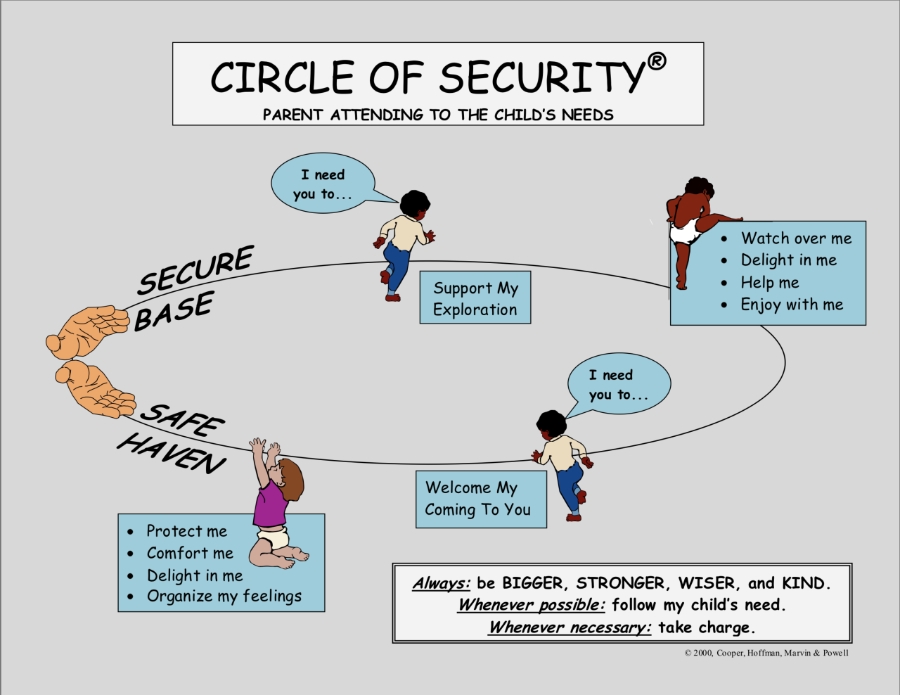
The graphic consists of a circle divided into two halves:
- The top half represents the child’s need for exploration and independence. This is where the child moves away from the caregiver to explore their environment.
- The bottom half represents the child’s need for comfort and protection. This is where the child returns to the caregiver for reassurance and support.
The hands at either side of the circle symbolize the caregiver, ready to support the child in both exploration and attachment needs.
Caregiver’s Roles in the Circle of Security
In the Circle of Security model, caregivers play crucial roles in supporting both the child’s exploration and attachment needs.
Supporting Exploration
- Watching over the child: The caregiver maintains a watchful presence, ensuring the child’s safety without unnecessary interference. For example, a parent might sit nearby as their toddler explores a new playground, ready to assist if needed but allowing the child to navigate independently.
- Delighting in the child’s discoveries: Showing genuine joy in the child’s experiences reinforces their sense of worth and encourages further exploration. This might involve enthusiastically praising a child’s first attempts at writing their name or expressing wonder at a bug they’ve found in the garden.
- Helping when needed: Offering assistance when the child encounters challenges, but allowing them to problem-solve independently when possible. For instance, if a child is struggling to build a tower with blocks, the caregiver might suggest turning a block to make it more stable rather than taking over the task.
- Enjoying with the child: Sharing in the child’s excitement and achievements strengthens the bond between caregiver and child. This could involve joining in a child’s imaginative play or celebrating when they master a new skill like riding a bike.
When caregivers effectively support exploration:
- Children develop greater independence and self-confidence
- They become more adept at problem-solving
- Their cognitive skills are enhanced through varied experiences
- The parent-child bond is strengthened through shared positive experiences
Caregivers should strive to be present and engaged during their child’s explorations, offering support and encouragement without taking over.
Welcoming the child’s return
- Protecting the child: Offering a safe haven when the child feels threatened or overwhelmed. This might involve comforting a child who’s scared during a thunderstorm or intervening when an older child is being bullied.
- Comforting the child: Providing emotional support and helping the child regulate their emotions. For example, holding and soothing a child who’s upset after falling down, or offering words of comfort to a child who’s disappointed about not being invited to a party.
- Delighting in the child: Showing genuine pleasure in the child’s presence, reinforcing their sense of being loved and valued. This could be as simple as greeting the child with a warm smile and hug when they return from school, or showing interest in their day.
- Organizing the child’s feelings: Helping the child understand and manage their emotions through naming feelings and discussing experiences. For instance, a caregiver might say, “It looks like you’re feeling frustrated because you can’t get your shoes on. It’s okay to feel that way. Let’s take a deep breath together and then try again.”
When caregivers effectively welcome the child’s return:
- Children develop better emotional regulation skills
- They learn to trust that their needs will be met
- Their stress response systems are better regulated
- They develop a positive self-image and sense of worth
Caregivers should be emotionally available and responsive when their child seeks comfort or connection, offering a warm and welcoming presence.
These roles create a secure environment for the child to explore and grow while knowing they have a safe haven to return to. The consistent fulfillment of these roles leads to a secure attachment, which forms the foundation for healthy emotional and social development.
Child’s Needs in the Circle of Security
Secure base for exploration
Children require a stable, reliable foundation from which to explore. This secure base gives them the confidence to venture out, knowing they have a safe place to return to if needed. It’s essential for developing independence and curiosity.
For example, a child with a secure base might feel comfortable trying new foods at a restaurant, knowing their caregiver is there to support them if they don’t like something. Or a young child might feel brave enough to join a new playgroup, glancing back at their caregiver for reassurance as they approach the other children.
Safe haven for comfort and protection
When children feel overwhelmed, scared, or upset, they need a safe haven to retreat to. This is where they can receive comfort, reassurance, and help in managing their emotions. The availability of a safe haven allows children to take risks in their exploration, knowing support is always available.
Consider a child who becomes overwhelmed at a busy birthday party. With a reliable safe haven, they can seek out their caregiver for a moment of quiet comfort, perhaps sitting on their lap for a few minutes before feeling ready to rejoin the festivities.
Help in organizing emotions and experiences
Young children often struggle to understand and manage their emotions. They rely on caregivers to help them make sense of their experiences and feelings. This process, known as co-regulation, is crucial for developing emotional intelligence and self-regulation skills. These protective relationships are also relevant to toxic stress, while trauma-informed parenting offers a related framework for children affected by adversity.
For instance, if a child is angry because they have to share a toy, a caregiver might help organize their feelings by saying, “I can see you’re feeling angry because you want to keep playing with the car. It’s okay to feel angry, but we still need to take turns. How about we set a timer and you can have the car again when it goes off?”
Implementation of Circle of Security in Parenting
Be a safe haven: Children need a secure base to return to when they feel overwhelmed or scared. By consistently providing comfort and safety, you help your child develop trust and a sense of security.
Example: When your child falls and hurts themselves, immediately go to them, offer comfort, and help them calm down. This teaches them that you’re reliable and responsive to their needs.
Support exploration: Encouraging exploration helps children develop confidence, independence, and problem-solving skills. Your support during this process reinforces their sense of security.
Example: At a playground, let your child try new equipment while staying nearby. Offer encouragement and be ready to help if needed, but allow them to take risks and learn from experiences.
Watch for cues: Being attuned to your child’s nonverbal signals helps you respond appropriately to their needs, fostering better communication and emotional understanding.
Example: Notice when your child becomes clingy or irritable. These might be signs they’re feeling overwhelmed and need comfort or a break from stimulating activities.
Practice “being with”: Quality time and full attention strengthen your bond and make your child feel valued and understood.
Example: During playtime, put away your phone and fully engage in the activity your child chooses. Comment on what they’re doing and show genuine interest in their play.
Embrace emotions: Acknowledging and validating emotions helps children develop emotional intelligence and learn to manage their feelings effectively.
Example: If your child is angry about sharing a toy, say, “I can see you’re feeling angry right now. It’s okay to feel that way, but we still need to share. Let’s figure out how we can take turns.”
Provide structure and limits: Clear boundaries create a sense of safety and help children understand expectations, leading to better behavior and self-regulation.
Example: Establish a consistent bedtime routine and explain why it’s important: “We go to bed at 8 PM because sleep helps our bodies grow strong and our minds learn better.”
Repair relationship ruptures: Demonstrating how to mend relationships teaches children about forgiveness, accountability, and the enduring nature of love despite conflicts.
Example: After losing your temper, apologize to your child: “I’m sorry I yelled earlier. I was frustrated, but that doesn’t make it okay. Can we talk about what happened and how we can both do better next time?”
Practice reflective functioning: Considering your child’s perspective fosters empathy and helps you respond more effectively to their needs.
Example: If your child refuses to eat dinner, instead of getting frustrated, think about possible reasons: Are they tired? Overwhelmed by the portion size? Not feeling well? This reflection can guide your response.
Use time-in instead of time-out: Staying close during difficult moments helps children learn to regulate their emotions with support, rather than feeling isolated when they’re struggling.
Example: If your child has a tantrum, sit near them and say, “I’m here when you’re ready for a hug. Let’s take some deep breaths together to help calm down.”
Encourage independence: Supporting autonomy builds self-esteem and competence while knowing you’re there for backup maintains their sense of security.
Example: Let your child choose their outfit for the day. If they pick clothes inappropriate for the weather, guide them: “I like your choice of shirt. Since it’s cold outside, what warm pants could we pair with it?”
Promote mentalization: Helping children understand their own and others’ mental states improves empathy and social skills.
Example: When reading stories, discuss characters’ feelings and motivations: “Why do you think the bear feels sad? What might make him feel better?”
Practice co-regulation: Co-regulation helps children learn to manage their emotions by experiencing regulation with a caregiver.
Example: When your child is upset, stay calm and say, “Let’s take some deep breaths together. I’ll help you calm down.”
Encourage secure-base scripting: This helps children internalize the pattern of seeking comfort and returning to exploration.
Example: Before a challenging situation, remind your child: “Remember, you can always come back to me if you need help or a hug, and then go play again when you’re ready.”
Foster resilience: Building resilience helps children cope with life’s challenges and bounce back from setbacks.
Example: When your child faces a difficulty, acknowledge their struggle and encourage problem-solving: “This is tough, but I believe you can figure it out. What could we try next?”
Promote a growth mindset: A growth mindset encourages perseverance and a positive attitude towards learning and challenges.
Example: Instead of praising intelligence, focus on effort: “You worked really hard on that puzzle. Your persistence paid off!”
Encourage peer relationships: Positive peer relationships help children apply attachment principles in social contexts.
Example: Arrange playdates and guide children in sharing turn-taking, and conflict resolution.
Implement consistent caregiving across settings: Consistency across different caregivers (parents, grandparents, daycare) reinforces secure attachment.
Example: Share Circle of Security principles with other caregivers and work together to maintain consistent responses to the child’s needs.
Challenges in Implementing the Circle of Security
While the Circle of Security offers a valuable framework for nurturing secure attachment, implementing it consistently can be challenging.
Personal Attachment History: Caregivers’ own attachment experiences can influence their ability to respond consistently to their child’s needs. Recognizing and addressing these patterns may require personal reflection or professional support.
Stress and Time Constraints: The demands of modern life can make it difficult to always be attentive and responsive. Finding ways to manage stress and create quality time with children is crucial.
Misinterpretation of Needs: Sometimes a child’s behavior can be misunderstood. For example, a child pushing a parent away might actually be seeking connection in a roundabout way. Learning to accurately read a child’s cues takes time and practice.
Balancing Multiple Children: For families with multiple children, meeting each child’s individual needs while maintaining a secure base for all can be challenging.
The “Shark Music” Concept
“Shark music” refers to the emotional reactions, often rooted in a caregiver’s own childhood experiences, that can interfere with their ability to respond sensitively to their child’s needs. This metaphor likens these uncomfortable feelings to the ominous music that plays in shark movies, signaling danger even when there may be none.
When caregivers experience “shark music,” they may react in ways that don’t align with their child’s actual needs. For example:
- A parent who experienced neglect in childhood might feel anxious when their child shows independence, leading to overprotective behaviors.
- A caregiver who was criticized often as a child might struggle to offer praise and encouragement, fearing they’ll spoil their child.
- Someone who experienced trauma might become overly alarmed by normal childhood behaviors, perceiving danger where there is none.
These reactions can interfere with the child’s natural exploration and development, potentially disrupting the secure attachment relationship.
Additional Resources
For those interested in learning more about CoS or seeking support, the following resources may be helpful:
- “The Circle of Security Intervention: Enhancing Attachment in Early Parent-Child Relationships” by Bert Powell, Glen Cooper, Kent Hoffman, and Bob Marvin
- “Raising a Secure Child: How Circle of Security Parenting Can Help You Nurture Your Child’s Attachment, Emotional Resilience, and Freedom to Explore” by Kent Hoffman, Glen Cooper, and Bert Powell
Conclusion
The Circle of Security provides a powerful framework for understanding and supporting children’s attachment needs. By offering a secure base for exploration and a safe haven for comfort, caregivers can foster secure attachment, which forms the foundation for a child’s lifelong emotional well-being and relationships.
As children grow and develop, their specific needs may change, but the fundamental principles of the Circle of Security remain relevant. By continuing to provide both a secure base and a safe haven, caregivers support children in developing the confidence, emotional intelligence, and relationship skills they need to thrive throughout their lives.
Implementing the Circle of Security principles requires patience, consistency, and self-reflection. It’s not about perfection, but about striving to be responsive and attuned to a child’s needs over time. Even small, consistent efforts can make a significant positive impact on a child’s development.
Sources & Further Reading:
October 25, 2026
October 25, 2026
October 25, 2026