
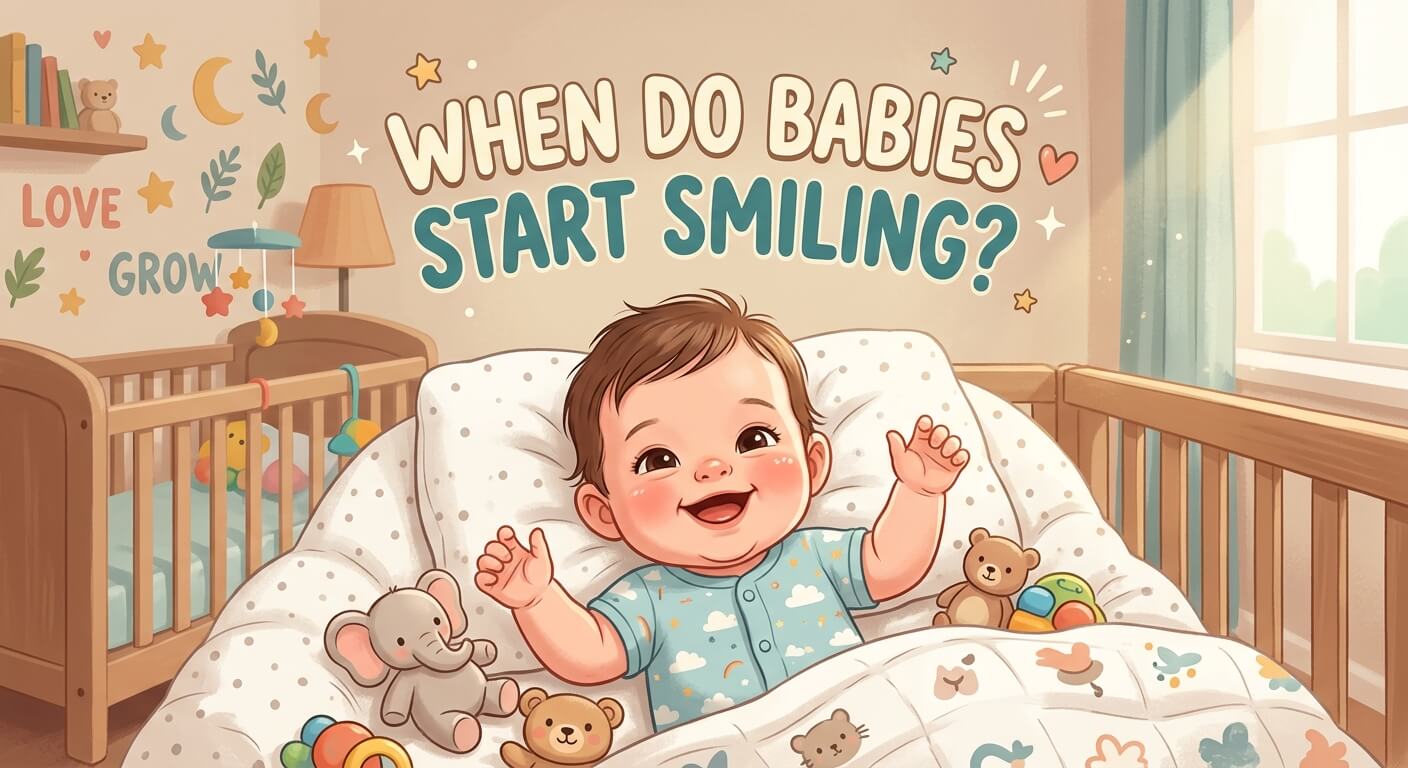
There is a stretch of early parenthood — roughly the first five or six weeks — that no one talks about with full honesty at the baby shower. The brochures mention “bonding.” The well-meaning relatives promise “the best time of your life.” What no one adequately conveys is the sheer, relentless one-sidedness of it all. A newborn, for all the staggering love they inspire, is essentially a small, beautiful autocrat who offers nothing in return. No recognition. No gratitude. No indication, really, that the exhausted person who feeds them at 3:00 a.m. is any more meaningful to them than the ceiling fan they occasionally stare at with equal intensity.
And then, somewhere around the sixth week, something extraordinary happens.
The baby looks up — not past, not through, but directly at — the face hovering above them. The tiny mouth begins to curl. The cheeks round. The eyes, those unfocused dark pools that have spent weeks gazing at nothing in particular, suddenly crinkle at the corners with unmistakable warmth. A full, radiant, gummy smile — deliberately and unmistakably aimed at a specific person — breaks across that small face like the first crack of light after a long night.
That is the social smile. And it is not merely adorable. It is one of the most significant events in the first year of human development — a moment that signals the awakening of a conscious, socially aware mind. Behind that simple expression lies a convergence of visual maturation, cognitive leaps, emotional circuitry, and millions of years of evolutionary refinement. Understanding what this smile truly means, how to recognize it, and how to nurture it transforms a charming baby moment into a window onto the astonishing architecture of the developing human brain.
What Is a Social Smile? Understanding the Difference Between Reflex and Real Connection
Before exploring the social smile in depth, it is worth pausing to address the question that every new parent eventually asks a pediatrician, usually with a mixture of hope and defensiveness: “But the baby smiled at me in the hospital — doesn’t that count?”
The honest answer, delivered as gently as possible: probably not.
Reflexive Smiles
In the first four to six weeks of life, newborns produce smiles that look, on the surface, identical to the ones adults exchange across dinner tables. The lips curl upward. The expression softens. Cameras come out. Instagram posts go up. Grandparents weep with joy.
But these early smiles are what pediatricians and developmental scientists call reflexive smiles — involuntary muscular movements that occur without any social stimulus whatsoever. They are most commonly observed during REM sleep (the phase of sleep in which dreaming occurs in older children and adults), during the digestive process (hence the immortal “it’s just gas” explanation), or during the drowsy, half-conscious transition between sleeping and waking.
To understand why these smiles happen, it helps to know a bit about how the brain is organized. Think of the brain as a building with many floors. The ground floor — the brainstem — handles the basics: breathing, heart rate, reflexes, and the autonomic functions that keep the body running without conscious thought. The upper floors — collectively known as the cerebral cortex — handle the sophisticated, uniquely human operations: language, planning, social awareness, and emotional connection.
In a newborn, the ground floor is fully operational. The upper floors are still under construction, with the wiring being laid but not yet connected. Reflexive smiles originate on the ground floor — the brainstem — and are triggered by internal physiological states: a comfortable stretch of the intestines, a burst of neural activity during sleep, a random firing of facial-nerve impulses. The outside world, including the adoring parent holding the baby, has nothing to do with them.
This is not bad news. It is simply incomplete news. The reflexive smile is the rehearsal. The real performance is still ahead.
The Social Smile: A Deliberate Act of Human Connection
Somewhere between six and twelve weeks of age — the range varies, and the reasons for that variation are important, as discussed below — a fundamentally different kind of smile emerges. Where the reflexive smile was random and inward-looking, the social smile is purposeful and outward-facing. It occurs in response to something external — specifically, in response to the face, voice, or presence of another person.
This is a distinction worth lingering over, because its implications are profound. A reflexive smile means the body is functioning. A social smile means the mind is awakening. The baby is no longer merely existing in the world; the baby is beginning to engage with it.
But how can parents tell the difference in practice? After all, both types of smile involve the same basic facial movement — an upward curl of the lips.
The answer lies in a concept from psychology called the Duchenne marker, named after Guillaume-Benjamin Duchenne, a 19th-century French neurologist who spent years painstakingly mapping the muscles of the human face to determine which combinations produced authentic expressions of emotion and which produced mere social performance.
Duchenne discovered something surprisingly simple. A polite or involuntary smile — the kind produced when posing for a photograph one does not want taken, or the kind a sleeping newborn produces reflexively — uses only one muscle: the zygomaticus major, which runs from the cheekbone to the corner of the mouth and pulls the lips upward. But a genuine smile — one that reflects real positive emotion — activates a second muscle simultaneously: the orbicularis oculi, a ring of muscle that encircles the eye and, when contracted, produces the distinctive crinkling or “crow’s feet” at the outer corners.
Think of it as the difference between a light switch and a dimmer. The reflexive smile flips one switch — the mouth moves, but the rest of the face stays largely still. The social smile turns on the whole system — the mouth, the cheeks, the eyes — producing a warm, radiant glow that is immediately recognizable to anyone watching.
The Quick Test for Caregivers: When the baby smiles, look at the eyes. If the skin around them crinkles and the eyes seem to narrow with warmth — not just the mouth turning up — that is almost certainly a genuine social smile. If the mouth curls but the eyes remain neutral or unfocused, it is more likely a reflex.
This distinction is not merely academic. When developmental pediatricians screen for social smiling at the two-month well-child visit, they are specifically looking for this full-face, eye-crinkling Duchenne response. It is one of the clearest, most reliable early indicators that the higher social circuits of the brain — the “upper floors” mentioned earlier — are coming online.
When Do Babies Start Smiling Socially? A Detailed Timeline
With the distinction between reflex and reality now clear, the natural next question is one of timing: When, exactly, should caregivers expect to see the real thing?
The Typical Window: Six to Twelve Weeks
The social smile typically appears within a six-to-twelve-week window, with most infants producing their first clear, intentional smile around the eight-week mark. The American Academy of Pediatrics (AAP) identifies the social smile as a key developmental milestone at the two-month well-child visit, and pediatricians routinely assess for its presence during that appointment.
It is worth emphasizing the width of that window. Six weeks to twelve weeks is a considerable range, and a baby who smiles at six weeks is not “advanced” any more than a baby who smiles at eleven weeks is “delayed.” Human development, particularly in the first year of life, unfolds on a schedule that is far more individual than the neat timelines in parenting books would suggest. Temperament, environment, neurological maturation rate, and even the amount of face-to-face interaction a baby receives all influence the precise timing.
The Premature Birth Factor
One of the most common — and most preventable — sources of parental anxiety around developmental milestones involves babies who were born prematurely. If a baby arrived six weeks before their due date, comparing their development to a full-term baby of the same calendar age is like comparing a cake pulled from the oven fifteen minutes early to one that baked the full time. The internal development is simply not at the same point.
This is why pediatricians use a concept called corrected age (sometimes called adjusted age). Corrected age is calculated from the baby’s original due date, not their actual birth date. A baby born eight weeks early who is now ten weeks old by the calendar is, developmentally speaking, closer to a two-week-old. That baby should not be expected to produce a social smile for another four to six weeks — and this is entirely normal.
The AAP recommends using corrected age for all developmental milestone assessments until at least 24 months of age for babies born prematurely. This single piece of information, widely known among pediatricians but less consistently communicated to parents, has the power to eliminate an enormous amount of unnecessary worry.
How the Social Smile Develops: A Three-Phase Progression
The social smile does not arrive as a single, dramatic event, like flipping on a light switch. It develops gradually, in observable phases, more like a sunrise — faint at first, then brightening steadily until the full warmth is unmistakable.
| Phase | Approximate Age | What It Looks Like | What It Means |
|---|---|---|---|
| Phase 1: The Glimmer | 6–7 weeks | Fleeting, half-second smiles that appear when the baby hears a familiar voice or sees a face up close; easy to miss and easy to second-guess | The baby is beginning to register and respond to social stimuli, but the neural connections are still fragile and inconsistent |
| Phase 2: The Full Beam | 8–10 weeks | Sustained, open-mouthed, whole-face smiles with prolonged eye contact; unmistakable and deeply rewarding | The social circuits have strengthened; the baby can now maintain a reciprocal exchange for several seconds at a time |
| Phase 3: The Full-Body Celebration | 10–12 weeks | Smiling combined with excited cooing, arm waving, leg kicking, and sometimes squealing | The smile has become part of a larger communicative repertoire; the baby is not just responding but actively initiatingsocial interaction |
The speed of this progression — from a tentative flicker to a full-body celebration in the span of just four to six weeks — is remarkable. Few other species on Earth develop reciprocal social communication this rapidly in the early postnatal period. It is a uniquely human acceleration, and it is driven by one of the most complex organs in the known universe: the developing infant brain.
Why the Social Smile Matters: The Science Behind the Milestone
It is tempting — and entirely understandable — to treat the social smile as simply a heartwarming moment, a charming footnote in the baby book. But within the fields of developmental neuroscience, pediatric psychology, and attachment theory, the social smile is treated as something considerably more significant: a convergence point where multiple critical developmental systems announce their arrival simultaneously.
Think of it as a dashboard indicator on a car. A single green light does not tell the full story, but it signals that the engine, the electrical system, and the fuel supply are all functioning. The social smile is a green light for at least three major developmental systems.
The Eyes Have It: Visual Development and the Social Smile
For the first several weeks of life, a newborn’s visual world is startlingly limited. The visual cortex — the region of the brain responsible for processing what the eyes take in — is among the last neural systems to mature. Newborn vision is estimated at roughly 20/200 to 20/400, which in practical terms means the world beyond about a foot away is a wash of blurred shapes and indistinct shadows.
There is, however, one precisely calibrated exception. Newborns can focus with relative clarity on objects positioned approximately 8 to 12 inches from their face — a range that is not arbitrary. It is, almost exactly, the distance between an infant’s eyes and their caregiver’s face during breastfeeding or bottle-feeding. Evolution, it seems, prioritized the one visual task that matters most for survival: recognizing the person who provides food, warmth, and protection.
By the time a social smile emerges at six to eight weeks, the visual system has sharpened considerably. The baby can now distinguish fine facial features — the curve of a brow, the shape of a nose, the particular way a specific person’s mouth moves when speaking. Research published in Current Biology has demonstrated that infants begin showing a measurable preference for human faces over other visual stimuli within hours of birth, but that this preference becomes significantly more refined and discriminating in the six-to-eight-week window, precisely as social smiling appears.
The social smile, in other words, is partly a visual achievement. It announces that the baby’s eyes and visual cortex have developed to the point where the most important faces in their world are no longer indistinct blurs but recognizable, meaningful individuals.
The First Spark of Logic: Cause, Effect, and Contingency Learning
The social smile also represents a cognitive breakthrough that is easy to underestimate. When a baby smiles at a caregiver and the caregiver smiles back, the baby is experiencing — perhaps for the first time — a fundamental principle that will underpin all future learning: cause and effect.
Developmental psychologists use a more precise term for this: contingency learning, which refers to the ability to recognize that one’s own actions produce reliable, predictable responses in the external environment. It is the same principle at work when a toddler learns that pressing a button makes a toy light up, or when a child discovers that saying “please” increases the likelihood of receiving a cookie. But in the social smile, contingency learning appears in its earliest, most primal form: I produce a facial expression → the world responds.
To grasp why this matters, consider the alternative. An infant who produces behaviors without ever receiving contingent responses — who smiles into a void, coos without acknowledgment, reaches without being reached back to — is an infant whose brain is receiving a very different message: My actions do not influence the world. Nothing I do matters. Decades of research in developmental psychology, beginning with the foundational work of Edward Tronick’s “still face” experiments in the 1970s, have demonstrated the profound distress infants exhibit when a previously responsive caregiver suddenly becomes unresponsive. Babies as young as two months will cycle through increasingly agitated attempts to re-engage the caregiver — exaggerated smiling, louder vocalizations, finally crying and withdrawal — when their social “serves” go unreturned.
The social smile, therefore, is not merely a cute expression. It is the baby’s first experiment in agency — the first time a human being tests the hypothesis that they have the power to shape the world around them.
The Foundation of Emotional Life: Serve-and-Return Interaction
The most far-reaching significance of the social smile lies in what it initiates: a pattern of interaction that will shape the baby’s emotional and social development for years to come.
Harvard University’s Center on the Developing Child has identified a concept called “serve and return” interaction as one of the most critical factors in healthy brain development. The metaphor is drawn from tennis: a baby “serves” — by smiling, babbling, pointing, or making eye contact — and a responsive caregiver “returns” — by smiling back, speaking, making a facial expression, or picking the baby up.
What makes this metaphor so apt is that the power lies not in any single volley but in the sustained rally. One smile exchanged in isolation is pleasant. Hundreds of thousands of these micro-exchanges, accumulated over the first three years of life, literally sculpt the neural architecture of the developing brain. Each serve-and-return interaction strengthens synaptic connections in the regions responsible for emotional regulation, social cognition, empathy, and language. Over time, these reinforced pathways become the foundational wiring for virtually every social and emotional skill the child will ever develop — from managing frustration in kindergarten to maintaining relationships in adulthood.
The flip side is equally well-documented. When serve-and-return interactions are chronically absent — due to caregiver depression, substance abuse, extreme stress, or neglect — the consequences are measurable and, in severe cases, lasting. Research from the Harvard Center has shown that children who experience sustained disruptions in early serve-and-return interaction are at significantly higher risk for difficulties with emotional regulation, behavioral problems, and even certain cognitive delays.
The social smile is the opening serve. Everything that follows builds on it.
Nature’s Masterstroke: The Evolutionary Genius of the Baby’s Smile
There is a question buried in the timeline of the social smile that is easy to overlook but, once noticed, becomes impossible to ignore: Why does the social smile emerge when it does?
The answer — or at least the leading theory — is one of the most elegant pieces of reasoning in evolutionary developmental biology.
The Six-Week Collision: Peak Crying Meets First Smiling
Consider two facts simultaneously. First: the social smile typically appears between six and eight weeks of age. Second: infant crying also peaks between six and eight weeks of age, in a pattern so universal across cultures that pediatric researchers have given it its own name — the period of PURPLE crying (an acronym developed by the National Center on Shaken Baby Syndrome to help parents understand the normal, if maddening, pattern of increased crying in early infancy).
This collision is not a coincidence. Multiple researchers, including those affiliated with the Max Planck Institute for Evolutionary Anthropology, have proposed that the social smile evolved precisely to emerge at the point of maximum parental vulnerability. The logic, from an evolutionary perspective, is coldly elegant: a newborn human is entirely dependent on adult caregivers for survival. If, at the precise moment when caregiving is most exhausting and most emotionally taxing, the infant develops the ability to produce a behavior that is profoundly, even addictively, rewarding to the caregiver — a behavior that floods the adult brain with pleasure and attachment chemicals — the infant’s chances of continued care improve dramatically.
The social smile, in this framework, is not merely a developmental milestone. It is a survival mechanism, refined over hundreds of thousands of years of natural selection, designed to ensure that exhausted caregivers remain emotionally invested at the exact moment they are most at risk of burnout.
The Neurochemical Reward: Dopamine, Oxytocin, and the Caregiver’s Brain
The biological machinery behind this mechanism is strikingly powerful. A 2012 study published in Proceedings of the Royal Society B used functional magnetic resonance imaging (fMRI) — a technology that allows researchers to observe brain activity in real time by tracking blood flow — to examine what happens inside a parent’s brain when they view images of smiling infants. The results were dramatic.
Viewing a smiling baby activated the mesolimbic dopamine pathway — a circuit deep in the brain that neuroscientists informally call the “reward system.” This is the same neural circuit that activates during experiences of romantic love, during the consumption of delicious food, and, notably, during exposure to certain addictive substances. The social smile does not merely please a caregiver. It produces a neurochemical reward response — a rush of dopamine (the neurotransmitter associated with pleasure and motivation) and oxytocin (often called the “bonding hormone” for its role in attachment, trust, and social connection) — that is, in a very real sense, designed to make caregiving feel irresistible.
To put it in everyday terms: when a baby smiles at a caregiver, the caregiver’s brain receives approximately the same kind of neurochemical reward as falling in love. And that is not a poetic metaphor. It is a measurable, replicable neuroscience finding.
The Mind-Meld: When Brainwaves Synchronize
Perhaps the most astonishing discovery in recent years adds yet another dimension to the power of the social smile. A series of studies — including a landmark 2017 paper from Princeton University’s Neuroscience Institute, published in Psychological Science— have documented a phenomenon called neural coupling (sometimes referred to as brain-to-brain synchrony).
Here is the basic finding: when two people engage in genuine, meaningful communication — not parallel monologues, but real back-and-forth interaction — their brainwave patterns begin to synchronize. The neural activity of the listener begins to mirror the neural activity of the speaker, not just passively but with slight anticipatory leads that suggest the listener is actively predicting what comes next. It is, at the neural level, as close to telepathy as science has ever documented.
Subsequent research has extended this finding to parent-infant interactions. When a caregiver and a baby engage in a smiling, cooing, face-to-face exchange — exactly the kind of interaction that the social smile initiates — their physiological systems begin to converge. Heart rates slow and align. Cortisol levels (the hormone associated with stress) in both parties decrease simultaneously. Brainwave patterns begin to mirror each other.
The social smile, in other words, does not just create an emotional connection. It creates a biological one — a measurable synchronization of two nervous systems across physical space. The parent and baby are not merely interacting. They are, in a very real physiological sense, becoming temporarily attuned to the same frequency — like two radios tuning to the same station.
How to Encourage the Social Smile: Evidence-Based Strategies for Caregivers
Understanding the science behind the social smile is valuable in its own right. But for caregivers navigating the daily reality of life with a newborn, the practical question is equally important: Is there anything one can do to help this milestone along?
The answer is yes — with an important caveat. The social smile cannot be forced or accelerated beyond the brain’s own developmental readiness. No amount of stimulation will produce a genuine social smile in a three-week-old whose prefrontal cortex is simply not yet wired for the task. What caregivers can do is create the conditions — the environment, the timing, the type of interaction — in which social smiling is most likely to emerge when the brain is ready.
Timing Is Everything
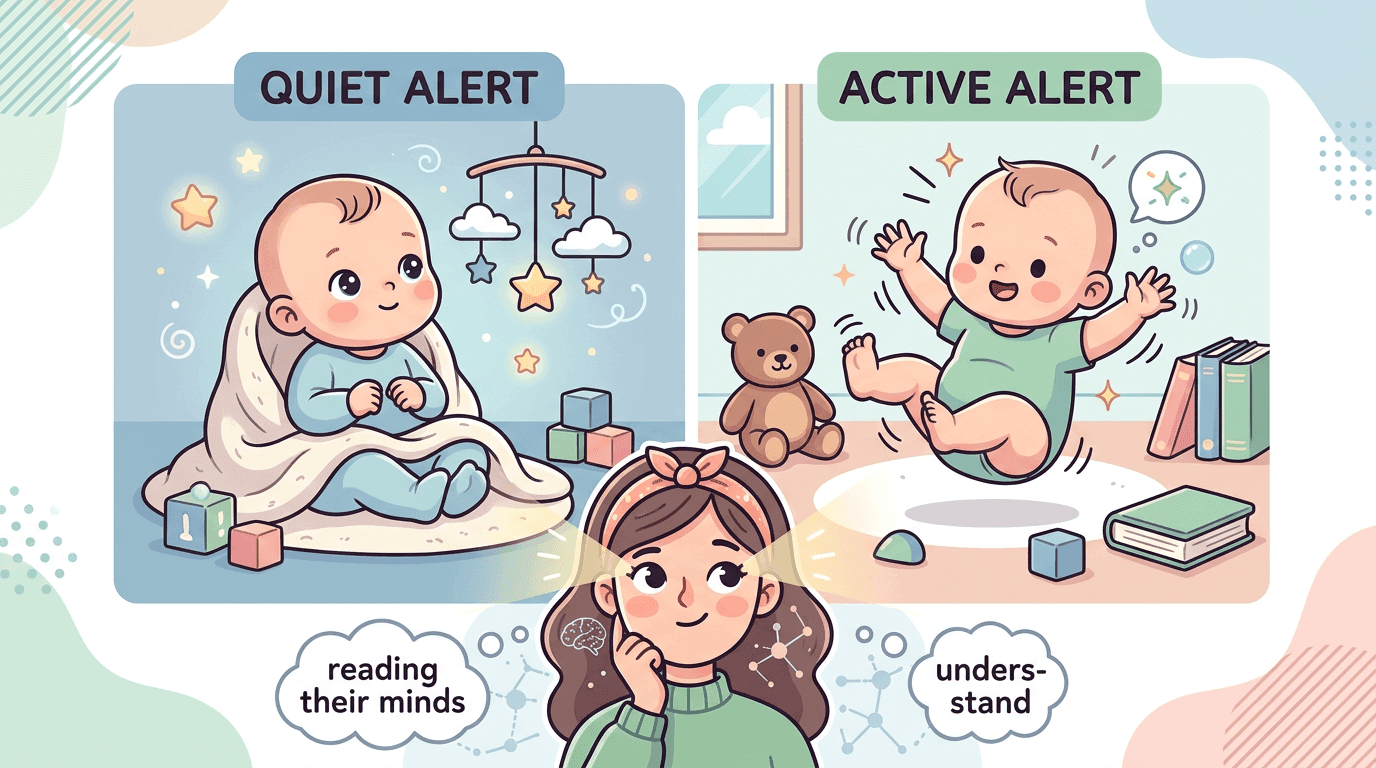
Babies cycle through several distinct states of consciousness throughout the day: deep sleep, active (REM) sleep, drowsy, fussy/crying, active alert, and quiet alert. Of these, the quiet alert state is the golden window for social interaction. A baby in quiet alert is awake, calm, and attentive — eyes open and focused, body still, attention available. It is the state in which a baby is most receptive to faces, voices, and the kind of sustained back-and-forth exchange that produces social smiling.
The practical implication is straightforward but often overlooked by eager caregivers: a hungry, overtired, or overstimulated baby will not smile. Attempting to coax a grin from an infant who is fussy, drowsy, or mid-cry is an exercise in mutual frustration. The most effective strategy is to wait — typically fifteen to twenty minutes after a feed, when the baby has settled into comfortable, alert wakefulness — and then engage.
Positioning: The 8-to-12-Inch Sweet Spot
Because the newborn visual system can only focus clearly at close range, positioning matters enormously. A face that is two or three feet away is, to a six-week-old, a blurred, unrecognizable shape — no more likely to produce a smile than a blank wall. Holding or positioning the face approximately 8 to 12 inches from the baby’s face — roughly the distance of a forearm — places the caregiver’s features squarely within the baby’s zone of visual clarity.
This distance is also, not coincidentally, the natural face-to-face distance during feeding, which is why so many early social smiles occur during or just after a nursing or bottle-feeding session. The baby is already in the right position, already looking at the right face, already in a calm, satiated state. The conditions are ideal.
The Power of Parentese: Why the Silly Voice Works
Nearly every culture on Earth has independently developed a distinctive way of speaking to babies: higher pitch, slower tempo, exaggerated vowel sounds, melodic intonation, and lots of repetition. Linguists call this infant-directed speech. Popular culture calls it baby talk. Researchers at the Institute for Learning & Brain Sciences (I-LABS) at the University of Washington call it parentese — and their research has demonstrated that it is far more than a cultural curiosity.
Parentese is, functionally, optimized for the infant auditory system. The higher pitch falls within the frequency range that newborn ears are most sensitive to. The exaggerated vowel sounds make the building blocks of language more acoustically distinct and easier for developing auditory circuits to parse. The melodic, sing-song intonation captures and sustains infant attention far more effectively than adult-directed speech. And critically, studies from I-LABS have shown that infants whose caregivers regularly use parentese produce significantly more vocalizations — and develop language skills faster — than infants whose caregivers do not.
For the purposes of encouraging the social smile, parentese serves a specific function: it is one of the most reliable ways to capture and hold a young infant’s attention during face-to-face interaction, creating the sustained mutual gaze that is the precondition for a smile.
The Imitation Game
Before the social smile appears, many babies engage in a behavior that is its developmental precursor: facial mimicry. As early as the first days of life, some newborns will attempt to imitate simple facial gestures — sticking out the tongue in response to a caregiver who does the same, or widening the eyes in response to raised brows. (This finding, first published by psychologists Andrew Meltzoff and M. Keith Moore in 1977, was initially controversial but has since been replicated across multiple cultures and settings.)
These proto-imitations are not yet smiles, but they are rehearsals for the same neural circuits. Deliberately engaging in facial mimicry play — making exaggerated expressions and pausing to see if the baby attempts to mirror them — helps strengthen the neural pathways that will eventually produce reciprocal smiling.
The Art of the Pause
Perhaps the most counterintuitive insight for enthusiastic caregivers is this: knowing when to stop is as important as knowing how to start.
Young infants have a very limited capacity for sustained social interaction. Their developing nervous systems can absorb only so much stimulation before becoming overwhelmed. When a baby looks away, closes their eyes, turns their head to the side, or arches their back during face-to-face play, they are not rejecting the caregiver. They are engaging in self-regulation — the only mechanism available to a being who cannot yet say “I need a break” or get up and leave the room.
Honoring these cues — pausing, waiting quietly, allowing the baby to recover and re-engage on their own terms — is one of the most developmentally supportive things a caregiver can do. It teaches the baby, at the deepest pre-verbal level, that their signals are understood and respected. And when the baby does turn back, refreshed and ready for more, the interaction that follows is typically richer, longer, and more likely to produce a full, genuine smile.
A Quick-Reference Guide for Encouraging the Social Smile:
✅ Wait for the quiet alert state — calm, awake, recently fed
✅ Position face 8–12 inches from the baby’s face
✅ Use parentese — high pitch, slow tempo, exaggerated expressions
✅ Try facial imitation games — tongue out, wide eyes, open mouth
✅ Follow the baby’s lead — pause when they look away, re-engage when they return
❌ Do not try to coax smiles from a hungry, tired, or crying baby
❌ Do not increase stimulation when the baby turns away — this signals overload
When to Talk to a Pediatrician
Every developmental milestone comes with a shadow: the fear that it is arriving too late, or not arriving at all. The social smile is no exception, and this section requires both honesty and care — because the line between helpful awareness and harmful anxiety is thin, and a responsible article must walk it deliberately.
The Wide Range of Normal
The first and most important reassurance is this: temperament creates enormous variation. Some babies are natural performers — sociable, expressive, quick to engage with every passing face. Others are what developmental psychologists call “slow to warm” — observant, cautious, serious, taking in the world with wide, watchful eyes long before they choose to interact with it. A baby who is slower to smile is not necessarily a baby with a developmental problem. They may simply be a baby with a contemplative personality.
Cultural and environmental factors play a role as well. Babies who receive a high volume of face-to-face interaction (common in cultures and families that emphasize holding and social play) may produce social smiles somewhat earlier than babies who spend more time in swings, bouncers, or car seats, where face-to-face contact is less frequent. This is not a judgment about parenting quality — it is simply a reflection of opportunity.
The Clinical Guideline: What Pediatricians Watch For
That said, there are clear, evidence-based benchmarks that pediatricians use to determine when further evaluation is warranted.
The American Academy of Pediatrics and the Centers for Disease Control and Prevention (CDC) identify the following as a potential concern:
If an infant shows no social smiling and no joyful facial expressions by three months (12 weeks) of corrected age, this should be discussed with a pediatrician.
The emphasis on corrected age is critical for premature infants, as discussed earlier. And the emphasis on no joyful expressions of any kind — not just smiling, but also brightening of the eyes, excited kicking in response to a familiar face, or any form of positive social response — is equally important. The benchmark is not one specific behavior but an overall pattern of social engagement.
What It Might Indicate — And What It Usually Does Not
A delay in social smiling, when it does occur, can be associated with several possibilities:
- Vision impairment: If a baby cannot clearly see faces, social smiling may be delayed simply because the visual stimulus that normally triggers it is absent or diminished. This is one of the most common — and most treatable — causes of delayed social smiling.
- Hearing differences: Because the voice is a powerful trigger for early smiles, reduced hearing can contribute to delays, particularly if the baby cannot clearly hear parentese or other vocal cues.
- Neurodevelopmental variation: In some cases, delayed social smiling — particularly when combined with limited eye contact, absence of response to familiar voices, and lack of interest in faces — can be among the earliest markers of neurodevelopmental differences, including autism spectrum disorder. It is important to emphasize: this is one possible explanation among many, and the majority of babies who smile slightly late do not receive any such diagnosis.
The overarching principle, and the one that every pediatrician consulted for this article would want to emphasize, is this: early identification of any developmental concern dramatically improves outcomes. A conversation with a pediatrician is not a diagnosis. It is a starting point — a way to either receive reassurance or, if needed, access early intervention services that are most effective when they begin early.
The instinct that every caregiver should trust above all others is their own. No one knows a baby better than the person who feeds them at midnight, who has memorized the particular rhythm of their breathing, who can distinguish between the hungry cry and the tired cry from three rooms away. If something feels off — even if the milestone checklist says everything is fine — bringing that concern to a professional is never an overreaction. It is good parenting.
Conclusion
The newborn social smile arrives in a package so small and simple — a fleeting curl of the lips, a crinkle around the eyes — that it is easy to underestimate what it contains. But contained within that expression is a convergence of achievements so complex that no technology on Earth can replicate it: a visual system sharp enough to distinguish a familiar face from a stranger’s, a cognitive engine beginning to grasp cause and effect, an emotional circuit reaching out across the space between two people to build the first bridge of human connection.
It is an evolutionary masterpiece, refined over millennia, timed with exquisite precision to arrive at the exact moment when the caregivers who sustain a new life most need to be reminded why they are doing it. It triggers a neurochemical cascade — dopamine, oxytocin, synchronized brainwaves — that is functionally indistinguishable from falling in love. And it initiates a pattern of serve-and-return interaction that will, over the next several years, literally build the architecture of a human mind.
For the caregivers navigating the exhausting, disorienting, magnificent terrain of early parenthood, understanding the social smile reframes the entire experience. Every face-to-face exchange, every exaggerated parentese coo, every patient pause when the baby needs a moment to self-regulate — these are not trivial parenting moments. They are construction work, performed at the most fundamental level of human development.
The social smile, when it finally arrives, is not just the baby saying I see you. It is the baby saying: I am becoming a person — and the relationship between us is the material I am building myself out of.
That is worth every sleepless night that preceded it.
Sources & Further Reading:
- Harvard University — Center on the Developing Child: Serve and Return Interaction
- National Institutes of Health (NIH) — Infant and Toddler Development
- Princeton Neuroscience Institute — Neural Coupling in Communication (Uri Hasson Lab)
- Zero to Three — Social-Emotional Development in Infancy
October 25, 2026
October 25, 2026
October 25, 2026

October 25, 2026