
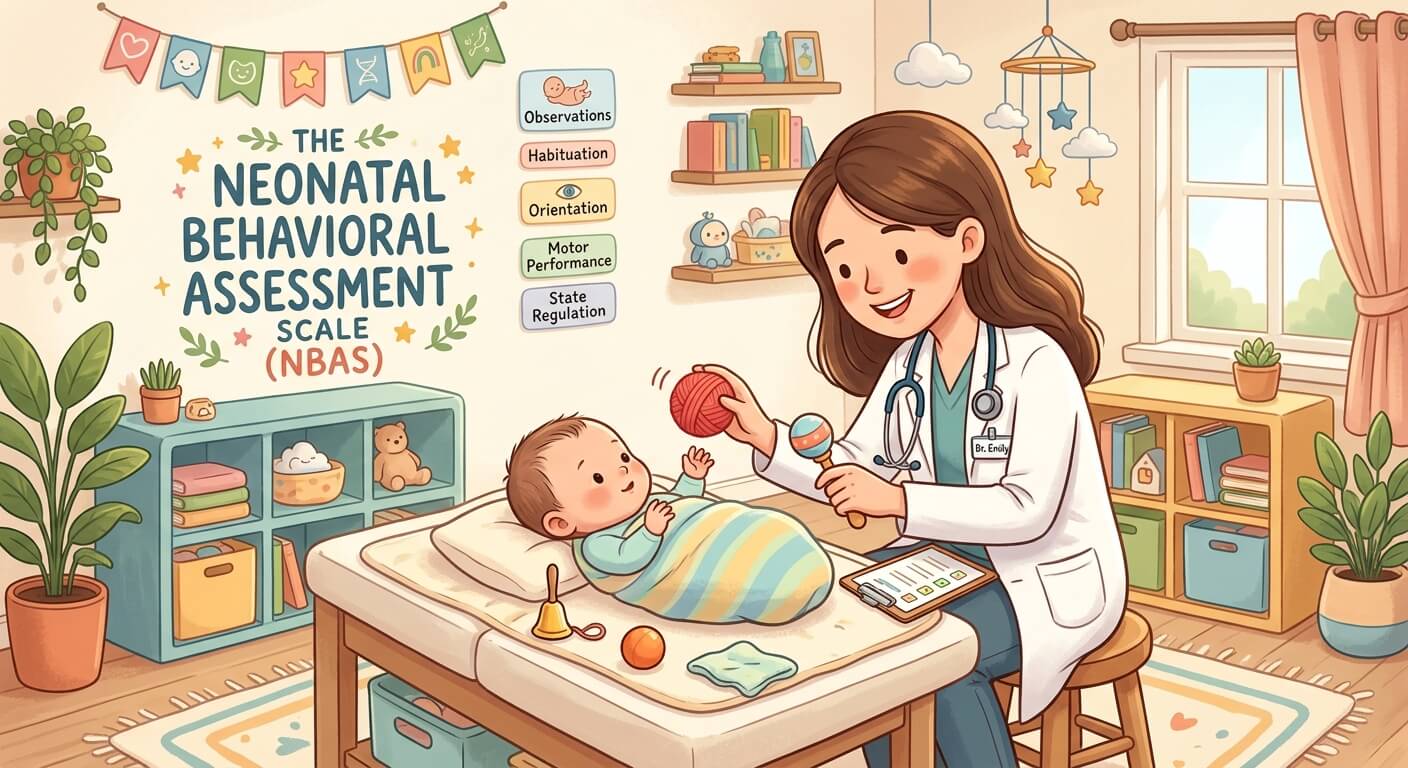
What Is the Neonatal Behavioral Assessment Scale (NBAS)
What is the NBAS Test?
There is a particular kind of silence that settles over a hospital room in the first hours after birth. The medical team has stepped back. The monitors have been quieted. And there, swaddled in a cotton blanket no larger than a bath towel, lies a human being who has never before existed in the world — one who somehow already has opinions about light, sound, and being held.
A mother notices that her baby turns toward her voice but not toward the television. A father observes that his newborn sleeps through a slamming door but startles at the rustle of tissue paper. A grandmother swears the baby “frowns” when the room gets too bright, as if lodging a formal complaint about the lighting.
These are not coincidences. They are not parental imagination. They are the earliest expressions of a distinct human personality — one that is far more organized, far more communicative, and far more individual than most people realize.
Most parents spend the first weeks of a newborn’s life in a state of focused bewilderment, trying to decode a language that has no dictionary. Every cry carries a question mark. Every grimace raises an eyebrow. Is this hunger? Discomfort? Personality? The uncertainty is compounded by a cultural assumption that has quietly persisted for generations: that newborns are essentially blank pages, incapable of meaningful interaction, waiting passively for the world to write upon them.
That assumption is wrong. And the scientific instrument that most elegantly proved it wrong — and that continues to reshape the way families, clinicians, and researchers understand the newborn mind — is a remarkable assessment framework called the Neonatal Behavioral Assessment Scale, commonly known as the NBAS or the Brazelton Scale.
What Is the Neonatal Behavioral Assessment Scale (NBAS)?
At its most basic level, the Neonatal Behavioral Assessment Scale is an observational tool — a structured way for a trained professional to watch a newborn carefully and systematically, noting how the baby responds to a series of gentle stimuli. It evaluates 28 behavioral items and 18 reflex items across multiple dimensions of newborn functioning, and it is typically administered between birth and two months of age.
But to describe the NBAS merely as a “test” is to miss its fundamental purpose. It is not designed to produce a score in the way a school exam does. There is no passing grade, no failing mark, no ranking against other babies. Instead, the NBAS creates something closer to a behavioral portrait — a detailed, individualized map of how one particular baby experiences and interacts with the world around them.
Think of it this way. If a standard medical exam is like reading a car’s dashboard warning lights — checking whether the engine runs, whether the oil pressure is adequate, whether anything is actively broken — then the NBAS is like taking that car out on a winding country road and learning its character. How does it handle curves? Does it prefer higher speeds or lower ones? Is the steering tight and responsive, or loose and forgiving? Nothing about the car is “wrong” in either case. But the driver who understands these characteristics will have a profoundly different experience behind the wheel.
The NBAS provides exactly this kind of knowledge — not about a car, but about a newborn human being.
The Man Behind the Scale: Dr. T. Berry Brazelton
No understanding of the NBAS is complete without understanding the person who created it, because the scale is inseparable from the philosophy of the man who built it.
Thomas Berry Brazelton (1918–2018) was an American pediatrician who spent his career at Harvard Medical School and Boston Children’s Hospital. Over a professional life spanning more than six decades, he became one of the most influential figures in the history of pediatric medicine — not by developing a new surgical technique or discovering a new disease, but by insisting, with extraordinary persistence and warmth, that the medical establishment pay attention to what babies were actually doing.
In the 1950s and 1960s, when Brazelton was a young clinician, the dominant view in both medicine and psychology held that newborns were, in the words of the great psychologist William James, experiencing the world as “a blooming, buzzing confusion.” Babies were understood to be neurologically immature, perceptually disorganized, and incapable of meaningful social engagement until at least two or three months of age. The practical consequence of this view was a medical culture that assessed newborns almost exclusively in terms of physical survival: Is the heart beating? Are the lungs functioning? Are the reflexes intact?
Brazelton found this picture deeply inconsistent with what he was observing every day in his clinical practice. He watched newborns track faces with focused attention. He saw them turn preferentially toward their mother’s voice. He noticed that different babies responded to the same stimuli in strikingly different ways — and that these differences were consistent, not random. What he was seeing, in short, was personality — and the existing medical frameworks had no way to capture it.
Drawing on the foundational neurological assessment work of European researchers Heinz Prechtl and Daisy Beintema, and collaborating with developmental psychologists including Jerome Bruner, Brazelton spent years designing a new kind of assessment — one that would look beyond physical survival metrics to capture the full spectrum of newborn behavioral capability. When the NBAS was published in 1973, it represented nothing less than a paradigm shift: the formal, scientific recognition that newborns are not blank pages waiting to be written upon, but complex individuals who arrive in the world already reading it.
The scale has since been revised multiple times (with major updates in 1984 and 1995), translated into dozens of languages, and is now used in clinical and research settings in more than 40 countries. Research conducted with the NBAS has contributed to landmark advances in understanding the effects of prenatal substance exposure, the neurodevelopmental consequences of premature birth, and the critical importance of early parent-infant interaction for lifelong brain development.
What Is the Apgar Score, and Why Isn’t It Enough?
To fully appreciate what the NBAS offers, it helps to understand the assessment it was designed to complement — not replace — and why, despite its enormous value, that earlier assessment tells only part of the story.
The Apgar: A Brilliant, Narrow Lens
Most parents are familiar with the Apgar score, even if they do not know it by name. Developed in 1952 by the anesthesiologist Dr. Virginia Apgar, it is a rapid, standardized assessment performed at one and five minutes after birth. The attending physician or nurse evaluates the newborn on five physical criteria — heart rate, respiratory effort, muscle tone, reflex irritability, and skin color — assigning each a score from 0 to 2. The numbers are summed to produce a total between 0 and 10.
The Apgar score is a masterpiece of clinical efficiency. In less than sixty seconds, it answers a question of existential urgency: Is this baby stable enough to survive outside the womb, or does this baby need immediate medical intervention? A score of 7 or above generally indicates a healthy transition to life outside the uterus. A score below 4 signals the need for urgent resuscitation.
But the Apgar score was never designed to capture anything beyond that initial survival assessment. It says nothing about how the baby processes sensory information. It reveals nothing about the baby’s capacity for social interaction. It offers no insight into whether the baby is temperamentally sensitive or robust, quiet or active, easily soothed or persistently fussy. These are not flaws in the Apgar — they are simply outside its scope.
Where the NBAS Picks Up the Story
The Neonatal Behavioral Assessment Scale begins precisely where the Apgar leaves off. If the Apgar asks, “Is this baby’s engine running?”, the NBAS asks, “What kind of engine is it, and how should the driver work with it?”
The following table summarizes the key differences:
| Feature | Apgar Score | NBAS (Brazelton Scale) |
|---|---|---|
| When administered | 1 and 5 minutes after birth | Days to weeks after birth |
| Duration | Approximately 60 seconds | 20–30 minutes |
| What it measures | Immediate physical viability | Behavioral, social, and neurological profile |
| Central question | Is this baby medically stable? | Who is this baby as an individual? |
| Scoring structure | Numeric score, 0–10 | Descriptive behavioral portrait, no pass/fail |
| Parent involvement | Typically none | Often central to the process |
| Clinical purpose | Identify babies needing urgent intervention | Understand developmental capabilities and needs |
Together, these two assessments provide a remarkably complete picture of a newborn’s status. The Apgar ensures that the baby is safe. The NBAS ensures that the baby is known.
The Four Domains of the NBAS
The NBAS evaluates newborn behavior across four interconnected domains. Each captures a different dimension of how the baby’s nervous system organizes experience, and each offers caregivers a different kind of practical insight. Understanding these domains transforms the assessment from a clinical abstraction into something immediately, tangibly useful — a framework for reading the baby who is already in the room.
Domain 1: Habituation — How the Baby Learns to Filter the World
The word habituation is a technical term from behavioral psychology, but the concept it describes is one that every adult practices unconsciously every day. Consider what happens when a person moves to an apartment near a busy highway. For the first few nights, the traffic noise is maddening — every engine, every horn, every tire on asphalt seems to demand attention. But within a week or two, the noise fades into the background. The sleeper’s brain has learned to categorize the sound as non-threatening and non-relevant, and it has stopped allocating conscious attention to it.
That process — the gradual reduction of response to a repeated, non-threatening stimulus — is habituation. And remarkably, newborn babies can do it too, often within the first days of life.
During the NBAS, the examiner tests habituation by presenting a gentle, repeated stimulus to a sleeping baby. A soft penlight might be flashed near the baby’s closed eyes. A quiet rattle might be shaken near the baby’s ear. At first, the baby responds — a flicker of the eyelids, a startle, a change in breathing. But with each repetition, the response diminishes. Eventually, the baby sleeps through the stimulus entirely, undisturbed.
Habituation capacity helps explain one of the most common puzzles of early parenthood — why some babies seem to sleep peacefully through a household’s ordinary commotion while others startle awake at the sound of a spoon being placed in a drawer.
The baby who habituates quickly has a nervous system that is, metaphorically, well-insulated: it efficiently identifies non-threatening inputs and filters them out, protecting the baby’s rest. The baby who habituates slowly is not “difficult” or “fussy” — that baby’s nervous system is simply more open to environmental input, more permeable, more alert to change. Neither profile is better or worse. But they require different environments. The high-habituation baby may thrive in a normally busy household. The low-habituation baby may need quieter spaces, dimmer lighting, and more deliberate transitions during sleep times. Understanding this distinction, even without a formal NBAS assessment, can spare families weeks of confusion and frustration.
Domain 2: State Regulation — Navigating the River of Consciousness
If habituation is about filtering incoming information, state regulation is about managing the baby’s internal landscape — the continuous, flowing cycle of consciousness that carries a newborn from deep sleep to full-throated crying and back again.
Newborn behavioral science identifies six distinct behavioral states, and understanding them is one of the most practically useful things a new caregiver can learn:
| State | Description | What It Looks Like |
|---|---|---|
| 1. Deep Sleep | The most restorative state; the baby is almost entirely unresponsive to external stimulation | Eyes closed, breathing regular and slow, no body movement except occasional startles |
| 2. Light Sleep | A more active sleep state in which some processing of the environment occurs | Eyes closed but may flutter; irregular breathing; occasional small movements or sucking |
| 3. Drowsy | A transitional state between sleep and wakefulness | Eyes may open and close; glazed, unfocused appearance; variable activity level |
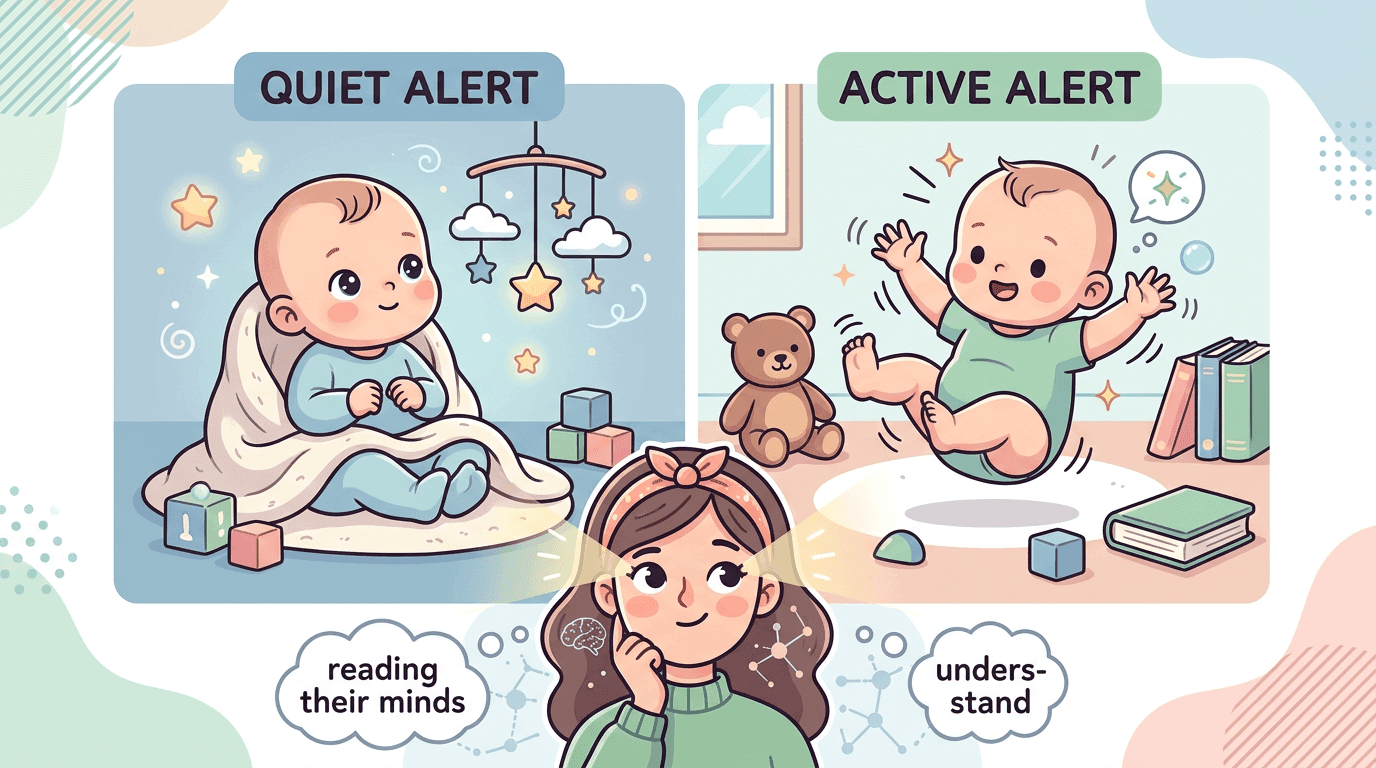
| 4. Quiet Alert | The optimal state for learning and interaction; the baby is calm, attentive, and receptive | Eyes open and bright; body relatively still; face attentive and focused |
| 5. Active Alert | A state of increased motor activity and sensitivity; the baby is more easily overstimulated | Eyes open; considerable body movement; may fuss; sensitive to stimulation |
| 6. Crying | A state of high arousal and distress | Intense motor activity; crying; skin color may change |
These states are not random — they are organized, and they cycle in predictable patterns. The NBAS examines several critical questions about how an individual baby moves through them.
First, how smoothly does the baby transition between states? Some babies move gradually from deep sleep through drowsiness to quiet alertness — a gentle ascent, like climbing a gradual hill. Others seem to leap from deep sleep directly to crying, bypassing the intermediate states entirely — more like falling off a cliff. The smoothness of these transitions is a window into neurological maturity and temperamental disposition.
Second, how long can the baby sustain the quiet alert state? This question matters enormously, because the quiet alert state is what developmental psychologists sometimes call the “learning window.” It is the period during which the baby is most receptive to faces, voices, and social interaction — the moments when the deepest bonding occurs and the most significant early learning takes place. Some newborns can maintain quiet alertness for extended periods, absorbing the world with calm, wide-eyed attention. Others can sustain it only briefly before tipping into overstimulation. Neither is wrong, but the difference shapes how caregivers should time their interactions.
Third, and perhaps most importantly, how effectively can the baby self-soothe? Self-soothing is the newborn’s ability to regulate their own distress without external help. A baby who brings a hand to their mouth and begins sucking when agitated is self-soothing. A baby who turns their head to a comfortable position and settles is self-soothing. A baby who fixates on a visual point in the environment and uses that focus to calm down is self-soothing. These are not trivial behaviors — they are the earliest manifestations of emotional regulation, the foundational skill upon which virtually all later coping capacity is built.
Research published in the Journal of Developmental & Behavioral Pediatrics has linked strong state regulation in newborns to better sleep consolidation, more successful feeding, and lower rates of colic in the first three months of life.
Domain 3: Motor System and Reflexes — The Body as Communicator
The third domain of the NBAS shifts attention from the baby’s internal world to the physical infrastructure through which that inner world is expressed. It assesses muscle tone, movement quality, and the suite of involuntary responses known as primitive reflexes — and in doing so, it reveals how the baby’s body is organized for both survival and connection.
Muscle tone refers to the baseline tension in a baby’s muscles when they are at rest. It is distinct from muscle strength. A helpful analogy: if muscles are guitar strings, then tone is how tightly those strings are tuned when no one is playing them. Healthy newborn tone occupies a middle range — the baby’s limbs have a gentle, springy resistance when moved, neither floppy and limp (which clinicians call hypotonia) nor rigidly stiff (hypertonia). The NBAS examiner evaluates tone by gently manipulating the baby’s arms and legs, noting the quality and consistency of the resistance they encounter.
Motor maturity describes the overall quality of the baby’s movements. Are they smooth and fluid, with a kind of organic grace? Or are they jerky, tremulous, and fragmented? Movement quality reflects the maturation of the motor pathways connecting the brain to the muscles, and it offers subtle but important information about neurological development.
Primitive reflexes are the involuntary, automatic motor responses that all healthy newborns exhibit. They are governed by the brainstem and spinal cord — the oldest, most fundamental parts of the nervous system — and they serve both survival functions and diagnostic purposes. Among the most important:
- The rooting reflex: When something gently touches the baby’s cheek, the baby turns their head toward the touch and opens their mouth. This reflex is the foundation of breastfeeding — it is how the baby finds the nipple.
- The palmar grasp reflex: When an object is placed in the baby’s palm, the baby’s fingers close around it with surprising strength. This reflex is so powerful that many newborns can briefly support their own body weight when grasping an adult’s fingers — a vestige, evolutionary biologists believe, of the infant primate’s need to cling to its mother.
- The Moro (startle) reflex: When the baby experiences a sudden sensation of falling or a loud noise, the arms fling outward and then draw inward in an embracing motion. The Moro reflex is an alarm system — a rapid, whole-body response to potential danger that, in an evolutionary context, would have prompted the baby to cling to a caregiver.
- The Babinski reflex: When the sole of the baby’s foot is stroked, the toes fan outward. In adults, the toes curl inward — the reversal occurs as the brain’s cortex matures and takes over motor control from the brainstem, typically in the first one to two years.
These reflexes are not merely evolutionary curiosities or neurological party tricks. They are functional assessments of brain integrity. Their presence, strength, symmetry (are they the same on both sides of the body?), and eventual disappearance on schedule provide clinicians with critical information about the health of the developing nervous system. The NBAS documents each reflex with care, noting both its quality and any deviations from expected patterns.
For parents, understanding reflexes also helps demystify many of the seemingly random things newborns do. The baby who startles violently at a car horn is not traumatized — the Moro reflex is doing exactly what it was designed to do. The baby who grasps a parent’s finger with unexpected force is not choosing to hold on — but the emotional power of that involuntary grip is no less real for being automatic.
Domain 4: Social-Interactive Behavior — The Innate Drive to Connect
The fourth and final domain of the NBAS is, for many parents and clinicians alike, the most astonishing. It assesses a newborn’s capacity for social engagement — the ability and apparent desire to interact with other human beings — and what it reveals challenges assumptions that persist in popular culture to this day.
During this portion of the assessment, the examiner evaluates whether the baby will visually track a moving human face — following it with the eyes as it moves slowly from one side to the other. The examiner speaks quietly and notes whether the baby orients toward the voice, stilling their body and turning their head toward the sound. The baby’s response to animate stimuli (a face, a voice) is compared with their response to inanimate ones (a red ball, a rattle), and in the vast majority of cases, the preference is unmistakable: newborns prefer people.
The neuroscientific basis for these capacities is now well established. In a landmark 1977 study published in the journal Science, developmental psychologists Andrew Meltzoff and M. Keith Moore demonstrated that newborns as young as 42 minutes old could imitate facial expressions — sticking out their tongues in response to an adult doing the same. This finding was initially met with skepticism, but it has since been replicated and extended by researchers worldwide. More recent work using brain imaging technology has shown that newborns possess specialized neural circuitry for processing faces and voices — circuitry that is active from birth, not developed through experience.
Other research has demonstrated that newborns preferentially orient to their mother’s voice over that of a stranger — a preference that develops in utero, as the fetus listens to the mother’s speech through the wall of the womb during the final trimester. Studies using heart rate monitoring have shown that newborns’ heart rates decelerate (a sign of focused attention) when they hear their mother’s voice, and accelerate (a sign of arousal or surprise) when they hear an unfamiliar voice.
What the NBAS captures, in its social-interactive domain, is the behavioral expression of all this underlying neuroscience. And when a skilled examiner demonstrates these capacities to parents in real time — showing a mother that her three-day-old baby turns preferentially toward her voice, or showing a father that his newborn tracks his face with focused, deliberate attention — the effect is routinely described as transformative. The invisible wall between “fragile medical patient” and “person I can communicate with” dissolves in an instant.
This is not sentimentality. It is the observable beginning of what developmental psychologists call the “serve and return” pattern — the fundamental rhythm of human communication in which one partner initiates (the baby cries, or stares, or coos) and the other responds (the parent picks up, or makes eye contact, or talks back). Research conducted by the Center on the Developing Child at Harvard University has demonstrated that the quality and frequency of these serve-and-return interactions in the first months and years of life are among the strongest predictors of healthy brain development, emotional regulation, and cognitive functioning throughout childhood and beyond.
The NBAS, by making these interactions visible and interpretable from the very first days, gives families a head start on a process that will shape their child’s development for decades to come.
How the NBAS Assessment Actually Works
For parents who may be encountering the idea of a newborn behavioral assessment for the first time, understanding what actually happens during an NBAS session can help demystify the process and reduce any apprehension.
The Setting and Preparation
The assessment is conducted in a quiet, dimly lit room — an environment designed to minimize distracting stimulation and allow the baby’s responses to the examiner’s specific stimuli to be clearly observed. The ideal room temperature is warm enough that the baby can be partially undressed without becoming cold, since some items require the examiner to observe the baby’s body movements and muscle tone directly.
The baby is typically placed on a firm, comfortable surface — a padded examination table or a blanket on a bed. Parents are almost always present and encouraged to sit close, where they can watch everything the examiner does.
Critically, the assessment begins with the baby in a sleep state — preferably deep sleep. This is not arbitrary. Starting from sleep allows the examiner to assess habituation (the baby’s ability to filter out repeated stimuli while sleeping) before the baby is aroused, and it also permits the examiner to observe the full sequence of state transitions as the baby moves naturally from sleep toward wakefulness.
The Flow of the Assessment
The NBAS is not administered as a rigid checklist. It is a dynamic interaction, and skilled examiners adjust their approach in real time based on the baby’s responses. That said, the general flow typically follows this sequence:
Phase 1 — Habituation (baby asleep): The examiner presents repeated light and sound stimuli to the sleeping baby, noting how quickly and completely the baby’s responses diminish.
Phase 2 — Gentle arousal and state observation: The examiner gradually introduces stimuli that begin to rouse the baby, observing how the baby transitions through drowsiness toward alertness. The smoothness of these transitions and the baby’s ability to maintain organized states are carefully noted.
Phase 3 — Social interaction (baby in quiet alert state): When the baby reaches a state of quiet alertness, the examiner engages the baby with face-to-face interaction, voice, and visual tracking stimuli. This is often the most emotionally compelling portion of the assessment for parents, as they watch their baby demonstrate sophisticated social capacities.
Phase 4 — Motor and reflex assessment: The examiner evaluates muscle tone, movement quality, and the suite of primitive reflexes described above. This involves gentle handling — lifting, supporting, and positioning the baby in various postures.
Phase 5 — Stress and consolability: Toward the end of the assessment, the examiner observes how the baby responds to the cumulative stress of the session. How does the baby signal distress? How effectively can they self-soothe? If consoling is needed, what strategies work — being held, swaddled, spoken to, offered a pacifier?
Throughout the entire process, the examiner narrates what is being observed, translating clinical observations into language that parents can understand and apply. “Do you see how she turned toward your voice just then? She already knows the difference between you and everyone else in this room.” These moments of guided observation are, for many families, among the most memorable experiences of the newborn period.
After the Assessment
The session concludes with a conversation — not a report card. The examiner discusses the baby’s individual profile: their particular strengths, their sensitivities, and practical strategies for supporting their specific needs in the weeks ahead. A baby who habituated slowly might prompt a conversation about creating quieter sleep environments. A baby who showed exceptional social responsiveness might prompt encouragement to maximize face-to-face interaction during quiet alert periods. A baby who demonstrated limited self-soothing might prompt a discussion of swaddling techniques or gentle soothing strategies.
The entire process takes 20 to 30 minutes, is entirely non-invasive, involves no pain of any kind, and is, in the assessment of most observers, genuinely enjoyable for the baby during many portions of the session.
The NBAS as a Relationship-Building Tool
Perhaps the most underappreciated — and most transformative — dimension of the NBAS is what it does not merely for clinical assessment but for the parent-infant relationship itself.
How Observation Becomes Intervention
When T. Berry Brazelton and his colleagues began training clinicians to administer the NBAS with families present, they noticed something they had not anticipated: parents who observed the assessment were measurably more attuned to their babies in the weeks and months that followed. They recognized their baby’s cues more quickly. They responded to distress more effectively. They reported feeling more confident in their ability to understand and care for their child.
These effects were not marginal. A growing body of peer-reviewed research, including studies published in the Infant Mental Health Journal and the Journal of Pediatric Psychology, has documented that NBAS-based interventions — even as brief as a single session — produce statistically significant improvements in maternal sensitivity, parental self-efficacy, and the quality of parent-infant interaction at three months postpartum. In populations at elevated risk for parenting difficulties (including adolescent parents, parents experiencing postpartum depression, and parents of premature infants), these effects are particularly pronounced.
This observation gave rise to a formalized adaptation of the NBAS called the Newborn Behavioral Observations (NBO) system, developed by Dr. Kevin Nugent and colleagues at the Brazelton Institute. The NBO is specifically designed as a relational tool — a structured framework for clinicians to sit with families and jointly explore the question, “What is this particular baby telling us?”
A Deeper Look
The significance of this relational dimension becomes clearer against the backdrop of a global mental health challenge that remains insufficiently addressed.
According to the World Health Organization, perinatal mood disorders — including postpartum depression and anxiety — affect approximately 10 to 15 percent of new mothers worldwide, with substantially higher rates in low-income settings and among parents lacking social support. These conditions do not only affect the parent; a substantial body of research has demonstrated that maternal depression in the postpartum period is associated with disruptions in early parent-infant interaction, which in turn are linked to poorer cognitive, emotional, and social outcomes in children extending well into childhood and adolescence.
Any intervention that strengthens parental confidence, reduces anxiety, and enhances the quality of early interaction is, therefore, not a luxury — it is a preventive public health measure. The NBAS and NBO represent precisely this kind of intervention: low-cost, brief, non-pharmacological, and grounded in the simple but powerful act of helping parents see what their baby is already capable of doing.
In standard medical culture, the dynamic is typically expert-observes-patient-while-family-waits. The NBAS inverts this relationship entirely. The parent is positioned as a co-investigator — someone who brings irreplaceable, firsthand knowledge of their specific baby that no clinician, however skilled, can possess. The assessment becomes a dialogue, not a monologue. And in the process, something subtle but profoundly important shifts: the parent begins to experience themselves not as a passive recipient of medical expertise, but as the primary authority on their own child.
Tailoring the World to the Baby’s Neurological Fingerprint
One of the most practically valuable concepts to emerge from NBAS research is what developmental psychologists call “goodness of fit” — the degree of alignment between a child’s innate temperamental profile and the environment their caregivers create around them.
Every baby arrives with what might be thought of as a neurological fingerprint — a unique combination of sensory thresholds, regulatory capacities, and social orientation that determines how they will experience and respond to their environment. The NBAS makes this fingerprint visible.
A baby who demonstrates strong habituation, smooth state transitions, and effective self-soothing has a nervous system that is, metaphorically, well-insulated. This baby can generally tolerate a normally busy household — the sound of older siblings, the clatter of a kitchen, the background hum of daily life — without becoming overwhelmed. The environment does not need to be drastically modified to accommodate this baby’s needs.
A baby who habituates slowly, transitions abruptly between states, and relies heavily on external soothing has a nervous system that is more permeable — more open to environmental input, more easily activated, more sensitive to change. This baby is not “difficult.” This baby is not “high-maintenance.” This baby has a different neurological profile, one that responds optimally to calmer, more predictable environments: dimmer lighting, softer sounds, slower movements, more deliberate transitions, and more consistent routines.
The distinction matters enormously, because a mismatch between temperament and environment — a sensitive baby in a chaotic household, or a robust baby in an excessively restrictive one — can produce months of unnecessary distress for both infant and caregiver. When parents understand their baby’s specific profile, they can make informed adjustments that dramatically improve the quality of daily life for everyone involved. This is not about creating a “perfect” environment. It is about creating a fitting one.
Bringing NBAS Principles Home: Practical Applications for Everyday Caregiving
A formal NBAS assessment requires a trained examiner and a clinical setting. But the principles that underlie it — careful observation, respect for the baby’s signals, and attunement to individual differences — are available to every caregiver, every day, in every interaction.
The Pause and Observe Principle
One of the most counterintuitive lessons of the NBAS is this: sometimes the most helpful thing a caregiver can do is nothing at all — at least for a few seconds.
When a baby stirs in the crib, or makes a small sound, or briefly fusses, the natural impulse is to intervene immediately — to pick up, to soothe, to feed. But a brief pause, even ten to fifteen seconds, can reveal something important: the baby may be in the process of self-regulating. Many babies who appear to be waking are actually cycling between sleep states — passing through a brief period of light sleep or drowsy activity before settling back into deeper sleep. A baby who brings a hand to their mouth and begins sucking may be self-soothing through a moment of minor distress. A baby who shifts position and then stills may be reorganizing for a new sleep cycle.
Intervening during these moments, while well-intentioned, can actually interrupt the baby’s own regulatory process — preventing them from practicing and developing the very skills that will eventually enable longer, more consolidated sleep. The pause is not neglect. It is respect for the baby’s competence.
Honoring the Quiet Alert State
Of all the behavioral states described in neonatal science, the quiet alert state is the one that deserves the most deliberate attention from caregivers — because it is the moment when the richest interaction is possible.
During quiet alertness, the baby’s eyes are open and bright, the body is relatively still, and the face is attentive and focused. The baby is, in the language of neuroscience, in an optimal state of arousal for processing information — alert enough to take in stimulation, but calm enough to organize it meaningfully. This is the window during which a baby is most likely to track a face, respond to a voice, and engage in the early serve-and-return exchanges that build the foundation for attachment and language development.
Recognizing this state, and prioritizing interaction during it — rather than trying to engage a drowsy baby or an overstimulated one — maximizes the quality and impact of every encounter. It is the difference between talking to someone who is fully present and talking to someone who is half-asleep or overwhelmed. The content of the conversation may be the same, but the reception is fundamentally different.
Learning the Baby’s Stress Vocabulary
Newborns communicate overwhelm through a consistent repertoire of behavioral signals that, once recognized, are as legible as words:
- Gaze aversion — looking away or closing the eyes
- Yawning outside of tiredness
- Sneezing or hiccupping without apparent cause
- Finger splaying — spreading the fingers wide
- Back arching — pushing away from stimulation
These are the baby’s equivalent of saying, “I need a moment.” Recognizing and respecting these signals, rather than pressing through with more stimulation, teaches babies from the earliest days that their communication is heard and honored — and builds the foundation for what attachment researchers identify as secure attachment.
Calibrating Stimulation to the Individual
There is no universal answer to how much stimulation a newborn needs. The NBAS framework encourages caregivers to observe their specific baby’s responses and adjust accordingly. Some babies flourish with animated conversation and colorful mobiles. Others are happiest with a quiet room, a warm hold, and the steady rhythm of a heartbeat. The goal is not to follow a formula but to develop, over time, the finely tuned attunement that researchers consider the hallmark of responsive caregiving.
Conclusion
The Neonatal Behavioral Assessment Scale is, at its deepest level, an act of respect.
It proceeds from the conviction that every newborn — regardless of gestational age, birth weight, or circumstance — arrives in the world as a fully realized individual with a unique neurological fingerprint, a suite of communicative capacities, and a profound readiness for human connection. The scale’s function is not to rank or sort or diagnose. It is to translate.
In a medical culture still too often organized around what is wrong, the NBAS insists on asking what is present — what capacities, what preferences, what personality is already in the room. The science is unambiguous: early attunement between parent and infant shapes the developing architecture of the brain, laying the neural foundations for emotional regulation, language acquisition, cognitive development, and relational security throughout the lifespan.
Understanding the NBAS is, therefore, more than an academic exercise. It is an invitation — to look more closely, listen more carefully, and recognize that the most significant conversation a new parent will ever have may be one that requires no words at all.
Half a century after T. Berry Brazelton first insisted that medicine look at newborns differently, his core insight remains as radical and as necessary as ever: the baby is already talking. The question is whether the adults in the room are ready to listen.
Sources & Further Reading:
- Brazelton Institute, Boston Children’s Hospital / Harvard Medical School — The definitive source on the NBAS and NBO system
- Center on the Developing Child, Harvard University — Research on serve-and-return interactions and their role in early brain development
- American Academy of Pediatrics (AAP) — Clinical guidance on newborn developmental assessment and surveillance
- World Health Organization (WHO) — Global data on perinatal mental health and early parent-infant relationships
- Meltzoff, A.N. & Moore, M.K. (1977). “Imitation of Facial and Manual Gestures by Human Neonates.” Science, 198(4312), 75–78.
- Nugent, J.K., et al. (2007). Understanding Newborn Behavior and Early Relationships: The Newborn Behavioral Observations (NBO) System Handbook
October 25, 2026
October 25, 2026

October 25, 2026

October 25, 2026