
KOAIV · TODDLER & PRESCHOOL
Potty training.
Small steps.
Growing confidence.
Find your starting point, make the next step feel manageable, and support your child at their own pace.
Free guides, practical scripts, and a caregiver handoff you can use today.
A LITTLE LESS PRESSURE
Start with connection.
You do not need to solve everything today.
01 Notice where you are.
02 Choose one small action.
03 Make room to practise.
Trust The Becoming.
Where are you right now?
Choose the situation that sounds most like your family.
01 · GETTING READY
“Is my child ready?”
Explore what to notice before you begin.
02 · FIRST STEPS
“We’re ready to try.”
Make the bathroom comfortable and the routine simple.
03 · A BUMP IN THE ROAD
“They’re refusing or having accidents.”
Find a calmer response and know when to get support.
04 · NIGHTS & NAPS
“Daytime is easier than nighttime.”
Explore why staying dry during sleep can take a different path.
The journey at a glance.
Use this as a guide, not a timetable. You can pause, revisit a step, or ask for support along the way.
01 · NOTICE
Find your starting point
Observe your child’s skills and comfort, and note the questions you want help with.
02 · PREPARE
Make the space familiar
Set up a comfortable bathroom and choose simple words your caregivers can share.
03 · PRACTISE
Keep support consistent
Use familiar language, help with cleanup, and adapt together when something feels difficult.
04 · ADAPT
Support the next transition
Share what works with nursery or another caregiver, and give help where it is still needed.
One small thing to try today.
Start with a comfortable setup and a calm invitation.
01
Make it comfortable
Place the potty within easy reach. With a toilet seat, provide stable foot support.
02
Offer an invitation
Try: “The potty is here when you need it. Would you like me nearby?”
03
Keep the response kind
Acknowledge trying. If an accident happens, help your child get comfortable again.
Words you can borrow.
Keep these close. Adjust them to your child’s language and communication needs.
WHEN THEY SAY NO
“You can tell me when you’re ready.”
Offer a calm pause and stay available.
AFTER AN ACCIDENT
“Your clothes are wet. Let’s get comfortable.”
Keep cleanup matter-of-fact and supportive.
AFTER A TRY
“You listened to your body.”
Notice participation without making a result the price of praise.
A simple caregiver handoff
Copy and complete this free template for nursery or another caregiver:
- The words we use: ______
- What helps my child feel comfortable: ______
- How they tell us they need to go: ______
- Our response to an accident: ______
- Clothes and supplies we provide: ______
- How we share updates: ______
- Any pain or bowel concerns to discuss: ______
A little more guidance, when you need it.
The starting points above cover readiness, setbacks, and nights. These free reads help with your space, your approach, and your own confidence.
ENVIRONMENT
Set up a calmer bathroom
Practical ideas for a more comfortable space.
PERSPECTIVE
Rethink “training”
A gentler way to approach learning a new skill.
FOR YOU
Your worth is not a milestone
Support for the parent behind the process.
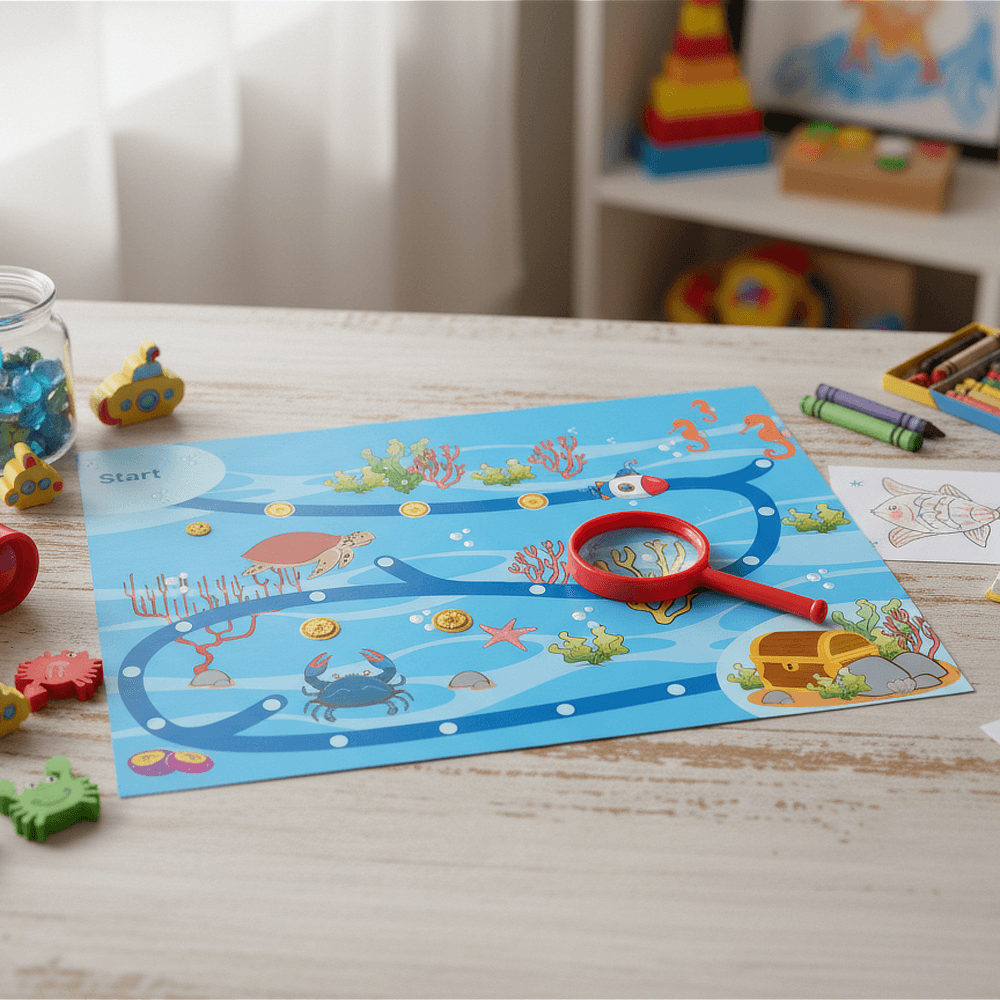
OPTIONAL · PRINTABLE TOOLKIT
Turn the routine into a little adventure.
The Ocean Potty Quest gives your family a playful, visual way to approach potty time.
- A 20-step ocean adventure map
- Printable characters and stickers
- An Ocean Explorer certificate
- A parent guide with setup instructions and scripts
Digital download · 4 PDFs · A4 / US Letter
Use at your child’s pace. Results and timelines vary.
You can use all the free guidance above without buying the kit.
When to ask for extra help.
This hub offers general educational support, not a diagnosis or individual treatment plan.
If your child has hard or painful stools, withholding, bleeding with poo, or repeated soiling, speak to a healthcare professional. Constipation can contribute to accidents; seek help early instead of increasing pressure.
For persistent worries, distress, or additional developmental needs, ask your child’s clinician for an individual plan.
Source: NHS: Constipation in children. For specialist family support, visit ERIC, the children’s bowel and bladder charity.