Flavor-Training-During-Pregnancy
Flavor Training During Pregnancy: How to Raise an Adventurous Eater Before Birth
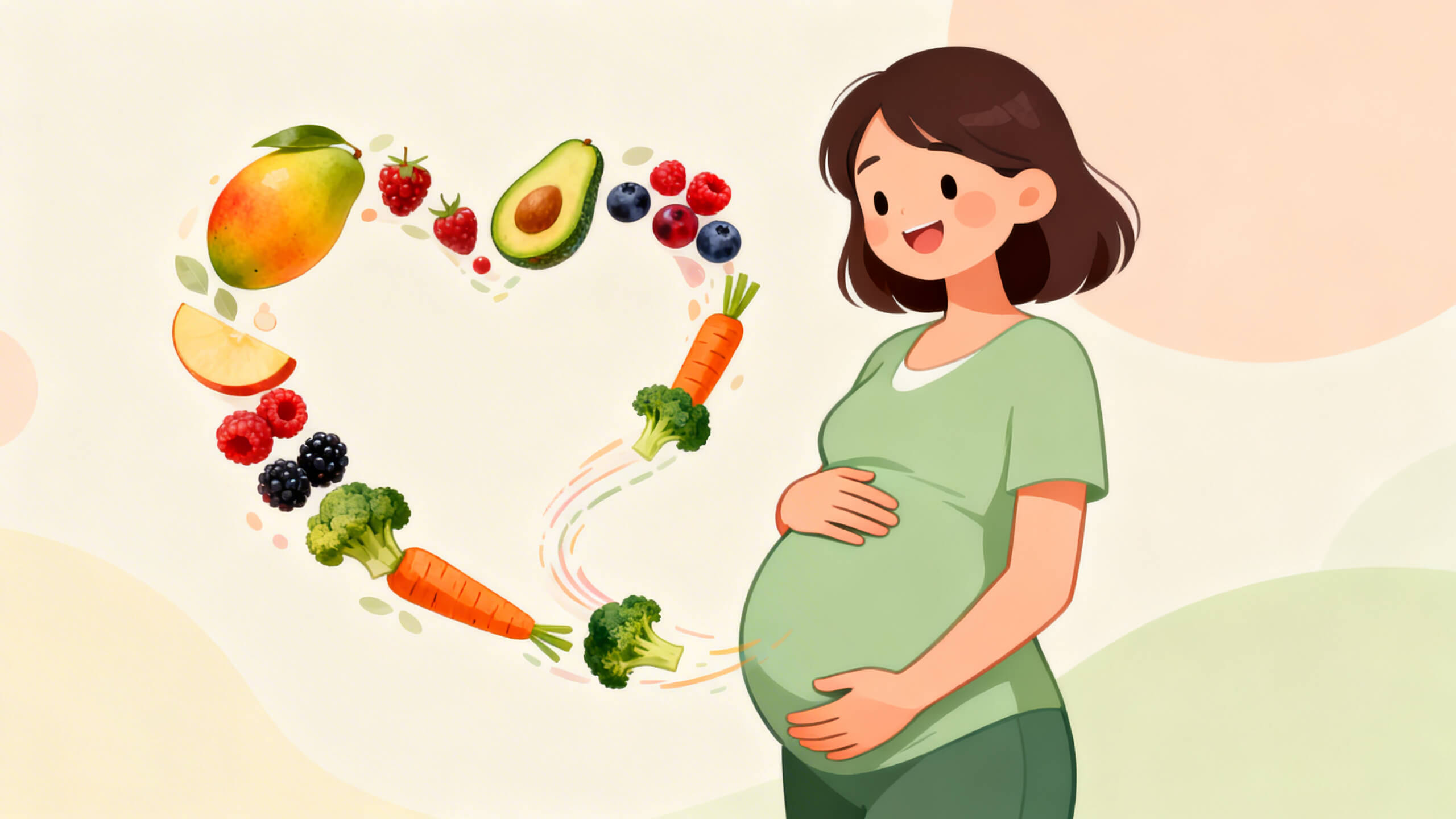
Flavor training during pregnancy—achieved by simply eating a diverse, aromatic diet—introduces your developing baby to complex tastes through the amniotic fluid, giving them a biological head start toward becoming an adventurous eater long before their first bite of solid food.
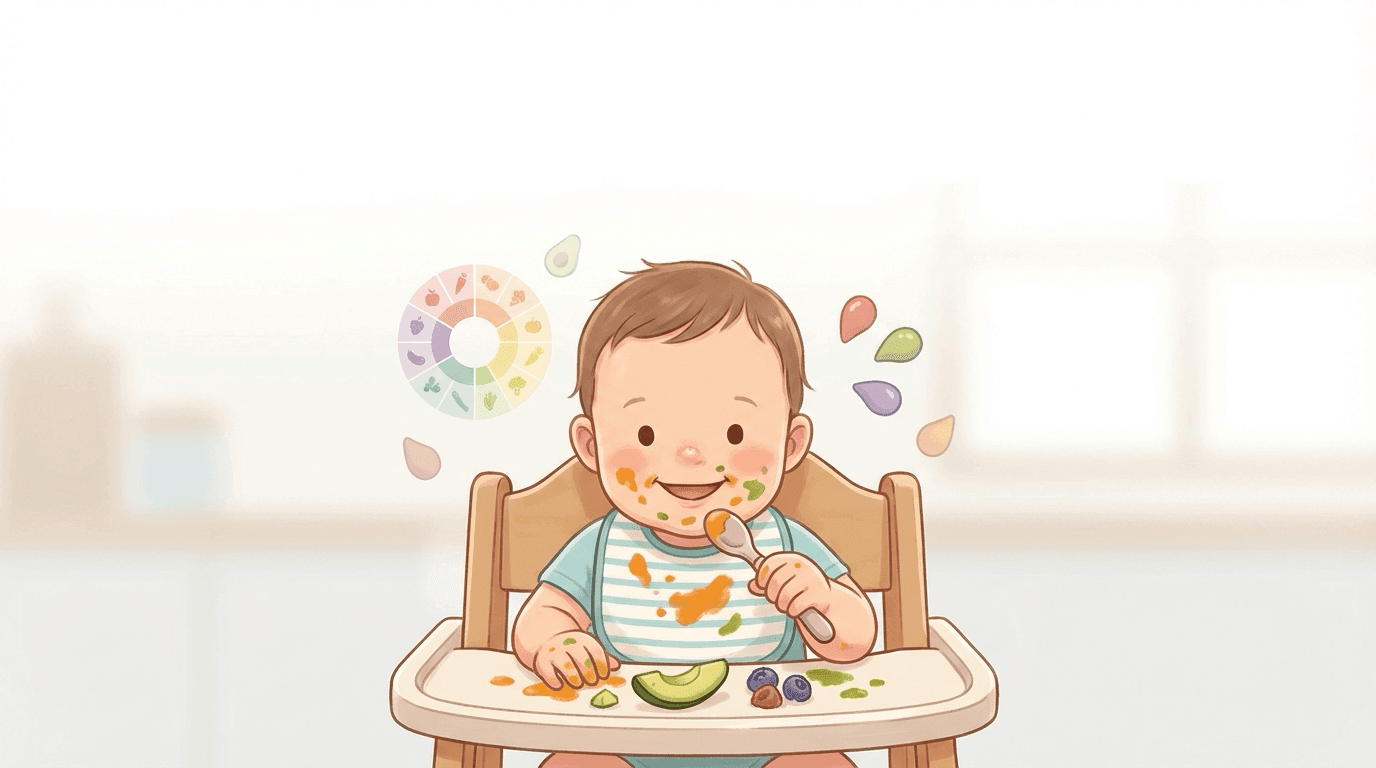
There is a scene that plays out in nearly every household with a six-month-old. The high chair is wiped clean. A tiny silicone spoon gleams under the kitchen light. A parent, brimming with optimism and armed with a small jar of mashed peas, leans in with a bright voice: “Open wide!” The baby obliges — and then, with the theatrical horror of someone who has just been betrayed, scrunches their face, pushes the green mush out with their tongue, and howls. The parent, bewildered, scrapes the pea debris from the baby’s chin and quietly wonders: Where did I go wrong?
The answer, of course, is that nothing went wrong in that moment. But something might have been missed in the months — and trimesters — that preceded it.
Conventional parenting wisdom has long placed the beginning of a child’s food journey at around six months of age, when pediatricians give the green light for solid foods. Everything before that milestone — the pregnancy, the early newborn period — is framed as nutritional background noise, relevant only in terms of the mother’s health. The baby’s own palate? A blank slate, waiting for its first spoonful.
Except it isn’t blank. Not even close.
Over the past two decades, a quiet revolution in developmental science has overturned this assumption with evidence that is as elegant as it is startling. A baby’s palate begins forming not at six months, not at birth, but deep inside the womb — as early as the first trimester. By the time that infamous spoonful of peas arrives, the infant has already been “eating” for months, sampling a complex, ever-changing menu delivered through the one medium available: amniotic fluid, flavored by every meal the mother has consumed. Scientists call this process prenatal flavor exposure. In plain language, it is flavor training during pregnancy — and it may be the single most overlooked tool in the fight against picky eating.
The Biology — When Do Babies Develop Taste Buds in the Womb?
What Are Taste Buds, and How Do They Work?
Before diving into fetal development, it helps to understand what taste buds actually are — because the term, while familiar, is often poorly understood.
A taste bud is not a single cell. It is a tiny cluster of 50 to 100 specialized sensory cellsbundled together in a structure shaped somewhat like a garlic bulb, embedded primarily in the surface of the tongue and the roof of the mouth. Each cluster contains receptor cells tuned to detect one or more of the five basic tastes: sweet, salty, sour, bitter, and umami (the savory, brothy taste found in foods like parmesan cheese, mushrooms, and soy sauce). When a molecule from food dissolves in saliva and contacts the receptor at the top of a taste bud, it triggers an electrical signal that travels along a nerve to the brain, where it is interpreted as flavor.
Think of each taste bud as a tiny antenna tuned to a specific frequency. A single tongue contains roughly 10,000 of these antennae in an adult, each one listening for chemical signals from food. In a fetus, these antennae begin to assemble remarkably early — and they don’t wait for birth to start receiving signals.
The Developmental Timeline
The emergence of taste in the womb follows a precise biological schedule. Understanding this timeline is essential, because it reveals exactly when the window for flavor training during pregnancy opens — and when it is most impactful.
Fetal Taste Development Timeline
Gestational Age Developmental Milestone ~8 weeks Taste bud structures begin forming on the tongue surface ~12 weeks Fetus begins practicing swallowing movements, ingesting small amounts of amniotic fluid ~13–16 weeks Taste buds become functional — capable of detecting dissolved flavor compounds ~20 weeks Olfactory (smell) receptors in the nasal passage begin forming, adding a second sensory dimension to flavor perception ~28–40 weeks (3rd trimester) Fetus swallows 500 ml–1 litre of amniotic fluid daily; peak period for flavor exposure
Two elements of this timeline deserve emphasis for parents encountering this information for the first time.
First, taste buds are functional by roughly the end of the first trimester. By the time most parents have had their first detailed ultrasound and begun telling friends and family the news, their baby already possesses a working gustatory system — a system that is actively receiving chemical information from its environment.
Second, the sheer volume of fluid consumed in the third trimester is staggering. A litre a day is the equivalent of drinking two full pint glasses of flavored liquid — every single day, for twelve weeks. This is not incidental sipping. It is sustained, high-volume exposure, and it provides the biological foundation on which prenatal flavor training rests.
How Flavor Reaches the Fetus
This is where the mechanism becomes both fascinating and intuitive, once explained.
When an expectant mother eats a meal — a curry, a salad, a bowl of garlic-scented pasta — her digestive system breaks that food down into its molecular components. Nutrients are absorbed into the bloodstream through the walls of the small intestine. Among those molecules are volatile aromatic compounds: the specific chemical signatures that give garlic its pungency, vanilla its sweetness, cumin its warmth, and kale its bitterness.
These aromatic molecules travel through the mother’s bloodstream, cross the placental barrier (the membrane separating maternal and fetal circulation), and dissolve into the amniotic fluid — the warm, protective liquid that surrounds the fetus throughout pregnancy. The amniotic fluid is not static; it is continuously produced, absorbed, and recycled. And crucially, it is flavored — its chemical composition shifts in response to what the mother eats.
An analogy makes this clearer. Imagine a swimming pool. Normally, pool water is chemically neutral. But if someone poured a bottle of vanilla extract into that pool, a swimmer would be able to taste it. The molecules would disperse through the water, contact the swimmer’s tongue, and register as flavor. The womb works on the same principle, at a far more sophisticated scale. Every meal the mother eats is, in effect, adding a few drops of flavor to the pool the baby is swimming in — and swallowing from.
This is why the phrase “eating for two” carries a meaning far beyond calorie counting. An expectant parent is not just providing energy and building blocks for fetal growth. Every bite is simultaneously composing a sensory message that the baby will receive, interpret, and — as research has shown — remember.
The Science — Proof That Prenatal Flavor Training Works
Understanding the biology is one thing. Knowing that it translates into real-world behavioral outcomes — that an unborn baby’s flavor exposure genuinely shapes what they will accept and enjoy months or years later — requires evidence. Fortunately, the evidence is both rigorous and, at times, delightfully vivid.
The Carrot Juice Experiment: Where It All Began
The study that opened the scientific world’s eyes to prenatal flavor learning was conducted by Dr. Julie Mennella, a biopsychologist at the Monell Chemical Senses Center in Philadelphia — one of the world’s leading institutions for research on taste and smell. Published in the journal Pediatrics in 2001, it remains a cornerstone of the field.
The design was deceptively simple. Mennella recruited pregnant women in their last trimester and divided them into three groups:
- Group A drank carrot juice regularly during the final weeks of pregnancy but not while breastfeeding.
- Group B avoided carrot juice during pregnancy but drank it while breastfeeding.
- Group C (the control group) consumed no carrot juice during either period.
When the infants were old enough to begin eating solid foods, researchers offered all three groups cereal mixed with carrot juice — and carefully recorded their reactions using standardized facial coding systems (the same systems used in emotion research to objectively measure human expressions, removing subjective guesswork).
The results were unambiguous. Infants in Group A — those exposed to carrot flavor in utero — showed significantly fewer negative facial expressions, ate more of the carrot-flavored cereal, and appeared to genuinely enjoy it, compared to infants in the control group. Group B (breastfeeding exposure) showed similar benefits, though slightly less pronounced.
The implication was profound: a flavor encountered in the womb was recognized and preferred months later at the weaning table. The baby didn’t just tolerate the carrot; the baby remembered it, in the most primal, pre-verbal sense of the word.
The Kale and Carrot Ultrasound Study: Watching a Fetus React in Real Time
If the Monell study provided the statistical evidence, a 2022 study from Aston University in the United Kingdom provided the visual proof — and it made international headlines.
Using 4D ultrasound technology — a type of advanced imaging that captures three-dimensional footage of the fetus in motion, much like watching a live video rather than a still photograph — researchers observed fetal facial expressions after mothers consumed capsules containing either carrot or kale flavoring. (Capsules were used instead of whole foods to control the exact dose and timing of flavor delivery.)
The footage was extraordinary. When exposed to carrot flavor through the amniotic fluid, fetuses displayed what the research team formally classified as a “laughter-face”: a relaxed expression with slightly upturned lip corners, resembling the earliest precursor of a smile. When exposed to kale — a strongly bitter vegetable — fetuses exhibited a “cry-face”: furrowed brows, compressed lips, and the unmistakable contortion of displeasure.
Several important nuances emerge from this study that are worth unpacking.
First, the fetus is not just passively absorbing flavor — it is actively responding to it.The differentiated facial expressions prove that the fetal brain is processing taste information and generating distinct emotional responses, even before birth. Taste, for an unborn baby, is not a vague, undifferentiated sensation. It is specific, evaluative, and surprisingly expressive.
Second, and more practically relevant for parents, the study reinforced a principle long understood in flavor science: repeated exposure reduces rejection. In adult life, this principle is familiar to anyone who has acquired a taste for black coffee, blue cheese, or olives — foods that are initially unpleasant but become enjoyable through repetition. The same neurological mechanism appears to operate in the womb. Repeated prenatal exposure to challenging flavors like kale may begin the slow, incremental work of desensitizing the fetal palate to bitterness, making acceptance at the weaning stage more likely (though, as any experienced parent will attest, never guaranteed — more on this later).
A Note on Terminology: What Does “Flavor” Actually Mean?
It is worth pausing here to clarify a distinction that even many adults don’t fully appreciate, because it matters for understanding how prenatal flavor training works.
Taste and flavor are not the same thing.
Taste refers strictly to the five basic sensations detected by taste buds on the tongue: sweet, salty, sour, bitter, and umami. It is a relatively blunt instrument — capable of sorting foods into broad chemical categories, but not of distinguishing, say, a strawberry from a raspberry.
Flavor is far richer. It is the combination of taste plus smell (technically called olfaction) plus other sensory inputs like temperature, texture, and even the chemical “burn” of spice. When people say they can “taste” the difference between basil and mint, what they are really doing is smelling those herbs through the back of the throat (a process called retronasal olfaction) while simultaneously tasting their basic chemical profile on the tongue.
Why does this matter for prenatal flavor training? Because a fetus develops olfactory (smell) receptors around week 20 of pregnancy, adding a second sensory channel to the taste buds that came online earlier. By the third trimester, when fluid consumption is at its peak, the fetus is experiencing something closer to true flavor — not just taste — from the amniotic fluid. It is detecting the aromatic signature of garlic, the specific herbaceous quality of basil, the warm complexity of cinnamon. These are not abstract chemical inputs. They are the same molecular signatures the child will encounter again, months later, at the family dinner table.
Why Does This System Exist? The Evolutionary Explanation
A reasonable reader might wonder: Why would evolution build a system that teaches babies about food before they can eat?
The answer lies in the fundamental challenge every newborn organism faces: figuring out what is safe to consume. For most of human history — the hundreds of thousands of years before supermarkets and food safety regulations — this was a life-or-death problem. The wrong berry, the wrong root, the wrong mushroom could be fatal. Young children, who explore the world by putting everything in their mouths, were especially vulnerable.
Nature’s solution was elegant: use the mother as a proxy. If the mother eats a food and survives — which is confirmed by the mere fact of continued pregnancy — that food’s chemical signature is transmitted to the fetus through the amniotic fluid. The fetus’s brain registers that signature and encodes it as “familiar.” Familiar, in an evolutionary context, means safe. When the child later encounters that same flavor in solid food, the brain already has a reference point: I’ve encountered this before. Mother ate this. It did not cause harm. I can accept it.
This is not merely a theoretical framework. It explains observable behavior across human cultures. Researchers have noted that infants born to mothers who consumed strongly flavored ethnic cuisines during pregnancy — spice-heavy Indian food, fermented Korean dishes, aromatic Thai preparations — tend to accept those same cuisines during weaning with notably less resistance than infants introduced to those flavors for the very first time at six months. The womb, in other words, is the original cultural kitchen. It pre-loads the child with the flavor vocabulary of their specific food environment, long before conscious preference enters the picture.
A Practical Guide to Flavor Training During Pregnancy
The science is compelling. But for expectant parents reading this article, the practical question remains: What should I actually eat, and when?
What follows is a research-informed, realistic guide — one that respects both the science of prenatal flavor exposure and the lived reality of pregnancy, which is frequently defined by exhaustion, nausea, and a deeply personal negotiation between what the body needs and what the body can tolerate.
Strategy 1: Eat for Aromatic Diversity, Not Just Nutritional Checkboxes
Standard prenatal nutrition advice focuses, understandably, on macronutrients and micronutrients: folate, iron, calcium, protein, omega-3 fatty acids. This is essential, and nothing in this article should be read as a substitute for following medical nutritional guidance.
But flavor training during pregnancy adds a complementary lens: aromatic diversity. The goal is not simply to consume the right vitamins but to expose the developing palate to as wide a range of flavor compounds as possible.
In practice, this means prioritizing foods that are strongly aromatic — foods that fill the kitchen with scent when they cook, because those scents are generated by the same volatile compounds that will cross the placenta and flavor the amniotic fluid:
- Alliums (garlic, onions, leeks, shallots, scallions) — some of the most detectable flavor compounds in amniotic fluid studies
- Root vegetables (sweet potatoes, carrots, beets, parsnips) — especially when roasted, which concentrates and develops their natural sugars and aromatic profiles
- Fresh herbs (basil, cilantro, dill, mint, parsley) — lightweight but aromatically powerful
- Fermented foods (plain yogurt, kefir, miso, sauerkraut) — introducing complex, tangy, umami-rich flavor profiles
The principle can be summarized simply: if a food has a distinct, recognizable smell, it is likely an effective flavor training food.
Strategy 2: Embrace Spices — They Are Allies, Not Hazards
One of the most persistent myths in pregnancy culture — particularly in Western contexts — is that pregnant women should eat bland food. This belief has no scientific basis and, paradoxically, may actively undermine a child’s future dietary flexibility.
Safe culinary spices have been consumed by pregnant women across every inhabited continent for millennia. Cumin, coriander, turmeric, cinnamon, ginger, cardamom, black pepper, paprika, basil, oregano, thyme, mint — these are kitchen staples, not medications, and their moderate use in cooking poses no established fetal risk (this is distinct from concentrated herbal supplements in capsule form, which should always be discussed with a healthcare provider).
The practical implication is liberating, and worth stating explicitly: a family that loves a particular cuisine has every reason to keep eating it throughout pregnancy. Indian curries, Mexican moles, Ethiopian stews, Thai coconut soups, Moroccan tagines, Italian herb-heavy pastas — all of these deliver exactly the kind of robust, complex aromatic profiles that flavor the amniotic fluid most effectively.
A mother who eats tikka masala twice a week during her third trimester is not indulging a craving. She is, in a very real biochemical sense, introducing her child to cumin, coriander, turmeric, ginger, and garlic — months before that child will sit in a high chair. When the family eventually offers the toddler a mild version of that same curry, the child’s palate will carry a faint, pre-verbal memory: I know this. This is familiar. This is safe.
Strategy 3: Lean Into the Vegetables That Toddlers Reject Most
If there were a “most wanted” poster in the world of toddler meal refusal, it would feature a predictable lineup: broccoli, spinach, kale, Brussels sprouts, cauliflower, and Swiss chard. These are the vegetables most consistently rejected by young children in Western dietary surveys, and the rejection is not arbitrary. It has a biological basis.
Many cruciferous and leafy green vegetables contain compounds called glucosinolates— sulfur-containing molecules that, when the plant is cut or chewed, break down into chemicals with a distinctly bitter, pungent taste. Bitterness, in the grammar of the human gustatory system, is the universal alarm signal. It evolved as a warning flag for potentially toxic substances (many natural poisons are, in fact, bitter). Infants and toddlers, whose survival once depended on an abundance of caution, are biologically wired to be more sensitive to bitterness than adults.
This is where prenatal flavor training offers its most strategically valuable intervention. By regularly consuming bitter greens during pregnancy — particularly during the third trimester, when fluid consumption peaks — an expectant parent can begin the long process of familiarizing the fetal palate with bitterness. The goal is not to make a newborn love kale. It is to ensure that kale’s bitter profile registers as known rather than alarming when it appears on the plate at six months. The difference between “known and slightly unpleasant” and “completely novel and alarming” is, in feeding behavior research, the difference between a child who grimaces but swallows and a child who refuses entirely.
Strategy 4: Prioritize the Third Trimester as the Peak Training Window
While a diverse diet is valuable throughout all three trimesters, the science is clear that the third trimester (weeks 28–40) represents the most impactful window for prenatal flavor training. The reasons are straightforward:
- Fluid volume is at its peak. The fetus is now swallowing up to a litre of amniotic fluid daily — far more than in earlier trimesters — meaning each meal the mother eats has proportionally greater flavor impact.
- The sensory system is most mature. Both taste buds and olfactory receptors are fully developed and actively processing information. The fetal brain is now sophisticated enough to form durable associations between specific flavors and the neurological sensation of “familiarity.”
- Neural memory formation is accelerating. The third trimester is a period of rapid brain growth, and the connections formed during this phase — including sensory memories — are among the most persistent.
This timeline carries a genuinely reassuring message for the many women who spend their first trimester surviving on nothing but crackers, plain toast, and ginger ale. Severe morning sickness (medically termed hyperemesis gravidarum in its extreme form, affecting roughly 0.3–3% of pregnancies, while milder nausea affects up to 80%) typically peaks between weeks 6 and 12 and diminishes significantly by week 16. The critical flavor training window is still ahead. A difficult first trimester does not represent a missed opportunity. It simply means the most important work begins later, when the body is more willing — and the biology is most receptive.
The Reality Check — Nausea, Heartburn, and Imperfect Pregnancies
Any article about prenatal nutrition that fails to grapple honestly with the physical realities of pregnancy risks becoming an exercise in well-intentioned fantasy. Pregnancy is not an idealized state of glowing health and mindful eating. It is frequently characterized by nausea so profound it redefines the relationship between a person and food, by heartburn that transforms every spice into a source of regret, and by food aversions so specific and irrational they border on the surreal (a lifelong garlic lover who suddenly cannot be in the same room as a clove of garlic — pregnancy does this with indifferent regularity).
The guidance here, therefore, must be practical within the constraints of the body’s own cooperation.
Handling First-Trimester Nausea
Morning sickness — a misnomer, since it can strike at any hour — affects roughly 70–80% of pregnancies, according to the American College of Obstetricians and Gynecologists (ACOG). For the majority of women, it peaks in the late first trimester and resolves by week 14–16. During this period, the body’s primary directive is simple: keep food down.
If that means two months of saltines, plain rice, lemon water, and dry toast, then that is the right diet for that moment. Guilt has no place in this equation. As established in the previous section, the most impactful window for flavor training does not even open until the taste buds fully activate around weeks 13–16, and the highest-value period is the third trimester. A difficult first trimester is not a failure of prenatal flavor training. It is biology routing resources to the urgent work of early development and imploring the parent to simply survive.
When Heartburn Vetoes the Menu
Heartburn during pregnancy has a specific physiological cause worth understanding, because it explains why it is so common and so stubbornly resistant to dietary management. During pregnancy, the body produces elevated levels of the hormone progesterone, which relaxes smooth muscle tissue throughout the body — including the lower esophageal sphincter (LES), the small ring of muscle that normally acts as a one-way valve between the stomach and the esophagus. When the LES relaxes too much, stomach acid escapes upward into the esophagus, producing the burning sensation known as heartburn or gastroesophageal reflux.
Research published in The American Journal of Gastroenterology estimates that up to 80% of women experience heartburn in the third trimester — precisely the window when flavor training is most valuable. This creates a genuine tension: the foods that are most effective for flavor training (spiced, aromatic, richly flavored) are often the same foods that trigger the worst reflux.
The solution is not to abandon flavor diversity but to modulate intensity while preserving variety. Some practical substitutions:
Flavor Swaps for Heartburn-Prone Pregnancies
Instead of… Try… Why It Works Hot chili flakes / cayenne Mild paprika, cumin, or cinnamon Delivers aromatic warmth without capsaicin (the compound that triggers acid reflux) Raw garlic Roasted garlic or garlic-infused olive oil Roasting mellows the acidity while preserving the aromatic compounds Tomato-based sauces Carrot- or butternut squash-based sauces Low in acid but rich in natural sweetness and aroma Citrus fruits (oranges, lemons) Mango, papaya, melon Tropical fruits deliver complex flavor with lower acidity Fried or heavily spiced foods Herb-roasted vegetables (thyme, rosemary, basil) Fresh herbs contribute diverse flavor compounds with virtually no reflux risk
The principle is simple: it is almost always possible to find a milder version of the same flavor family. A family that loves Thai food but cannot tolerate the heat can emphasize lemongrass, coconut milk, basil, and lime leaves — all intensely aromatic, all effective flavor training agents, and all far gentler on the esophagus than a fiery tom yum.
The Other Side of the Coin: When the “Training” Goes the Wrong Way
Honesty demands acknowledging that prenatal flavor exposure is a two-way mechanism. Just as the womb can prime a child for vegetable acceptance, it can also prime them for less nutritionally desirable flavor profiles if those dominate the maternal diet.
Research from Brigham and Women’s Hospital and the Harvard T.H. Chan School of Public Health has linked maternal diets high in added sugar — particularly sugar-sweetened beverages — to altered infant taste preferences postnatally, including an increased preference for sweet flavors and a decreased willingness to accept bitter or sour ones. A 2016 study published in The European Journal of Clinical Nutrition found that children whose mothers consumed high-sugar diets during pregnancy were more likely to prefer sweetened foods and drinks in early childhood, independent of their postnatal diet.
This does not mean that eating a cookie during pregnancy will program a child for a sweet tooth. The research speaks to patterns — to what the dominant, repeated, month-over-month flavor profile of the diet looks like. A diet overwhelmingly characterized by processed, sugar-heavy foods sends a very different set of flavor signals through the amniotic fluid than one anchored in vegetables, whole grains, herbs, and spices.
The takeaway is not moralization. It is simply this: flavor training during pregnancy is always happening, whether or not a parent is doing it intentionally. The only question is what the curriculum includes.
The Fourth Trimester — Extending Flavor Training Through Breastfeeding
Birth does not end the story. It merely changes the medium.
The concept of a “fourth trimester“ — the first three months of a newborn’s life — has gained widespread acceptance in pediatric and developmental circles as a recognition that the transition from womb to world is not a clean break but a gradual, overlapping process. In no domain is this more literally true than in flavor learning.
How Breastfeeding Continues the “Womb Menu”
Just as the mother’s diet flavors the amniotic fluid during pregnancy, it flavors breast milk after birth. The mechanism is parallel: aromatic compounds from food enter the maternal bloodstream, are transported to the mammary glands, and are secreted into the milk. Multiple studies have confirmed that breast milk shows measurable flavor changes within one to two hours of a meal, and that nursing infants demonstrate altered suckling behavior — feeding longer, or more enthusiastically, or with different facial expressions — in response to familiar versus unfamiliar flavors in the milk.
This creates what developmental nutritionists describe as a flavor continuity bridge: an unbroken chain of flavor exposure that links the prenatal period to the breastfeeding period to the introduction of solid foods. For a baby who encountered garlic in the amniotic fluid for months, then tasted it again in breast milk for months more, that first bite of garlic-roasted sweet potato at the weaning table is not an encounter with the unknown. It is recognition. And recognition, in the neurology of taste, is the precursor to acceptance.
The practical advice here echoes the prenatal guidance: breastfeeding parents who eat a diverse, flavorful diet are extending their child’s flavor training with every feeding. The same spices, herbs, vegetables, and aromatic foods that benefited the infant in the womb continue to do their work through the milk.
What About Formula-Fed Babies?
For parents who formula-feed — whether by choice, medical necessity, or circumstance — the absence of the breastfeeding flavor bridge does not negate the prenatal work. The flavor exposure that occurred through the amniotic fluid has already been encoded. The infant has already accumulated months of flavor memories. Formula feeding means that one segment of the bridge is missing, not that the entire structure has collapsed.
That said, formula-fed infants may benefit from an especially deliberate and diverse approach to the introduction of solid foods at six months. Because the postnatal flavor reinforcement from breast milk is absent, the weaning period takes on heightened importance. Offering a wide variety of vegetables, herbs, and aromatic foods early in the complementary feeding process — rotating through sweet potato, broccoli, lentils, garlic, mild spices, and bitter greens rather than defaulting to the same three purees on repeat — can help compensate by providing the varied flavor exposure that breast milk would otherwise have delivered.
Frequently Asked Questions About Flavor Training During Pregnancy
Can eating spicy food during pregnancy harm the baby’s developing taste buds?
No. Moderate consumption of culinary spices does not damage fetal taste buds. The amniotic environment provides a chemically buffered medium — meaning the sharp “burn” that capsaicin (the active compound in chili peppers) produces on an adult tongue is not replicated in the womb. What does transfer is the aromatic profile of the spice, not its painful sensation. The primary risk of spicy food during pregnancy is maternal discomfort — heartburn and gastrointestinal irritation — not fetal harm.
When is the best time to start thinking about prenatal flavor training?
The ideal approach is to begin eating a diverse, flavorful diet by the start of the second trimester (around week 13), when taste buds become functional. However, the single most impactful period is the third trimester, due to the dramatic increase in amniotic fluid swallowed daily. Starting at any point in pregnancy is better than not starting at all — the window of opportunity is wide and forgiving.
Will flavor training during pregnancy guarantee a non-picky child?
No — and any source claiming otherwise should be viewed with deep skepticism. Picky eating in toddlers is influenced by a constellation of factors: genetics (taste receptor sensitivity is partially inherited), developmental neurology (toddlers go through a well-documented phase of neophobia — fear of new foods — that peaks between ages 2 and 6 and is a normal developmental feature, not a parenting failure), texture sensitivity, parenting feeding practices, peer influence, and temperament.
What prenatal flavor training does is shift the probabilities. It does not eliminate food resistance, but it meaningfully reduces its magnitude by ensuring that a greater number of flavors register as “familiar” rather than “novel” when they are encountered at the table. Think of it as stacking the deck in a parent’s favor, not rewriting the rules of the game entirely.
Does this research apply across cultures?
Yes — and in fact, the research confirms what many non-Western cultures have practiced intuitively for generations. Communities with robustly flavored traditional diets — where expectant mothers continue eating the same spiced, aromatic, culturally specific foods they have always eaten, rather than retreating to blandness — have effectively been conducting flavor training during pregnancy for centuries without naming it as such. The science is not introducing a new practice; it is validating an ancient one and explaining why it works at a molecular level.
Does the father/partner’s diet during pregnancy matter for the baby’s palate?
Indirectly, yes. While only the gestating parent’s diet directly flavors the amniotic fluid, partners play a critical role in shaping the household’s food environment. If the entire family is eating diverse, flavorful meals together, the expectant parent is far more likely to maintain the dietary variety that benefits prenatal flavor training. Partners who cook elaborate, aromatic meals are, in a real sense, contributing to the prenatal flavor curriculum — even if the biochemical pathway runs exclusively through the person carrying the pregnancy.
Conclusion: The Longest Meal Begins Before the First Bite
There is a tendency, in the overwhelming abundance of modern parenting advice, to treat each stage of a child’s development as a discrete, self-contained challenge. Feeding is presented as a series of hurdles: surviving colic, introducing solids, navigating toddler food refusal, managing the school lunchbox. Each stage gets its own book, its own expert, its own set of anxieties.
The science of flavor training during pregnancy tells a more interconnected story. It reveals that a child’s relationship with food is not a series of disconnected battles but a single, continuous arc — one that begins silently in the amniotic fluid, transitions through breast milk, and surfaces visibly only when a spoon first meets a mouth. By the time a parent is locked in the classic toddler standoff over broccoli, the biological groundwork for that encounter was laid months earlier, in the meals that flavored the womb.
This knowledge is not a burden. It is an invitation. Every meal an expectant parent eats — the garlicky pasta, the cumin-spiced lentils, the roasted beets, the kale that was tolerated rather than enjoyed — is a quiet act of introduction, a molecular handshake between parent and child.
Not every introduction will stick. Toddlers will still be toddlers, armed with iron wills and deeply held convictions about the unacceptability of green vegetables. But the parent who understands prenatal flavor training approaches the high chair with a subtle, science-backed advantage: the knowledge that this conversation is not starting from zero, and that the longest meal in a child’s life — the one that shapes every meal after it — began months before the first bite was ever taken.
Sources & Further Reading:
- Prenatal and postnatal flavor learning by human infants. .
- Fetal facial responses to flavors in amniotic fluid. .
- Fetal Chemosensory Development.
The research on prenatal flavor exposure is still evolving, and new studies continue to refine the understanding of how — and how much — the womb shapes a child’s palate. For parents navigating this journey, the simplest takeaway may also be the most liberating: every flavorful meal is already doing more than it appears.

October 25, 2026