
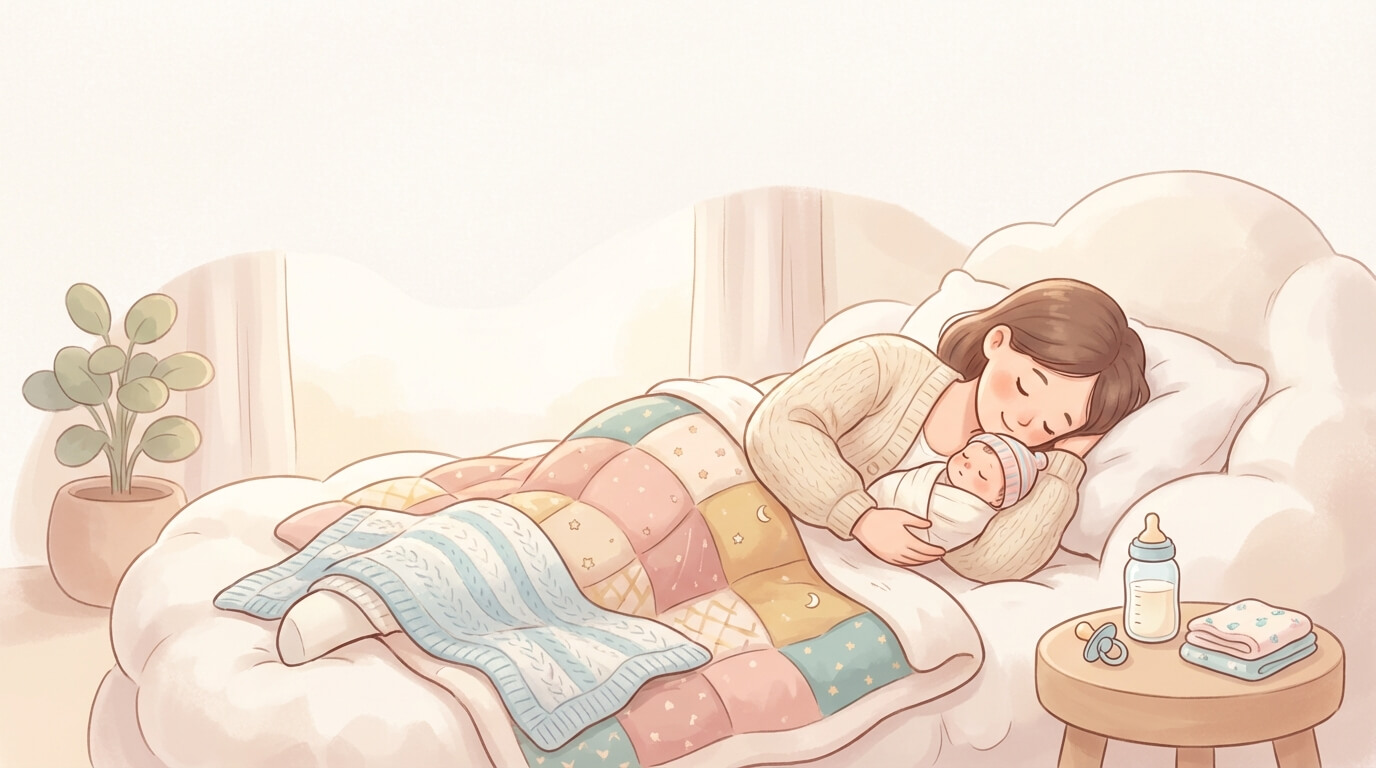
Why Is the First 3 Months Called the Fourth Trimester
Why Is the First 3 Months Called the Fourth Trimester?
If you find yourself wondering why is the first 3 months called the fourth trimester, it is because human evolutionary biology requires babies to be born neurologically premature, meaning they need you to act as a comforting external womb while the birthing parent simultaneously undergoes a massive physical, hormonal, and psychological metamorphosis.
It is two o’clock in the morning, and the house has taken on the strange, underwater quality that only exists in the small hours. A new parent — let’s call her Maya — sits on the edge of the bed, cradling a ten-day-old baby who has been crying, on and off, for what feels like three geological ages. The crib is pristine. The room is the ideal temperature. The diaper is fresh, the last feed was twenty minutes ago, and every parenting book on the nightstand agrees that this baby should, by all reasonable logic, be sleeping.
But the moment Maya lowers her daughter toward the mattress — slowly, gently, with the painstaking care of someone defusing an explosive — the baby’s arms shoot outward, her back arches, and she wails. Again.
Maya brings the baby back to her chest. The crying stops instantly. The baby sighs, tucks her fists beneath her chin, and melts into her mother’s body as though the crib — that lovingly assembled, perfectly safe, two-hundred-dollar crib — is made of hot coals.
What is wrong with my baby?
Nothing. Nothing is wrong. In fact, something is deeply, beautifully right. This baby is doing exactly what 300,000 years of human evolution have wired her to do. She is telling her mother, in the only language she possesses, that she is not yet finished being born. She has left the womb, but her body and brain have not received the memo.
Welcome to the fourth trimester.
What Does “Fourth Trimester” Actually Mean?
Before diving deeper, it helps to start with the basics — because the term itself can be genuinely confusing. Most people learn that pregnancy has three trimesters:
- First trimester: Weeks 1–12 (the organs form)
- Second trimester: Weeks 13–26 (the baby grows rapidly)
- Third trimester: Weeks 27–40 (the baby matures and prepares for birth)
Then the baby is born, and, as far as most prenatal education goes, the story of gestation ends. The “pregnancy chapters” are over; the “parenting chapters” begin.
The fourth trimester challenges that clean dividing line. Coined and popularized by the American pediatrician Dr. Harvey Karp in his influential 2002 book The Happiest Baby on the Block, the term refers to the first 12 weeks (roughly three months) after birth— a period in which the newborn is still, in many biological and neurological senses, completing the developmental work that the womb started. It is gestation continued by other means: outside the body, in the open air, but requiring conditions that mimic the uterine environment as closely as possible.
Think of it this way: if pregnancy were a four-act play, the hospital discharge happens at the end of Act Three. The baby and the parent still have one more act to perform together before the curtain falls on the newborn phase and true infancy begins. That final act — quiet, unglamorous, and almost entirely invisible to the outside world — is the fourth trimester.
But this idea raises an obvious question. Why would human babies need an extra trimester outside the womb in the first place? Why don’t they just stay inside a little longer and finish developing there?
The answer lies in one of the most elegant compromises in the history of human evolution.
Why Are Human Babies Born “Too Early”? The Evolutionary Science Behind the Fourth Trimester
The Obstetrical Dilemma: A Tug-of-War Between Brain and Body
Imagine, for a moment, that the human body is a work of architecture — a building that has been renovated many times over millions of years, with each renovation solving one problem while creating another.
Roughly two million years ago, early humans began walking upright on two legs. This was an extraordinary advantage: it freed the hands for tool use, it allowed the eyes to scan vast distances across the African savanna, and it was far more energy-efficient for long-distance travel than knuckle-walking. But standing upright required a fundamental redesign of the skeleton, and the most consequential change happened at the pelvis. To support the full weight of the torso above two legs and to allow bipedal locomotion, the pelvis narrowed and tilted inward. The birth canal — the bony passage through which a baby must travel to be born — became tighter.
At the same time, a second renovation was underway. The human brain was expanding at an extraordinary rate. Over the same two-million-year window, brain volume more than tripled, from roughly 400 cubic centimeters (about the size of a chimpanzee’s brain) to approximately 1,400 cubic centimeters. Intelligence, language, social cooperation, and creative problem-solving — all of these required more neural real estate, and evolution was building it as fast as it could.
Here was the architectural crisis: the hallway was getting narrower while the furniture was getting larger.
Anthropologists call this the “obstetrical dilemma” — a term first proposed by Sherwood Washburn in 1960. The pelvis cannot widen further without compromising the ability to walk. The brain cannot stop growing without compromising the ability to think. Something has to give.
Nature’s solution was breathtaking in its simplicity: deliver the baby before its head gets too large to fit through the canal. Human infants are born at a point in their development when the skull is still small enough, soft enough (the fontanelles, or “soft spots,” are skull bones that have not yet fused), and flexible enough to navigate the birth canal — but at the staggering cost of neurological readiness.
How “Early” Are Human Babies, Really?
To grasp just how premature human newborns are relative to other species, a simple comparison is illuminating.
| Species | Time to Walk After Birth | Brain Development at Birth (% of Adult Size) |
|---|---|---|
| Horse | ~30 minutes | ~90% |
| Chimpanzee | ~5 months | ~40% |
| Human | ~12 months | ~25% |
A newborn foal can stand within its first hour, trot within three, and outrun a predator by sundown. Its brain, at birth, is roughly 90% of its adult size. A human newborn, by contrast, cannot lift its own head. Its brain is only about 25% of its adult volume — a staggeringly immature organ that will not reach full size until early adulthood.
The pioneering Swiss zoologist Adolf Portmann, writing in the 1940s, calculated that if human gestation followed the same brain-to-body development ratio as other higher primates, it would need to last approximately 21 months — nearly twice as long as it actually does. The “missing” 9-12 months of development, Portmann argued, occurs after birth, in the outside world. He called this process “extero-gestation” — literally, gestation outside the body.
The fourth trimester is the most critical window of that extero-gestation: the first 12 weeks during which the baby’s nervous system, digestive system, and sensory processing are so immature that the infant essentially needs a caregiver to function as an external womb.
This is not a flaw. It is a feature. A brain that finishes developing entirely inside the body arrives in the world with a fixed operating system — efficient, but rigid. A brain that finishes developing in the world, shaped by the particular sights, sounds, voices, and touches of its specific caregivers, arrives with an operating system that is customized for the exact environment it was born into. Human helplessness at birth is not a bug. It is the price of admission to the most adaptable brain on the planet.
Womb vs. World: Understanding the Newborn’s Sensory Shock During the Fourth Trimester
Now that the evolutionary “why” is clear, the next step is to understand the experiential “what.” What does the transition from womb to world actually feel like for a newborn — and why does that experience explain virtually all of the confusing newborn behaviors that leave parents exhausted and bewildered?
Life Inside the Womb: A Sensory Portrait
Imagine spending nine months inside a sensory environment so complete, so perfectly calibrated to comfort, that there is no concept of discomfort at all. This is what the womb provides.
Sound. The uterus is not quiet. It is thunderously, relentlessly loud. The rhythmic rush of blood through the placenta, the gurgling of the digestive system, the muffled thud of the heartbeat — all of this creates a constant ambient noise measured at roughly 70 to 90 decibels. For reference, that is approximately the volume of a vacuum cleaner running continuously, or a busy restaurant during dinner service. Research published in the journal Early Human Development has confirmed this: the fetus has never, in its entire existence, experienced silence.
Touch. From the second trimester onward, the baby is in near-constant physical contact with the uterine walls. As the baby grows and the space tightens, this contact becomes a full-body embrace — warm, firm, and unbroken. Every surface of the baby’s skin is touching something. The proprioceptive system (the body’s internal sense of where its limbs are in space) is continuously engaged, creating a deep sense of physical security. It is, in effect, the ultimate swaddle.
Movement. Every step the gestating parent takes, every shift in a chair, every roll in bed, translates into gentle, rhythmic rocking for the baby. The fetus is in motion for most of the day, lulled by a constant, wave-like sway.
Nourishment. There is no hunger in the womb. The umbilical cord delivers a continuous, steady stream of glucose, oxygen, and nutrients directly into the bloodstream. The baby has never experienced the gripping spasm of an empty stomach, nor the strange, new work of digesting food through a gastrointestinal tract that has never been used.
Light. The womb is dim — not pitch black (a bright light held against the abdomen will glow faintly red through the tissue), but deeply, consistently dark. The baby’s eyes, still developing, are never assaulted by brightness.
Life Outside the Womb: The Sensory Earthquake
Now imagine that environment disappearing in a matter of seconds.
Birth is, from the baby’s sensory perspective, the most dramatic environmental transition any human being will ever undergo. The newborn is ejected from a warm, loud, tight, dark, constantly moving, continuously nourishing environment into one that is cold, quiet, open, bright, still, and — for the first time — punctuated by the bewildering sensation of hunger.
Here is what the baby’s sensory systems are processing:
- Where there was constant sound, there is now eerie silence — punctuated by sudden, sharp noises (a cough, a doorbell, a dog barking) that the baby has no framework to predict or understand.
- Where there was firm, continuous touch, there is now open air. The baby’s arms and legs, once tucked snugly against the torso, now flail into empty space, triggering the Moro reflex — a primitive, involuntary startle response in which the arms shoot outward and the baby gasps. This reflex exists because, in the baby’s neurological vocabulary, the sensation of limbs falling through unsupported space signals one thing: I am falling. I am in danger.
- Where there was constant, gentle movement, there is now stillness. A crib does not rock. A bassinet does not sway. The vestibular system — the inner-ear mechanism that processes motion — is suddenly unemployed.
- Where there was continuous nourishment, there is now cyclical hunger. The stomach contracts painfully, a brand-new digestive system struggles to process its first meals, and gas — a sensation the baby has never encountered — builds in the intestines.
The following visualization helps capture the scale of the contrast:
🔄 Womb → World: The Sensory Shift
Sensory Input In the Womb Outside the Womb Sound Constant 70-90 dB ambient noise Silence, broken by unpredictable sounds Touch Full-body embrace on all sides Open air; limbs unsupported Movement Continuous, rhythmic rocking Stillness (cribs & bassinets don’t move) Feeding Continuous IV-like nourishment Cyclical hunger + new digestive work Light Dim, consistent darkness Bright, variable, overstimulating Temperature Perfectly regulated ~98.6°F Variable; cold air on wet skin
With this contrast in mind, the “mystery” of newborn fussiness dissolves almost entirely. A baby who screams when set down in a crib is not being difficult, manipulative, or spoiled — concepts that require a level of cognitive sophistication a newborn brain is incapable of producing. The baby is experiencing something closer to sensory withdrawal: the sudden absence of every environmental input that it relied on for survival during the preceding nine months.
This understanding is the foundation of the fourth trimester’s most practical insight: if the problem is the sensory gap between womb and world, then the solution is to narrow that gap.
Recreating the Womb: How to Soothe a Fourth Trimester Baby
Parents as the “External Womb”
Once the science of the sensory gap becomes clear, a new metaphor for early parenting emerges: during the fourth trimester, the caregiver’s body becomes the baby’s external womb. The parent’s arms replace the uterine walls. The parent’s heartbeat replaces the placental rhythm. The parent’s warmth replaces the amniotic temperature. In biological terms, the parent is not “holding” the baby — the parent is completing the gestation.
This reframing matters because it changes the emotional valence of those early weeks. “My baby won’t let me put her down” becomes “My baby is using my body to finish a developmental process that the womb started.” The behavior has not changed — but the story around it has shifted from crisis to biology.
Dr. Karp’s Five S’s: A Practical, Evidence-Based Framework
Dr. Harvey Karp synthesized decades of cross-cultural soothing practices into a five-step method, each element designed to replicate a specific feature of the uterine environment. When applied in sequence and with the right technique, these steps activate what Karp calls the “calming reflex” — a neurological off-switch for crying that is hardwired into every newborn’s brainstem.
1. Swaddle — Recreating the Boundaries
A snug swaddle mimics the tight, containing pressure of the uterine walls. It prevents the Moro reflex from firing (which wakes sleeping babies), and it restores the sense of proprioceptive containment — the feeling of being held in place — that the baby experienced for nine months. Think of it as putting the baby back inside a gently firm envelope. (Important safety note: the swaddle should always leave the hips loose to allow healthy hip development, and swaddling should be discontinued once the baby shows signs of rolling.)
2. Side or Stomach Position — Quieting the Alarm (For Holding Only)
When cradled on the side or placed tummy-down across a caregiver’s arm (the “football hold”), the baby’s internal balance sensors calm down. The supine (back-lying) position, while essential for safe sleep, can trigger the Moro reflex and a flailing sensation. The side or stomach position, used only while the baby is being actively held and supervised, mimics the curled fetal posture and signals safety. (For sleep, the baby must always be placed on the back — this is a non-negotiable safety guideline endorsed by the American Academy of Pediatrics.)
3. Shush — Replacing the Silence with Familiar Noise
This is perhaps the most counterintuitive S for new parents, because it requires being loud. A gentle “shh” whispered from across the room will not activate the calming reflex. The shushing needs to be close to the baby’s ear and at a volume that matches the baby’s crying — which means it can be surprisingly forceful. A white noise machine set to 60-80 decibels achieves the same effect, replicating the constant whoosh of placental blood flow that soundtracked the baby’s entire prenatal existence. Once the baby calms, the volume can be gradually lowered to a background hum for ongoing sleep support.
4. Swing — Restoring the Rhythm
Small, rapid, rhythmic movements — a gentle jiggle of the head and neck (always supporting the head), a bouncing sway while standing, or the vibration of a car seat on a moving vehicle — replicate the constant motion the baby experienced in utero. The key word is rhythmic: the motion should be fast enough to approximate a brisk walk (about 2-3 jiggles per second), not the slow, wide rocking of a rocking chair, which is actually too slow to activate the vestibular calming response.
5. Suck — Engaging the Calming Circuit
Suckling — whether at the breast, on a bottle, on a clean finger, or on a pacifier — directly activates the parasympathetic nervous system, the body’s “rest and digest” mode. Heart rate slows. Cortisol (the stress hormone) drops. Breathing deepens. For a baby in the fourth trimester, the act of sucking is not merely feeding — it is a neurological sedative. A 2017 study published in Pediatrics confirmed that non-nutritive sucking (pacifier use) combined with swaddling significantly reduced crying duration in infants diagnosed with colic.
🧠 How the Five S’s Map to the Womb
The S What It Does Which Womb Feature It Replaces Swaddle Contains the body; prevents startle reflex Tight uterine walls Side/Stomach Reduces flailing; mimics fetal curl Fetal position Shush Provides loud, constant white noise Placental blood flow sound Swing Delivers fast, rhythmic motion Parent’s walking gait Suck Activates parasympathetic calming Thumb-sucking in utero
It is worth noting that these techniques are not Western inventions. Cultures across the globe — from the tight swaddling practices of Central Asian nomadic traditions to the constant baby-wearing of West African communities to the rhythmic rocking documented in Indigenous Australian caregiving — have independently converged on the same basic suite of soothing strategies. Evolution, as it turns out, left the same instruction manual everywhere. Dr. Karp’s contribution was translating it into a sequence that modern Western parents, many of whom lack the intergenerational knowledge networks of extended-family cultures, could learn and apply.
The Mother’s Fourth Trimester
The “Forgotten Patient” in Postpartum Care
Here is where the fourth trimester conversation, in much of popular media, goes dangerously incomplete. The vast majority of articles, books, and social media posts about this period focus on the baby: what the baby needs, how the baby feels, how to soothe the baby. And all of that is essential. But it leaves out the other half of the equation — the parent whose body and mind are undergoing one of the most extreme physiological transformations in human biology.
During pregnancy, the gestating parent is the undeniable center of medical attention. There are regular prenatal appointments. There are blood tests, ultrasounds, and dietary guidelines. There are entire industries devoted to prenatal wellness, prenatal fitness, and prenatal nutrition.
The moment the baby is born, the spotlight swivels — and the parent, who is now bleeding, hormonally crashing, sleep-deprived, and recovering from either a vaginal delivery (which may involve significant tearing of the perineal tissue) or a cesarean section (which is major abdominal surgery involving the cutting of seven distinct layers of tissue), is largely left to heal in the wings.
This is not a metaphor. It is a structural failure in modern healthcare that the medical community itself has begun to formally acknowledge.
The Hormonal Cliff: The Largest Sudden Shift in Human Biology
To understand the emotional landscape of the postpartum parent during the fourth trimester, one must understand what is happening at the hormonal level, because the scale of the shift is genuinely staggering.
During pregnancy, estrogen and progesterone — the two primary reproductive hormones — rise to the highest levels the body will ever produce. By the third trimester, estrogen levels are roughly 1,000 times higher than their non-pregnant baseline. Progesterone follows a similar trajectory.
Within 24 to 48 hours of delivering the placenta (which is the organ that produces these hormones), both estrogen and progesterone plummet to their lowest possible levels. Endocrinologists describe this as the single largest, most abrupt hormonal shift a living human being can experience. There is no other natural event in human physiology — not puberty, not menopause, not any illness — that produces a hormonal drop of this magnitude at this speed.
To put this in relatable terms: imagine the thermostat in a building going from its maximum setting to its absolute minimum in the span of one day. Every system connected to that thermostat — mood regulation, sleep architecture, appetite, pain sensitivity, immune function — is thrown into disarray.
This hormonal crash is why approximately 70 to 80% of new mothers experience what is commonly called the “baby blues” in the first two weeks post-delivery: weeping at a television commercial, snapping at a partner over nothing, feeling simultaneously elated and devastated within the same hour. The baby blues are not a sign of weakness, ingratitude, or poor coping. They are a predictable, universal, biochemical event, as physiologically inevitable as the soreness that follows running a marathon.
For approximately 1 in 7 mothers (and a growing body of research suggests 1 in 10 fathers and non-birthing partners), the disturbance does not resolve on its own. It deepens into postpartum depression (PPD) or postpartum anxiety (PPA) — clinical conditions that require professional treatment. The fourth trimester is the window during which these conditions most commonly emerge, which is one of the strongest arguments for extending robust postpartum care through the full 12-week period.
The Physical Marathon Hiding in Plain Sight
The hormonal crash is happening simultaneously with a physical recovery that, in any other context, would be treated with weeks of rest and rehabilitation.
Consider what the postpartum body is accomplishing during the fourth trimester:
- Uterine involution: The uterus — which expanded during pregnancy from the size of a small pear to the size of a watermelon — contracts back to its pre-pregnancy size over approximately six weeks. These contractions (called “afterpains”) can be intensely painful, particularly during breastfeeding, which triggers oxytocin release and further uterine contractions.
- Tissue healing: A vaginal delivery may involve first- to fourth-degree perineal tearing, or an episiotomy (a surgical incision to widen the vaginal opening). Healing takes weeks and can make sitting, walking, and using the bathroom painful.
- Cesarean recovery: A C-section involves incisions through skin, fat, fascia, muscle, peritoneum, and the uterine wall itself. It is classified as major abdominal surgery, and the recovery timeline — which includes lifting restrictions, incision care, and risk of infection — typically extends six to eight weeks at minimum.
- Milk production: If the parent is breastfeeding, the body is producing approximately 25 to 35 ounces of milk per day by the end of the first month, a process that burns an additional 400 to 500 calories daily. That caloric expenditure is roughly equivalent to running 4 to 5 miles every single day — while simultaneously recovering from surgery, sleeping in fragmented 90-minute blocks, and caring for a newborn.
- Blood volume redistribution: During pregnancy, blood volume increases by approximately 50%. After delivery, the body must redistribute and shed this excess fluid, which contributes to the intense sweating (night sweats) and frequent urination many postpartum parents experience.
The exhaustion of the fourth trimester is not merely the tiredness of disrupted sleep. It is the compounded fatigue of a body that is simultaneously healing, producing, redistributing, and restructuring while running on as little as three to four hours of fragmented sleep per night.
Matrescence: The Birth of a Mother’s New Identity
Beyond the physical and hormonal, there is a third dimension of the parent’s fourth trimester that is only now receiving the scientific attention it deserves: the fundamental reorganization of identity.
In 1973, the medical anthropologist Dana Raphael coined the term “matrescence” to describe the developmental passage into motherhood. Decades later, neuropsychologist Dr. Aurelie Athan of Columbia University revived and expanded the concept, arguing that matrescence is a life transition as biologically profound and psychologically disorienting as adolescence.
The parallel is striking. During adolescence, the body changes in ways the teenager does not choose. Hormones alter mood, perception, and social behavior. The sense of self — “Who am I?” — becomes unstable. Society imposes new expectations. Sleep patterns shift. The adolescent is, for a period of years, neither fully a child nor fully an adult, existing in a disorienting in-between space.
Matrescence follows the same template: the body changes without consent. Hormones reshape emotional reality. The old identity (“I am a professional / a partner / a free individual”) has not disappeared, but it must now coexist with, and sometimes defer to, a new identity (“I am a mother”). The transition is neither instant nor seamless. It takes time, support, and a tolerance for ambiguity.
And, remarkably, the brain is physically changing to support this process. A landmark 2016 study published in Nature Neuroscience by neuroscientist Elseline Hoekzema and colleagues found that pregnancy and the postpartum period produce measurable reductions in gray matter volume in specific regions of the maternal brain. Before this finding triggers alarm, a crucial clarification: this is not brain damage. It is neural pruning and specialization — the same process that occurs during adolescence, when the brain eliminates redundant synaptic connections to become more efficient. The regions affected are precisely those involved in social cognition and theory of mind — the ability to read another person’s emotional state and intentions.
In other words, the maternal brain is not losing capacity. It is being remodeled to become exquisitely sensitive to the needs of a specific infant. The changes were so consistent across subjects that researchers could determine, with near-perfect accuracy, whether a woman had ever been pregnant simply by scanning her brain structure. And these changes persisted for at least two years after birth.
The parent experiencing the fourth trimester is not merely tired. They are undergoing a neurological renovation while simultaneously managing a hormonal earthquake and a physical recovery — all while keeping a neurologically immature human alive around the clock.
The 6-Week Myth: Rethinking Postpartum Care
For decades, the standard in most Western healthcare systems has been a single postpartum checkup at six weeks after delivery. Many new parents internalize this milestone as a finish line: “At six weeks, I should be healed. At six weeks, I should feel normal. At six weeks, I should be cleared to exercise, have sex, and return to work.”
This timeline is, to put it plainly, medically outdated.
In 2018, the American College of Obstetricians and Gynecologists (ACOG) published a landmark committee opinion formally acknowledging that the six-week model was inadequate. ACOG recommended that postpartum care be reconceptualized as an “ongoing process”, with initial contact within the first three weeks and a comprehensive visit at 12 weeks — the full span of the fourth trimester. The document explicitly stated that the current system’s focus on a single late postpartum visit resulted in a “missed opportunity” to support maternal well-being during the most vulnerable period of recovery.
Full physical recovery from childbirth — including pelvic floor rehabilitation, abdominal wall reconditioning, and hormonal stabilization — can take a year or more. The fourth trimester is not the end of recovery. It is the beginning.
Practical Wisdom for Navigating the Fourth Trimester
Having established the science — the evolutionary context, the sensory gap, the baby’s neurological needs, and the parent’s parallel transformation — the remaining question is the most urgent one for any family in the thick of it: What do we actually do with all of this knowledge?
Release the Schedule (It Is Not Biologically Possible Yet)
Many new parents feel pressure — from books, from apps, from well-meaning relatives — to establish a “routine” for their newborn in the early weeks. Feeding schedule. Nap schedule. Bedtime ritual.
The fourth trimester makes this expectation biologically impossible, and understanding why can relieve an enormous amount of unnecessary guilt.
The human circadian rhythm — the internal clock that distinguishes day from night and regulates the sleep-wake cycle — is governed by a tiny structure in the brain called the suprachiasmatic nucleus (SCN). In newborns, the SCN is not yet functional. It does not begin responding to environmental light cues until approximately 8 to 12 weeks of age, and it does not produce meaningful amounts of melatonin (the hormone that induces sleepiness at night) until roughly the same period.
This means that for the entire duration of the fourth trimester, the newborn’s body has no internal mechanism for distinguishing 2 p.m. from 2 a.m. The baby who feeds every 90 minutes through the night is not defiant. The baby’s brain literally does not know that it is nighttime. Requesting that a newborn “sleep through the night” during the fourth trimester is like asking someone to read a book that has not yet been printed.
This does not mean parents should abandon all structure. Gentle, consistent cues — dim lights in the evening, bright lights during the day, quiet nighttime feeds without stimulation — help train the developing SCN. But the expectation of a predictable sleep schedule during the fourth trimester should be released, because the hardware required to run it has not yet been installed.
Skin-to-Skin Contact: The Most Underused Prescription in Newborn Care
If the fourth trimester is about replacing the womb, then skin-to-skin contact (also called kangaroo care) is the single most powerful tool available — and one of the most extensively validated interventions in all of neonatal medicine.
The practice is simple: the baby, wearing only a diaper, is placed directly against the bare chest of a caregiver and covered with a blanket. That is all. And yet the physiological effects are remarkable.
Research published in Pediatrics, The Cochrane Database of Systematic Reviews, and Neonatology has demonstrated that regular skin-to-skin contact:
- Regulates the newborn’s heart rate and breathing by synchronizing with the caregiver’s autonomic rhythms — a phenomenon called “co-regulation”. The parent’s body essentially acts as a pacemaker.
- Stabilizes body temperature more reliably than an incubator in many clinical contexts, because the parent’s chest automatically warms or cools in response to the baby’s needs (a process called thermal synchrony).
- Reduces cortisol (the stress hormone) in both the baby and the parent, while increasing oxytocin (the bonding and trust hormone).
- Increases breastfeeding success rates by stimulating the baby’s rooting and feeding reflexes and the parent’s milk production hormones.
- Supports healthy weight gain in premature and low-birth-weight infants.
Kangaroo care was originally developed in the 1970s in Bogotá, Colombia, by Dr. Edgar Rey Sanabria, as a response to a shortage of incubators for premature infants. It was, in effect, born from necessity — and it turned out to be superior to the technology it was replacing. The World Health Organization now formally recommends kangaroo mother care as a standard of practice for all newborns, not just premature ones.
Skin-to-skin contact is not a trend. It is not a parenting philosophy. It is a physiological intervention that the biology of the fourth trimester actively demands — and it is available to every caregiver (fathers, partners, grandparents, and adoptive parents included) with a bare chest and a willing infant.
Protecting the Bubble: Setting Boundaries as a Biological Imperative
The cultural pressure to perform recovery — to host visitors, to appear in public, to smile and declare that everything is wonderful — runs directly counter to the biological needs of the fourth trimester for both the baby and the parent.
A newborn’s nervous system has no filters. Every new face, every unfamiliar voice, every change in lighting or scent is raw, unprocessed sensory input flooding a brain that has no categorization system for any of it. What an adult experiences as “Aunt Susan came to visit” a newborn experiences as a barrage of novel stimuli: an unknown voice at an unfamiliar pitch, an unfamiliar scent, a different quality of touch, a new angle of light. The result, after a well-meaning afternoon of being passed from lap to lap, is often an evening of inconsolable crying — the baby’s nervous system discharging the overstimulation it could not process in real time.
For the postpartum parent, the stakes are equally high. Stress hormones triggered by social performance, hosting obligations, or unsolicited parenting advice can suppress milk supply, slow wound healing, and exacerbate the hormonal vulnerability that underpins the baby blues and postpartum depression.
The instinct many new parents feel to keep the world at a distance during the first weeks — to close the door, dim the lights, and retreat into a cocoon with the baby — is not antisocial behavior. It is biological wisdom, and it deserves to be honored rather than overridden.
The Light at the End of the Fourth Trimester: What Happens at 12 Weeks
The Storm Before the Calm: Understanding the Crying Peak
For many families, the most harrowing stretch of the fourth trimester occurs not in the first week, but around weeks 4 through 6, when infant crying reaches its statistical peak.
Developmental researcher Dr. Ronald G. Barr at the University of British Columbia identified this pattern and described it using the acronym PURPLE, which stands for:
- P — Peak of crying (it will get worse before it gets better)
- U — Unexpected (the crying comes and goes without any apparent cause)
- R — Resists soothing (sometimes nothing works, and that is normal)
- P — Pain-like face (the baby looks as though they are in agony, even when they are not)
- L — Long-lasting (bouts can last 30 minutes to several hours)
- E — Evening clustering (the crying is often worst in the late afternoon and evening)
The PURPLE crying period is not a sign of parental failure, formula intolerance, or illness in most cases. It is a neurological event — the expression of a rapidly developing brain that has outpaced its own inhibitory controls. The baby’s sensory system is taking in more input than it can process, and the excess energy is discharged as crying.
The most important thing to know about PURPLE crying is that it is self-limiting. It peaks around week 6, begins to decline around week 8, and has typically resolved by week 12 — the end of the fourth trimester. Knowing this does not make the 6 p.m. crying jag easy to endure. But it makes it endurable, because an experience with a known end point is fundamentally different from one that feels infinite.
The 12-Week Sunrise: What Changes at the End of the Fourth Trimester
Parents who have white-knuckled their way through the fourth trimester frequently describe the shift that occurs around three months as a sunrise — gradual enough to miss in its early stages, then suddenly, undeniably, transformatively light.
The changes are not subtle:
- The social smile arrives. Around 6 to 8 weeks, the baby produces its first nonreflexive, deliberately communicative smile — a grin triggered by the sight of a familiar face, not by gas or a random muscle twitch. This single milestone, small as it seems, has an outsized effect on parental bonding. It is the first moment the baby gives something back — the first reciprocal exchange in a relationship that has, until now, been entirely one-directional.
- Visual tracking begins. The baby starts to follow faces and objects with focused eyes, demonstrating curiosity rather than reflexive startling. The world is becoming interesting rather than threatening.
- The gut matures. Colic symptoms, which are thought to reflect the gastrointestinal system’s adjustment to processing food via a brand-new digestive tract, resolve spontaneously in the vast majority of infants around the 3-month mark.
- Melatonin production begins. The pineal gland starts producing melatonin in response to darkness, and the first longer stretches of nighttime sleep — three to four hours, sometimes five — become possible. These are not yet “sleeping through the night,” but they are, to a parent who has been functioning on 90-minute cycles, a form of resurrection.
- The self emerges. Around 12 weeks, the baby begins to demonstrate an awareness that it is a separate entity from its caregiver. Hands are discovered and studied. Sounds are experimented with. The baby starts to “wake up” to the world in a way that is qualitatively different from the sleepy, reflexive existence of the first weeks.
The fourth trimester is over. The baby has, in the fullest sense of the word, arrived.
Conclusion
The concept of the fourth trimester does not change the reality of the newborn period. It does not reduce the crying, accelerate the healing, or add hours to the night. What it changes — and this is no small thing — is the meaning attached to the experience.
Without the fourth trimester lens, a baby who cries unless held is a problem to be solved. With it, the same baby is a biological system completing a developmental process that requires closeness as surely as it requires oxygen. Without the framework, a parent who cannot keep the house clean, return phone calls, or feel like a recognizable version of themselves is failing. With it, the same parent is undergoing a neurological and physiological metamorphosis — matrescence — that is as legitimate, as biologically profound, and as deserving of patience as the adolescence that preceded it by two decades.
The fourth trimester reframes exhaustion as purpose. It reframes neediness as trust. And it reframes the first 12 weeks — those bleary, tearful, magnificent weeks — as what they truly are: not an endurance test, but the final act of a biological drama that began at conception. A drama in which a caregiver’s arms, voice, heartbeat, and warmth finish the work that the womb began.
Every culture that has ever thrived on this planet understood, on some intuitive level, what modern science is now confirming: that new babies and new parents need a fourth trimester. They need closeness, patience, protection from overstimulation, and the grace to be incomplete. They need time to become themselves — together.
The only truly difficult thing about the fourth trimester is that nobody can do it for you. But understanding it — deeply, scientifically, compassionately — makes all the difference between surviving those 12 weeks and recognizing, even in the hardest moments, that something extraordinary is happening.
Sources & Further Reading:
- American College of Obstetricians and Gynecologists (ACOG) — Optimizing Postpartum Care (Committee Opinion No. 736, 2018)
- Hoekzema, E. et al. (2017) — Pregnancy leads to long-lasting changes in human brain structure — Nature Neuroscience, 20, 287–296
- National Institute of Child Health and Human Development (NICHD) — Safe to Sleep Campaign
- Columbia University, Teachers College — The Matrescence Project (Dr. Aurelie Athan)
- Karp, H. (2002) — The Happiest Baby on the Block — Bantam Books
- Trevathan, W.R. (2011) — Human Birth: An Evolutionary Perspective — Aldine Transaction

October 25, 2026
October 25, 2026

October 25, 2026
October 25, 2026