Breast-Milk-Bath-for-Baby-Eczema
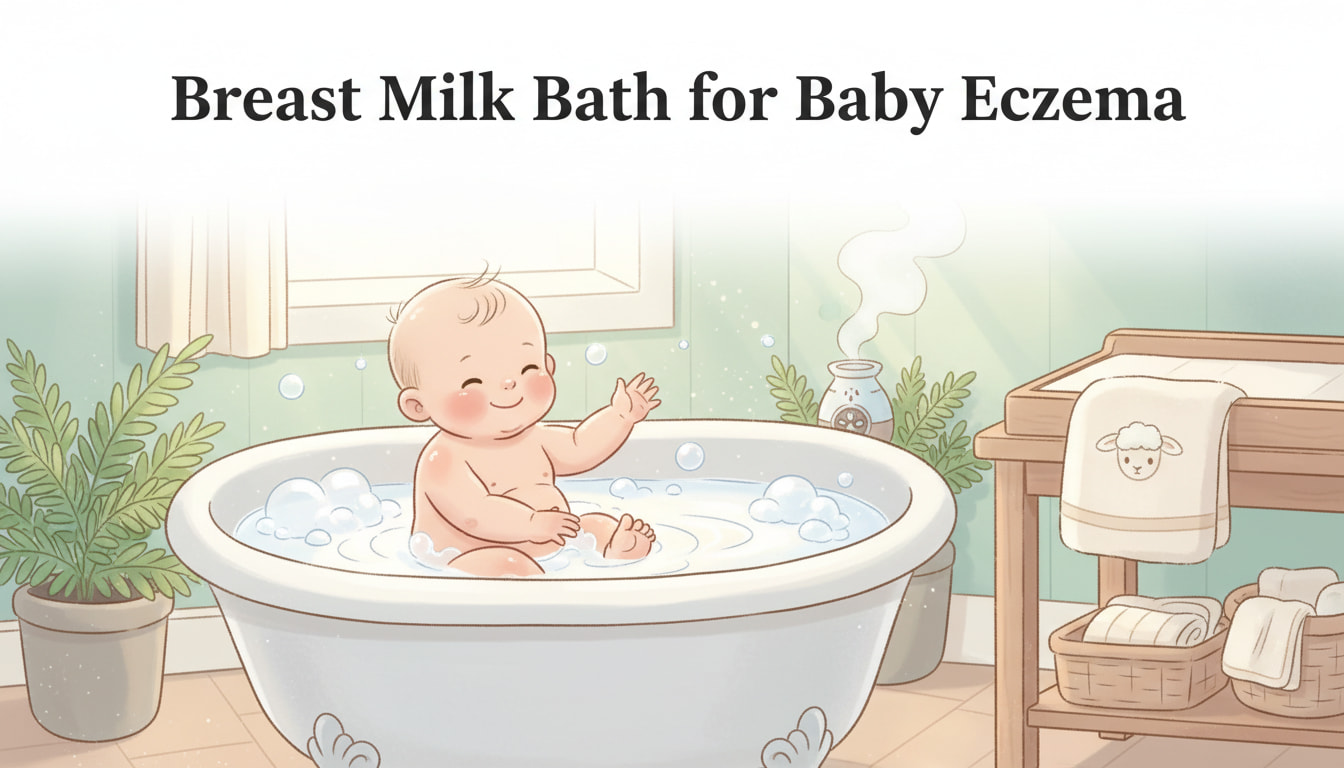
Breast Milk Bath for Baby Eczema
- What Baby Eczema Really Is
- A Concept as Old as Civilization — What Exactly Is a Breast Milk Bath?
- Why Breast Milk Heals Baby Eczema
- The Complete Step-by-Step Breast Milk Bath Guide for Baby Eczema
- Supercharging the Breast Milk Bath — Colloidal Oatmeal as a Booster
- When a Breast Milk Bath Is NOT Appropriate — Important Safety Boundaries
- Frequently Asked Questions About Breast Milk
- Conclusion
A breast milk bath for baby eczema is a scientifically backed, natural remedy that repairs the skin’s broken barrier using human milk’s unique fatty acids and antibodies; simply add 4 to 10 ounces of milk to a lukewarm tub, let your baby soak for 10 to 15 minutes without rinsing, and immediately apply a thick ointment to lock in the healing moisture.
There is a particular silence that falls over a household at 3 a.m. when a baby cannot stop scratching. The sound of tiny nails dragging across inflamed cheeks, the restless squirming against a fitted sheet, the muffled crying that says something is deeply, persistently wrong—these are the sounds that define life with infant eczema. Parents who have lived through it rarely forget the helplessness: the parade of prescription creams, the pediatrician visits, the careful laundering of every fabric that touches the skin, and the creeping suspicion that none of it is truly getting to the root of the problem.
What makes the experience so exhausting is not just the eczema itself, but the gap between what the condition demands and what conventional treatments deliver. For another common newborn skin concern, see diaper rash. Steroid creams suppress the inflammation, yes—but they do not rebuild what eczema has broken. Thick ointments trap moisture—but they do not address why the moisture keeps escaping. Parents find themselves managing symptoms in an endless loop, never quite reaching a resolution.
It is precisely in that gap—the space between symptom suppression and actual skin repair—that an ancient, remarkably simple practice has re-emerged with surprising scientific credibility. That practice is the breast milk bath for baby eczema: a warm, milky soak that leverages the extraordinary biological complexity of human breast milk to do what no pharmacy cream was designed to do—heal the skin barrier from the outside in, using the exact same substance that nourishes a baby from the inside out.
This is not a wellness fad born on social media. Milk baths for skin healing stretch back thousands of years across every inhabited continent. What has changed is that modern dermatology and microbiology can now explain, at the molecular level, why this practice works—and the explanation turns out to be far more sophisticated than anyone expected.
What Baby Eczema Really Is
Most people hear the word “eczema” and picture dry, flaky skin—the kind of thing a good moisturizer should fix. This misunderstanding is one of the reasons eczema is so poorly managed in many households. Eczema—known in medical settings as atopic dermatitis—is not a moisturizing problem. It is a structural problem. The distinction matters enormously, because it changes everything about how to treat it.
To understand what is happening, it helps to think of healthy skin as a brick wall.
Imagine a wall made of thousands of tightly packed bricks (these are the skin cells, called keratinocytes) held together by a thick layer of mortar (these are the natural oils and fats, called lipids, that fill the spaces between cells). When the wall is intact, it does two critical jobs simultaneously: it keeps moisture locked inside the body, and it keeps irritants—dust, bacteria, pollen, pet dander—locked outside.
In babies with eczema, that mortar is defective. Many carry a genetic variation in a protein called filaggrin—a key building block of the mortar. Without enough functional filaggrin, the mortar develops invisible cracks. The wall still looks like a wall, but it is now porous.
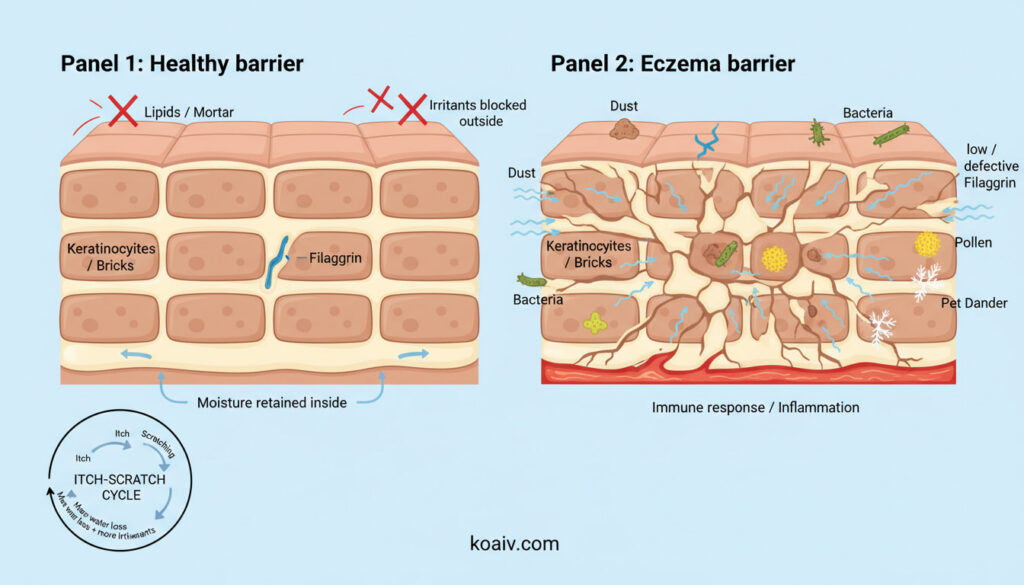
Through those cracks, two disasters happen at once:
- Water escapes outward. The skin loses moisture far faster than it can replace it, becoming dry, tight, and flaky. Dermatologists call this transepidermal water loss(TEWL)—a technical term that simply means “water leaking through the skin.”
- Irritants flood inward. Allergens, bacteria, and environmental pollutants slip through the gaps and reach the deeper layers of skin, where the immune system lives. The immune system reacts to these invaders with inflammation—redness, swelling, heat, and itch—which is the body’s fire alarm going off.
The cruel irony is that the itch makes babies scratch, and scratching physically tears more holes in the already compromised wall. More holes mean more water loss and more irritant entry, which means more inflammation, which means more itch. Dermatologists call this the itch-scratch cycle, and it is the engine that keeps eczema flares running long after the original trigger has passed.
The Key Insight: Eczema is not the skin being too dry. Eczema is the skin being too porous—like a roof with holes in it. Moisturizers are the buckets that catch the rain. What parents really need is something that patches the holes. This is where breast milk enters the picture.
A Growing Epidemic Among Infants
Eczema is not a rare condition. According to the National Eczema Association, an estimated 10–20% of all infants in industrialized countries will develop atopic dermatitis, with the majority showing their first symptoms before six months of age. In some countries, prevalence rates have tripled over the past three decades—a trend researchers believe is driven by changes in environmental exposure, diet, and the microbial environment of modern homes.
The standard first-line treatment for moderate infant eczema is a topical corticosteroid—a steroid cream applied directly to the inflamed patches. These creams are effective at suppressing the inflammatory response, but they come with well-documented concerns when used on infant skin over extended periods:
- Skin thinning (atrophy), which makes the barrier even more fragile
- Rebound flares when the cream is discontinued
- Parental anxiety about applying a pharmaceutical steroid to a newborn’s face or skin folds multiple times a day for months on end
A 2015 survey published in the Journal of the American Academy of Dermatology found that over 70% of parents expressed significant concern about using topical corticosteroids on their children—a phenomenon researchers have labeled “steroid phobia.” While dermatologists generally regard short-term, low-potency steroid use as safe, the anxiety is understandable, and it has driven an enormous demand for effective, natural alternatives.
The breast milk bath is one of the most scientifically credible answers to that demand.
A Concept as Old as Civilization — What Exactly Is a Breast Milk Bath?
A breast milk bath is, at its core, a warm tub of water with expressed breast milk stirred into it. The milk disperses through the water, turning it cloudy and slightly opaque—not thick like a dairy product, but softly milky, like the color of diluted skim milk. The baby soaks in this milky water for 10 to 15 minutes, allowing the skin to absorb the bioactive compounds suspended in the bath.
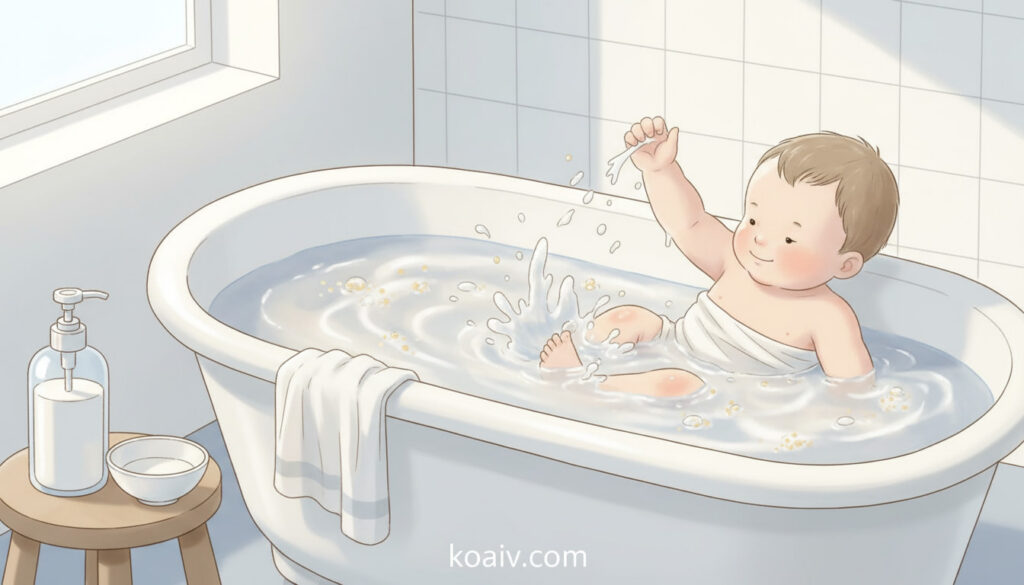
That is the entire concept. No special equipment. No prescriptions. No complicated protocols.
An Ancient Practice with Modern Validation
The practice of bathing in milk for skin health is older than recorded medicine. Cleopatra VII, the last pharaoh of ancient Egypt, was said to bathe daily in donkey’s milk to preserve the luminosity and elasticity of her skin. Roman physicians prescribed milk compresses for wounds and burns. Across East Asia, the Middle East, and indigenous cultures on every continent, mothers have applied breast milk directly to diaper rashes, cradle cap, insect bites, and newborn acne as a matter of maternal instinct—long before anyone published a paper explaining why it worked.
What separates traditional use from modern understanding is the mechanism. Earlier generations knew breast milk healed skin. Today’s researchers can identify exactly which molecules are responsible, how they interact with the skin barrier, and why breast milk is uniquely suited to infant eczema in ways that no other natural substance can replicate.
Why Breast Milk Heals Baby Eczema
Human breast milk is not a simple liquid. It is a living biofluid—one of the most complex substances produced by the human body—containing over 1,000 distinct proteins, hundreds of bioactive lipids (fats), antibodies, hormones, enzymes, prebiotics, and even living cells including stem cells. Each of these components plays a role when the milk makes contact with eczema-damaged skin.
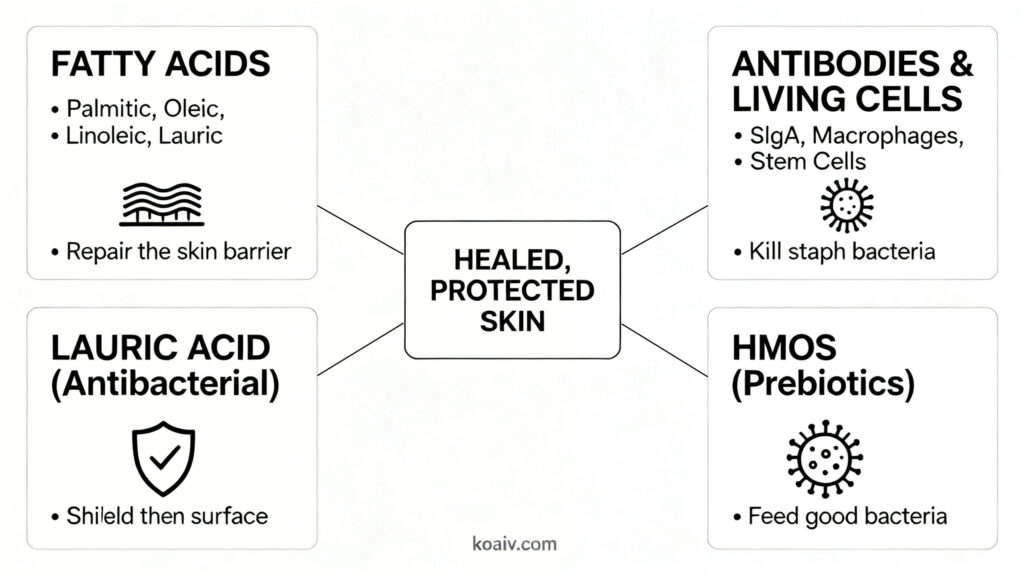
To make the science accessible, it is helpful to organize the key healing agents into four categories, each addressing a specific dimension of eczema.
Category 1: The Barrier Repair Crew — Healing Fatty Acids
Remember the brick-wall analogy? Eczema cracks the mortar between skin cells. Breast milk contains a suite of fatty acids that function as liquid mortar patches, physically filling gaps in the damaged skin barrier upon contact.
| Fatty Acid | What It Does | Simple Analogy |
|---|---|---|
| Palmitic acid | Coats the outer skin layer, slowing moisture loss | Acts like a wax sealant on a leaky wooden deck |
| Oleic acid | Helps the skin absorb and retain moisture | Works like a sponge that pulls water in and holds it |
| Linoleic acid | Reduces inflammation and strengthens cell membranes | Functions like anti-rust treatment on the metal frame of a building |
| Lauric acid | Kills harmful bacteria on the skin surface | Operates like a natural antiseptic hand wash |
A study published in the International Journal of Molecular Sciences confirmed that linoleic acid applied topically improves skin barrier function in as little as two weeks by reinforcing the lipid layers between keratinocytes—those “bricks” in the skin wall. This is not incidental moisturizing; it is structural repair.
Category 2: The Immune Shield — Antibodies and Living Cells
Breast milk contains a class of antibodies called secretory immunoglobulin A (sIgA). In the gut, sIgA lines the intestinal walls and prevents pathogens from attaching to the tissue. On the skin, it performs an analogous function: when breast milk is applied topically, sIgA creates an invisible antibody film across the skin surface, binding to bacteria and allergens and neutralizing them before they can penetrate through the eczema cracks and trigger an immune flare.
Think of sIgA as a transparent security net draped over the skin—one that catches intruders while letting normal moisture and air flow through undisturbed.
Beyond antibodies, breast milk contains living white blood cells (macrophages and lymphocytes) that actively seek out and destroy pathogens. It also contains mesenchymal stem cells—a type of cell studied extensively for its wound-healing potential. Research published in Stem Cells Translational Medicine has demonstrated that these stem cells, when applied to damaged tissue, accelerate the rate at which new, healthy cells are generated to replace damaged ones.
In practical terms: the breast milk bath does not simply protect the skin from further damage. It actively recruits healing agents to the site of the damage—agents that the baby’s own immune system may be too immature to produce in sufficient quantities.
Category 3: The Bacterial Peacekeeper — Fighting Staph Infections
This category deserves particular attention because it addresses one of eczema’s most dangerous complications, one that many parents do not realize is happening.
The skin of a healthy person hosts a diverse community of bacteria—most of them harmless or actively beneficial. This community is called the skin microbiome, and it functions much like a healthy rainforest ecosystem: when diverse species coexist in balance, they keep each other in check, and the whole system remains stable.
Eczema disrupts this ecosystem. Research published in Science Translational Medicinefound that during an eczema flare, the diversity of the skin microbiome collapses, and a single species—Staphylococcus aureus—dominates the landscape. This particular bacterium is found on the skin of over 90% of people with atopic dermatitis. It produces toxins called superantigens that directly amplify the inflammatory response, making the eczema worse, which in turn creates a more hospitable environment for staph, which produces more toxins—another vicious cycle layered on top of the itch-scratch cycle.
Why this matters for the breast milk bath: Lauric acid, one of the fatty acids abundant in breast milk, has been specifically shown to suppress Staphylococcus aureus colonization. A study published in the Journal of Antimicrobial Chemotherapy demonstrated lauric acid’s bactericidal (bacteria-killing) activity against staph—at concentrations naturally present in breast milk.
This means the breast milk bath is not just moisturizing the skin or calming inflammation. It is directly attacking the bacterial overgrowth that is amplifying the eczema in the first place. No over-the-counter moisturizer on the market can make that claim.
Category 4: The Frontier Science — Prebiotics for the Skin Microbiome
Here is where the science grows genuinely exciting and moves beyond anything most parenting blogs have discussed.
Breast milk contains a group of complex sugars called human milk oligosaccharides (HMOs). There are more than 200 structurally distinct HMOs in breast milk, and they are the third most abundant solid component of the milk—more plentiful than protein. For decades, researchers were puzzled by HMOs because babies cannot digest them. They simply pass through the infant’s gut unabsorbed.
Then came the discovery: HMOs are not food for the baby. They are food for the bacteria. Specifically, they are prebiotics—substances that selectively nourish beneficial bacterial species like Bifidobacterium and Lactobacillus while starving harmful species. This insight, published in landmark research in Glycobiology, reshaped the understanding of breast milk as not merely nutrition but as a microbial management system.
Now, emerging research is asking a provocative question: do HMOs perform the same prebiotic function when applied to the skin?
Early findings, including work published in Microbiome and Nature Reviews Immunology, suggest that the answer is yes. When HMOs contact the skin surface, they appear to selectively feed the beneficial bacterial species that normally keep S. aureus in check. Rather than killing bacteria indiscriminately (the way an antibiotic might), HMOs may help restore the ecological balance of the skin microbiome—repopulating it with the protective species that eczema has depleted.
If confirmed in larger clinical trials, this would reposition the breast milk bath from a traditional remedy to a legitimate microbiome restoration therapy—an approach that addresses eczema not by suppressing symptoms from above, but by rebuilding the skin’s own defense system from within.
The Clinical Evidence: Breast Milk vs. Steroid Cream
Perhaps the most compelling piece of evidence for parents weighing this option comes from a clinical study published in the International Journal of Dermatology in 2015. Researchers divided infants with mild-to-moderate eczema into two groups: one received topical application of breast milk to the affected areas, while the other received 1% hydrocortisone cream—the standard pharmaceutical treatment.
The results were striking:
| Treatment | Rate of Improvement |
|---|---|
| Breast milk (topical) | 81.5% of infants showed significant healing |
| 1% Hydrocortisone cream | 76% of infants showed significant healing |
Breast milk did not merely match the steroid cream. It slightly outperformed it—without any of the associated risks of skin thinning, rebound flares, or the psychological burden of applying a corticosteroid to a newborn’s face for months.
This single study does not represent the totality of evidence, and dermatologists rightly note that more large-scale trials are needed. But it does make this much clear: the breast milk bath is not wishful thinking. It is a biologically plausible, clinically supported intervention—and for mild-to-moderate eczema, it deserves a place in every parent’s toolkit alongside (not necessarily instead of) conventional care.
The Complete Step-by-Step Breast Milk Bath Guide for Baby Eczema
Armed with the why, what follows is the how—a precise, detailed walkthrough designed for first-time parents who have never drawn a breast milk bath before. Each step includes the reasoning behind it, so that the process feels purposeful rather than ritualistic.
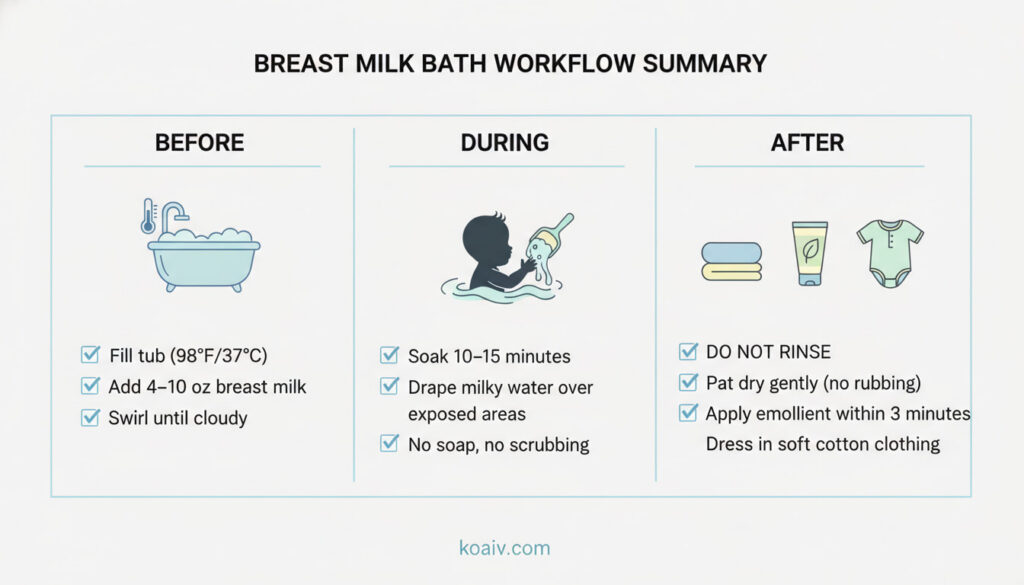
Step 1 — Choose Your Timing Strategically
Eczema itch follows the body’s daily clock. Research in chronobiology—the study of biological rhythms—has shown that the inflammatory chemicals responsible for itching, particularly histamine and certain cytokines, peak in the late evening and early nighttime hours. This is why eczema babies often have their worst episodes at bedtime.
Drawing the breast milk bath approximately one hour before the desired bedtimeachieves two goals: it addresses the itch just as it is escalating, and the post-bath warmth drop (the body cooling down after a warm soak) naturally promotes melatonin release, helping the baby transition into sleep.
For frequency: two to three baths per week during an active flare, tapering to once weekly as the skin stabilizes.
Step 2 — Get the Water Temperature Right (This Is Non-Negotiable)
Hot water is one of eczema’s most reliable triggers. Heat strips the skin of its remaining natural oils, dilates blood vessels (increasing redness), and activates itch receptors in the dermis. The ideal temperature is lukewarm—approximately 98°F (37°C), which is close to normal body temperature.
A simple test: dip the inside of the wrist into the water. It should feel neutral—neither warm nor cool. If it feels distinctly “warm,” it is too hot for eczema-prone skin.
Step 3 — Measure and Add the Breast Milk
The most frequently asked question about breast milk baths is straightforward: How much breast milk is needed?
The answer depends on tub size, but the quantities are smaller than most parents expect:
| Tub Type | Recommended Amount | Visual Indicator |
|---|---|---|
| Baby bathtub (small infant tub) | 4–6 ounces (120–180 ml) | Water turns softly cloudy, like diluted skim milk |
| Full-sized bathtub(shared family tub) | 8–10 ounces (240–300 ml) | Same cloudy, milky opacity throughout |
Pour the milk directly into the filled tub and swirl gently with one hand to distribute it evenly.
The cloudiness is the signal that the bath is “ready.” It indicates that the fat-soluble compounds (the healing fatty acids) have emulsified—meaning they have been suspended evenly throughout the water in tiny droplets, ready to coat every inch of the baby’s skin upon contact. If the water is still clear, there is not enough milk in the bath to be effective.
Step 4 — What Kind of Breast Milk Can Be Used?
This is the step that resolves one of the most common sources of parental guilt: the question of whether imperfect milk is “good enough.”
- Freshly expressed milk: Ideal. All bioactive components—antibodies, stem cells, living cells—are at maximum potency.
- Refrigerated milk (up to 4 days old): Excellent. Minimal degradation has occurred at this stage.
- Frozen and thawed milk: Perfectly suitable. Freezing does reduce the count of living white blood cells and some enzymes, but it preserves the fatty acid profile, the antibodies (sIgA), and the HMOs—the three most important categories for skin healing.
- High-lipase milk: This deserves special mention because it represents one of the great frustrations of pumping life. Some mothers produce milk with elevated lipase—an enzyme that breaks down fat. When frozen and thawed, high-lipase milk develops a soapy, metallic, or fishy taste that many babies flatly refuse to drink. This milk is nutritionally intact and perfectly safe, but it often sits unused in freezers, a monument to wasted effort. The breast milk bath is the perfect destination for high-lipase milk. The taste is irrelevant; the healing compounds remain fully active.
- Milk that has passed its feeding window: Breast milk that is slightly past the recommended storage timeframe for feeding (e.g., a few days beyond the CDC’s refrigeration guidelines) can often still be used for a bath, provided it does not smell distinctly rancid or sour. If it smells neutral or mildly sweet, it is appropriate for topical use.
A Note on What NOT to Add:
Do not add commercial soap, bubble bath, shampoo, or essential oils to a breast milk bath. Soaps are designed to strip oils from the skin—which is the opposite of what eczema needs. Essential oils, even popular ones like lavender, can be irritating to compromised skin. The breast milk is the cleanser, the moisturizer, and the treatment in one. Nothing else is needed in the water.
Step 5 — The Soak: 10 to 15 Minutes of Active Healing
Gently lower the baby into the milky water and allow a soak of 10 to 15 minutes. This duration is not arbitrary—it corresponds to the time research suggests is needed for the lipid components to form a stable film on the skin surface.
During the soak, use a soft washcloth to gently scoop the milky water and drape it over any body parts that are not naturally submerged—the cheeks, the scalp, the tops of the shoulders, the backs of the ears. Eczema commonly affects these areas, and they need the same exposure as the submerged portions.
Resist the urge to scrub. No rubbing, no exfoliating, no vigorous washing. The skin barrier is already compromised; friction will only worsen the damage. Let the milk do the work.
Step 6 — The Most Important Rule: Do Not Rinse
This is the single most critical technique in the entire process, and it is the step that most first-time parents instinctively get wrong.
When the soak is finished, lift the baby from the tub. Do not rinse the baby with clean water afterward. The milky residue left on the skin is not something that needs to be washed off—it is the treatment. Those fatty acids, antibodies, and HMOs are now sitting on the skin’s surface, forming a thin bioactive film that will continue to absorb and protect for hours after the bath.
Rinsing washes away that film entirely and negates much of the bath’s benefit.
Instead, gently pat the skin dry with a soft cotton towel. Pat, do not rub. Leave the skin very slightly damp—not dripping, but not bone-dry.
Step 7 — The Lock-and-Seal: Apply Emollient Within Three Minutes
This final step transforms the breast milk bath from a helpful soak into a clinical-grade skin repair protocol.
Within three minutes of leaving the tub—before transepidermal water loss has a chance to accelerate—apply a thick, fragrance-free emollient ointment generously over the entire body. This creates an occlusive seal over the milk residue, locking the fatty acids, antibodies, and moisture into the skin and preventing them from evaporating.
Think of it this way: the breast milk bath delivers the healing compounds to the skin. The emollient ointment is the lid on the jar that keeps them there.
Products that pediatric dermatologists commonly recommend for this step include:
- Petroleum jelly (plain, fragrance-free—the original and still one of the most effective occlusives known to dermatology)
- CeraVe Healing Ointment (contains ceramides, which mimic the skin’s natural lipids)
- Aquaphor Baby Healing Ointment (a combination of petrolatum and lanolin)
- Vanicream Moisturizing Ointment (formulated specifically for sensitive skin)
The three-minute window is grounded in research on post-bath TEWL rates: after a warm soak, the skin is maximally hydrated, but it will begin losing that hydration rapidly within minutes. Applying the emollient while the skin is still slightly damp traps the water beneath the seal, maximizing moisture retention for hours.
Supercharging the Breast Milk Bath — Colloidal Oatmeal as a Booster
For parents seeking to amplify the soothing power of the breast milk bath, one evidence-backed addition stands above the rest: colloidal oatmeal.
What Is Colloidal Oatmeal and Why Does It Help Eczema?
Colloidal oatmeal is simply oat grain that has been ground into an ultra-fine powder—so fine that when stirred into water, it remains suspended (in “colloid”) rather than sinking to the bottom. This fine suspension allows the oat compounds to coat the skin evenly during a bath.
The magic molecules in oats are called avenanthramides—polyphenol antioxidants unique to the oat plant. Avenanthramides have been demonstrated in clinical studies to:
- Reduce itch by blocking the release of histamine in the skin
- Reduce redness by suppressing the NF-κB inflammatory pathway (the same pathway targeted by some prescription eczema medications)
- Form a protective film on the skin that mimics a temporary barrier
The U.S. Food and Drug Administration (FDA) has formally classified colloidal oatmeal as a safe and effective over-the-counter skin protectant—one of only a small number of natural substances to receive this designation.
How to Add Colloidal Oatmeal to the Breast Milk Bath
Blend approximately one-quarter cup of plain, unflavored rolled oats in a food processor or blender until the powder is silky-fine (no gritty bits). Add the powder to the breast milk bath water and stir until it disperses. The water will take on a slightly thicker, more velvety texture.
The combination works synergistically: the oat avenanthramides address the itch and inflammation at the nerve-receptor level, while the breast milk fatty acids address the structural barrier damage at the cellular level. Together, they cover two of eczema’s three major dimensions (the third—bacterial overgrowth—is handled by the lauric acid and HMOs already present in the milk).
When a Breast Milk Bath Is NOT Appropriate — Important Safety Boundaries
No responsible guide prescribes a remedy without clearly marking its limits. A breast milk bath is a gentle, complementary therapy—not a substitute for medical treatment when complications arise. The following situations require pausing the baths and consulting a pediatrician or pediatric dermatologist.
Infected Eczema (Impetiginized Eczema)
If the eczema patches are:
- Oozing yellow or honey-colored fluid
- Developing crusty, golden scabs
- Spreading rapidly to new areas of the body
- Accompanied by fever
…this likely indicates a secondary bacterial infection, most commonly impetigo caused by S. aureus or Streptococcus. Infected eczema requires antibiotic treatment (topical or oral), and soaking the infected skin in a bath—even a breast milk bath—risks spreading the bacteria to uninfected areas.
Newborns with an Intact Umbilical Cord Stump
Full-immersion baths of any kind should wait until the umbilical cord stump has naturally detached and the site has healed completely—typically by 1 to 3 weeks of age. Until then, sponge baths with a washcloth dampened in breast milk can serve as a gentler alternative.
Suspected Allergic Reaction to the Bath
While extremely rare, some babies with a confirmed cow’s milk protein allergy (CMPA)may theoretically react to bovine protein fragments present in the mother’s breast milk if she consumes dairy. If, following a breast milk bath, the baby develops:
- Increased redness or hives
- Unusual fussiness or crying
- New rash in areas not previously affected
…discontinue the milk baths and consult a pediatric allergist. This reaction is uncommon but worth monitoring.
Frequently Asked Questions About Breast Milk
Can a breast milk bath make baby eczema worse?
In the vast majority of cases, no. Published clinical research and extensive anecdotal evidence consistently support the safety of topical breast milk application for infant skin conditions. When worsening does occur, it is almost always attributable to a confounding factor—water temperature that was too hot, soap or fragrance that was added to the bath, or, in rare cases, a protein sensitivity unique to that individual baby. The breast milk itself does not contain known eczema-triggering compounds.
How often should the breast milk bath be given during an eczema flare?
Two to three times per week during an active flare. Daily bathing—even in breast milk—can paradoxically worsen eczema if the post-bath moisturizing step is skipped or delayed, because the evaporation of bath water from the skin surface pulls moisture outof the barrier. The bath-then-seal protocol described above is most effective when performed consistently two to three times weekly.
Can infant formula be used instead of breast milk?
No. The therapeutic benefit of the breast milk bath for eczema is derived from the living immunological components of human milk—the secretory IgA antibodies, the living white blood cells, the mesenchymal stem cells, the HMO prebiotics, and the specific fatty acid profile. Commercial infant formula, whether cow’s milk-based or soy-based, contains none of these bioactive components. It is designed to approximate the nutritional content of breast milk, not its immunological content. Substituting formula for breast milk in a bath would provide no meaningful skin-healing benefit.
Does the baby smell sour after a breast milk bath?
When the protocol is followed correctly—no rinsing, gentle patting dry, immediate emollient application—no sour or dairy smell remains. Most parents report that their baby smells either neutral or faintly sweet after the bath. The milk residue is present in such small quantities, and is sealed beneath the emollient layer, that it does not develop an odor.
What about mothers who do not produce enough milk to spare for a bath?
This concern is deeply valid and should never be dismissed. Not every nursing or pumping mother has surplus milk. For mothers with limited supply, two options exist:
- Use very small amounts. Even 2–3 ounces in a small baby tub can provide benefit, especially if the milk is concentrated in a basin used for soaking only the most affected areas (e.g., just the hands and face).
- Redirect milk that would otherwise be discarded. As noted above, high-lipase milk, expired milk, and milk contaminated by medications that make it unsafe for feeding but not for topical use can all serve in the bath.
The breast milk bath should never come at the expense of feeding adequacy. A fed baby always takes priority over a bathed one.
Conclusion
The story of the breast milk bath for baby eczema is, at its core, a story about design. The same substance that a mother’s body produces to nourish a baby’s gut turns out to be molecularly calibrated to heal that baby’s skin. The fatty acids that build cellular membranes internally also repair the skin barrier externally. The antibodies that protect the intestinal lining also shield the skin surface. The prebiotics that cultivate healthy gut bacteria also feed healthy skin bacteria.
This is not coincidence. It is evolutionary elegance—biology ensuring that the same substance tasked with keeping an infant alive from the inside is equally equipped to protect it from the outside.
For the parent sitting in the dim quiet of a nursery at midnight, watching their child scratch at inflamed skin, the breast milk bath offers something that no pharmacy aisle can: an intervention that is free, gentle, backed by clinical evidence, free of side effects, and already available in the refrigerator. It does not replace a pediatric dermatologist’s judgment for severe or infected eczema. It does not eliminate the need for daily moisturizing. But for the millions of families managing the relentless daily reality of mild-to-moderate infant eczema, it represents one of the most biologically intelligent tools available—a tool that was hiding in plain sight all along.
Science has a way of circling back to validate what mothers have always quietly known. The breast milk bath is one of its more beautiful examples.
Sources and Further Reading:
- Efficacy of topical application of human breast milk on atopic eczema healing among infants: a randomized clinical trial
- Staphylococcus aureus and Staphylococcus epidermidis strain diversity underlying pediatric atopic dermatitis
- Filaggrin mutations associated with skin and allergic diseases
- Human Milk Composition: Nutrients and Bioactive Factors
- Human milk oligosaccharides: every baby needs a sugar mama
- Skin Protectant Drug Products for Over-the-Counter Human Use; Final Monograph
- Topical corticosteroid phobia in atopic dermatitis: a study of its nature, origins and frequency

October 25, 2026

October 25, 2026

October 25, 2026