
Is-Infant-Tooth-Decay-Contagious
Is Infant Tooth Decay Contagious?
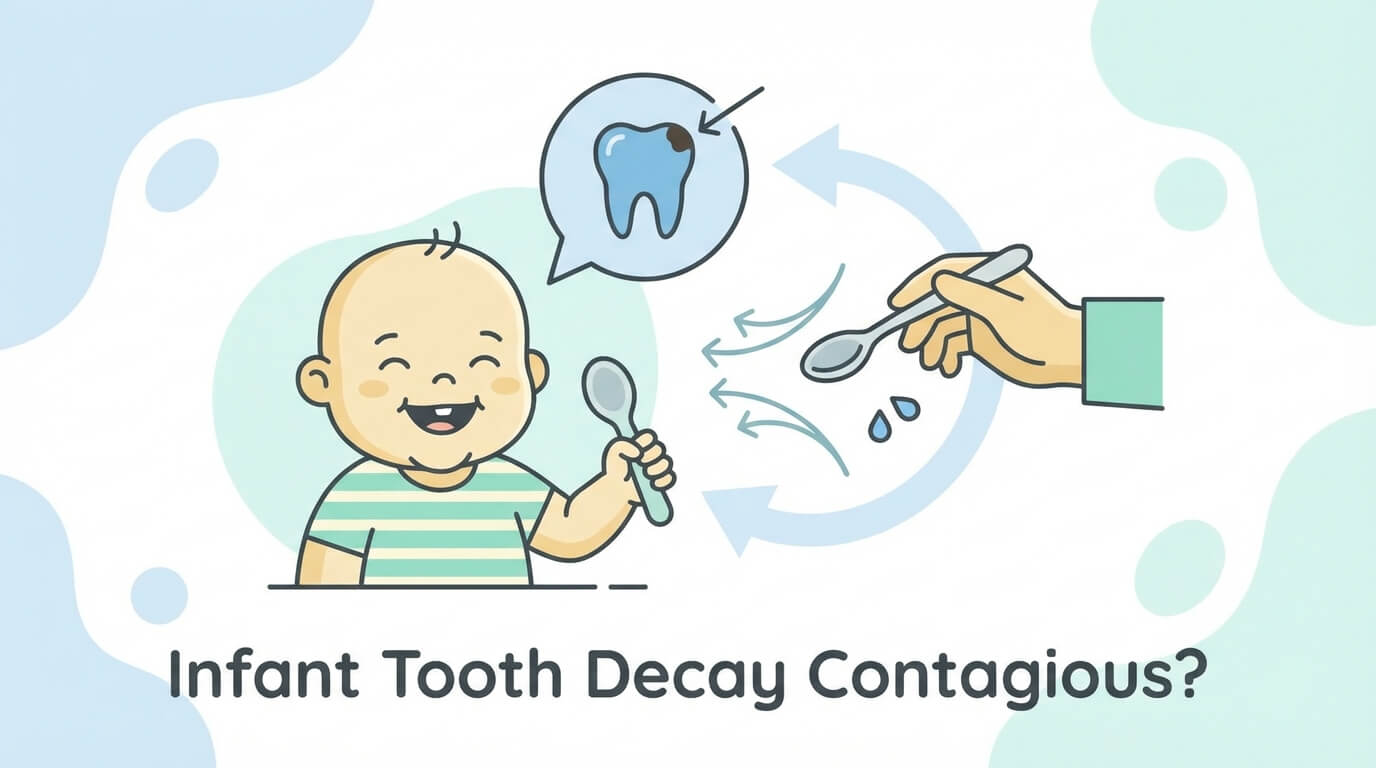
Is Infant Tooth Decay Contagious? Yes, infant tooth decay (early childhood caries) is an infectious disease spread by cavity-causing bacteria passed from parents or caregivers to babies through saliva, such as via lip kissing or sharing spoons. The good news: it’s highly preventable — keep your own mouth healthy, avoid saliva sharing, clean baby’s gums and teeth daily from birth, limit sugary bottles (especially at night), and see a pediatric dentist early (by age 1) to greatly reduce or eliminate the risk and keep your baby’s smile healthy.
There is a moment, unremarkable and universal, that plays out in kitchens around the world every single day. A parent stirs a bowl of warm oatmeal, lifts the spoon to their own lips to test the temperature, and then guides that same spoon into the waiting mouth of their eight-month-old. Nobody photographs this moment. Nobody writes it down. It is one of ten thousand small, instinctive acts of care that constitute an ordinary morning with an infant — so routine that it barely registers as a decision at all.
And yet, from the perspective of oral microbiology, something significant just happened. A community of bacteria — invisible, alive, and extraordinarily well-adapted to life on human teeth — crossed from one mouth to another. Not all of these bacteria are harmful. Most are benign, even beneficial. But among them, riding the slick film of saliva on that spoon, may be a species called Streptococcus mutans — the single organism most directly responsible for dental cavities in humans. In that tender, unconscious act of feeding, a parent may have just introduced the biological seed of their child’s first cavity.
This is not a story about blame. Sharing food and affection with an infant is as old as the human species, and no parent should feel guilt over the natural intimacy of caregiving.
But it is a story about knowledge — specifically, about a piece of scientific understanding that has been well-established in dental research for decades yet remains almost entirely unknown to the general public: tooth decay is an infectious, transmissible disease, and the bacteria that cause it are routinely passed from caregivers to infants during the earliest months of life. Understanding this single fact may be the most powerful preventive tool a family can possess, because what is understood can be managed, and what is managed can, in many cases, be entirely prevented.
To fully appreciate why this matters, it helps to start at the very beginning — not with the cavity, but with the mouth itself, and the invisible world that inhabits it.
What Actually Causes a Cavity?
Most people, if asked what causes cavities, would offer some variation of “sugar” or “not brushing enough.” These answers are not wrong, but they are incomplete in a way that matters. Sugar does not, by itself, dissolve teeth. Poor brushing does not, on its own, create holes in enamel. A cavity is the end result of a biological process — a chain of events that requires a specific cast of characters and a specific set of conditions to unfold.
The central character in this story is a bacterium: Streptococcus mutans, often shortened to S. mutans in the scientific literature. To understand its role, imagine a microscopic tenant that moves onto the surface of a tooth and never leaves. This tenant is not passive. It feeds, constantly and eagerly, on the sugars and refined carbohydrates that pass through the mouth with every meal and snack. And like every living organism, it produces waste. In the case of S. mutans, that waste product is lactic acid — a corrosive chemical that, over time, eats away at the hard mineral surface of the tooth.
To grasp why this matters so much, it helps to understand what tooth enamel actually is. Enamel — the white, glossy outer layer visible on every tooth — is the hardest substance the human body produces, harder even than bone. It is composed primarily of a crystalline mineral called hydroxyapatite, packed into a dense, tightly organized structure that evolved to withstand decades of biting, chewing, and grinding. Think of it as biological armor: remarkably strong, but not invincible. Like any armor, it has a specific vulnerability. For tooth enamel, that vulnerability is acid.
Each time S. mutans metabolizes sugar, it releases a small wave of lactic acid that washes over the surrounding enamel. This acid dissolves the mineral crystals at the tooth’s surface in a process scientists call demineralization — essentially, the enamel is being dissolved from the outside in, one molecular layer at a time. Under normal circumstances, the body fights back. Saliva, which is slightly alkaline, neutralizes the acid and carries dissolved minerals (calcium and phosphate) back to the tooth surface, repairing the damage in a complementary process called remineralization. In a healthy mouth, these two forces — attack and repair — exist in a rough equilibrium, like two sides of a seesaw that stays more or less level throughout the day.
A cavity forms when the seesaw tips. When acid attacks happen too frequently, last too long, or occur when saliva flow is reduced (as during sleep), the repair process cannot keep pace with the destruction. The enamel weakens, softens, and eventually collapses inward, creating the hole that dentists call a carious lesion — the clinical term for what everyone else simply calls a cavity.
In adult teeth, this process can take months or even years to produce a visible cavity. But in the primary teeth of infants and toddlers, the timeline is dramatically compressed. Baby teeth have enamel that is roughly half as thick as adult enamel — thinner, softer, and far more porous. If an adult tooth’s enamel is a castle wall, a baby tooth’s enamel is more like a garden fence: functional, but far easier to breach. This is precisely why early childhood cavities can progress from invisible to devastating in a matter of weeks, and why the bacterial colonization of a baby’s mouth is a matter of genuine consequence.
Born Sterile: How Bacteria First Arrive in a Baby’s Mouth
Here is a fact that surprises nearly every parent who hears it for the first time: a newborn baby’s mouth contains no Streptococcus mutans whatsoever. At the moment of birth, the oral cavity is essentially a blank slate — a warm, moist environment populated by a sparse, harmless community of bacteria acquired during passage through the birth canal or, in the case of cesarean births, from the surrounding skin and hospital environment. S. mutans is not among them.
This raises an obvious and important question: if babies are not born with cavity-causing bacteria, where do those bacteria come from?
The answer, confirmed by decades of genetic fingerprinting studies, is both simple and profound: they come from other people. Specifically, they come from the people who are closest to the baby — the ones who feed, comfort, kiss, and care for the child during the first years of life. In the scientific literature, this process is called vertical transmission, a term borrowed from infectious disease epidemiology that describes the passage of a pathogen from parent to offspring.
The most comprehensive and frequently cited research on this phenomenon comes from a groundbreaking series of studies by Dr. Page Caufield and his colleagues at the University of Alabama, first published in the Journal of Dental Research in the early 1990s and expanded over the subsequent decade. Caufield’s team used a technique called DNA fingerprinting to compare the genetic profiles of S. mutans strains found in children’s mouths with those found in their mothers’ mouths. The results were striking: in the vast majority of cases, the bacterial strains were identical. The children had not acquired S. mutans from random environmental exposure. They had acquired it directly from their mothers, through the shared saliva of daily caregiving.
Subsequent research has broadened this picture somewhat. Fathers, grandparents, older siblings, and other frequent caregivers can also serve as sources of transmission, particularly if they have high levels of S. mutans in their own saliva — a condition strongly correlated with untreated cavities and poor oral hygiene. But the mother remains, statistically, the most common source, for the straightforward reason that mothers tend to have the most frequent, most intimate oral contact with infants during the critical early months.
The specific behaviors that facilitate this transfer are worth understanding in detail, not because they are unusual, but precisely because they are so ordinary.
When a caregiver tastes food from a baby’s spoon before offering it, a film of saliva — and the bacteria it contains — transfers to the utensil and then to the child’s mouth. When a parent blows on hot food to cool it, a fine aerosol of saliva droplets settles on the food’s surface. When a dropped pacifier is “cleaned” by popping it briefly into a parent’s mouth, it returns to the baby coated in a fresh inoculum of adult oral bacteria. Even kissing a baby on the lips, one of the most instinctive and emotionally meaningful gestures in human bonding, involves a measurable exchange of saliva.
None of these behaviors are pathological. They are, in fact, deeply normal expressions of human caregiving that have existed for as long as humans have raised children. The point is not to pathologize them, but to illuminate them — to transform an unconscious habit into a conscious choice, so that parents who wish to reduce bacterial transfer can do so without sacrificing the warmth and closeness that define early parenthood.
Beyond Parents: How Children Spread Bacteria to Each Other
While the parent-to-child pathway dominates the research, it is not the only route by which S. mutans colonizes a young mouth. Horizontal transmission — the spread of bacteria between individuals of the same generation, particularly among young children in shared environments — represents a secondary but meaningful pathway that is often overlooked.
Consider the typical scene at a daycare center or a playgroup. Toddlers are, by nature, generous sharers of saliva. They mouth each other’s toys with enthusiastic abandon. They trade sippy cups mid-snack with the casual indifference of people who have not yet learned about germ theory. An older sibling at home, who may already harbor a well-established population of S. mutans from their own dietary and hygiene history, can transfer bacteria to a younger sibling through shared cups, shared food, or the simple, affectionate chaos of daily sibling interaction.
This does not mean that communal childcare is inherently risky or that siblings should be kept apart. What it does mean is that a child’s oral microbiome — the total community of bacteria living in the mouth — is shaped not only by parental contact but by the broader social world the child inhabits. Awareness of this broader ecology helps parents and childcare providers make informed, practical decisions: encouraging separate cups at snack time, cleaning shared toys regularly, and maintaining good oral hygiene for all children in the household, not just the youngest.
The Window of Infectivity: Why Timing Matters More Than Almost Anything
Among the most important concepts in pediatric oral health — and one of the least widely communicated to parents — is what researchers call the “window of infectivity.”First described and named by Dr. Caufield, this term refers to a specific developmental period, typically spanning from approximately 6 months to 30 months of age (roughly six months to two and a half years), during which a child’s mouth is maximally vulnerable to lasting colonization by S. mutans.
The biological logic behind this window is elegant and worth understanding. S. mutans, unlike many bacteria, cannot establish a permanent colony on soft tissue alone. It requires a hard, non-shedding surface to adhere to — a surface that does not peel away and renew itself the way the mucous membranes of the gums, cheeks, and tongue do. Before a baby’s teeth erupt, the mouth offers no such surface. Bacteria may enter, but they are washed away by saliva, swallowed, and eliminated. They have nowhere to anchor.
The eruption of the first primary tooth, usually around six months of age, changes the equation entirely. That tiny tooth — barely a sliver of white breaking through the gum — provides exactly the kind of hard, permanent surface S. mutans has been waiting for. The bacterium adheres to the enamel, forms a sticky biofilm (the thin, invisible layer of bacteria and sugars that dentists call plaque), and begins to establish a colony. Once established, that colony is remarkably persistent. Research suggests that the specific strains of S. mutans acquired during this window tend to remain the dominant strains in the mouth for years, often well into adulthood.
The implications of this timeline are both sobering and hopeful. Sobering, because it means that the bacterial landscape of a child’s mouth may be largely determined before the child’s third birthday — long before most parents have given serious thought to dental care. But hopeful, because the narrowness of the window means that targeted intervention during a specific, well-defined period can yield outsized, lifelong benefits. The parent who understands this window and acts within it is not merely preventing a single cavity. They are shaping the microbial ecology of their child’s mouth for decades to come.
The numbers underscore the urgency. The American Academy of Pediatric Dentistry (AAPD) estimates that Early Childhood Caries (ECC) — defined as the presence of one or more decayed, missing, or filled tooth surfaces in a child under six — affects approximately 23% of U.S. children aged 2 to 5.
That makes ECC the single most common chronic disease of early childhood in the United States, more prevalent than asthma (which affects roughly 8% of children) and childhood obesity (which affects approximately 13% of children in the same age group). Yet unlike asthma or obesity, ECC receives a fraction of the public attention, parental education, and preventive investment — a disparity that the transmission model of tooth decay helps to explain and, ultimately, to correct.
Rethinking the Mouth: From Battlefield to Garden
For most of the 20th century, the prevailing metaphor in dentistry was one of warfare. Bacteria were the enemy. Mouthwash was ammunition. The goal was to kill as many microorganisms as possible and hope that the mouth, thus sterilized, would remain disease-free. This framework, while intuitive, turns out to be deeply incomplete — and in some cases, counterproductive.
Over the past two decades, advances in microbiome science — the study of the vast, complex communities of microorganisms that inhabit every surface and cavity of the human body — have fundamentally reshaped the way scientists and clinicians think about oral health. The human mouth, it turns out, is home to more than 700 distinct species of bacteria, along with fungi, viruses, and other microorganisms, forming an ecosystem of staggering complexity. The vast majority of these organisms are harmless. Many are actively beneficial, playing essential roles in digestion (breaking down food particles), immune regulation (training the immune system to distinguish friend from foe), and pathogen resistance (competing with harmful species for space and resources).
S. mutans, in this ecological context, is not an alien invader. It is a native species — one that, under balanced conditions, exists in small, manageable numbers, kept in check by the sheer diversity and competitive vigor of the surrounding microbial community. A cavity, in this view, is not so much an infection as it is an ecological collapse — a state in which the normal balance of the oral ecosystem has been disrupted, allowing a single opportunistic species to proliferate unchecked.
The analogy that best captures this shift in thinking is that of a garden. A healthy garden is not a barren, sterile plot of soil. It is a thriving, diverse landscape where deep-rooted plants crowd out weeds, beneficial insects keep pests in check, and the overall vitality of the system makes it resilient against any single threat.
The gardener’s job is not to eliminate all life, but to cultivate the right conditions for the right organisms to flourish. Similarly, the goal of modern pediatric oral health is not to sterilize a baby’s mouth — an impossible and undesirable objective — but to establish and maintain a diverse, balanced oral microbiome in which caries-causing species like S. mutans never gain the upper hand.
This ecological perspective has profound implications for how families approach infant oral health. It suggests that early interventions — reducing the initial dose of transmitted S. mutans, establishing good dietary and hygiene habits that favor beneficial bacteria, and supporting the natural protective capacity of saliva — are not merely preventing disease. They are cultivating health, in the deepest and most literal sense of the word.
The First 1,000 Days: Oral Health as a Foundation for Whole-Body Wellness
This garden metaphor extends beyond the mouth itself, connecting to one of the most exciting frameworks in modern pediatric medicine: the concept of the “first 1,000 days.” Spanning from conception to approximately the child’s second birthday, this period is increasingly recognized as a critical window for establishing the biological foundations of lifelong health — not just in terms of nutrition and brain development, but also in terms of microbiome ecology.
The oral microbiome does not exist in isolation. It is the gateway to the gastrointestinal microbiome, and the two systems are in constant communication. Bacteria swallowed from the mouth seed the gut, and the gut microbiome, in turn, influences immune function, metabolic health, and even neurological development through what researchers call the gut-brain axis. Emerging research suggests that disruptions to the oral microbiome in early life — whether from heavy S. mutans colonization, excessive antibiotic use, or poor diet — may have ripple effects that extend far beyond the teeth, potentially influencing a child’s susceptibility to allergies, autoimmune conditions, and metabolic disorders later in life.
While this research is still in its early stages and definitive causal links remain to be established, the direction of the science is clear: oral health in infancy is not a standalone concern. It is a foundational element of whole-body health, and the habits established in the first 1,000 days can echo through a lifetime.
The Co-Conspirators: Why Bacteria Alone Are Not Enough
Understanding that cavity-causing bacteria are transmissible is a crucial first step. But it is equally important to understand that bacterial colonization, by itself, does not guarantee decay. S. mutans is a necessary ingredient, but it is not a sufficient one. For a cavity to form, the bacteria need a steady supply of fuel, and they need an environment that allows them to operate without interference. This is where diet, feeding habits, and the body’s own defenses enter the picture.
Sugar: The Fuel That Powers the Acid Factory
S. mutans feeds on fermentable carbohydrates — a category that includes not only the obvious culprits like candy, cookies, and soda, but also the natural sugars found in milk, formula, fruit juice, and many foods marketed specifically to toddlers. From the bacterium’s perspective, there is no meaningful difference between the sugar in a lollipop and the sugar in a pouch of organic pureed mango. Both are metabolized into lactic acid with equal efficiency.
This is a crucial point that catches many health-conscious parents off guard. A diet free of processed sweets but rich in frequent servings of fruit juice, dried fruit, flavored yogurt, and whole-grain crackers (which break down into simple sugars in the mouth) can be just as cariogenic — cavity-promoting — as a diet that includes candy, if the frequency and timing of sugar exposure are not managed. The critical variable is not just how much sugar a child consumes, but how often and for how long the teeth are exposed to it.
The Danger of Nighttime Bottles: A Perfect Storm for Decay
Few feeding practices illustrate this principle as vividly as the bedtime bottle — a habit so common and so seemingly benign that many parents are stunned to learn of its consequences. The scenario unfolds like this: a fussy toddler is given a bottle of milk, formula, or juice at bedtime and falls asleep while feeding. The bottle remains in the mouth, and the liquid pools around the upper front teeth throughout the night.
Under normal daytime conditions, saliva would mitigate much of the damage. Saliva is the mouth’s first line of defense: it dilutes and washes away food debris, neutralizes bacterial acid with its buffering compounds, and delivers dissolved calcium and phosphate to damaged enamel, enabling the remineralization process that repairs early acid damage. But during sleep, saliva production drops by as much as 90%. The mouth becomes dry, quiet, and still — the biological equivalent of turning off the sprinklers in a garden during a drought. With saliva flow effectively suspended, the milk sugars pooling around the teeth provide S. mutans with an all-night buffet, and the acid the bacteria produce goes entirely unchecked for hours.
The resulting pattern of destruction is so characteristic that it has its own clinical name: Baby Bottle Tooth Decay. It typically strikes the upper front teeth first — the teeth most directly bathed by the pooling liquid — producing a telltale arc of white, brown, or gray discoloration that can progress from surface staining to complete crown destruction in a matter of months. Pediatric dentists see this pattern so frequently that they can often identify it at a glance, and for many families, it is the first and most devastating encounter with early childhood caries.
The Grazing Trap: Why Constant Snacking Undermines the Mouth’s Defenses
A related but subtler contributor to infant tooth decay is the modern pattern of continuous snacking — what nutritionists sometimes call “grazing.” In many contemporary households, toddlers have near-constant access to snacks: a handful of crackers here, a few sips of juice there, a fruit pouch in the stroller, a cup of milk before nap. Each of these exposures, individually, may seem trivial. But from an oral health perspective, each one restarts the acid-attack clock.
As described earlier, every time fermentable carbohydrates enter the mouth, S. mutansproduces acid, and that acid lowers the oral pH for approximately 20 to 30 minutes before saliva can fully neutralize it and begin the remineralization process. In a structured eating pattern — three meals and two snacks per day, for instance — the teeth experience five discrete acid attacks, each followed by a recovery period during which saliva does its restorative work. In a grazing pattern, the acid attacks overlap, the pH never fully recovers, and the enamel is subjected to a nearly continuous state of demineralization. Over weeks and months, this relentless, low-grade assault can be every bit as destructive as a single dramatic sugar exposure.
The practical takeaway is not that snacks are inherently harmful, but that timing and structure matter as much as content. Consolidating eating into defined meals and snacks, offering water between meals (rather than juice or milk), and avoiding prolonged exposure to any sweetened liquid are among the simplest and most effective dietary strategies for protecting young teeth.
From Knowledge to Action: A Practical Framework for Prevention
Understanding the science of bacterial transmission and acid-driven decay is valuable only insofar as it translates into tangible, achievable actions. What follows is a synthesis of current evidence-based guidance from the American Academy of Pediatric Dentistry (AAPD), the American Dental Association (ADA), and the World Health Organization (WHO) — organized not as a collection of isolated tips, but as an integrated, ecological approach to infant oral health.
Start with the Caregiver
Perhaps the most counterintuitive and underappreciated strategy in all of pediatric dentistry is this: the single most effective thing a parent can do for their baby’s teeth is to take care of their own. Because S. mutans is transmitted through saliva, a parent’s oral bacterial load directly influences the child’s risk. A parent with multiple untreated cavities harbors a dense, thriving population of S. mutans, and every shared spoon, every blown-upon meal, every kissed cheek delivers a heavier dose of pathogenic bacteria than would a parent whose own mouth is well-maintained.
This means that a parent’s dental checkup is not a personal indulgence. It is a pediatric intervention. Treating existing cavities, maintaining a daily routine of thorough brushing with fluoride toothpaste and flossing, and receiving professional cleanings at regular intervals all serve to reduce the bacterial reservoir available for transmission. In a very real sense, fixing a parent’s cavity is preventive medicine for the baby.
Be Intentional About Saliva-Sharing
Eliminating all salivary contact between caregiver and infant is neither realistic nor necessary. But small, deliberate adjustments to high-frequency behaviors can meaningfully reduce the volume and regularity of bacterial transfer.
Instead of testing food temperature with a tasting spoon, a caregiver can touch a small amount to the inside of the wrist — the same technique long used to test the temperature of a baby’s bottle. Instead of blowing on hot food, stirring and waiting allows it to cool without introducing salivary aerosol. Instead of cleaning a dropped pacifier with the mouth, rinsing it under running water — or simply carrying a spare — achieves the same result without the bacterial payload. These are not dramatic lifestyle changes. They are minor pivots, each requiring only a moment of awareness, that collectively reduce one of the primary routes of S. mutans transmission.
Begin Oral Care Before the First Tooth
Many parents assume that oral hygiene begins when teeth appear. In reality, it should begin much earlier — ideally within the first weeks of life. Gently wiping a baby’s gums with a clean, damp washcloth or gauze pad after feedings serves two purposes. First, it removes the thin film of milk residue that can serve as an early nutrient source for bacteria. Second, and perhaps just as importantly, it acclimates the baby to the sensation of having the mouth handled — a form of early habituation that makes the later introduction of a toothbrush far less distressing for both parent and child.
When the first tooth does emerge — typically around six months, though the timing varies widely — a soft-bristled infant toothbrush should be introduced immediately. The ADA recommends using a smear of fluoride toothpaste no larger than a grain of ricefor children under three years of age. This amount is sufficient to provide meaningful cavity protection while being small enough that even if the child swallows it (as young children invariably do), the fluoride exposure is negligible and well within safe limits.
After the third birthday, the amount can be increased to a pea-sized dollop, and parents should continue to supervise and assist with brushing until the child demonstrates the manual dexterity to do it effectively alone — typically around age six or seven.
Harness the Power of Xylitol
One of the most promising and underutilized preventive tools in pediatric oral health is xylitol, a naturally occurring sugar alcohol found in many fruits and vegetables and commercially derived from birch bark or corn cobs. Xylitol looks and tastes like sugar, but its molecular structure makes it fundamentally different from the perspective of S. mutans.
Here is what happens: S. mutans absorbs xylitol just as eagerly as it absorbs regular sugar, because the bacterium cannot distinguish between the two. But once inside the bacterial cell, xylitol cannot be metabolized. It enters a futile biochemical loop — the bacterium expends energy trying to process a molecule it cannot use, producing no acid in the process. Over time, repeated xylitol exposure reduces the S. mutans population, lowers its ability to adhere to tooth surfaces, and diminishes its acid-producing capacity.
The evidence for xylitol’s effectiveness in reducing mother-to-child transmission is particularly compelling. A landmark study by Söderling and colleagues at the University of Turku, Finland, tracked mothers who chewed xylitol gum regularly (consuming roughly 6 to 10 grams of xylitol per day) starting when their children were three months old.
The researchers then compared the children’s S. mutans levels and cavity rates to those of children whose mothers received conventional treatments (fluoride varnish or chlorhexidine rinse). The xylitol group showed dramatically lower transmission rates, and the children of xylitol-using mothers had up to 70% fewer cavities by age five — an effect that persisted even after the mothers stopped using xylitol, suggesting that the early prevention of colonization had lasting ecological effects on the children’s oral microbiome.
For parents with a personal history of cavities or high S. mutans levels, the incorporation of xylitol gum, mints, or lozenges into their own daily routine represents a low-cost, low-effort intervention with an unusually strong evidence base. It is worth raising with a dentist at the next checkup.
Prioritize the First Dental Visit
Both the AAPD and the ADA recommend that a child’s first dental visit should occur when the first tooth erupts, or no later than the child’s first birthday — whichever comes first. This recommendation consistently surprises parents, many of whom assume that dental visits are unnecessary until a child has a full set of teeth or enters school.
The purpose of this early visit is not primarily treatment. It is assessment, education, and prevention. A pediatric dentist can evaluate the child’s caries risk based on factors including the number and condition of erupted teeth, the dietary and feeding patterns reported by the caregiver, and the caregiver’s own oral health status.
If warranted, the dentist can apply a fluoride varnish — a concentrated, quick-drying fluoride coating painted directly onto the teeth — which has been shown to reduce caries incidence in young children by approximately 30 to 40%, according to a systematic review published in the Cochrane Database of Systematic Reviews. Just as critically, the visit gives the family a chance to ask questions, receive personalized guidance, and begin building a relationship with a dental provider in a low-stress context — no drills, no discomfort, just a friendly introduction to a chair that will become a regular part of the child’s life.
Conclusion
The science of infant tooth decay, viewed in its entirety, tells a story that is far more nuanced and far more hopeful than the simple narrative of “too much sugar and not enough brushing.” It is a story about ecology — about the invisible microbial communities that inhabit every human mouth, the delicate balance between pathogenic and protective species, and the surprisingly narrow window of time during which that balance is most decisively established.
The bacteria that cause cavities are transmissible, yes. They pass from caregiver to child through the intimate, ordinary gestures of daily life. But transmission is not destiny. A child who acquires S. mutans early is at elevated risk, but that risk can be powerfully mitigated — by a parent who tends to their own oral health, who makes small but intentional adjustments to feeding and sharing habits, who introduces oral hygiene early and consistently, and who connects with a pediatric dentist before the first birthday.
What emerges from this understanding is not a framework of anxiety, but one of agency. The first 30 months of a child’s life are an extraordinary window — a period in which the microbial landscape of the mouth is still plastic, still responsive, still waiting to be shaped by the habits and choices of the people who care for that child. Every gum wiped with a damp cloth, every meal served on a separate spoon, every dental appointment kept, every piece of xylitol gum chewed by a conscientious parent — these are not trivial acts. They are ecological interventions, each one tilting the microbial balance a little further toward health.
No loving parent will ever be defined by a shared spoon or a kissed forehead. But the parent who carries this knowledge — who brings it into the kitchen, the nursery, the pediatric dentist’s office — is a parent equipped not merely to react to problems, but to prevent them. And in the quiet, cumulative logic of prevention, that makes all the difference in the world.
References & Further Reading
- Initial acquisition of mutans streptococci by infants: evidence for a discrete window of infectivity
- Influence of maternal xylitol consumption on acquisition of mutans streptococci by infants
- Pacifier cleaning practices and risk of allergy development
- Fluoride varnishes for preventing dental caries in children and adolescents
- Policy on Early Childhood Caries (ECC): Consequences and Preventive Strategies
- Fluoride Toothpaste Use for Young Children Clinical Practice Guideline (2014)
- Oral health
October 25, 2026
October 25, 2026
October 25, 2026
October 25, 2026