
Why-Is-My-Baby-Putting-Everything-in-Their-Mouth
Why Is My Baby Putting Everything in Their Mouth?
Infant mouthing is a vital, evolutionarily driven developmental milestone that serves as a baby’s primary method for gathering sensory data, strengthening the complex oral muscles required for future speech, and calibrating their developing immune system, making it a behavior for parents to safely facilitate rather than fear.
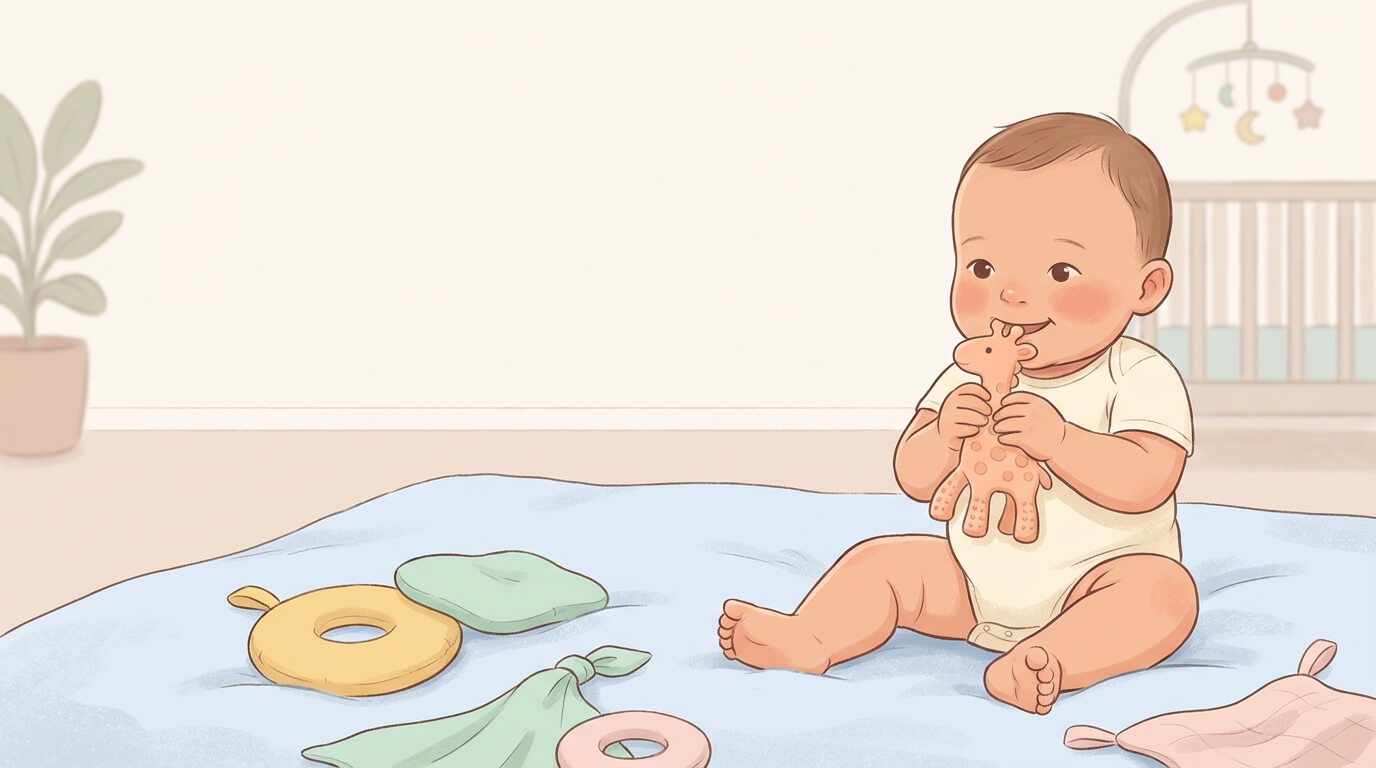
There is a moment every new parent comes to know with an almost cinematic clarity. The house is quiet. The baby, positioned on a play mat surrounded by a carefully curated collection of age-appropriate toys, appears contentedly occupied. The caregiver steps into the kitchen — not far, just a few feet — to pour a cup of coffee. Perhaps fifteen seconds pass. When the caregiver turns back, the baby has bypassed every single developmental toy and is instead holding, with both hands and an expression of deep scholarly concentration, a TV remote. It is already in the mouth.
The heart rate spikes. The caregiver lunges. The remote is extracted, wiped down, and placed on a high shelf. But within minutes, the baby has found something else — a shoe, a magazine corner, a stray leaf that drifted in from the patio — and the cycle begins again.
For many parents, this behavior provokes a layered cocktail of emotions: alarm about choking, anxiety about germs, mild exasperation at the sheer relentlessness of it, and — lurking quietly beneath everything — the nagging worry that something might be wrong. Is the baby hungry all the time? Is this some kind of compulsion? Should someone be told about this?
Here is the reassuring truth, supported by decades of developmental science: nothing is wrong. In fact, something is going extraordinarily right.
The behavior researchers call “mouthing” — the near-universal tendency of human infants to bring objects to their lips, tongue, and gums — is not a bad habit, a sign of constant hunger, or a behavioral problem that needs correcting. It is one of the most elegant and efficient learning strategies in the entire mammalian world, and understanding why it happens, how it changes over time, and what it accomplishes transforms a daily source of parental stress into something closer to wonder.
The Science Behind the Instinct: How a Baby’s Mouth Became a Research Laboratory
To understand why infants explore the world mouth-first, it helps to step inside their perceptual experience for a moment — to imagine what it actually feels like to be four months old and confronted with an unfamiliar object.
The Problem: A Brain Full of Questions and Very Few Tools
Consider what a baby’s available instruments look like in the early months of life. The visual system is still maturing — infants can see colors, but depth perception is unreliable, and the ability to judge an object’s material properties (Is this thing hard? Soft? Heavy?) from sight alone requires a kind of cross-referencing with touch that the brain has not yet learned to perform. The hands, those marvelous future instruments of surgery and piano sonatas, are still operating with the neurological equivalent of oven mitts — capable of gross grasping motions but not yet refined enough to perform the delicate fingertip manipulations that provide detailed tactile feedback.

Think of it this way: asking a four-month-old to understand a wooden block using only their hands and eyes is a bit like asking an adult to evaluate the quality of a fabric while wearing thick winter gloves in a dimly lit room. The tools are technically present, but the resolution is far too low to extract meaningful data.
The mouth, however, is a different story entirely.
The Solution: 100,000 Nerve Endings in a Very Small Space
The lips and tongue of a human infant are among the most densely innervated regions of the entire body — meaning they contain an extraordinarily high concentration of sensory nerve endings packed into a very small area. To put this in perspective, neuroscientists use a concept called the cortical homunculus — a distorted map of the human body drawn in proportion to how much brain real estate is dedicated to processing sensory information from each body part. On this map, the lips and tongue are enormous, dwarfing the legs, the torso, and even the hands. The brain has allocated a disproportionate amount of its processing power to decoding signals from the mouth.
What is a cortical homunculus?
Imagine a human figure drawn so that each body part is sized according to how sensitive it is, rather than how large it physically is. The result is a strange-looking creature with gigantic lips, a massive tongue, oversized hands, and a tiny torso and legs. This is the cortical homunculus — a visual representation of how the brain prioritizes sensory input. For infants, whose hands are still developing fine motor control, the mouth’s outsized representation on this neural map makes it the single most powerful sensory tool available.
What does this mean in practice? When a baby places a wooden block in their mouth, they are not engaging in random, purposeless behavior. They are running a multi-variable sensory experiment, extracting a remarkable amount of data that their eyes and hands simply cannot yet provide:
| Property Being Tested | What the Mouth Learns | Example |
|---|---|---|
| Texture | Is this smooth, rough, bumpy, or ridged? | A polished wooden ring vs. a textured rubber ball |
| Temperature | Is this warm like skin or cold like metal? | A caregiver’s finger vs. a stainless steel spoon |
| Hardness/Density | Does this flex under pressure, or is it rigid? | A soft cloth book vs. a hard plastic rattle |
| Shape & Contour | What are the edges, curves, and dimensions? | A flat disc vs. a cylindrical tube |
| Taste/Chemical Properties | Does it have a flavor? Is it organic or synthetic? | A wooden spoon vs. a silicone teether |
In a single mouthing episode lasting a few seconds, the infant’s brain receives a rich, multidimensional data packet about an object that would take far longer to assemble through vision and touch alone. The mouth, put simply, is operating as the baby’s most reliable analytical instrument — a kind of biological Swiss Army knife for making sense of the physical world.
The Theoretical Framework: Piaget and the Sensorimotor Stage
This behavior is not merely anecdotal — it sits at the center of one of the most influential theories in developmental psychology.
Swiss psychologist Jean Piaget (1896–1980), widely regarded as the founder of the modern study of child cognitive development, described the first two years of life as the Sensorimotor Stage — the initial phase of a four-stage model that charts how human thinking evolves from infancy through adolescence. During the Sensorimotor Stage, Piaget observed, infants do not yet possess the capacity for abstract, symbolic thought. They cannot reason about the world in the way an older child or adult can. Instead, they build their understanding of reality through direct physical interaction — touching, grasping, dropping, shaking, and, crucially, mouthing.
To appreciate how different this is from adult cognition, consider how an adult learns about a new object — say, an unfamiliar kitchen gadget. An adult can read the label, watch a video tutorial, or simply deduce its function from its shape and context. An infant has none of these cognitive shortcuts. The only path to understanding is through the senses, and the mouth, during these early months, is the most powerful sense of all.
Mouthing, in Piaget’s framework, is not a quirk. It is the primary research methodology of the human mind during its most formative period.
A Phase That Shifts and Evolves: The Developmental Timeline of Mouthing
One of the questions parents most frequently ask — often with a note of weary hopefulness — is: When does this stop? The answer is both reassuring and instructive, because mouthing does not simply switch off one day. It evolves gradually, in lockstep with broader developmental milestones, in a progression that is remarkably consistent across cultures and demographics.
Birth to 3 Months: Reflexes and Self-Discovery
In the earliest weeks of life, mouthing is not a conscious choice — it is driven by primitive reflexes hardwired into the nervous system. Two reflexes dominate this period:
- The rooting reflex: When something touches a newborn’s cheek, the head automatically turns toward the stimulus, and the mouth opens in search of a nipple. This reflex exists to ensure successful breastfeeding and is present from the first moments of life.
- The sucking reflex: Anything that enters the mouth triggers a powerful, rhythmic sucking response. This reflex, like rooting, is a survival mechanism — it ensures that the infant can feed even before the brain is sophisticated enough to direct the behavior voluntarily.
During this phase, the primary objects being mouthed are the baby’s own hands and fists. This is significant. The infant is not merely sucking for comfort (though comfort is part of it). They are beginning the monumental project of body mapping — learning, through direct sensory feedback, that these strange objects drifting into and out of their visual field are part of them. “This thing I can see — I can also feel it. It responds when I move. It belongs to me.” This is the foundation of proprioception, the sense of knowing where one’s own body is in space, and it begins here, at the mouth.
4 to 7 Months: The Golden Age of Oral Exploration
Around the four-month mark, something shifts dramatically. Hand-eye coordination improves. The ability to intentionally reach for, grasp, and bring objects to the midline of the body comes online. And with it, a new and unshakable rule is established in the infant’s operational protocol: if it can be reached, it will be tasted.
This is the period that sends most households into a sustained state of baby-proofing urgency. Blocks, rattles, teething rings, and — invariably — whatever the caregiver is currently holding all become targets. The baby’s world has expanded, and the mouth is the primary instrument for processing all of this new territory.
This phase typically overlaps with the onset of teething (the eruption of the first primary teeth through the gums, usually the lower central incisors), which adds an entirely separate motivation for mouthing — one that will be explored in detail in the next section.
8 to 12 Months: Cross-Referencing and Multi-Modal Exploration
As the baby approaches the end of the first year, mouthing does not disappear, but it becomes noticeably more deliberate and contextual. An eight-month-old does not simply grab an object and put it in the mouth. They pick it up, look at it, turn it over, bang it against the floor, place it in the mouth, remove it, examine it again, and perhaps offer it to a caregiver before retrieving it for another round of oral analysis.
What is happening here is cognitively sophisticated: the baby is cross-referencing data from multiple senses. The mouth is no longer the sole investigative tool — it is being integrated into a broader system of inquiry that now includes improved vision, more precise hand manipulation, and an emerging understanding of cause and effect (if I drop this, it makes a sound; if I mouth it, it feels smooth).
12 to 24 Months: The Gradual Handoff
Between the first and second birthdays, a gradual but decisive transition occurs. Fine motor skills — the ability to use the thumb and forefinger in a precise pincer grasp, to poke, prod, squeeze, and manipulate objects with dexterity — mature rapidly. The hands, which spent the first year playing a supporting role to the mouth, begin to assert themselves as the primary instruments of exploration.
This does not happen overnight. There will be regressions, especially during periods of teething or stress. But the overall trend is unmistakable: the mouth slowly retires from its career in fieldwork, and by approximately age two to three, most children have largely outgrown the generalized mouthing of non-food items.
A helpful analogy: Think of the transition from mouth to hands as a technology upgrade in an office. For the first year, the mouth is the office’s primary computer — the only machine powerful enough to run the necessary software. Meanwhile, the hands are a secondary system, still being installed and configured. By the second year, the hand-system is finally online and operational, and the mouth-computer, though still available, is no longer the default.
Teething vs. Curiosity — How to Tell the Difference
Perhaps no aspect of infant mouthing generates more confusion than the overlap between developmental exploration and teething pain relief. Both involve putting objects in the mouth. Both peak during the same developmental window. And both are entirely normal. But they are driven by different motivations, and the distinction matters because the caregiver’s response should differ accordingly.
What Teething Actually Feels Like
To appreciate why teething drives such intense chewing behavior, it helps to understand what is physically happening beneath the gum line. A tooth erupting through soft tissue produces localized inflammation, swelling, and pressure — sensations that most adults last experienced during the emergence of wisdom teeth and remember as deeply unpleasant. For an infant experiencing this for the first time, with no cognitive framework for understanding why their mouth hurts, the discomfort is both alarming and impossible to articulate.
Chewing on firm or cold objects provides counter-pressure that compresses the inflamed tissue and temporarily numbs the area — a simple but effective pain management strategy that the baby discovers instinctively.
A Side-by-Side Comparison
| Signal | Exploratory Mouthing | Teething-Driven Mouthing |
|---|---|---|
| Quality of chewing | Gentle, methodical, unhurried | Frantic, intense, pressured |
| Baby’s affect | Calm, curious, visually engaged with the object | Fussy, irritable, may cry between bouts |
| Drooling | Normal amount | Significantly increased |
| Object preference | Varied — whatever is novel and interesting | Preference for cold, hard objects that provide firm counter-pressure |
| Gum appearance | Normal | Red, swollen, possibly with a visible white ridge where a tooth is pushing through |
| Accompanying behaviors | Rotating the object, examining it, combining with other actions | Ear pulling, cheek rubbing, disrupted sleep patterns |
The Beautiful Efficiency of Overlap
What makes this period of early infancy so developmentally rich is that teething and exploration are not mutually exclusive. A teething baby who reaches for a novel wooden toy may simultaneously achieve two goals: the hard edge of the toy provides soothing counter-pressure against inflamed gums, while the shape, temperature, and texture generate new sensory data for the brain. The mouth, in these moments, is performing dual-purpose work — pain management and scientific research operating in seamless parallel.
When a caregiver recognizes that a child is teething rather than exploring, the appropriate response shifts: instead of offering a variety of interesting objects, offer a chilled (not frozen) silicone or rubber teether specifically designed to provide cold, firm counter-pressure. Freezing teethers can make them too hard and potentially bruise sensitive gum tissue; refrigerating them is safer and equally effective.
The Counterintuitive Case for Germs: How Mouthing Trains the Immune System
If the developmental neuroscience of mouthing is reassuring, the immunology may be genuinely liberating — particularly for parents who find themselves reaching for the antibacterial wipes with exhausting frequency.
The Hygiene Hypothesis: A Brief History
In 1989, British epidemiologist David Strachan published a paper in the British Medical Journal that would reshape how scientists think about childhood illness. Strachan had noticed something puzzling in large-scale population data: children who grew up in larger families — with more siblings, more shared germs, more exposure to common childhood infections — were less likely to develop hay fever and eczema than children who grew up in smaller, more hygienic households.
His hypothesis, which came to be known as the Hygiene Hypothesis, proposed a mechanism that was, at the time, counterintuitive: early exposure to a diverse array of common microbes helps calibrate the developing immune system, teaching it to distinguish between genuine threats (dangerous bacteria, viruses) and harmless substances (pollen, dust, pet dander). Without this microbial “education,” the immune system is more likely to overreact to benign stimuli — which is essentially what an allergic reaction is. The body sounds a five-alarm fire response to a substance that poses no real danger.
An analogy: Think of the infant immune system as a new security guard on the first day of the job. Without training, the guard does not know who is an employee and who is an intruder — so every unfamiliar face triggers a full lockdown. With proper training (i.e., exposure to the normal cast of characters), the guard learns to distinguish between everyday visitors (harmless environmental microbes) and genuine threats (pathogenic bacteria and viruses). Mouthing objects in a normal household environment is part of that training program.
What the Research Shows
The scientific literature supporting this framework has grown substantially since Strachan’s original observation:
- A frequently cited 2013 study published in the journal Pediatrics tracked infants whose parents cleaned dropped pacifiers by sucking on them (transferring the parent’s own oral bacteria to the child) versus parents who sterilized the pacifiers in boiling water. The children in the “parental sucking” group showed significantly lower rates of allergy development at 18 months of age.
- Research from the University of Gothenburg has demonstrated that children raised in households with greater microbial diversity — including exposure to pet bacteria and environmental microbes — show more robust and appropriately calibrated immune responses in later childhood.
- A growing body of evidence in the field of microbiome science — the study of the trillions of bacteria that live in and on the human body — indicates that the diversity of an infant’s gut bacteria in the first year of life has lasting implications for immune function, metabolic health, and even mood regulation well into adulthood.
What This Means (and What It Does Not Mean)
It is important to be precise here. The message is not that hygiene does not matter, or that babies should be encouraged to mouth dirty objects. The message is that ordinary, everyday environmental exposure — the kind that naturally occurs when a baby crawls across a clean floor, mouths a toy that has been touched by other family members, or interacts with a household pet — is not only harmless but appears to be actively beneficial.
The distinction lies between reasonable hygiene (washing toys with soap and water, keeping floors reasonably clean, practicing good hand hygiene around the baby) and germophobia (sterilizing every surface, preventing the baby from touching anything that has not been disinfected, panicking every time an object touches the floor before going into the mouth).
Nature, it appears, designed mouthing to occur at precisely the developmental window when microbial exposure is most immunologically valuable. The behavior is not a bug; it is a feature — and it is performing double duty: feeding the brain’s hunger for sensory data and training the immune system’s threat detection capabilities.
The Hidden Connection Most Parents Never Hear About: Mouthing and the Foundations of Speech
Of all the developmental dividends paid by infant mouthing, perhaps the most overlooked — and the most consequential for long-term outcomes — is its contribution to speech and language development.
This connection rarely appears in mainstream parenting conversations, yet it is well established in the clinical literature of speech-language pathology (the medical specialty concerned with diagnosing and treating communication and swallowing disorders). Understanding it requires a brief detour into the surprising muscular complexity of human speech.
Speaking Is an Athletic Event
Most people think of speech as a cognitive act — a matter of selecting the right words and stringing them into grammatically correct sentences. But from a purely physical standpoint, speaking is one of the most motorically complex activities the human body performs.
Producing a single spoken sentence requires the precisely timed, millisecond-level coordination of more than 100 muscles spanning the jaw, tongue, lips, cheeks, soft palate, larynx, diaphragm, and rib cage. The tongue alone must execute a rapid series of position changes — pressing against the upper palate for a “t” sound, curling upward for an “r,” flattening for an “ah” — with an accuracy and speed that rivals the fine motor demands of playing a musical instrument.
These muscles, like all muscles, do not arrive pre-trained. They must be developed, strengthened, and neurologically mapped through repeated use — and that training begins long before a child says their first recognizable word.
Mouthing as Oral-Motor Boot Camp
When a baby grasps a teething ring and chews along its edge, they are not only exploring its texture. They are strengthening the jaw muscles that will one day provide the stable base for articulate speech. When they manipulate a smooth wooden disc against the inside of their cheek, they are building lateral tongue strength — the ability to move the tongue from side to side — which is essential for producing consonant sounds like “l” and “d.” When they push a soft toy against their palate, they are developing the tongue-tip elevation that will eventually be required for sounds like “t,” “n,” and “s.”
Speech-language pathologists refer to this process as oral mapping — the gradual construction, through repeated sensory experience, of a detailed neurological representation of the interior of the mouth. Think of it as the brain building a three-dimensional GPS map of the oral cavity: Where is the palate? How far back does the tongue reach? How much pressure is needed to create a seal between the lips? This map, assembled over hundreds of hours of mouthing, chewing, and sucking, becomes the spatial reference system the brain will use to plan and execute the precise muscular movements of speech.
An analogy: Imagine learning to type on a keyboard while blindfolded. Before the first word can be typed, the fingers must first build a mental map of the keyboard — where each key is located, how far apart they are, how much pressure is needed. Mouthing is a baby’s way of building this mental map of their own mouth, so that when the brain is eventually ready to attempt speech, it knows exactly where to send the tongue and how much force to apply.
Dr. Diane Bahr, a board-certified speech-language pathologist and author of Nobody Ever Told Me (or My Mother) That!, has written extensively about how early oral-motor experiences — including mouthing, breastfeeding, and the introduction of varied food textures — contribute directly to both feeding skills and speech articulation. Her clinical work emphasizes that aggressively discouraging mouthing can inadvertently deprive infants of critical oral-motor practice during a window of peak neurological plasticity — a period when the brain is maximally receptive to building and reinforcing new neural pathways.
This does not mean that every mouthing restriction will cause a speech delay. It means that mouthing is, among its many other functions, a form of pre-linguistic physical training — and that parents who understand this can view the behavior with less alarm and more appreciation for the complex preparation it represents.
Keeping the Laboratory Safe: A Practical Safety Framework
Embracing the developmental wisdom of mouthing does not mean abandoning vigilance. The same exploratory instinct that makes mouthing so valuable also exposes infants to genuine physical hazards that every caregiver must take seriously. The goal is not to prevent mouthing, but to curate the environment so that the research can continue safely.
The Toilet Paper Roll Rule: A Simple, Powerful Standard
The single most practical tool for identifying choking hazards is this: take an empty toilet paper roll and test whether the object in question can pass through the tube. If it fits inside the cylinder, it is small enough to potentially lodge in an infant’s airway and must be kept out of reach.
This deceptively simple test captures the vast majority of household choking hazards — buttons, coins, small toy parts, batteries, pen caps, grapes, cherry tomatoes, and raw carrot rounds among them.
The Highest-Priority Hazards: Objects That Demand Special Attention
Not all dangerous objects carry equal risk. Two categories warrant particular emphasis because the consequences of ingestion are severe and time-sensitive:
Button batteries — the small, flat, coin-shaped batteries found in remote controls, key fobs, hearing aids, musical greeting cards, flameless candles, and many small electronics — represent one of the most serious ingestion hazards in the modern household. If swallowed, a button battery can become lodged in the esophagus, where it generates an electrical current that causes chemical burns to the surrounding tissue within as little as two hours. These injuries can be life-threatening. The National Capital Poison Center has documented a sharp rise in button battery ingestion incidents, and pediatric emergency physicians consistently rank this among the most dangerous foreign body ingestions they encounter. Any suspected button battery ingestion should be treated as a medical emergency requiring immediate evaluation.
Small high-powered magnets — the type sold in adult desk toys, craft supplies, and certain building sets — pose a unique danger when two or more are swallowed. Individual magnets lodged in different loops of intestine can attract through the intestinal walls, creating powerful clamping forces that cause perforations, blockages, and tissue death requiring surgical intervention. The American Academy of Pediatrics has issued specific warnings about these products in households with young children.
Additional Environmental Hazards
Beyond choking and ingestion risks, several other categories of hazard are worth systematic attention:
- Lead paint — a concern primarily in homes built before 1978, when lead-based paint was common. Paint chips and dust from deteriorating lead paint surfaces are tasteless and invisible, making them easy for a mouthing infant to ingest without the caregiver’s awareness.
- Toxic houseplants — common varieties such as dieffenbachia (also known as “dumb cane”), philodendron, and pothos contain calcium oxalate crystals that cause painful oral irritation if mouthed or chewed.
- Cleaning product residues — objects that have been cleaned with harsh chemical disinfectants can carry residues that end up in the baby’s mouth during the next mouthing episode. For objects that will predictably be mouthed, warm water and mild dish soap is generally the safest and most effective cleaning method.
- Strings, cords, and small fabric pieces — including pet hair, loose threads, and deflated balloons — which present both choking and strangulation risks.
The Floor-Level Audit: Seeing the World Through a Baby’s Eyes
One of the highest-return safety practices available to any household with a mobile infant requires no purchases and no special equipment. Simply get down on hands and knees and survey the living space from the baby’s physical vantage point.
Objects that are completely invisible from adult height — a dropped pill that rolled under the couch, a coin that fell between seat cushions, a small twist-tie that missed the trash can — become immediately apparent at floor level. This exercise, performed regularly (especially after guests visit or packages are opened), is one of the most effective hazard-identification strategies available.
Navigating the Daily Reality: Strategies That Work
Armed with an understanding of why babies mouth and what to protect them from, the remaining question is practical: How should a caregiver respond in the moment?
Why “No” Does Not Work (Yet)
It is perfectly natural to want to say “no” when a baby reaches for an unsafe object. But it is important to understand what “no” means — and does not mean — to an infant.
Before approximately 12 to 15 months of age, most children do not have the cognitive capacity to understand “no” as a prohibition — a rule that applies now and in the future. They may respond to the sharpness of the tone (a loud “no!” may cause a startle response), but they are not storing the instruction for future application. Repeated, forceful “no’s” aimed at a six-month-old are, in most cases, creating stress without comprehension.
More counterproductively, repeatedly removing an interesting object from a baby’s grasp can inadvertently transform the object into something even more desirable. The caregiver’s urgent attention and the drama of the removal signal to the baby that this must be a very important object — increasing, rather than decreasing, the motivation to obtain it the next time.
The Trade-Off Technique
A far more effective approach, widely recommended by pediatric occupational therapists and child development specialists, is the trade-off: when an unsafe object must be removed, it is immediately replaced with something equally engaging and safe.
The key to a successful trade-off is that the replacement must be genuinely interesting— not a consolation prize. A brightly colored silicone teether, a textured fabric square, or a small wooden rattle offered with enthusiasm and engagement (“Oh, look at this one!”) is far more effective than simply removing the remote and leaving the baby empty-handed.
The “Tasting Basket”: A Proactive Solution
Some pediatric occupational therapists recommend creating a dedicated sensory exploration basket — a low, open container filled with a rotating selection of safe, varied-texture items, all sized well above the choking threshold. A well-stocked tasting basket might include:
- A large wooden spoon (smooth, warm, rigid)
- A silicone spatula (flexible, cool, slightly textured)
- A fabric washcloth (soft, absorbent, malleable)
- A stainless steel measuring cup (cold, hard, resonant when tapped)
- A natural rubber teething ring (resilient, chewy, slightly aromatic)
- A sealed, small plastic water bottle with a few beads inside (visual and auditory interest, plus varied temperatures)
By rotating items every few days to maintain novelty, the basket becomes a self-contained, caregiver-approved research station — one that satisfies the baby’s exploratory drive while giving the caregiver a powerful, always-available redirection tool for the inevitable moments when the phone charger cable proves irresistible.
When the Phase Outlasts Its Welcome: Red Flags That Warrant Professional Attention
Mouthing is healthy, expected, and — by its nature — self-limiting. As fine motor skills and cognitive capacity develop, the behavior naturally recedes. In the vast majority of children, generalized mouthing of non-food items has largely resolved by age two to three.
In a small number of cases, however, mouthing behaviors persist or take unusual forms that can signal an underlying issue worth investigating. Knowing what to watch for allows caregivers to seek appropriate support early.
Pica: When Mouthing Becomes Ingestion
Pica is a clinical condition defined as the persistent, compulsive eating of non-nutritive, non-food substances — dirt, clay, chalk, paper, hair, paint chips, ice — for a period of at least one month, at an age when such behavior is developmentally inappropriate (generally beyond 18 to 24 months).
Pica is distinct from normal exploratory mouthing in several important ways: it is persistent rather than intermittent, involves actual ingestion rather than tasting and spitting, and often targets the same substance repeatedly. A baby who occasionally tastes a piece of paper and discards it is exploring. A toddler who repeatedly seeks out and eats paper is exhibiting a pattern that warrants evaluation.
Pica has multiple potential causes, but one of the most common — and most treatable — is iron-deficiency anemia. A growing body of pediatric research has established that the body sometimes responds to iron deficiency by generating cravings for non-food substances, particularly ice, dirt, and starch. A simple blood test can confirm or rule out this cause, and supplementation often resolves the behavior.
Sensory Processing Differences
Some children experience the world with atypical sensory processing — their brains register sensory input as either more intense or less intense than is typical. Children with sensory-seeking profiles may continue to mouth objects well beyond the expected developmental window because the oral input provides a level of sensory stimulation that their nervous systems actively crave.
If a child over age three is consistently and intensely chewing on clothing, furniture, or non-food objects — particularly if the behavior appears to serve a self-soothing or self-regulating function — evaluation by a pediatric occupational therapist specializing in sensory integration can be valuable. These professionals can assess whether the child’s sensory needs are being met and, if not, design strategies (such as specialized chewable tools and sensory activities) that address the underlying need safely.
Mouthing in the Context of Broader Developmental Delays
Mouthing in isolation — even prolonged mouthing — is rarely, by itself, a cause for clinical concern. However, persistent mouthing that occurs alongside the absence of other expected developmental milestones tells a more complex story:
- No social smiling by 6 to 8 weeks
- No babbling or vocal play by 9 months
- No pointing, waving, or gesturing by 12 months
- No single words by 16 months
- Loss of previously acquired skills at any age
When mouthing is accompanied by any of these patterns, it is appropriate to discuss the full picture with a pediatrician, who can determine whether a developmental evaluation is warranted.
The guiding principle: Most mouthing is developmental, most mouthing resolves on its own, and most babies who mouth everything in sight are doing exactly what they are designed to do. The red flags described above apply to a small minorityof children and are included here not to create anxiety, but to empower caregivers with the knowledge to act early in the uncommon event that intervention would be beneficial.
Conclusion
There is a particular image that captures the essence of early childhood development more vividly than any textbook illustration. It is a baby, seated on a play mat in a patch of afternoon sunlight, surrounded by a dozen carefully selected developmental toys — and holding, with both hands and an expression of absolute absorption, a wooden spoon from a kitchen drawer.
The spoon is in the mouth. Drool is pooling on the bib. The baby’s eyes are focused somewhere in the middle distance, processing.
From the outside, this looks like mess. Like something to be managed, redirected, cleaned up after.
From the inside — from the perspective of the developing brain — this is science. It is the systematic, evolutionarily refined process by which a human mind assembles its first model of the physical world, one mouthed object at a time. The texture of the spoon is being catalogued. The jaw muscles are being strengthened for speech that is still months away. The immune system is processing the microbial data embedded in the wood grain. Neurons are firing, connecting, pruning, consolidating.
The practical mandate for caregivers is beautifully simple: do not try to stop it. Try to make it safe. Remove the genuinely dangerous items. Keep the floors reasonably clean. Stock the tasting basket with interesting, varied, safe objects. And when the baby has once again bypassed every single age-appropriate toy in favor of a spatula, a sock, or a leaf — take a breath, check that it passes the toilet paper roll test, and let the research continue.
Parenthood, particularly in the early months, is an exercise in perpetual vigilance — and it is also, for those who know where to look, a front-row seat to one of the most extraordinary learning processes in the natural world.
The drool-soaked spoon, it turns out, is a window into something remarkable.
References & Further Reading

October 25, 2026

October 25, 2026

October 25, 2026
October 25, 2026