
How-to-Soothe-Baby-Teething-Pain-Safely
How to Soothe Baby Teething Pain Safely
Navigating baby teething pain is one of early parenthood’s most exhausting challenges, bringing sleepless nights and a clear need for safe, effective teething remedies. The exhaustion arrives not as a single dramatic blow, but as a slow, relentless accumulation of sleepless nights, inconsolable cries, and an unsettling sense of helplessness.
Teething is the process of a tooth breaking through the gum tissue to take its place in the mouth. It is not an illness, but the distress it causes — both to the infant and the household — is very real. The crying you hear is not just noise; it is your baby’s way of saying, “Something feels strange and uncomfortable.” And if it feels overwhelming, that is because, for a time, it genuinely is.
The good news? This phase, as exhausting and emotionally taxing as it may feel in the middle of a 3 a.m. meltdown, is entirely survivable. More than that, it is navigable — with the right information. The challenge is that the internet is saturated with well-intentioned but dangerously outdated advice, old wives’ tales dressed in modern blog clothing, and product marketing masquerading as pediatric guidance.
This guide exists to cut through the noise. Drawing on current pediatric guidelines, FDA safety communications, and the real-world experience of family healthcare practitioners, it delivers a comprehensive, medically accurate, and empathetic roadmap through the teething phase.
Quick Answer: Best Teething Remedies
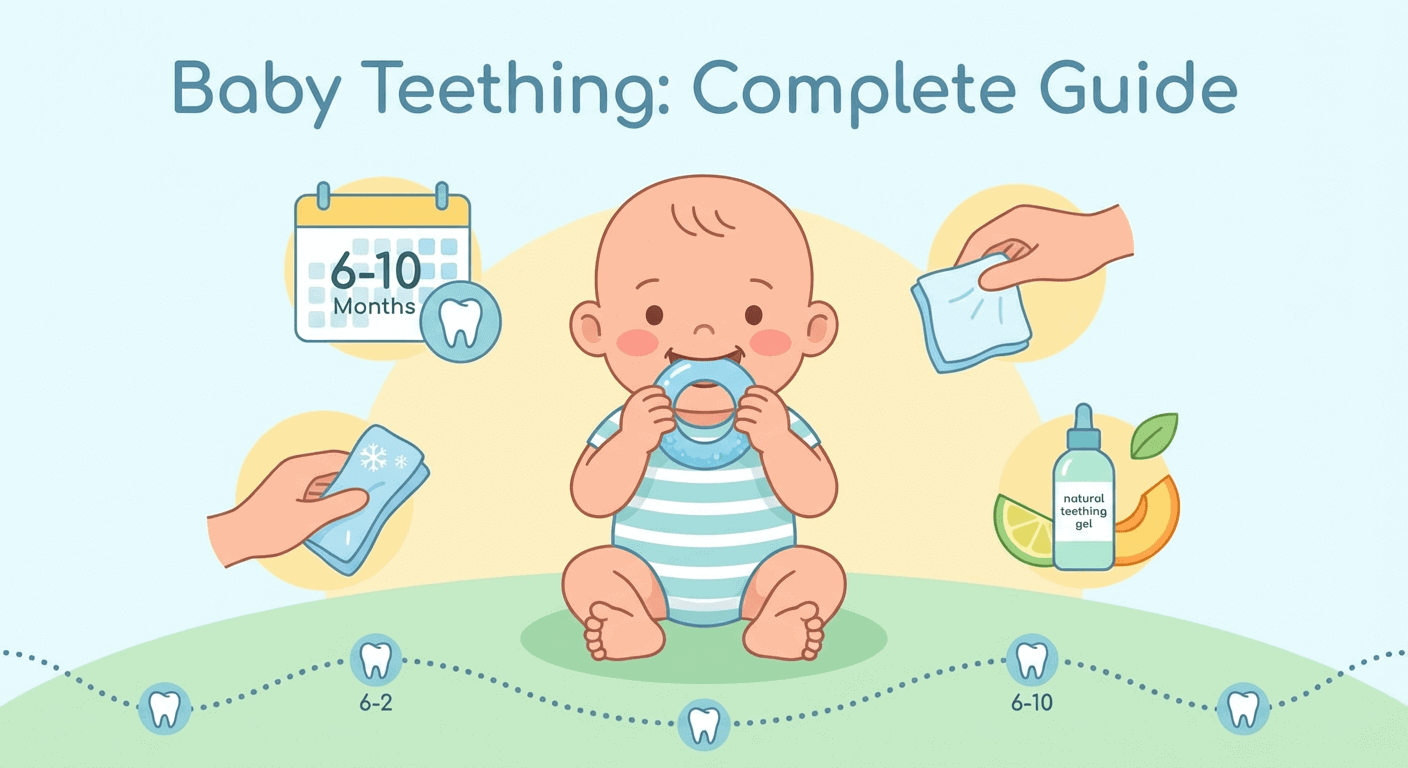
For baby teething pain, pediatricians recommend Cold (a chilled washcloth or refrigerator-cooled teether) and Pressure (a clean finger or solid silicone ring on the gums). For severe pain, use weight-appropriate Ibuprofen (6+ months) or Acetaminophen (2+ months). It is recommended to do so under the guidance of a pediatrician.
Baby Teeth 101: Why Early Dental Care Matters
Before diving into teething symptoms and solutions, it helps to understand what is actually happening inside a baby’s mouth.
What Are Baby Teeth, and Why Do They Matter?
A common misconception is that baby teeth — also called primary teeth or deciduous teeth — are somehow less important than permanent adult teeth because they will eventually fall out. This is genuinely false, and the misunderstanding can lead to neglected dental care during the early years.
Baby teeth serve several critical functions:
- Chewing and nutrition: Without teeth, the range of foods a child can safely eat is severely limited. Teeth are the tools that make a varied, nutritious diet possible.
- Speech development: Many speech sounds — particularly consonants like “t,” “d,” “s,” and “th” — require the tongue to interact with the teeth. Children missing key teeth often develop speech patterns that require later correction.
- Holding space for permanent teeth: Baby teeth actively guide permanent teeth into correct alignment. A baby tooth lost prematurely can cause neighboring teeth to drift into the gap, crowding out the permanent tooth meant to occupy that space.
- Jaw development: The act of chewing stimulates the jawbone to develop properly. Healthy baby teeth contribute to healthy jaw architecture.
In short, baby teeth are not a dress rehearsal. They are a fully functioning, developmentally critical set of tools that deserve care from the moment they appear.
How Many Teeth Does a Baby Get?
The complete set of primary teeth consists of 20 teeth — 10 on the upper jaw (maxilla) and 10 on the lower jaw (mandible). For reference, adults have 32 permanent teeth, including wisdom teeth. The process of all 20 baby teeth erupting typically spans from around 6 months of age to roughly 3 years old, though that timeline varies considerably.
A Quick Anatomy Lesson
To make the baby teeth eruption timeline easier to follow, here is a map of the different tooth types:
- Central Incisors: The four front teeth, two on top and two on the bottom. Usually first to arrive and the ones that make that iconic gappy baby grin.
- Lateral Incisors: The teeth immediately beside the central incisors — one step outward on each side.
- Canines (eyeteeth): The slightly pointed teeth, one on each side of the lateral incisors. Named “eyeteeth” historically because of their position below the eyes.
- First Molars: Broad, flat-topped teeth positioned further back in the mouth. Their large surface area makes eruption noticeably more uncomfortable than the incisors — imagine trying to push a broad brick through the soil versus a sharp stake.
- Second Molars: The rearmost baby teeth, arriving last and typically causing the most significant discomfort of the entire process.
Baby Teething Timeline: When Do Babies Start Teething?
One of the most common questions pediatricians field is deceptively simple: “When do babies start teething?” The honest, evidence-based answer is: it depends.
Managing expectations starts with understanding the schedule. The general window for a baby’s first tooth spans from 4 to 7 months of age, with the average teething agehovering around the 6-month mark. However, the range of normal is remarkably wide. Think of teething like walking or talking — there is a broad range of “normal.” Some babies arrive in the world with natal teeth already present — a rare but documented phenomenon affecting approximately 1 in 2,000 newborns. At the other end of the spectrum, some perfectly healthy toddlers cross their first birthday still fully gum-equipped, with no teeth in sight.
A reassuring note for anxious parents: If your baby reaches 12 months without any teeth, this warrants a mention to your pediatrician — but it is rarely a sign of anything serious. Genetics plays a significant role in the timing of tooth eruption, and late-teething parents often have late-teething children.
The Complete Eruption Timeline
When teeth do begin their march, they generally follow a predictable sequence. The table below shows that sequence, along with the typical timing for each stage.
| Stage | Teeth | Approximate Timing | What Parents Often Notice |
|---|---|---|---|
| Stage 1 | Lower Central Incisors (bottom front 2) | 6–10 months | First signs of drooling, gnawing, and disrupted sleep |
| Stage 2 | Upper Central Incisors (top front 2) | 8–12 months | The classic gap-toothed baby smile begins |
| Stage 3 | Upper & Lower Lateral Incisors (beside the front teeth) | 9–13 months | Four teeth arriving in fairly quick succession; wider, toothy grin emerges |
| Stage 4 | First Molars (back flat teeth) | 13–19 months | Often the most disruptive stage — broad surface area means more gum displacement; crankiness at meals |
| Stage 5 | Canines / Eyeteeth (the slightly pointed ones) | 16–23 months | Sharp-edged teeth pushing through; often resurgence of nighttime waking |
| Stage 6 | Second Molars (rearmost baby teeth) | 23–33 months | Final stage; can be the most painful; often coincides with toddler developmental intensity |
The single most important takeaway from this table: Teething is not a 6-month event. It is a roughly 2.5-year process. Parents who assume their child “got through teething” after the front teeth appeared are often blindsided by the molar and canine eruptions — which are, by most accounts, significantly more uncomfortable. Forewarned is forearmed.
The Journey of a Tooth: What Happens Beneath the Surface
Understanding what is physically happening beneath the gum helps explain why certain teething remedies work and why the process causes discomfort:
- Stage A — Tooth bud forms (in the womb): The tooth bud is embedded in the jawbone beneath smooth gum surface.
- Stage B — Root forms; tooth begins moving upward: The tooth crown develops and the root begins pushing it upward.
- Stage C — Tooth nears the surface (discomfort peaks): The tooth crown presses upward against gum tissue and bone, causing pressure and inflammation. This is when baby teething pain is most intense.
- Stage D — Crown breaks through (“eruption”): The tooth punctures the gum surface, pressure is relieved, and the baby typically becomes noticeably more comfortable.
Teething vs. Development: The Critical Distinction
Here is an insight that significantly changes the way parents interpret their baby’s behavior: teething does not occur in a vacuum. The months between 4 and 24 months are among the most developmentally explosive of a human lifetime. Sleep regressions, neurological leaps, the onset of separation anxiety, the beginning of solid foods — all of these milestones cluster in the same window as teething.
Think of it this way: if you were simultaneously learning to walk, experiencing separation anxiety for the first time, transitioning to new foods, and growing 12 new teeth — you would probably have some difficult nights too. Not every bout of fussiness, disrupted sleep, or clinginess is attributable to an emerging tooth. Is the baby frustrated because they want to move but can’t? That might be developmental frustration, not dental pain. Conflating every behavioral change with teething can cause parents to miss other developmental cues — or, more critically, to overlook genuine illness.
Baby Teething Symptoms vs. Illness: How to Tell the Difference
Accurate symptom recognition is the cornerstone of appropriate parental response. Understanding what teething signs actually look like — versus what myths say they look like — is arguably the most important section of this guide.
The First Signs of Teething
The following symptoms have consistent, credible evidence linking them to the teething process:
Excessive drooling (the waterfall)
As the tooth bud stimulates nerve endings in the gum, the salivary glands increase production — and they respond enthusiastically. This is biologically normal: extra saliva helps lubricate the area around the emerging tooth and maintain oral hygiene. The drool itself is harmless, but its volume can be startling. Some teething babies soak through multiple bibs per day. A secondary effect worth anticipating: saliva contains digestive enzymes (amylase, in particular) that break down food. When those enzymes sit on the delicate skin around the chin, lips, and neck for extended periods, they irritate and break down the skin barrier, creating a raw, painful teething rash that adds to the baby’s discomfort.
Gnawing and chewing on everything within reach
Babies instinctively apply counter-pressure to sore gums by biting down on whatever is available — fingers, toys, furniture edges, shirt collars, unsuspecting parents’ shoulders. This is not random or destructive behavior; it is a hardwired neurological coping mechanism.
Swollen, tender gums (baby gum pain)
A careful look inside the baby’s mouth may reveal a small, reddened, slightly raised area where the next tooth is preparing to emerge. In some cases, a bluish or whitish ridge is visible just beneath the gum surface — the crown of the tooth pressing upward like a tent pole from underneath fabric.
Irritability and mood changes
Low-grade, persistent discomfort — especially when combined with sleep disruption — creates a predictably unsettled baby. Irritability is one of the most consistently reported teething symptoms, though it is also one of the least specific, since dozens of other infant experiences also cause fussiness.
Disrupted sleep
Many parents report that teething seems worse at night. This is not imagination. Pain perception genuinely intensifies during sleep because daytime distractions — movement, stimulation, social interaction — all provide competing sensory signals that partially suppress pain awareness. In the quiet darkness, with those distractions gone, the same level of baby gum pain registers more acutely.
Mild temperature elevation
The inflammation in the gum tissue can cause a very slight rise in body temperature — typically no more than a half-degree above normal baseline. This is the body’s standard inflammatory response. It is not, however, a true teething fever.
The “Blue Bump” — An Expert Tip
Occasionally, parents will notice a bluish-purple, fluid-filled bump on the gum surface in the days or weeks before a tooth appears. This is called an eruption cyst (sometimes called an eruption hematoma). To a parent encountering it for the first time, it can look deeply alarming.
In the vast majority of cases, it is entirely harmless. As the tooth pushes upward, a small pocket of fluid — sometimes tinged with blood — becomes trapped between the tooth crown and the overlying gum tissue, creating a soft, discolored bump. As the tooth continues its upward movement and breaks through the gum, the bump resolves on its own. No intervention is needed or recommended.
The caveat: if the bump is unusually large, appears infected (red streaking, warmth, pus), causes significant feeding difficulty, or persists for several weeks without the tooth appearing, a pediatric dentist should take a look. But the reflexive panic this bump often triggers in first-time parents can safely be set aside.
Myth-Busting: Dangerous Teething Assumptions
This section must be unambiguous, even at the risk of contradicting what grandparents and well-meaning neighbors have been saying for decades. These myths are not merely inaccurate — some of them can cause genuine harm by leading parents to ignore symptoms that deserve medical attention.
MYTH vs. FACT: Quick-Reference Guide
| Common Belief | The Evidence Says… | Why It Matters |
|---|---|---|
| “Teething causes high fever” | FALSE — teething does not cause fever above 100.4°F (38°C) | A true fever means something else is wrong and needs medical evaluation |
| “Diarrhea is a teething symptom” | FALSE — teething does not cause diarrhea | Persistent diarrhea in an infant needs pediatric attention |
| “Ear-pulling always means teething” | SOMETIMES — but also a primary sign of ear infection | Ear infections require treatment; they do not resolve on their own |
| “Amber necklaces reduce teething pain” | FALSE — no credible scientific evidence exists for this claim | Beaded necklaces on infants are a documented strangulation hazard |
| “Natural = safe for teething products” | FALSE — “natural” is not a safety certification | Several “natural” teething products have been recalled after causing seizures |
Myth #1: Does teething cause fever?
This is one of the most pervasive and potentially dangerous myths in pediatric parenting culture. The medical evidence is clear and consistent: teething does not cause a true fever — defined as a temperature above 100.4°F (38°C). A large-scale study published in Pediatrics found that while teething may be associated with a fractional elevation in baseline temperature — a product of localized gum inflammation — it does not produce a genuine systemic fever.
When a teething baby develops a high fever, there is another cause. That cause may be a viral infection, an ear infection, a urinary tract infection, or another condition that requires proper medical evaluation. The danger of this myth is the behavioral response it creates: parents who believe “teething causes fever” are prone to monitoring a sick baby at home while attributing symptoms to teething, potentially delaying care for an illness that genuinely needs treatment. Any temperature above 100.4°F in an infant warrants a call to the pediatrician — regardless of whether the baby is also teething.
Myth #2: Teething causes diarrhea.
Loose stools and diarrhea are not medically caused by the teething process itself. The coincidence is understandable: teething-aged babies are simultaneously being introduced to solid foods (new foods change gut flora and stool consistency), are putting more objects in their mouths (increasing exposure to environmental pathogens), and are going through periods of immune system development. All of these factors make gastrointestinal disruption more likely during the same window — but correlation is not causation. Any significant or persistent diarrhea warrants pediatric attention, not dismissal as “just teething.”
Myth #3: Ear-pulling always means teething.
This myth contains a kernel of truth, which makes it particularly sticky. Ear-pulling canresult from referred pain — discomfort originating in the gum or jaw that travels along shared nerve pathways to create a sensation in or around the ear canal. The trigeminal nerve, which serves both the jaw and parts of the ear, is the anatomical explanation for this crossover.
However, ear-pulling is also a primary symptom of otitis media — a middle ear infection — which is extremely common in infants and toddlers. Unlike teething discomfort, otitis media typically requires antibiotic treatment or at minimum, medical evaluation. An ear infection left untreated can lead to persistent hearing impairment, which can affect speech development. The rule of thumb: when in doubt, a healthcare provider should examine the ears. A quick otoscope check takes about thirty seconds and provides information no amount of parental observation can match.
Why Does Teething Hurt? The Science Behind Baby Gum Pain
Understanding why teething causes pain is not merely academic. It directly explains why the most effective drug-free teething remedies work — and it transforms the parent’s relationship to those remedies from “I’ll try anything” to “I understand exactly why this is helping.”
Step One: What Is Happening in the Gum?
As a tooth prepares to erupt, it exerts upward pressure on the bone and gum tissue above it. The body interprets this mechanical pressure as tissue stress and launches its standard protective response: inflammation.
Inflammation is a sophisticated and essential biological process — the body’s emergency response team arriving at a construction site. Blood flow to the area increases, delivering immune cells and repair resources. The tissue swells slightly. Specialized chemical messengers called prostaglandins and cytokines are released. These chemicals sensitize the nerve endings in the surrounding tissue, making them more reactive to stimuli — including pressure, temperature, and touch — than they would normally be.
In practical terms: the gum becomes tender, reactive, and uncomfortable. Even normal contact — the pressure of a pacifier or a feeding — can register as painful when those nerve endings are in a heightened state of sensitivity.
Step Two: Understanding Pain Signals — The Gate Control Theory
In 1965, two pain researchers named Ronald Melzack and Patrick Wall published a landmark paper proposing what became known as Gate Control Theory. It fundamentally changed how medicine understood pain — and it explains, with elegant simplicity, why rubbing a sore spot makes it feel better.
Think of the spinal cord as a telephone line — or a train station — that sends messages to the brain. Its processing capacity is limited; it can only handle so many signals simultaneously. Pain signals from the gum travel slowly on thin nerve fibers. Pressure signals from chewing travel very fast on thick nerve fibers.
When a baby bites down on a firm toy, the sensation of pressure races to the brain faster than the sensation of pain. The pressure signals effectively occupy the tracks, crowding out the pain signals. Less signal reaching the brain means less pain is consciously experienced. The “gate” in Gate Control Theory is this filtering mechanism in the spinal cord. Competing sensory input closes the gate against pain signals.
This is precisely why babies chew. Chewing is not random, frustrated behavior — it is an instinctive, neurologically sophisticated self-soothing mechanism. The pressure of biting down activates mechanoreceptors (pressure-sensing nerve endings) in the gum tissue, which compete with and partially override the inflammatory pain signals. Babies are, in a very real sense, self-medicating through chewing.
Step Three: Why Cold Helps
Temperature is another potent sensory input that can engage the Gate Control mechanism. Cold has two additional physiological effects beyond competing with pain signals:
- Vasoconstriction: Cold causes blood vessels to narrow. Narrowed blood vessels deliver less blood flow to the inflamed area, reducing the delivery of pro-inflammatory molecules and slowing the inflammatory response. Less inflammation means less sensitization of nerve endings and reduced pain.
- Mild local analgesia: Cold temperatures directly reduce the firing rate of pain-sensitive nerve fibers (called nociceptors). A cold gum surface is, in effect, a gum surface whose pain signals are temporarily quieted at the source.
This two-pronged mechanism — Gate Control plus direct neural quieting — makes cold one of the most effective non-pharmacological tools in the safe teething relief toolkit.
Natural Teething Remedies: Safe, Drug-Free Pain Relief
Armed with the science from the previous section, the toolkit of safe, drug-free interventions becomes immediately intuitive. Each strategy maps directly back to a mechanism already explained.
Strategy 1: Temperature Therapy — The Power of Cold
Cold reduces gum inflammation through vasoconstriction, provides mild numbing of nerve endings, and activates Gate Control by delivering competing temperature signals.
Safe, practical applications:
- Chilled washcloth: Dampen a clean muslin or terry cloth washcloth with water, twist or fold it into a small bundle, and refrigerate for 15–30 minutes. The texture of the cloth provides additional mechanoreceptor stimulus when the baby chews on it. Many parents keep two or three rotating in the refrigerator.
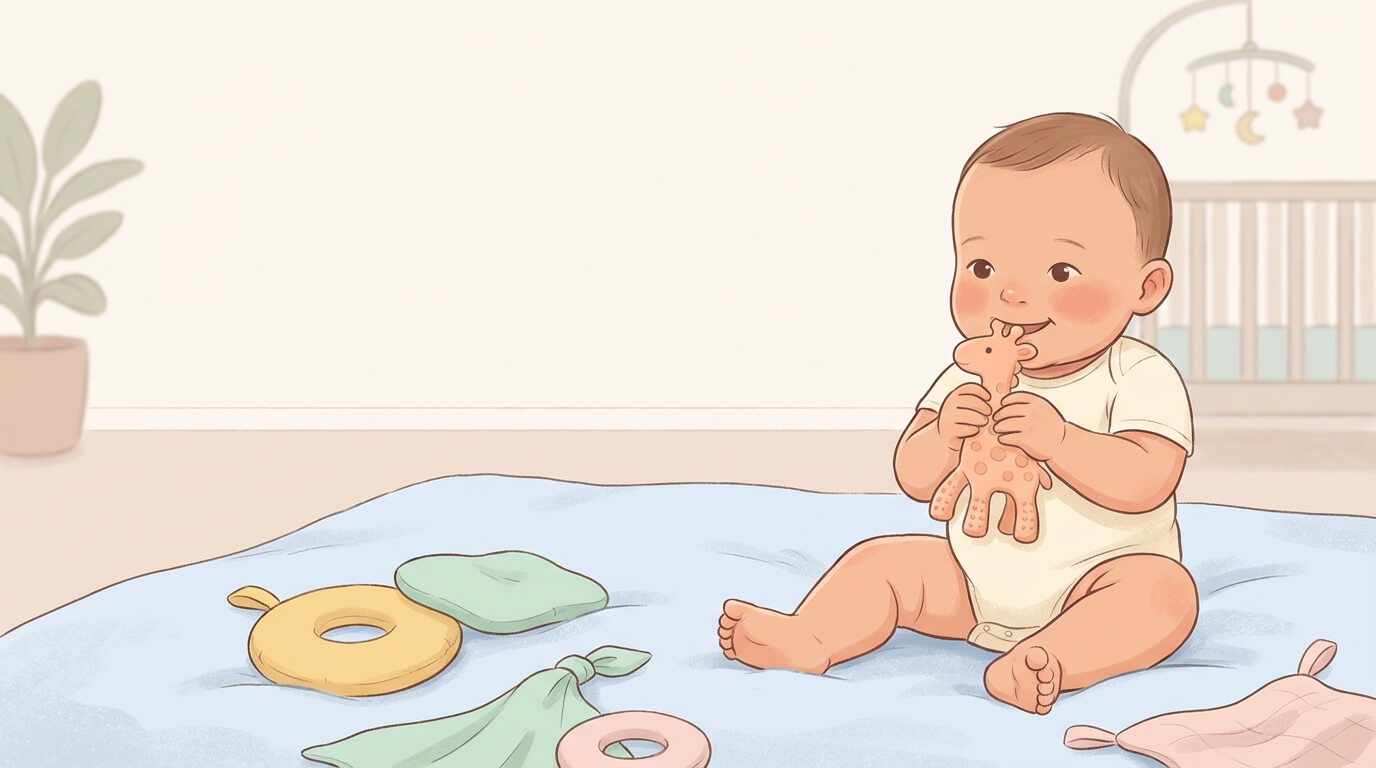
- Refrigerated silicone teething ring: A solid silicone teething ring stored in the refrigerator delivers both cold and counter-pressure. Effective and simple.
- Cold metal spoon: The bowl of a chilled metal spoon pressed gently against inflamed gum tissue provides cooling relief. Metal conducts cold exceptionally well, maintaining a low temperature longer than fabric.
- Chilled solid foods (for babies on solids): Discussed in detail in the nutrition section below.
⚠️ The Refrigerator vs. Freezer Distinction — This Matters
Chilled = safe. Frozen = potentially harmful.
An object chilled in the refrigerator maintains a cool temperature without becoming hard or ice-solid. A frozen teether becomes rigid enough to cause cold burns on sensitive gum tissue — damage from excessive cold rather than heat, but damaging nonetheless — much like holding an ice cube to your skin for too long. Additionally, frozen teethers are more brittle; if a corner or edge breaks off, it represents a choking hazard. The rule is simple: the refrigerator is your friend; the freezer is not.
Strategy 2: Mechanical Therapy — Pressure and Baby Teething Toys
Pressure applied to the gum surface activates mechanoreceptors, which close the neural gate against pain signals via Gate Control Theory.
The clean finger: The most available, most customizable, and most underrated teething tool is a clean adult fingertip. Applying firm but gentle counter-pressure to the swollen gum ridge — moving in small circular motions, or pressing steadily on the area where the tooth is budding — directly engages the Gate Control mechanism. Cost: nothing. Effectiveness: high.
For parents who prefer a dedicated tool, a silicone finger brush (a small silicone cap worn on the adult fingertip, textured with soft nubs) combines the intimacy of finger pressure with a variety of mechanical stimulation. It doubles as an early toothbrushing tool once teeth arrive.
Solid one-piece silicone rings: These are the current gold standard in baby teething toys from a safety perspective. Key features to look for:
- One-piece construction: No seams, joints, or attachable parts that can separate and become choking hazards
- Food-grade silicone: Free from BPA, phthalates, and PVC
- Appropriate size: Large enough that the entire ring cannot fit in the baby’s mouth simultaneously
- No liquid filling: Liquid-filled teethers carry the risk of rupturing and releasing gel contents — which may contain plasticizers or other substances not intended for ingestion
The Sensory Rotation Strategy
An insight that experienced parents and occupational therapists often share: babies habituate quickly to a consistent sensory input. What provides relief at 10 a.m. may stop working by noon — not because the remedy has stopped being effective, but because the nervous system has adapted and the stimulus is no longer novel enough to compete strongly with the pain signal.
The solution is sensory rotation — deliberately alternating between different textures, temperatures, and types of stimulation throughout the day. Think of it as a playlist for the gums: rough, bumpy, smooth — variety keeps interest high and pain low. A chilled washcloth, followed by a ridged silicone ring, followed by direct finger massage, followed by a smooth teething ring — each provides a different pattern of mechanoreceptor activation and maintains the gate-closing effect more consistently over time.
Sample sensory rotation for daily teething management:
- Morning: Chilled washcloth (cold + texture)
- Mid-morning: Silicone ring with ridges (pressure + texture)
- After nap: Direct finger massage on gum (pressure + warmth)
- Afternoon: Smooth chilled silicone ring (cold + smooth pressure)
- Evening: Chilled metal spoon + finger massage (cold + focused pressure)
- Night: Age-appropriate pain reliever if needed
Strategy 3: Managing the Teething Rash — Secondary Pain Prevention
The river of drool that accompanies teething is not merely a laundry problem — it is a source of secondary discomfort that compounds the baby’s overall distress. When saliva’s digestive enzymes sit on the delicate skin around the chin, lips, and neck for extended periods, they begin to irritate and break down the skin barrier, creating a raw, painful teething rash.
Prevention is far easier than treatment. Two simple interventions make a meaningful difference:
- Barrier cream: Apply a thin layer of petroleum jelly (Vaseline), lanolin-based cream, or fragrance-free zinc oxide cream around the chin and mouth before periods of heavy drooling. This creates a physical, waterproof barrier between saliva and skin. Reapply after feeding. A useful habit: apply ointment before sleep when wiping is less frequent.
- Gentle blotting, not wiping: When the skin is already irritated, wiping with even a soft cloth causes friction-based abrasion. Blotting — pressing the cloth gently against the skin and lifting, rather than dragging it — removes moisture without additional mechanical stress.
Soft, absorbent bibs are useful, but be aware that a soaked bib becomes a second source of prolonged moisture contact if not changed frequently. During peak drool periods, checking and swapping bibs every 45–60 minutes prevents the bib itself from contributing to the rash.
Nutritional Support: Soothing Teething Pain from the Inside Out
For babies who have progressed to solid foods, the kitchen becomes an unlikely pharmacy during the teething phase. Food-based interventions have the advantage of combining teething treatment with nourishment — a double win at a time when some teething babies are resistant to eating.
Cold Foods: The Principles
Cold foods work through the same vasoconstriction and nerve-quieting mechanisms described earlier. The key is providing cold temperature without the texture becoming so hard that it damages gum tissue — and without creating choking hazards.
Practical cold food options by developmental stage:
| Stage | Options | Notes |
|---|---|---|
| Early solids (6–8 months) | Chilled smooth purees (applesauce, pear, banana), cold yogurt | Easy to manage; low choking risk |
| Advancing solids (8–10 months) | Cold mashed avocado, chilled soft fruit pieces, cold oatmeal | Soft enough to dissolve without teeth |
| Older babies (10–12+ months) | Chilled cucumber sticks (peeled, cut large enough to avoid choking hazard), cold melon pieces, frozen banana in mesh feeder | Provide better counter-pressure |
| Toddlers (12+ months) | Cold whole milk yogurt, chilled soft cheese, refrigerated soft bread | Full range available |
The silicone mesh feeder deserves special mention. This ingenious tool consists of a small silicone or fabric mesh pouch attached to a handle. A piece of frozen or chilled food — a slice of frozen banana, a cube of frozen breast milk or formula, a piece of chilled peach — is placed inside the pouch. The baby sucks and chews on the mesh, receiving both the soothing cold sensation and the counter-pressure of biting, while the mesh prevents large pieces from being swallowed. It is one of the more clever pieces of baby product design and is genuinely useful for the teething stage.
Managing Feeding Refusal During Teething
A nuance that catches many parents off guard: some teething babies temporarily refuse the breast or bottle, not from illness or feeding aversion, but because the suction mechanism of nursing creates additional pressure changes in the mouth and jaw that aggravate already-tender gum tissue.
If a baby who is normally a confident feeder suddenly becomes reluctant, resists latching, or feeds briefly and then pulls away in apparent discomfort, teething-related pain during suction may be the cause. Strategies to try:
- Offer a chilled teether for 5–10 minutes before a feeding to provide temporary numbing before the feed begins
- Experiment with position: Different feeding positions change the angle and pressure of suction; some positions may be more comfortable
- Try open cup or spoon feeding for fluids to maintain hydration while bypassing the suction mechanism temporarily
- Offer feeds more frequently but for shorter durations — shorter individual feeds may be more manageable while still meeting nutritional needs
If feeding refusal is significant, persistent (more than 24–48 hours), or accompanied by weight loss or signs of dehydration (fewer wet diapers, dry mouth, unusual lethargy), contact a pediatrician. Teething-related feeding challenges are usually mild and temporary; significant feeding refusal has other explanations that need evaluation.
Oral Care for Babies: It Starts Before the First Tooth Appears
A topic that receives far less attention than teething remedies — but arguably has far greater long-term implications — is the establishment of oral care for babies before the first tooth ever emerges.
The Pre-Tooth Routine: Gum Care
The gum pads of a pre-tooth infant are colonized by bacteria from the first hours of life — from skin contact, breast milk, formula, and the environment. Establishing a pattern of gum care reduces early bacterial colonization of the oral environment (bacteria that cause cavities, particularly Streptococcus mutans, can be introduced early), and habituates the baby to the sensation of oral care, making the transition to toothbrushing substantially less of a battle.
The routine: Run a clean, damp muslin cloth, gauze pad, or soft silicone finger brush over the gum pads once daily — often conveniently done during bath time or as part of a bedtime routine. This removes milk residue and bacteria, and begins building a positive association with having the mouth touched and cleaned.
Baby’s First Tooth: Starting Brushing
The moment the first tooth appears, brushing begins. There is no “waiting until there are more teeth” — the baby first tooth is susceptible to decay from day one.
Equipment:
- An infant-sized toothbrush with an extra-soft bristle head and a large handle (for adult grip during brushing)
- Fluoride toothpaste in a quantity no larger than a grain of rice (approximately 0.1 gram)
On fluoride toothpaste: This is an area of significant parental anxiety, often fueled by general concerns about chemical exposure. The evidence is clear and consistent: fluoride, at appropriate quantities, is the single most effective cavity-prevention tool available. The American Dental Association, the American Academy of Pediatrics, and the American Academy of Pediatric Dentistry all recommend fluoride toothpaste from the eruption of the first tooth. A grain-of-rice-sized smear contains a quantity of fluoride so small that ingestion poses no meaningful risk — the protective benefit against early childhood caries (cavities) far outweighs any theoretical concern.
For children ages 3–6, the quantity increases to a pea-sized amount (approximately 0.25 gram).
Early childhood caries (tooth decay in young children) is the most common chronic disease of childhood — more common than asthma. It is largely preventable with appropriate fluoride use and diet. Baby teeth with decay do not simply “fall out before it matters” — severe early decay causes pain, affects eating and speech, requires dental procedures under sedation, and is associated with self-esteem and social impacts. Getting the oral hygiene routine right from the start is one of the highest-return health interventions available in early childhood.
The First Dental Visit: Earlier Than Most Parents Expect
Current guidelines from the American Academy of Pediatric Dentistry recommend establishing a “dental home” — a primary dental care relationship for the child — by age 1, or within 6 months of the first tooth eruption, whichever comes first.
A useful mnemonic: “One tooth, one year, one dentist.”
This recommendation consistently surprises parents who were told that the first dental visit should happen around age 3 or when “all the teeth are in.” The first visit at age 1 is primarily educational for parents rather than procedural for the child. The pediatric dentist will check the erupted teeth and gum health, evaluate bite development and jaw alignment, discuss proper brushing technique, review dietary factors affecting dental health, establish fluoride supplementation if the local water supply is not fluoridated, and build a relationship between the child and the dental office in a positive, non-threatening context.
The early establishment of a “dental home” is associated with significantly better long-term dental health outcomes and lower rates of dental anxiety in older children.
Surviving the Teething Phase: A Guide for Exhausted Caregivers
No guide to baby teething is complete without addressing the person holding the baby at 2 a.m. — the caregiver whose wellbeing is directly connected to the child’s outcome.
The Science of Stress Transmission: Co-Regulation
There is a well-established concept in developmental psychology called co-regulation. It describes a fundamental aspect of early child development: a baby’s nervous system is not yet capable of self-regulation — that is, independently managing its own emotional and physiological state. Infants and toddlers borrow regulatory capacity from their caregivers.
In concrete terms:
- When a caregiver is calm, present, and regulated — speaking in a low, steady voice, maintaining gentle consistent touch, breathing slowly — the baby’s nervous system literally begins to synchronize with that state. Heart rate slows. Cortisol (the stress hormone) levels begin to drop. The capacity for soothing increases.
- When a caregiver is flooded with stress, overwhelmed, or displaying distress — even nonverbally, through tense holding, rapid movement, or a high-pitched anxious voice — the baby receives those signals and tends to escalate rather than calm.
This is not a guilt-inducing observation. It is a pragmatic one — and it contains an important message: taking care of the caregiver is not a luxury or an indulgence. It is a direct clinical intervention in the baby’s wellbeing. Self-care is not selfish; a regulated adult helps regulate the child.
Practical Caregiver Strategies
Splitting nighttime duty: Where two caregivers are available, alternating nighttime response shifts is the single most effective strategy for preventing the accumulated sleep deprivation that degrades both mood and judgment. A common rotation: one caregiver handles all waking before 2 a.m.; the other handles everything after 2 a.m. Both get a continuous block of restorative sleep.
The sixty-second reset: When the acute stress of sustained infant crying begins to feel overwhelming, it is entirely appropriate — and sometimes necessary — to place the baby safely on their back in the crib, step out of the room, and take sixty seconds of silence. This is not abandonment; it is a brief, deliberate intervention to prevent caregiver dysregulation from escalating the baby’s distress. Sixty seconds of controlled breathing, splashing cold water on the face, or simply standing in silence can meaningfully reset the nervous system.
Noise management: The specific frequency and rhythm of infant crying is designed by evolution to be maximally distressing to caregivers — it demands response. Foam earplugs or noise-canceling headphones worn during sustained crying reduce the neurological impact of the sound (the sharp, cutting quality that creates acute stress) while still allowing awareness that the baby needs you. Some parents find this small tool disproportionately helpful for tolerating extended teething episodes, allowing them to hold and comfort the baby more patiently.
Normalizing the difficulty: There is a pervasive cultural tendency to present all aspects of early parenthood as a magical, joyful experience, which creates silent shame around the genuine exhaustion and frustration of phases like teething. Finding a community — online, a local parent group, a trusted friend who has been through it — who acknowledges the difficulty without judgment is not a sign of parenting failure. It is an evidence-based resilience strategy.
Teething at Night: Why It Seems Worse and What to Do
Many parents wonder why baby teething pain seems to intensify after bedtime. As mentioned earlier, daytime distractions — movement, play, social interaction — provide competing sensory signals that partially suppress pain awareness through Gate Control mechanisms. At night, with those distractions gone, the same level of gum discomfort registers more acutely.
Strategies for soothing a teething baby at night:
- Pre-bedtime gum massage: Spend 2–3 minutes applying gentle finger pressure to the gum ridge before putting the baby down. This can preemptively engage the Gate Control mechanism.
- Chilled teether at bedtime: Offer a refrigerated silicone ring during the wind-down routine.
- Timed pain relief: If medication is warranted, administer weight-appropriate acetaminophen or ibuprofen approximately 30 minutes before the expected bedtime so it reaches peak effectiveness as the baby falls asleep.
- White noise: A consistent background sound provides low-level sensory input that can partially compete with pain signals even during sleep, and helps the baby resettle more quickly after waking.
The Essential Truth About Duration
This phase ends. Every tooth that erupts represents one fewer tooth left to emerge. The second molar, the last tooth in the sequence, typically arrives somewhere between 25 and 33 months. After that: teething is over. The sleepless nights attributed to teething stop. The drool diminishes. The gnawing reduces. At some point — often unremarkably, without the parents fully registering it — there will simply be a morning with a calm, comfortable child and a full set of small, bright primary teeth, and the teething chapter will have quietly closed.
When to Call the Pediatrician
- Temperature above 100.4°F (38°C)
- Significant diarrhea lasting more than 24 hours
- Feeding refusal lasting more than 24–48 hours, or signs of dehydration
- Ear-pulling combined with fever or unusual fussiness
- An eruption cyst (blue bump) that appears infected or persists unusually long
- Any symptom that your parental instinct tells you is more than teething
Frequently Asked Questions About Baby Teething
When do babies start teething?
Most babies get their first tooth between 4 and 7 months of age, with the average around 6 months. However, the range of normal is wide — some babies are born with teeth, while others don’t get their first tooth until after their first birthday. If no teeth have appeared by 12 months, mention it to your pediatrician, but it is rarely a cause for concern.
What are the first signs of teething?
The earliest teething symptoms typically include increased drooling, a strong urge to gnaw or chew on objects, swollen or tender gums, and mild irritability. You may also notice disrupted sleep and a very slight elevation in body temperature. A reddened or slightly raised area on the gum where the tooth is emerging is a reliable visual sign.
How do I soothe a teething baby at night?
Offer a gum massage before bedtime, use a chilled teething ring during the wind-down routine, and consider a weight-appropriate dose of acetaminophen or ibuprofen timed approximately 30 minutes before sleep. White noise can also help by providing competing sensory input. During nighttime wakings, keep the environment calm and dim while offering comfort through gentle pressure and a soothing voice.
Does teething cause fever?
No. Teething may cause a very slight rise in body temperature (less than half a degree above baseline) due to localized gum inflammation, but it does not cause a true fever above 100.4°F (38°C). If your teething baby develops a genuine fever, another cause is responsible and medical evaluation is warranted.
How long does baby teething pain last?
The discomfort from an individual tooth typically lasts a few days to a week as it pushes through the gum surface. However, the entire teething process — all 20 primary teeth — spans from approximately 6 months to about 33 months of age (roughly 2.5 years). Molar eruptions tend to cause the most prolonged discomfort due to their larger surface area.
Conclusion
Teething is not an illness. It is not an emergency. It is a normal, universal, developmentally meaningful process that every human being who has ever lived has gone through. And despite the sleepless nights and the endless drool and the gnawed furniture corner that will never quite look the same, it is — in the grandest sense — a celebration.
A small human body, remarkable in its biological complexity, is manufacturing a set of tools that will be used for the next decade of eating, speaking, smiling, and experiencing the world. The discomfort is real. The exhaustion is real. And the endpoint — that gummy, gap-filled grin giving way to a full toddler smile — is also real, and worth every sleepless night.
Your Complete Teething Action Plan: Three Pillars
Pillar 1: COLD — Reduces inflammation via vasoconstriction; quiets pain-sensing nerve fibers directly. Tools: chilled washcloth, refrigerated teether, cold metal spoon, cold foods for solids babies.
Pillar 2: PRESSURE — Activates Gate Control Theory; competing signals close the neural gate against pain signals. Tools: clean fingertip, solid silicone ring, silicone finger brush, silicone mesh feeder.
Pillar 3: MEDICATION — For moderate-to-severe discomfort that cold and pressure cannot adequately manage. Weight-appropriate acetaminophen (2 months+) or ibuprofen (6 months+) under pediatric guidance.
References & Further Reading:
- American Academy of Pediatrics (AAP) — Teething: Information for Parents
- U.S. Food & Drug Administration (FDA) — Warning on Teething Products Containing Benzocaine
- U.S. Food & Drug Administration (FDA) — FDA warns against the use of homeopathic teething tablets and gels
- U.S. Food & Drug Administration (FDA) — Drug Safety Communication: Lidocaine 2% oral viscous solution
- American Academy of Pediatric Dentistry (AAPD) — Periodicity of Examination Guidelines
- American Dental Association (ADA) — Primary Tooth Eruption Chart
- Melzack, R. & Wall, P.D. (1965). “Pain mechanisms: A new theory.” Science, 150(3699), 971–979.
- Wake, M., et al. (2000). “Teething and tooth eruption in infants: A cohort study.”
- Massignan, C., et al. (2016). “Signs and symptoms of primary tooth eruption: A meta-analysis.” Pediatrics, 137(3).
October 25, 2026
October 25, 2026
October 25, 2026
October 25, 2026