
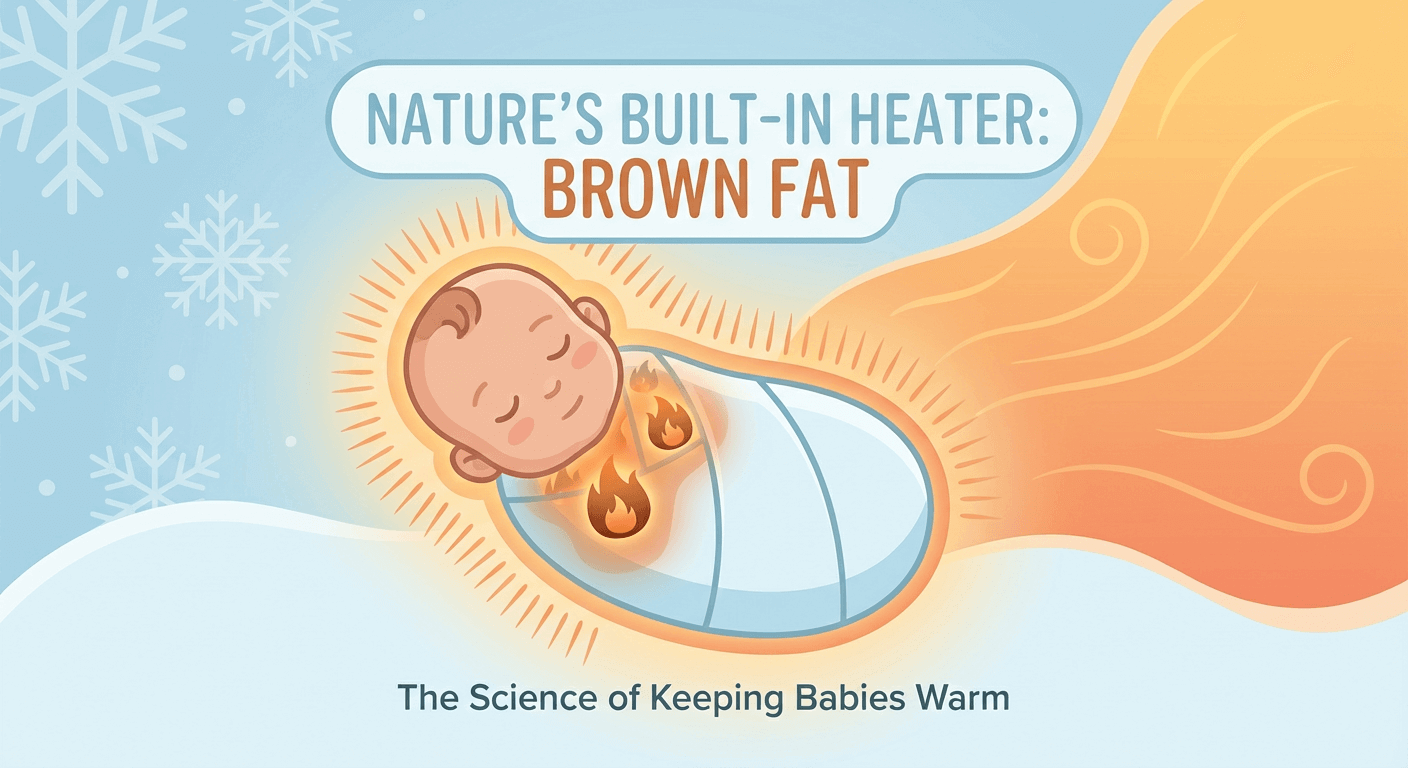
Brown fat in babies
Brown Fat in Babies: How Newborns Stay Warm Without Shivering
Brown fat in babies is a special type of tissue called brown adipose tissue (BAT) that burns calories to generate heat, acting as a built-in heater that keeps newborns warm when they can’t yet shiver. Found around the neck, spine, and vital organs, this remarkable fat is essential for newborn temperature regulation and infant survival.
There is a moment familiar to every new parent: standing over a sleeping newborn at two in the morning, hand hovering just above that tiny chest, checking for the rise and fall of breath. In that same moment, almost instinctively, the hand reaches for another blanket. Another layer. Another layer of protection against a world that suddenly feels overwhelmingly cold and dangerous.
This impulse is primal, understandable, and entirely human. We reach for hats and blankets, but few parents realize an internal “space heater” is already humming inside their baby. Beneath the surface of this perceived fragility lies a sophisticated biological architecture designed for resilience. Infants are not merely passive recipients of thermal care; they enter the world equipped with a physiological superpower specifically evolved to manage the dramatic transition from the warm, fluid environment of the womb to the dry, cooler air of the external world.
Introduction: Warmth, Wonder, and a Hidden Superpower
This mechanism centers on a specialized type of body tissue known as brown adipose tissue (BAT) — or colloquially, “brown fat.” Unlike the regular body fat that adults typically spend hours in the gym attempting to burn off, brown fat in babies acts not as a burden, but as a survival tool. It is a biological heater — a metabolic marvel that distinguishes newborn thermoregulation from that of the adult.
Most adults think of fat as a storage problem. For babies, a special kind of fat is a lifesaver. So how does brown fat keep babies warm, and why do newborns need it so badly?
What Is Fat, and Why Does the Body Have It?
Before diving into the science of brown fat specifically, it is worth pausing on a question that sounds almost too simple: what exactly is fat?
In biological terms, fat — or adipose tissue — is a type of connective tissue made up of specialized cells called adipocytes, or fat cells. These cells are masters of storage. Their primary job, in the most basic form, is to hold onto a type of energy-rich molecule called a triglyceride — a combination of glycerol and fatty acids that the body can break down and burn for fuel when food is not immediately available.
Think of triglycerides the way you might think of firewood stacked beside a fireplace. You gather it when it is available, store it for later, and burn it when you need warmth. Fat tissue is the body’s woodpile.
In addition to energy storage, fat serves two other important functions: it insulates the body against heat loss (like the thick walls of a well-built house), and it cushions and protects delicate internal organs against physical impact (like bubble wrap packed around a fragile item in a shipping box).
With this foundation in place, it becomes much easier to understand what makes brown fat so extraordinary — because it does none of those things. Instead, it does something almost the opposite.
Brown Fat vs. White Fat in Babies: Two Very Different Tissues
Now that we understand what fat generally does, we can appreciate just how unusual baby brown fat truly is.
There are two main types of fat in the human body, and calling them both “fat” is a little like calling both a warehouse and a power plant “buildings.” Technically accurate, but deeply misleading about what each one actually does.
Two Jobs, Two Designs
White adipose tissue (WAT) — the type of fat most people are familiar with — is the biological equivalent of a warehouse or pantry. Its job is to receive incoming energy (in the form of calories from food), package it into triglycerides, and store it away in expanding fat cells for later use. When you gain weight, it is largely because white fat cells are growing larger, filling with more stored triglycerides. White fat cells contain a single, massive droplet of oil (lipid) that pushes the cell’s nucleus to the side, making the tissue look pale or yellow — much like chicken fat or butter. While essential for long-term energy balance, insulation, and physical cushioning, white fat’s primary role is passive accumulation. In excess, it is associated with a range of metabolic health problems, including heart disease, insulin resistance, and type 2 diabetes.
Brown adipose tissue (BAT) is categorically different. If white fat is the warehouse, brown fat is the furnace. Its entire biological purpose is not to hoard energy but to burn it — rapidly, efficiently, and specifically to generate heat. Think of white fat as a savings account and brown fat as pocket cash you spend immediately to stay comfortable.
Inside the Cell: A Microscopic Power Plant
So what makes brown fat brown? And what makes it so effective at generating heat? The answers lie inside the cells themselves.
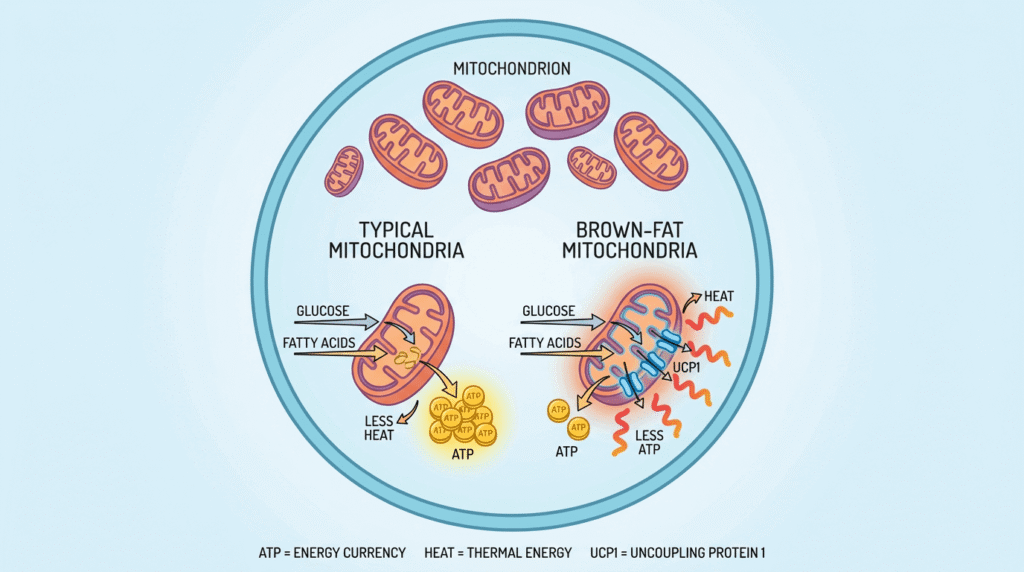
Every cell in the human body contains tiny structures called mitochondria. If you have encountered biology before, you may remember the phrase “mitochondria are the powerhouse of the cell” — and while this description is a slight oversimplification, it captures the essential truth. Mitochondria are the sites where the body converts fuel (primarily glucose from carbohydrates and fatty acids from fat) into a usable energy molecule called ATP (adenosine triphosphate). ATP is the body’s universal energy currency. Every time a muscle contracts, every time a nerve fires an electrical signal, every time a cell divides or builds a new protein — ATP is the fuel powering that transaction. The mitochondria are the mints that produce this currency.
Now, imagine that most mitochondria are very efficient mints: they accept raw materials (fuel) and reliably output ATP (currency). Brown fat mitochondria are different. They contain a specialized protein embedded in their inner membrane called Uncoupling Protein 1 (UCP1), sometimes called thermogenin. UCP1 in newborns is the key protein that makes brown fat function as a heater. This protein essentially punches a hole in the normal ATP-production process — “uncoupling” the burning of fuel from the making of ATP.
What happens to all that energy if it does not become ATP? It is released directly as heat.
This is not an accident or a malfunction. It is precisely the design. Brown fat mitochondria are not trying to make ATP; they are specifically engineered to waste energy as heat. It is like revving a car engine while the car is in neutral — the car does not move, but the engine gets incredibly hot. And because brown fat cells are extraordinarily dense with these heat-generating mitochondria — far more so than virtually any other cell type in the body — they are extraordinarily good at generating warmth on demand.
Why the Different Colors?
The distinction extends to the cellular level, which actually influences the color of the tissue visible to the naked eye:
- White Fat (Yellow/White): Pale or yellow, due to the single large lipid droplet dominating each cell.
- Brown Fat (Reddish-Brown): This tissue gets its darker color from two specific features:
- Mitochondria Density: Brown fat is packed with mitochondria. The iron-containing proteins within those dense mitochondria give brown fat its characteristic dark, reddish-brown color — just as iron gives blood its red hue.
- Vascularization: Brown fat is laced with a much denser network of capillaries (tiny blood vessels) than white fat contains. This rich blood supply acts like the water pipes in a radiator system — it ensures that the heat generated within brown fat cells is rapidly captured by circulating blood and distributed throughout the body, warming the organs and tissues that need it most. This vascular richness tints the tissue even more.
The core distinction: White fat accumulates and stores. Brown fat activates and burns. One deposits; the other combusts. While white fat adds inches, brown fat incinerates fuel so your baby’s vital organs never get too cold.
Brown Fat vs. White Fat in Babies: Quick Comparison
| Feature | White Fat | Brown Fat |
|---|---|---|
| Primary Function | Energy storage, insulation, cushioning | Heat generation (thermogenesis) |
| Color | White/yellow | Brown (due to dense mitochondria) |
| Mitochondria Density | Low | Very high |
| Key Protein | None specific | UCP1 (Uncoupling Protein 1 / Thermogenin) |
| Metabolic Role | Passive accumulation | Active combustion of fatty acids |
| Location in Infants | Cheeks, limbs, subcutaneous layer | Neck, shoulders, spine, around kidneys and heart |
| Proportion in Newborns | Majority of total fat mass | ~5% of total body mass |
| Activation Signal | Insulin (promotes storage) | Norepinephrine from sympathetic nervous system |
| Health Association | Excess linked to metabolic disease | Associated with metabolic health benefits |
| Present in Adults? | Yes, extensively | Yes, in smaller, dormant deposits |
Why Newborn Temperature Regulation Depends on Brown Fat
With that cellular foundation in place, the next question becomes obvious: why do babies need brown fat so badly? How does brown fat keep babies warm when nothing else can? Why can newborns not simply do what cold adults do — put on an extra sweater, move around to warm up, or shiver? The answer lies in three major challenges newborns face at birth.
1. The Thermal Shock of Being Born
For nine months, a developing baby exists in an environment of almost perfect thermal stability. The interior of the uterus maintains a constant temperature of approximately 98.6°F (37°C) — warm, humid, and unchanging. The baby has never experienced cold. Its body has never had to generate its own heat from scratch.
Then, in the space of a few minutes, everything changes. The baby enters a world where typical hospital delivery room temperatures hover around 65–70°F (18–21°C) — a drop of nearly 30 degrees Fahrenheit from the environment the baby has always known. And the baby arrives wet, which accelerates heat loss even further, because evaporating liquid draws heat away from the skin very efficiently. (This is the same principle that makes stepping out of a swimming pool on a breezy day feel so dramatically cold, even when the air temperature is not particularly low.)
This is a genuine thermal emergency. Core body temperature must be maintained within a fairly narrow range — roughly 97–100.4°F (36–38°C) — for the brain, heart, kidneys, and other vital organs to function properly. Fall significantly below that range, and a condition called hypothermia sets in, progressively impairing organ function. In a newborn, severe hypothermia can be fatal within hours.
2. The Shivering Problem
In adults, the primary response to cold is shivering. Shivering is the body’s emergency heat-generation protocol — rapid, involuntary muscle contractions that produce heat as a byproduct of all that muscular work. It is metabolically expensive and physically uncomfortable, but it works.
Newborns cannot rely on shivering. The reasons are both structural and developmental:
First, neonates have comparatively limited skeletal muscle mass — the very tissue that shivering depends on. Muscles are the body’s primary heat generators during shivering; a newborn simply does not have enough of them to produce meaningful warmth through this mechanism.
Second, the neuromuscular coordination required to execute controlled, rhythmic muscle contractions is not yet fully developed at birth. A newborn’s nervous system is remarkable in countless ways — it manages breathing, heartbeat, suckling, and sensory processing right from the start — but orchestrating the precise motor symphony of shivering requires a level of neural maturity that comes only with time. Think of it like asking a musician who has just picked up an instrument for the first time to perform a complex piece: the hardware is there, but the software has not been written yet.
3. The Surface Area Problem: Physics Working Against the Baby
There is a third challenge that compounds the situation significantly, and it comes from pure physics rather than biology.
Newborns have an unfavorably high surface-area-to-volume ratio. This phrase, while technical-sounding, describes something quite intuitive once it is unpacked.
Imagine comparing a large watermelon to a small grape. Both are roughly spherical. But if you were to wrap both in plastic film, the small grape would need a much larger amount of plastic relative to its size than the watermelon. In other words, the grape has more surface area relative to its volume.
Now apply this to thermal dynamics: heat is generated inside the body (volume) and lost through the surface (skin). The more surface area you have relative to your volume, the faster you lose heat to the surrounding environment. A small object loses heat proportionally much faster than a large object of similar composition — a principle that engineers call the square-cube law.
Another way to think of it: if you pour hot tea into a massive bucket and a tiny teacup, the teacup cools down much faster because, relative to the amount of liquid inside, the cup has a lot of surface exposed to the air. Babies are like that teacup. Relative to their weight, they have a massive amount of skin exposed to the air. They lose body heat approximately four times faster than an adult. Even if a newborn could shiver, the heat generated might be outpaced by the rate of heat loss through that relatively vast surface area.
Evolution’s Elegant Solution: Non-Shivering Thermogenesis in Newborns
Evolution, facing this elegant but dangerous problem — a small, muscle-poor organism that cannot shiver, losing heat rapidly to a cold world — engineered an equally elegant solution: non-shivering thermogenesis (NST).
The term translates precisely from its Latin and Greek roots: non-shivering (without muscle movement) + thermo (heat) + genesis (creation) = making heat without moving.
Brown fat is the primary engine of non-shivering thermogenesis in newborns, and the activation sequence is beautifully efficient:
- Cold air or a cool surface stimulates temperature receptors in the baby’s skin.
- Those receptors send signals to the brain, specifically to a region called the hypothalamus — the body’s master thermostat, which constantly monitors core temperature and coordinates the response to thermal challenges.
- The hypothalamus activates the sympathetic nervous system — the branch of the nervous system responsible for rapid, automatic responses to stress and environmental challenges (the same system that triggers the “fight or flight” response in dangerous situations).
- The sympathetic nervous system releases a signaling molecule called norepinephrine (sometimes called noradrenaline) directly onto brown fat cells.
- Norepinephrine acts as an ignition key. It binds to receptors on the surface of brown fat cells and triggers a cascade of chemical reactions inside, ultimately switching on UCP1 and ramping up mitochondrial activity.
- UCP1 begins uncoupling fuel burning from ATP production. Fatty acids flood into the mitochondria and are burned at an accelerated rate.
- Heat floods into the bloodstream through brown fat’s rich blood vessel network.
- Core temperature is defended.
All of this happens within minutes of cold exposure, without a single voluntary muscle contraction, and without any conscious effort whatsoever. It is, by any measure, a stunning piece of biological engineering.
Long before incubators and heated blankets, infants with more active brown fat survived chilly nights and passed on the genes for this warming system. Modern medicine backs it up, but the ancient heater remains.
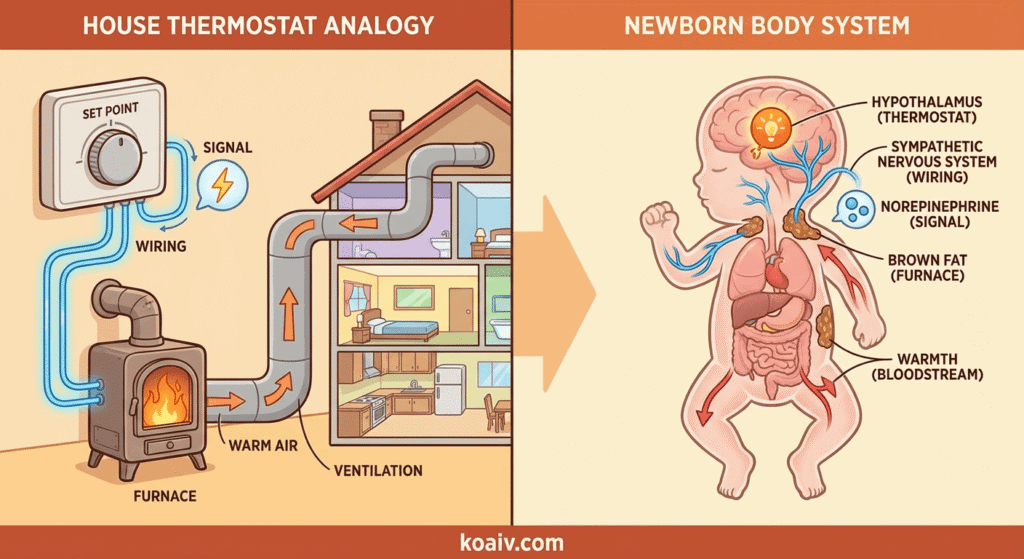
An analogy to bring it home: Think of the hypothalamus as a thermostat on a wall. When the temperature in the house drops below the set point, the thermostat sends a signal to the furnace. The furnace fires up and heats the air, which circulates through the vents to warm every room. In a newborn, the hypothalamus is the thermostat, the sympathetic nervous system is the wiring, norepinephrine is the signal, and brown fat is the furnace. The bloodstream is the ventilation system carrying warmth to every organ that needs it. Brown fat is to a newborn what automatic climate control is to a high-end car — temperature stays steady without the driver doing a thing.
A Brief Detour: How the Body Loses Heat
Before continuing with brown fat’s role in baby temperature regulation, it is worth briefly describing the broader system of which brown fat is only one part. This will help parents understand how all the pieces fit together — and why multiple strategies for keeping newborns warm work synergistically rather than redundantly.
The human body maintains its core temperature through a constant balancing act between heat production and heat loss. Heat is produced by virtually every metabolic process occurring in the body, but especially by muscles during activity, by the liver during chemical processing, and — in newborns — by brown fat during thermogenesis.
Heat is lost to the environment through four main pathways:
- Radiation: Heat radiating outward from the skin surface into cooler surrounding air, the way a hot cup of coffee radiates warmth — this is why a cold room draws heat away from a bare-skinned baby even without any wind or contact.
- Conduction: Heat transferring directly from skin to any cooler surface in physical contact — a cold examination table, a cool blanket, a parent’s cool hand.
- Convection: Heat carried away by moving air — drafts, fans, or even gentle air circulation in a room.
- Evaporation: Heat lost through the evaporation of moisture from skin and lungs — which is why a wet newborn loses heat so rapidly at birth.
Every piece of advice you will ever receive about maintaining newborn temperature — dry them immediately after birth, keep the room draft-free, use a warm blanket for skin contact, feed frequently — targets one or more of these four heat-loss pathways. Brown fat addresses the newborn heat production side of the equation. A good thermal strategy for a newborn addresses both sides simultaneously.
Where Is Brown Fat Located in Newborns?
One of the most persistent misconceptions surrounding newborn fat involves geography — specifically, where brown fat is actually found in newborns.
Those iconic chubby cheeks, the soft folds at the wrists, the delightful roundness of a well-fed baby thigh — these are overwhelmingly composed of white fat, serving as both an energy reserve and a layer of thermal insulation. When parents and grandparents admiringly pinch a baby’s pudgy cheeks, they are almost certainly touching white fat, not brown.
Brown fat deposits in infants occupy entirely different, more strategically selected real estate within the body. Brown fat is hidden deep inside, acting like a high-tech thermal vest. Its placement is not random. It reflects a precise biological priority: protect the organs that cannot survive even brief temperature disruptions.
Strategic Locations of Brown Fat in Babies
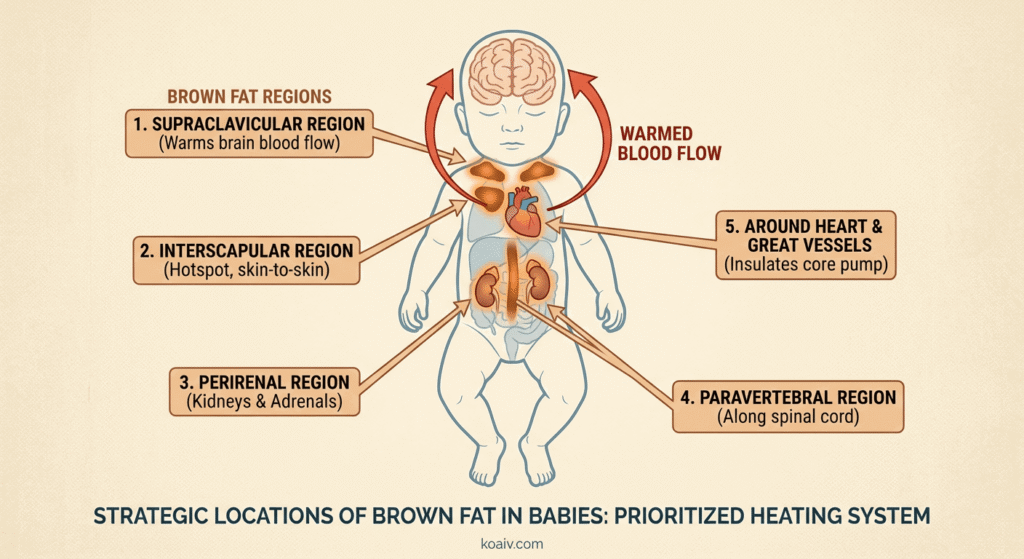
Brown fat in newborns is concentrated in the following regions:
- The Supraclavicular Region — Around the neck and clavicles (collar bones):Positioned to warm blood traveling upward toward the brain — the organ most sensitive to temperature changes and most catastrophically damaged by hypothermia.
- The Interscapular Region — Between the shoulder blades: A dense, accessible deposit sometimes called the “brown fat hotspot,” long known to anatomists and now studied extensively in metabolic research. This is also the region most easily warmed during skin-to-skin (kangaroo) care.
- The Perirenal Region — Surrounding the kidneys and adrenal glands: The kidneys are highly sensitive to temperature and require stable thermal conditions to filter blood effectively. The adrenal glands, which sit atop the kidneys, produce hormones like cortisol and adrenaline that are critical to stress response; keeping them warm maintains their function during thermal challenges.
- The Paravertebral Region — Along the spinal cord: The spinal cord is the primary information highway of the central nervous system, relaying signals between brain and body. Protecting it from cold ensures reliable communication throughout the thermal stress event.
- Around the heart and great vessels (aorta and vena cava): The heart, pumping warm blood throughout the body, benefits from localized heat insulation, as does the blood in the large vessels entering and leaving it.
The Logic of Location: Warming the Blood Supply
This geography is deeply deliberate from an evolutionary standpoint. By clustering brown fat around the body’s most critical thermal targets — the brain, heart, kidneys, and central nervous system — the infant body creates a prioritized heating system. As blood passes through these “heated zones” (like the neck), it is warmed up before it reaches the brain or returns to the heart. This ensures that the brain and heart remain at optimal operating temperatures.
The core is defended first. The periphery — fingers, toes, outer limbs — is permitted to cool somewhat if necessary. This is why a baby’s hands may feel cool to the touch even when the baby is perfectly warm at the core: the body has made a deliberate triage decision, directing heat toward vital organs and allowing the extremities to drop slightly in temperature. A cool hand is not necessarily evidence of a cold baby.
The “Obesity Paradox”: When Fat Is Not the Enemy
Popular discourse around body fat tends toward the binary: fat is bad, and less fat is better. In modern society, the “obesity epidemic” has conditioned us to view any adipose tissue as unhealthy. Brown fat invites a necessary complication of this narrative, and understanding the distinction is genuinely important for parents who may worry when they see their baby described as “in the 90th percentile for weight” or who feel the cultural pressure to have a leaner-looking infant.
Brown fat is inherently metabolically healthy. It does not accumulate in arterial walls the way certain fat-related compounds can. It does not drive insulin resistance — the condition in which cells lose their sensitivity to insulin and blood glucose regulation becomes impaired. It does not contribute to the chronic inflammatory state associated with excess white adipose tissue. On the contrary, its activation actively consumes blood glucose and free fatty acids — the very metabolic substrates that, in excess, drive chronic disease.
More broadly, a healthy, well-padded baby is not an overweight baby in the adult sense. The fat that makes babies look rounded and soft represents a carefully calibrated biological portfolio: white fat providing energy reserves and insulation for a rapidly growing organism with enormous caloric demands, and brown fat standing ready to defend the core temperature that keeps the brain, heart, and kidneys functioning with perfect reliability.
Is brown fat healthy for babies? Absolutely. Baby fat, in other words, is doing exactly what it is supposed to do. It is not a problem to be solved. It is a portfolio that no financial adviser could engineer with equivalent precision.
How to Support Your Baby’s Brown Fat: 4 Practical Tips
Understanding the biology of brown fat in babies has direct, actionable implications for everyday parenting decisions. Here is how to maintain newborn temperature while supporting this remarkable system — not overwhelming it. The following guidance is grounded in current pediatric and physiological evidence.
1. The Over-Bundling Warning: The “Thermos Effect”
Because newborns possess this remarkable internal heating capacity, the parental instinct to add layer upon layer of clothing can actually work against the baby’s natural thermoregulation — and in extreme cases, contribute to dangerous overheating. If you wrap a heater in too many blankets, the heat has nowhere to go.
It is counterintuitive, because the baby looks so small and vulnerable and because our instincts shout warmth, protection, more. But overheating in infants is not a trivial concern. Research has associated excessive thermal stress in sleeping infants with increased risk of sudden infant death syndrome (SIDS) — the unexplained death of an apparently healthy baby during sleep (Carpenter et al., 2013; Moon et al., 2016). The exact mechanisms linking overheating to SIDS risk are still being studied, but the epidemiological association is clear enough that baby temperature management has become a central pillar of safe sleep guidance worldwide.
The standard clinical guideline is elegant in its simplicity: dress the baby in one more layer than an adult would comfortably wear in the same environment. Not two more layers. Not three. One. If you are comfortable in a T-shirt and light pants, the baby needs a onesie and a light sleep sack. That is it. Brown fat is covering the rest.
2. Room Temperature: The Goldilocks Zone
Pediatric and public health organizations, including the American Academy of Pediatrics (AAP) and the World Health Organization (WHO), recommend maintaining nursery temperatures between 68–72°F (20–22°C). This range is not arbitrary. It is calibrated to allow brown fat to function as a natural thermostat without placing excessive metabolic demand on the infant’s system.
Here is the logic: brown fat performs best when it has something to respond to. A room that is too cold forces the brown fat into sustained, energy-intensive activation — continuously burning through caloric reserves that a rapidly growing baby needs for brain development, organ maturation, and the construction of new tissues. A room that is too warm suppresses the thermogenic system entirely and creates genuine overheating risk. The 68–72°F range represents the thermal sweet spot — the “thermoneutral zone” for a clothed infant — within which the infant thermoregulation system functions most efficiently: engaged enough to stay in practice, but not so taxed that it diverts resources from growth.
A reasonably accurate indoor thermometer is therefore a sensible and inexpensive investment for any nursery.
3. Nutrition as Fuel: Keeping the Furnace Stocked
Brown fat burns energy. That energy must come from somewhere, and in a newborn, it comes from frequent feeding — whether breastmilk or formula. Brown fat function is energy-expensive, burning through glucose and lipids rapidly.
This is one underappreciated reason why newborn feeding schedules demand such frequency. The commonly recommended 8–12 feedings per 24 hours in early infancy is not only about meeting caloric needs for growth or establishing breastmilk supply. It is also about ensuring that the metabolic substrate for infant thermogenesis is consistently available. The fatty acids that UCP1-driven mitochondria burn to generate heat have to come from the bloodstream, which ultimately draws on recently consumed and recently digested food.
A cold, underfed infant faces a compounded physiological challenge: the demand for heat generation is elevated precisely when fuel reserves are depleted. This is why cold infants who are not feeding adequately can deteriorate faster than either problem alone would predict — the two stressors reinforce each other in a negative feedback loop.
Cold winter months, when ambient temperatures are lower and homes may be drafty, warrant particular parental attention to feeding frequency and adequacy. The furnace requires fuel, and that fuel arrives via every feeding.
A practical note for breastfeeding parents: If a baby seems excessively sleepy in a cold room and is not rousing for feeds, gentle warming (additional skin-to-skin contact, adjusting room temperature) may help stimulate alertness. Cold, even moderate cold, can suppress a newborn’s alertness and hunger cues, creating a cycle where the baby does not feed, loses more heat, becomes less alert, feeds even less, and so on. Warmth supports wakefulness supports feeding supports warmth.
4. Kangaroo Care: Biology’s Own Thermal Partnership
Skin-to-skin contact — widely known in clinical settings as kangaroo care — represents one of the most elegantly designed thermal partnerships in human biology. It is more than just bonding; it is one of the most effective methods for keeping newborns warm naturally. Named for the way marsupial mothers carry their young in a warm pouch against the body, kangaroo care temperature regulation works on multiple levels simultaneously.
When a parent holds a newborn chest-to-chest, skin against skin, the parent’s body acts as an external heat source addressing three of the four heat-loss pathways. It reduces radiant heat loss (the parent’s warm skin surrounds the baby). It replaces conductive heat loss with conductive heat gain (warm parent skin against cool baby skin). It blocks convective heat loss (no air movement across the baby’s skin). Only evaporative losses are not directly addressed, though a hat on the baby’s head mitigates evaporative loss from the scalp.
Remarkably, a mother’s chest temperature can actually rise to warm a cold baby or cool down to soothe an overheated one. Parent and infant heart rates and breathing patterns even begin to synchronize during skin-to-skin contact, a phenomenon that researchers believe reflects genuine physiological co-regulation between the dyad.
The effect on newborn thermoregulation is measurable and significant. Brown fat activation is reduced because the external heat source picks up some of the thermal load, conserving the baby’s energy reserves for growth rather than thermogenesis. This frees energy for other critical developmental tasks.
Research consistently demonstrates that kangaroo care stabilizes infant body temperature, reduces circulating stress hormones such as cortisol, supports weight gain, and promotes bonding — outcomes that reflect both the thermal and neurobiological dimensions of the practice (Moore et al., 2016; Conde-Agudelo & Díaz-Rossello, 2016).
For preterm infants — babies born before 37 weeks of gestational age — kangaroo care is particularly critical. Premature babies have had less time to accumulate brown fat deposits (brown fat accumulates primarily in the third trimester of pregnancy), their nervous systems are less developed (making norepinephrine signaling less reliable), and their surface-area-to-volume ratio is even more extreme than that of full-term newborns. They are, in every physiological sense, more thermally vulnerable. Kangaroo care can be genuinely life-preserving in this population, and it is now standard practice in neonatal intensive care units worldwide for this reason.
The takeaway for all parents is straightforward: skin-to-skin time is not merely an emotional experience, though it is certainly and beautifully that. It is a physiological collaboration — one body’s thermal management system actively supporting another’s while the latter develops its full independent capacity.
Quick tip: Check baby’s warmth by feeling the nape of the neck or chest, not the hands and feet — they are often cooler by design.
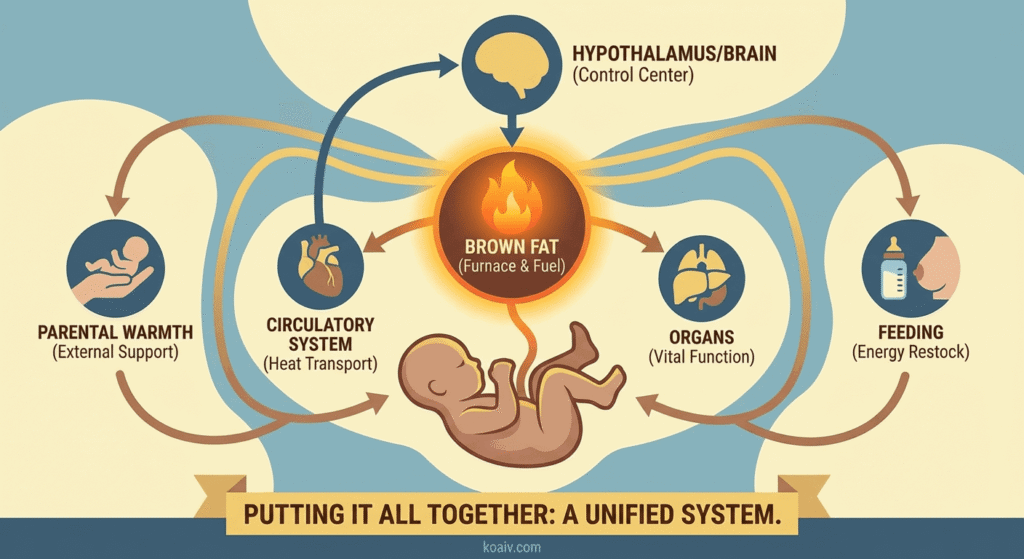
Putting It All Together: A System That Works in Concert
It is worth pausing to zoom out and appreciate how all of these elements of newborn thermal protection function as a unified, interdependent system rather than as isolated features.
A newborn enters the world. Cold air hits warm, wet skin. Temperature receptors fire. The hypothalamus registers the thermal challenge. The sympathetic nervous system responds. Norepinephrine reaches brown fat depots clustered strategically around the neck, spine, kidneys, and heart. UCP1 activates. Fatty acids combust. Heat floods into the bloodstream, carried outward through dense blood vessel networks to warm the brain, the heart, every organ that cannot afford to cool. Simultaneously, the baby roots for the breast or bottle — feeding is itself a warming act, bringing warm fluid into the stomach, stimulating metabolism, and restocking the fuel the brown fat furnace is burning. If a parent picks up the baby and holds it skin-to-skin, the external thermal input reduces the burden on the internal system, freeing energy for growth.
Every element — the brown fat, the hypothalamus, the sympathetic nervous system, the blood vessels, the feeding instinct, and even the parent’s warmth — is part of a single integrated thermoregulatory system that has been refined over millions of years of mammalian evolution.
Understanding this system does not make parenting easier in the logistical sense. But it does make it more grounded, more confident, and more marveling. Every time a parent feeds a baby, holds a baby, or thoughtfully adjusts the thermostat in the nursery, they are participating in this ancient biological choreography — not fighting against the baby’s biology, but working in partnership with it.
Frequently Asked Questions About Brown Fat in Babies
Q: My baby’s hands and feet always feel cold. Should I be worried?
Not necessarily. The body prioritizes warming the core (brain, heart, kidneys) over the extremities. A baby with cool hands and feet but a warm torso and neck is generally practicing normal thermal triage. Check the temperature of the back of the neck or the chest — these are better indicators of true core temperature than the hands or feet. If the chest feels cold, or if the baby appears pale, lethargic, or is not feeding normally, contact your pediatrician.
Q: How do I know if my baby is too hot?
Signs of overheating in a baby include: flushed or red skin, sweating (particularly on the scalp), rapid breathing, irritability or restlessness, and a hot torso. If you notice these signs, remove a layer of clothing, move to a cooler environment, and offer a feeding. If symptoms persist or the baby seems unwell, seek medical advice promptly.
Q: Does brown fat activity explain why newborns sleep so much?
Partly, yes. Running an active thermogenic system is metabolically expensive, and sleep is the body’s primary period of restorative metabolic activity. Newborns also sleep extensively because their brains are growing at an extraordinary pace — sleep is critical to neural development — and because their digestive and immune systems require enormous energy resources. Brown fat thermogenesis is one of several high-energy processes competing for the newborn’s caloric budget.
Q: Do premature babies have the same brown fat protection?
Less so, and this is one reason premature infants require more intensive thermal management. Brown fat deposits accumulate primarily in the third trimester of pregnancy; a baby born significantly early will have had less time to build those stores. This is one of many reasons why kangaroo care and incubator temperature management are so critical in the NICU — they supplement a thermal system that has not yet fully developed.
Q: At what age does brown fat decrease in babies?
Brown fat is at its highest proportion at birth, comprising roughly 5% of a newborn’s total body mass. As infants grow, develop greater muscle mass, and gain the ability to shiver effectively — typically over the first year and into early childhood — the proportion of brown fat gradually declines. The tissue does not disappear entirely; small deposits persist into adulthood in many people, primarily around the neck and upper back, but the dramatic thermogenic capacity present at birth diminishes as the child’s body develops other means of temperature regulation.
Conclusion
There is a particular kind of wonder that emerges not from ignorance of biology but from understanding it deeply. The more one knows about what is happening inside a newborn body — the mitochondrial furnaces firing in the spaces between shoulder blades, the norepinephrine signals cascading down the sympathetic nervous system in response to a cool draft, the strategically positioned deposits of brown fat standing guard around the heart and kidneys — the more extraordinary the ordinary act of holding a baby becomes.
Next time you marvel at a baby’s soft rolls, remember they are more than adorable. Brown fat in babies is not “baby fat” in the pejorative sense. It is not excess. It is not something to be grown out of quickly or dismissed as cute incidental softness. It is a precisely engineered, evolutionarily ancient, metabolically sophisticated survival tool — one that has ensured the newborn thermal protection of human infants across every climate and condition that humanity has ever inhabited, from equatorial jungles to subarctic tundra.
For parents, the practical message is grounding: a healthy, well-fed, chubby baby is a baby whose biology is working exactly as designed. The rolls of fat that define the infant aesthetic represent a duality of survival. The white fat provides the energy reserves and insulation that fuel rapid growth. The brown fat stands ready to defend the core temperature that keeps the brain, heart, and kidneys functioning with perfect reliability. The feeding schedule keeps the furnace stocked. The skin-to-skin contact provides external thermal partnership while the system matures. Together, they form an integrated, redundant, beautifully resilient thermoregulatory architecture that no external blanket, however soft, however well-intentioned, could fully replicate.
So layer that onesie wisely, enjoy plenty of cuddles, and trust that nature’s internal heater is on the job — quietly, efficiently, and all for the sake of keeping baby warm. The blanket is still a lovely gesture. But the biology was there first — and it is more remarkable than any of us were ever told.
References
- Becher, T., et al. (2021). Brown adipose tissue is associated with cardiometabolic health. Nature Medicine, 27, 58–65.
- Cannon, B., & Nedergaard, J. (2004). Brown adipose tissue: function and physiological significance. Physiological Reviews, 84(1), 277–359.
- Carpenter, R., et al. (2013). Bed sharing when parents do not smoke: is there a risk of SIDS? BMJ Open, 3(5).
- Conde-Agudelo, A., & Díaz-Rossello, J. (2016). Kangaroo mother care to reduce morbidity and mortality in low-birthweight infants. Cochrane Database of Systematic Reviews, Issue 8.
- Cypess, A. M., et al. (2009). Identification and importance of brown adipose tissue in adult humans. New England Journal of Medicine, 360(15), 1509–1517.
- Harms, M., & Seale, P. (2013). Brown and beige fat: development, function and therapeutic potential. Nature Medicine, 19(10), 1252–1263.
- Himms-Hagen, J. (1990). Brown adipose tissue thermogenesis: interdisciplinary studies. FASEB Journal, 4(11), 2890–2898.
- Hohenauer, E., et al. (2021). Cold-induced thermogenesis in humans: A review. Journal of Thermal Biology, 99, 102915.
- Moore, E. R., et al. (2016). Early skin-to-skin contact for mothers and their healthy newborn infants. Cochrane Database of Systematic Reviews.
- Stanford, K. I., et al. (2013). Brown adipose tissue regulates glucose homeostasis and insulin sensitivity. Journal of Clinical Investigation, 123(1), 215–223.

October 25, 2026

October 25, 2026

October 25, 2026

October 25, 2026