
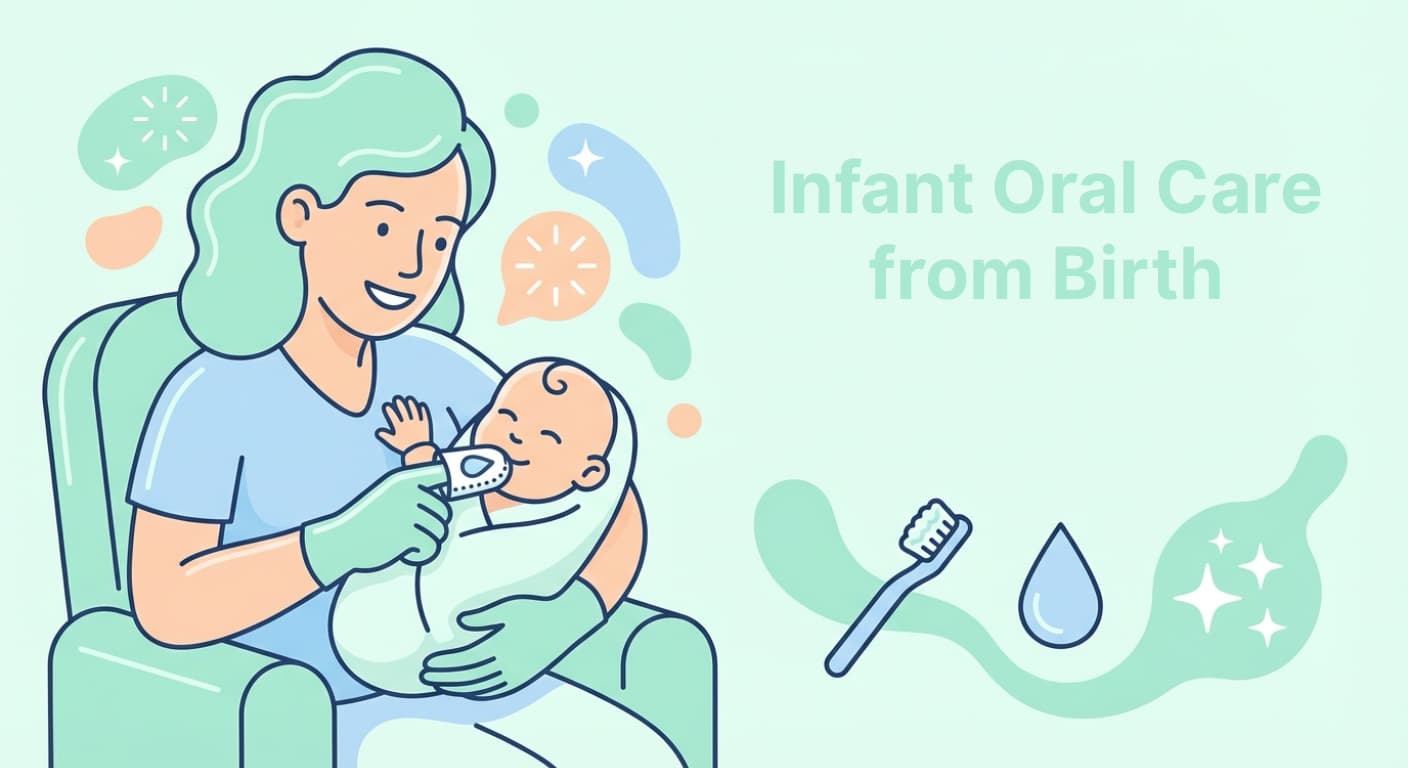
Infant oral care refers to the gentle, daily routine of cleaning a baby’s mouth—from birth onward—starting with wiping the gums and tongue with a soft, damp cloth after feedings to remove milk residue and bacteria, then transitioning to brushing emerging teeth with a soft toothbrush and a tiny smear of fluoride toothpaste to prevent early decay and build healthy oral habits.
There is a persistent myth in parenting circles — one so deeply embedded that even well-meaning grandparents repeat it with cheerful confidence: “Baby teeth don’t matter. They’re going to fall out anyway.”
This single misconception has arguably done more harm to children’s health than almost any other piece of folk wisdom passed down the generations. The data tells a strikingly different story. According to the Centers for Disease Control and Prevention (CDC), tooth decay is the single most common chronic childhood disease in the United States — more prevalent than asthma, more widespread than childhood diabetes. Roughly 23% of children aged 2 to 5 have already experienced cavities in their primary (baby) teeth, and the consequences ripple outward far beyond a toothache and a tearful afternoon at the dentist’s office.
Quick Reference: Age-by-Age Infant Oral Care Milestones
| Age | Action |
|---|---|
| 0–6 months | Wipe gums with damp cloth after feedings; no toothpaste yet |
| First tooth appears | Begin brushing with rice-grain fluoride toothpaste; schedule first dental visit |
| 6–12 months | Introduce sippy or straw cup; avoid juice entirely |
| 12 months | First dental visit if not yet done; fluoride varnish begins |
| 12–18 months | Complete transition off the bottle |
| When teeth touch | Begin flossing between adjacent teeth |
| 2–3 years | Begin pacifier weaning; increase fluoride toothpaste to pea-sized amount |
| 3+ years | Encourage supervised self-brushing; dental visits every 6 months |
Why a Baby’s Mouth Matters More Than You Think
Before exploring those consequences, it is worth pausing on a foundational question: why do baby teeth matter at all, given that they eventually fall out? The answer begins with anatomy. Baby teeth are not decorative placeholders. They hold the architectural space in the jaw that permanent teeth will later occupy. When a baby tooth is lost too early to decay or infection, the surrounding teeth drift into the gap, and the permanent tooth beneath has no clear path to erupt correctly. This single event can set in motion years of crowding, misalignment, and costly orthodontic correction — all from a cavity in a “temporary” tooth.
But the mouth’s significance extends well past dentistry. Think of a baby’s oral cavity not as a temporary placeholder for future teeth, but as the architectural blueprint for everything that follows. The mouth is the gateway to digestion, the instrument of early speech, the foundation of facial structure, and — perhaps most fascinatingly — a thriving ecosystem. Within that small, gum-lined space, trillions of microorganisms are already establishing colonies from the first hours of life, forming what scientists call the oral microbiome. This invisible community will influence not only dental health but immune function, gut health, and overall well-being for years to come.
Caring for a baby’s mouth, then, is not a task that begins when the first pearly white breaks through the gumline. It begins at birth. And when done thoughtfully — and the threshold for “thoughtfully” is much lower than most parents fear — it becomes one of the most loving and consequential investments a caregiver can make in a child’s future.
Understanding the Baby Mouth — A Foundation Before the Teeth Appear
The Hidden Architecture of a Newborn’s Oral Cavity
Long before a single tooth emerges, a newborn’s mouth is a remarkably complex and purposeful structure. Understanding its basic anatomy helps parents appreciate both its fragility and its resilience.
The gingival pads — those smooth, firm, pink ridges of tissue lining the jaw — are what most people would call the gums. Before teeth appear, they serve as the functional surface for feeding, compressing the nipple or bottle teat with surprising muscular force. They are sensitive, receptive to stimulation, and already home to a growing community of microorganisms. Above the gums, the palate (the roof of the mouth) plays a dual structural role: the hard palate at the front provides rigid support, while the soft palate at the back orchestrates the elegant, coordinated ballet of sucking and swallowing.
The tongue deserves particular attention. In adult life, we think of it primarily as an organ of taste and speech, but in early infancy, it is the master coordinator of feeding. Its rhythmic, wave-like movements during breastfeeding or bottle feeding don’t just deliver milk — they actively shape the developing palate and jaw in real time. Picture the tongue as a gentle, constant mold pressing against the roof of the mouth, gradually influencing the arch’s width and height. This is why the mechanics of feeding have lasting consequences for oral structure.
Even the structures that seem purely supporting — the cheeks, the salivary glands — are actively contributing. Saliva, produced from birth in significant quantities (which is why newborns drool so readily), is far more than just moisture. It is the mouth’s first line of chemical defense: it neutralizes the acids produced by bacteria, washes away food debris, and delivers a steady supply of calcium and phosphate minerals that will eventually strengthen emerging teeth. Think of saliva as the mouth’s built-in irrigation and repair system, running continuously.
The Oral Microbiome
To understand infant oral health fully, it helps to understand one concept that has transformed modern dentistry and immunology: the microbiome. If this word feels intimidating, the underlying idea is intuitive. A microbiome is simply a community of microorganisms — bacteria, fungi, viruses, and other microscopic life — living together in a particular environment. The human body hosts many such communities: in the gut, on the skin, and in the mouth. These communities are not invaders to be eliminated; they are residents that, when balanced, perform essential functions. When imbalanced, they can contribute to disease.
A baby arrives in the world with an essentially sterile mouth. Within hours, that changes dramatically. The process depends heavily on birth mode: infants born vaginally are bathed in the mother’s vaginal and intestinal microbiota; infants born by Caesarean section have a different initial microbial exposure, though the gap narrows significantly with skin-to-skin contact and breastfeeding. Breast milk itself is not sterile — it contains live bacteria, prebiotics (substances that feed beneficial bacteria), and antibodies, all of which help shape the oral and gut microbiome in a protective direction.
Why does the identity of these early microbial colonizers matter? Because the oral microbiome is not a fixed, unchanging community — it is a dynamic ecosystem whose composition in infancy appears to influence long-term dental health and immune development. Scientists are only beginning to map the full complexity of what they call the oral-gut axis: the bidirectional relationship between the microbial communities in the mouth and those in the gut.
Emerging research suggests that an unhealthy oral microbiome — one dominated by acid-producing, cavity-causing bacteria — may contribute to systemic inflammation and disrupted gut health. Conversely, a diverse, well-balanced oral microbiome in infancy may help program a more resilient immune response. In other words, caring for a baby’s mouth isn’t just about teeth. It’s about the whole child.
This is also where parental behavior becomes pivotal in a way most people haven’t considered. Streptococcus mutans — the primary bacterium responsible for tooth decay — is not present in a baby’s mouth at birth. It is acquired, almost exclusively, from caregivers through saliva transfer. Sharing spoons, pre-tasting food to “check the temperature,” or cleaning a fallen pacifier with your own mouth rather than rinsing it with clean water can all introduce this cavity-causing organism into a baby’s oral environment.
The implications extend even further: a parent with a large, thriving population of S. mutans (usually because of untreated cavities) poses a higher transmission risk than one with good oral health. This is not a reason to avoid closeness with an infant — it is a compelling reason to tend to one’s own dental health, a point this article returns to in depth.
Caring for Baby’s Gums Before Teeth Arrive (0–6 Months)
Why Cleaning Gums Matters Before Any Tooth Has Appeared
A common assumption runs like this: oral hygiene is for teeth, and since a newborn has none, oral hygiene can wait. This assumption is worth dismantling early, because the absence of teeth does not mean the absence of bacteria, and the habits established in these early toothless months have consequences that compound for years.
Breast milk and formula leave residue on the gums after every feeding. This residue — composed of sugars, proteins, and fats — creates an environment where microorganisms, including early colonizers of the oral microbiome, can thrive. Cleaning the gums after feedings removes this substrate and disrupts the bacterial accumulation that might otherwise occur.
But perhaps more importantly, regular gum care in the first months of life serves a behavioral purpose that is just as significant as its hygienic one: it establishes the sensation of having the mouth cleaned as a normal, expected part of daily life. Infants who experience consistent, gentle oral care from birth typically resist toothbrushing far less vigorously when it becomes necessary later. A toddler who has never had a finger or cloth in their mouth, and then suddenly encounters a toothbrush, is being asked to accept something entirely and startlingly unfamiliar. An infant who has been gently wiped since week two of life experiences toothbrushing as a familiar, unremarkable continuation of an existing routine.
How to Clean a Newborn’s Gums
The technique is simple enough to describe in a single breath, which is the point. After feedings — and particularly before bed, when oral bacteria are left undisturbed for the longest period — a parent can wrap a soft, damp cloth or a piece of gauze around one finger and gently wipe the gums in small circular or sweeping motions. The texture of the cloth provides mild stimulation of the gum tissue; the moisture loosens and removes feeding residue. The water should be at room temperature or slightly warm; cold water can be startling and uncomfortable for infants.
Soft silicone finger brushes, widely available in pharmacies, are an excellent alternative — they slip over the fingertip and allow somewhat more controlled contact with the gums, and some infants find their texture soothing enough to willingly chew on them, which is more than fine.
No toothpaste is needed at this stage. The mechanical action of wiping is sufficient for gum hygiene in a pre-tooth mouth.
The single most important variable is not technique but consistency. Once a day is better than never; twice a day approaches an ideal. What disrupts habit formation is not imperfection but inconsistency. A gentle, brief gum wipe every evening after the last feeding will, over weeks, become as automatic as the feeding itself.
The Great Tooth Eruption
The Timeline of Primary (Baby) Teeth
Few milestones generate as much parental anticipation — and anxiety — as the arrival of the first tooth. Parents peer into their infant’s gums with flashlights, prod with fingers, and consult the internet at 2 a.m. with questions like “is this normal?” This section is designed to be the answer they’re looking for.
The following chart presents general eruption windows for primary teeth, based on population averages:
| Tooth Type | Lower (Bottom) | Upper (Top) |
|---|---|---|
| Central Incisors | 6–10 months | 8–12 months |
| Lateral Incisors | 10–16 months | 9–13 months |
| First Molars | 14–18 months | 13–19 months |
| Canines (Cuspids) | 17–23 months | 16–22 months |
| Second Molars | 23–31 months | 25–33 months |
The ranges in this chart are deliberately wide because biological variation in eruption timing is enormous. Some babies cut their first tooth as early as 4 months; others may not see one until after their first birthday. Both scenarios are typically within the range of normal.
The classic signs of teething are well-documented and generally mild: increased drooling (sometimes dramatically so — a shower bib becomes a wardrobe essential), gum swelling and tenderness at the eruption site, a powerful urge to chew on anything available, moderate fussiness, and disrupted sleep. These are real, the discomfort is genuine, and compassionate management is entirely appropriate.
What is equally important — and the source of considerable parental confusion — is understanding what teething does not cause. High fever (temperature above 101°F / 38.3°C), diarrhea, and severe rash are not symptoms of teething. They are symptoms of illness. This distinction matters clinically, because the teething age window (roughly 6 to 24 months) overlaps significantly with the period during which infants encounter many viral and bacterial infections for the first time, as maternal antibody protection wanes. When a teething baby develops a high fever, a sick child with a teething baby is the more accurate way to think about it. That fever warrants a call to the pediatrician, regardless of how swollen the gums look.
The inflammation associated with a tooth pressing through the gum tissue may temporarily and mildly reduce local immune defenses in the mouth, making babies slightly more susceptible to minor infections in the vicinity of erupting teeth. This may partially explain why mild illness seems to accompany teething episodes — not because teething causes the illness, but because the local immune adjustment creates a narrow window of vulnerability.
Safe and Effective Teething Relief
For a genuinely uncomfortable teething baby, several approaches have sound evidence or at minimum a strong safety profile:
A chilled (not frozen) teething ring or toy provides counterpressure against the swollen gum and the mild cold reduces inflammation — the same principle as icing a minor sprain. The “not frozen” qualification is important: extremely cold objects can damage delicate gum tissue. A clean finger used for gentle gum massage provides direct pressure and the reassurance of touch. A cold, damp washcloth offers something satisfying to chew on with a texture many infants prefer. For babies who have already started solid foods, chilled pureed foods such as cold applesauce serve the dual purpose of soothing and nourishing.
For pain that genuinely disrupts a baby’s feeding or sleep, infant-appropriate acetaminophen or ibuprofen (for babies over 6 months), administered according to the pediatrician’s guidance on appropriate dosing, remains the safest and most effective pharmacological option available.
Brushing Baby Teeth — Getting It Right From the Very Start
When to Begin, and Why There Is No Grace Period
The moment the first tooth emerges through the gumline, brushing begins. Not when a few more appear. Not after the first birthday. From the very first tooth. This is not arbitrary or overcautious — it reflects a specific biological reality. Newly erupted primary teeth are encased in young, immature enamel that is thinner and more porous than the enamel that will coat permanent teeth. This means they are especially vulnerable to acid attack and decay in their earliest weeks and months. The period right after eruption is precisely when the mouth’s chemical environment matters most.
Choosing the Right Toothbrush
A good infant toothbrush comes down to three key characteristics:
- Small head: sized to fit comfortably in a baby’s mouth
- Soft bristles: non-negotiable, as medium or firm bristles can abrade delicate gum tissue
- Easy-grip handle: designed for both the imprecise grasp of a squirming infant and the one-handed reach of a parent leaning over a wriggling child
Silicone finger brushes can serve as a useful transitional tool in the earliest months, bridging the gap between familiar gum-wiping and formal tooth brushing. Once a baby has several teeth, however, a proper small toothbrush becomes the more appropriate and effective choice.
Regardless of type, all toothbrushes should be replaced every three months — or sooner if the bristles begin to fray and splay. Worn bristles lose their cleaning efficacy and can irritate gum tissue.
The Fluoride Question
No topic in infant oral care generates more parental debate than fluoride, and the debate is largely fueled by misinformation and the confusing proliferation of “natural” alternatives that imply fluoride is harmful. The scientific consensus, held consistently across every major dental and pediatric health organization in the world, is clear.
Both the American Academy of Pediatric Dentistry (AAPD) and the American Academy of Pediatrics (AAP) recommend the following:
From the first tooth appearance through age 3: Use a smear — the size of a grain of rice — of fluoride toothpaste.
Ages 3 to 6: Increase to a pea-sized amount.
Why does fluoride work? Tooth enamel is primarily composed of a mineral called hydroxyapatite. When bacteria in the mouth metabolize sugar and produce acid, that acid can dissolve hydroxyapatite in a process called demineralization. Fluoride interrupts this process in two ways: it makes the enamel more resistant to acid attack (by forming fluorapatite, a harder mineral structure), and it actively participates in the repair of early demineralized areas — a process called remineralization. Think of fluoride as both a shield and a repair kit for the tooth surface.
The concern many parents raise is dental fluorosis — cosmetic discoloration of the enamel caused by excessive fluoride consumption during tooth development. This concern is legitimate but proportionate. At the rice-grain quantities recommended, the risk of fluorosis is minimal, and the cavity-prevention benefit is overwhelming. A child with mild cosmetic fluorosis has slightly mottled enamel as an adult; a child who develops cavities in infancy from insufficient fluoride exposure may face pain, infection, sedation, and the developmental consequences of early tooth loss.
Technique, Timing, and the Art of Making It Work
The mechanics of brushing an infant’s teeth are less complicated than getting a baby to cooperate with them, but both deserve attention. The most ergonomically sound position is to lay the baby on a flat surface — a changing table, a bed — or to hold the child in the parent’s lap facing away, with the parent’s free arm stabilizing the head and the free hand gently holding the chin. This gives the parent clear sightlines to all tooth surfaces and a degree of gentle control that standing a child upright rarely provides.
The technique itself involves small, circular motions along the gumline and over all surfaces of each tooth, front and back. The session should ideally last two minutes, though this is more aspirational than achievable with most infants and toddlers — the realistic goal is to cover all surfaces as thoroughly as possible within whatever cooperation window exists.
Of all the brushing sessions in a day, the bedtime session is the critical one. After this brushing, nothing enters the mouth except water. During sleep, saliva production drops dramatically — sometimes nearly to zero — removing the mouth’s primary natural defense against bacterial acid production. Any trace of sugar left on teeth overnight has hours of undisturbed contact with enamel, in an environment with almost no saliva to dilute and neutralize it. The bedtime brush, therefore, is not interchangeable with the morning one. It is the most important cleaning of the day.
Flossing — Yes, Even for Babies
Flossing is typically the oral care recommendation that parents find most surprising, and most difficult to take seriously, in the context of infancy. But the underlying logic is simple: plaque and microscopic food particles accumulate between teeth wherever two teeth are in contact, regardless of the age of their owner. Once two adjacent teeth are touching with no space between them, a toothbrush cannot reach the contact point between them. That is the moment when flossing should begin.
Child-sized floss picks — disposable tools with a small arc of floss pre-strung between two plastic prongs — are far more manageable in a baby’s mouth than conventional floss wrapped around an adult’s fingers. The technique should be gentle, following the natural curve of each tooth rather than snapping the floss down onto the gum. The lower front teeth are typically the first to make contact and the first area where interproximal (between-tooth) plaque accumulates.
Nutrition, Diet, and Oral Health — The Invisible Connection
The relationship between what a baby eats and the condition of a baby’s teeth operates on a principle that, once genuinely understood, reliably reshapes parental behavior: it is the frequency of sugar exposure, not the total quantity, that drives tooth decay.
To understand why, it helps to think about what happens in the mouth every single time sugar is consumed. Bacteria — primarily Streptococcus mutans and related species — metabolize sugar and produce lactic acid as a byproduct. This acid attacks tooth enamel for approximately 20 to 40 minutes after each sugar exposure, in a phenomenon sometimes called the Stephan Curve (after the researcher who charted it). After that window, saliva gradually neutralizes the acid, the pH in the mouth rises back to a safe level, and the attack subsides. The crucial word in that sentence is “after” — and the crucial variable is how quickly the next exposure arrives.
A child who sips diluted apple juice slowly over two hours is mounting a nearly continuous acid assault on their teeth, even though the total sugar consumed may be modest. A child who drinks the same amount in a concentrated ten-minute sitting at mealtime, and then rinses with water, experiences a single, time-limited acid event followed by a recovery period.
Same quantity of sugar, wildly different outcome for the teeth. This is why the AAP recommends no fruit juice for infants under 12 months, and only limited amounts thereafter — not because juice is uniquely evil, but because it is a liquid sugar that is particularly easy to sip on continuously. Water is the ideal between-meal drink, at every age. It has no sugar, it helps rinse the mouth, and if it comes from a fluoridated municipal tap, it contributes a passive layer of cavity protection.
Early Childhood Caries — The Epidemic Hiding in Plain Sight
What ECC Is, and Why Its Scale Is Stunning
Early Childhood Caries (ECC) — a clinical term encompassing any decay, missing tooth due to decay, or filled tooth surface in a primary tooth in a child under age 6 — is not a rare edge case of poor parenting or extreme dietary negligence. It is an epidemic. Tooth decay is the single most common chronic disease of childhood, more prevalent than asthma or diabetes, affecting children across every socioeconomic stratum, though with disproportionate severity in low-income communities where access to preventive dental care and fluoridated water is less reliable.
What makes ECC particularly insidious is a fact that reframes the entire discussion: it is, in a meaningful epidemiological sense, an infectious disease. Streptococcus mutans, the primary cavity-causing bacterium, is not spontaneously generated in a child’s mouth. It is transmitted — most commonly from primary caregivers through saliva. A parent who shares a spoon with an infant without thinking about it, who pre-tastes food to test the temperature, or who cleans a fallen pacifier with their own mouth is, unknowingly, potentially inoculating that child with the organisms most responsible for childhood dental disease.
Research consistently demonstrates that children whose primary caregivers carry high levels of S. mutans and have untreated cavities develop ECC at significantly higher rates. The condition spreads within families in the same way a cold does — through shared air and contact. It is also worth noting that siblings and daycare contacts can serve as secondary transmission routes.
The White Spot Lesion: A Second Chance
The earliest visible manifestation of tooth decay is not the dark pit or brown cavity that most people recognize as a problem. It is something far subtler and, critically, far more hopeful: a white spot lesion. This chalky, opaque patch appears along the gumline, most commonly on the upper front teeth, and represents an area of enamel that has begun to demineralize — essentially, the early dissolution of the mineral structure of the tooth surface. It does not hurt, it is easy to miss in a cursory inspection, and it is, at this stage, reversible.
With prompt intervention — fluoride varnish applied by a clinician, improved brushing consistency, and reduction in sugar exposure frequency — the enamel can remineralize. The white spot may lighten, harden, and stabilize without ever becoming a true cavity. This is the window of opportunity, and it is one of the most clinically important messages in all of pediatric dentistry. By the time a white spot darkens to yellow or brown, the damage has progressed beyond the reversible threshold. By the time a visible pit or hole is present, treatment — often involving sedation or even general anesthesia for very young children who cannot cooperate with dental procedures — becomes necessary.
The cascade of consequences from untreated ECC extends well beyond the mouth: persistent dental pain, bacterial infection with potential for facial abscess, difficulty eating leading to inadequate nutrition, disrupted sleep from pain, delayed speech development as a consequence of premature tooth loss, missed daycare and school days, and — not to be underestimated — measurable psychological impact on a child’s self-image and social comfort.
Fluoride varnish — a concentrated liquid fluoride coating applied directly to the teeth by a clinician — is quick (the application takes roughly one minute), painless, and among the most effective individual preventive interventions available. It is recommended by the AAPD starting at age 12 months, typically applied every 3 to 6 months depending on a child’s risk level. Increasingly, pediatricians apply fluoride varnish at well-child visits, meaning a child doesn’t even need a dental appointment to receive this protection.
Dietary management — reducing the frequency of sugar exposure and eliminating the bedtime bottle — addresses the root behavioral drivers of decay. And regular dental check-ups, beginning by age 1, allow a clinician to catch the white spot lesion before it becomes the cavity that could have been avoided entirely.
The First Dental Visit — Demystifying “Baby’s First Appointment”
When to Go — and Why the Timing Matters
The consensus among the AAP, the AAPD, and the World Health Organization is clear and consistent: a child’s first dental visit should occur by age 1 or within 6 months of the first tooth erupting — whichever comes first. This timeline surprises most parents, who tend to assume that dental care begins somewhere around age 3 or 4, when a child has a full set of teeth and is old enough to understand what a dentist is asking them to do.
The purpose of the first visit, however, is emphatically not to drill or fill. It is to establish a dental home: a consistent, ongoing relationship with a dental provider who knows the child’s history, who monitors development over time, who applies preventive treatments proactively, and who educates the family in ways that a pamphlet or a website simply cannot replicate. The first visit is, at its core, a parent education session with a gentle physical examination attached.
Why does going so early produce better outcomes than waiting? Because the first visit that occurs before any decay is present is infinitely more valuable than the first visit triggered by a visible problem. By the time most children arrive at a dentist for the first time — often at age 3 or later — they sometimes already have cavities requiring treatment. The intervention that prevents a cavity costs virtually nothing compared to the intervention that treats one in a toddler who is terrified of the chair.
What Actually Happens at the First Visit
In a well-run pediatric dental practice, the first visit is designed explicitly to be positive. Typically, the infant sits on the parent’s lap while the dentist or hygienist performs a knee-to-knee examination — the baby lies back with their head in the clinician’s lap and their feet in the parent’s lap, giving the dentist an unobstructed view of the entire oral cavity. This is a visual and gentle tactile assessment: the teeth and gums are examined for early decay, tissue health, and structural concerns. Fluoride varnish may be applied.
The dentist will ask about feeding habits, pacifier use, exposure to fluoridated water, and family oral health history. From the answers, they will generate a personalized risk profile for that child and tailor their preventive recommendations accordingly. A low-risk infant with breastfeeding parents who have excellent oral health, fluoridated water, and no family history of significant dental disease will receive different guidance than a high-risk infant in a formula-fed household where a primary caregiver has active untreated cavities and a diet high in sugary drinks. This individualized approach is what makes the clinical visit irreplaceable.
Choosing the Right Dentist
A pediatric dentist — technically called a pedodontist — has completed two to three additional years of specialized training beyond dental school, focusing on child development, behavioral management for children who are frightened or uncooperative, and oral conditions specific to developing mouths. While a competent general dentist can and does treat children successfully, families with elevated risk factors — premature birth, special health care needs, a family history of extensive dental disease — benefit most from the depth of pediatric specialization.
A quality pediatric dental environment is recognizable: the waiting area has toys and child-scaled furniture; the staff communicates at a child’s level; procedures are explained in age-appropriate terms; the philosophy of the practice prioritizes building trust over achieving efficiency.
Red flags include a first-visit recommendation for sedation for a routine examination, an office that communicates primarily with the adult while ignoring the child, or a rushed appointment that doesn’t include time for parent questions.
Standard frequency for dental visits is every 6 months. Children identified as high-risk — those who have had previous cavities, whose siblings have active decay, who have medical conditions affecting saliva production, or who have a high-sugar diet — may be scheduled every 3 months to allow more frequent monitoring and preventive treatment.
Habits That Shape the Mouth — Pacifiers, Thumb-Sucking, and Oral Development
The Non-Nutritive Sucking Reflex and When It Becomes a Problem
Sucking without the goal of obtaining milk — what clinicians call non-nutritive sucking, whether on a pacifier, a thumb, or fingers — is a normal, developmentally appropriate behavior in infancy and early toddlerhood. It serves a legitimate self-soothing function; the sucking reflex is one of the most potent calming mechanisms available to the infant nervous system. The concern arises not from the behavior itself but from its persistence past the developmental window in which it can influence dental and skeletal structures.
Pacifiers, when used judiciously in the first year of life, carry a favorable risk-benefit profile. Their role in potentially reducing SIDS risk, as cited by the AAP, is a meaningful and evidence-supported reason to use them.
The oral development concern begins when pacifier use extends habitually past age 2 to 3. At that stage, the sustained pressure of the pacifier against the palate and erupting teeth can cause open bite — a gap between the upper and lower front teeth when the mouth is closed — posterior crossbite, and measurable narrowing of the palatal arch. These changes may correct spontaneously when the habit is stopped early enough, but persistent use into the years when permanent teeth are developing risks outcomes that require active orthodontic treatment.
Thumb sucking trajectories look similar. Most children abandon the habit naturally by age 3 to 4, and this natural cessation, if early enough, typically results in full spontaneous correction of any mild dental changes. If the habit persists past age 4 to 5, when the permanent incisors are beginning their long process toward eruption, intervention becomes clinically advisable. Positive reinforcement (praise and small non-food rewards for nights without thumb sucking), barrier methods such as thumb guards, and structured guidance from a pediatric dentist are the first-line approaches — gentle, collaborative, never punitive.
The bottle-to-cup transition is an inflection point that many parents underestimate in its oral health significance. The AAP recommends introducing a cup as early as 6 months and phasing out the bottle entirely by 18 months. The reason is not merely about symbolic maturity — it is that prolonged bottle use concentrates liquid exposure against specific teeth. Straw cups or open cups are decidedly preferable to hard-spout sippy cups, which direct liquid stream in a way that can pool against the upper front teeth, recreating a version of the decay risk associated with the bottle if sugary liquids are involved.
A less commonly discussed but clinically significant concern is chronic mouth breathing in infants. For the first several months of life, newborns are obligate nasal breathers — they breathe almost exclusively through their nose, which is why nasal congestion in a very young infant is distressing rather than merely annoying.
If an infant consistently breathes through the mouth beyond the newborn period, this warrants investigation. Causes include chronic nasal congestion from allergies, enlarged adenoids or tonsils, or anatomical variation. The oral health consequences of chronic mouth breathing are substantial: the evaporation of saliva dries the oral mucosa, stripping the mouth of its primary chemical defense; the teeth become more vulnerable without the buffering, mineral-delivering action of saliva; and over time, the altered oral posture — jaw dropped open, tongue not resting on the palate — can influence jaw shape and facial development. An ENT (ear, nose, and throat specialist) referral is appropriate when mouth breathing is persistent and unexplained by temporary illness.
The Parent’s Own Oral Health — The Overlooked Piece of the Puzzle
The Surprising Truth About Parental Influence
Here is a truth that surprises many new parents profoundly: one of the most effective things a parent can do for a baby’s oral health is to take care of their own teeth.This is not metaphor or motivational framing. It is direct biological fact.
Streptococcus mutans travels in saliva. Parents who have untreated cavities carry high concentrations of this organism. Every shared utensil, every pre-tasted spoonful of food tested for temperature, every pacifier cleaned by the parent’s own mouth rather than rinsed under a tap is a potential — and meaningful — transmission event. Studies have shown that the S. mutans strains found in children’s mouths are genetically identical to those in their primary caregivers’ mouths, confirming the transmission pathway beyond reasonable doubt.
This is emphatically not a call to avoid physical closeness or emotional warmth with an infant. Kissing a baby, cuddling, breathing in the same air — none of this should be eliminated in the name of oral bacteria management. The call to action is far more targeted: get cavities treated, maintain consistent daily oral hygiene, and use separate utensils. These are practical, low-burden interventions with outsized downstream effects on a child’s dental health.
Some evidence suggests that xylitol gum chewed regularly by primary caregivers can meaningfully reduce salivary S. mutans concentrations, thereby lowering the bacterial load available for transmission. Xylitol is a naturally occurring sugar alcohol that oral bacteria cannot metabolize for acid production — in fact, it actively suppresses S. mutans growth. A piece of xylitol gum after meals is an inexpensive, simple addition to a caregiver’s routine with a plausible preventive benefit for the baby. It is worth discussing with a dental provider.
The Family as a Shared Oral Microbiome Community
An innovative and increasingly evidence-supported way to think about family oral health is this: the family unit is a shared oral microbiome community. Every member’s oral bacterial profile influences every other member’s through the ordinary, intimate acts of shared life — eating together, kissing, being breathed on, sharing glasses. Siblings exchange bacteria during play and squabbles. Daycare and preschool contacts introduce new microbial populations. Building a household culture of oral health — where brushing is visible and praised, dental visits are discussed as normal and non-threatening, and nutritious eating is the daily default — creates a protective microbial and behavioral ecosystem that benefits every individual within it.
Maternal dental care during pregnancy deserves particular mention, because it sits at the intersection of maternal health and infant health in ways that are only partially understood. It is unambiguous that routine dental care — cleanings, exams, necessary restorative work — is safe during pregnancy.
The myth that dental treatment is dangerous for pregnant women persists despite clear guidance from both obstetric and dental professional organizations that it is not. Delayed dental care during pregnancy is never recommended. Beyond the safety issue, some studies have associated untreated maternal periodontal disease (gum disease) with increased risk of adverse pregnancy outcomes including preterm birth and low birth weight, though the causal relationship is still an active area of research. The prudent approach is clear: good maternal oral health during pregnancy is an investment in both the mother and the developing child.
Special Situations — When Standard Advice Needs Nuance
Premature Babies and Elevated Oral Risk
Infants born prematurely face oral health challenges that full-term infants do not. The development of tooth enamel is an intrauterine process that, if interrupted by an early birth, can result in enamel hypoplasia: patches of thinner, softer, structurally compromised enamel that are significantly more susceptible to acid attack and decay than normal enamel.
Additionally, the prolonged presence of breathing tubes and feeding tubes in the NICU — necessary and life-saving interventions — can exert pressure on the palate over weeks or months, potentially altering its shape. Premature infants benefit from early, proactive dental referral — ideally in the first year — to establish a baseline assessment and begin preventive intervention before decay has the opportunity to take hold on vulnerable enamel.
Babies with Special Health Care Needs
Children with Down syndrome often experience delayed tooth eruption, a broader range of eruption timing variation, hypotonia (low muscle tone) that can affect oral motor function and self-cleaning ability, and an elevated susceptibility to periodontal (gum) disease. Meticulous oral hygiene and regular dental monitoring are especially important. Infants born with cleft lip and/or palate require a multidisciplinary care team from birth — including oral surgeons, orthodontists, and speech-language pathologists — and face oral hygiene challenges related to the structural anatomy of the palate that require specialized guidance.
Children with congenital heart conditions occupy a special category in dental risk, because the bacteria responsible for oral infection — specifically, those that enter the bloodstream through inflamed or infected gum tissue — can seed the heart valves and cause bacterial endocarditis, a potentially life-threatening infection. For this population, rigorous oral hygiene is not a quality-of-life recommendation but a medical necessity, and parents should ensure close communication between cardiologists and dental providers.
Children with gastroesophageal reflux disease (GERD) face a different challenge: stomach acid, when it repeatedly reaches the mouth, erodes tooth enamel chemically over time, independent of dietary sugar exposure. The erosion pattern — typically most visible on the inner surfaces of upper front teeth — is distinct and recognizable to a trained clinician. Managing reflux medically protects the teeth; after any vomiting episode, rinsing with water and waiting 30 minutes before brushing allows the acid-softened enamel to reharden before it is subjected to the mechanical abrasion of a brush.
Finally, children on long-term liquid medications — antibiotics for recurrent infection, iron supplements, seizure medications, reflux medications — face an underappreciated risk from the sugar used in many of these formulations to improve palatability. Rinsing the mouth with water after each dose is a simple, cost-free protective measure that is rarely mentioned at the point of prescription but carries genuine preventive value.
Building Lifelong Oral Health Habits
The Neuroscience of Early Habit Formation
Behavioral science offers a reassuring but also subtly demanding insight for parents: the infant brain does not categorize routines as optional or mandatory. It simply registers what happens every day. Behaviors performed consistently and in the same context — same time, same sequence, same environment — become wired as expectations, then as habits, through a process of neural consolidation that happens most rapidly and durably in the early years of life.
This is both the greatest opportunity and the greatest responsibility in infant oral care. Establishing teeth-brushing as a non-negotiable part of the daily rhythm in the first months and years of life — as unremarkable as putting on pajamas or reading a bedtime story — creates a deeply embedded behavioral norm that a child will carry into childhood, adolescence, and adulthood. The inverse is also true: a household where oral care is inconsistent, contested, or optional telegraphs to the developing nervous system that this is something that sometimes happens when adults feel like enforcing it. That framing produces a very different lifetime of behavior.
Habit stacking — a concept from behavioral psychology referring to the practice of anchoring a new behavior to an existing, well-established routine — is particularly valuable here. Pairing toothbrushing with the existing bedtime sequence (bath → pajamas → brush → story → sleep) reduces the cognitive and motivational friction required to initiate it. The bedtime sequence is already on autopilot; toothbrushing simply joins the queue. Over weeks, this association becomes so natural that its absence feels wrong, which is precisely the goal.
Making Oral Care Feel Like Play
The developmental arc of a child’s engagement with oral care follows a predictable and traversable path. In the first year of life, oral care is entirely parent-led — the infant’s cooperation is partial and unpredictable, and the parent’s technique, consistency, and gentleness are everything.
From 12 to 24 months, toddlers enter a stage of passionate autonomy-seeking; instead of fighting this developmentally appropriate drive, parents can recruit it. Let the toddler hold a second toothbrush and “brush” while the parent performs the real cleaning. Praise the effort loudly and warmly. The toddler believes they are helping; the parent gets the job done. Both parties win.
By age 2 to 3, many children become enthusiastic participants given the right incentives. A two-minute sand timer, a brushing app with animated characters that respond to the motion of brushing, a sticker chart on the bathroom door — these tools work because they orient the duration of the task around something external and tangible rather than an adult’s command. Reward charts paired with meaningful (non-food) praise and privileges have strong behavioral science backing for this age group.
The critical and often-overlooked developmental fact about oral care independence: effective self-brushing typically does not develop until ages 6 to 8, regardless of how confident and enthusiastic a child appears. The fine motor coordination required to replicate the controlled movements that actually clean all tooth surfaces is the same coordination required to tie shoelaces, button a shirt, or write clearly. A child who cannot tie their own shoes is almost certainly not brushing their teeth effectively without oversight. The practical implication: parents should brush or thoroughly check their child’s brushing — repositioning the brush, covering missed areas — until age 7 or 8, regardless of the child’s protestations of independence.
When to Call the Doctor or Dentist — Red Flags Every Parent Should Know
Not every oral concern requires an urgent call, but certain situations demand prompt professional attention, and knowing which is which spares both unnecessary panic and dangerous delay.
Dental trauma — a tooth knocked out, chipped, or pushed up into the gum after a fall — is the most common pediatric dental emergency and nearly always arrives without warning. For a knocked-out baby tooth, the counterintuitive correct response is not to attempt reimplantation: reinserting a primary tooth risks damaging the developing permanent tooth bud beneath it. Instead, control the bleeding with gentle firm pressure from a clean cloth, apply a cold compress to the lip or cheek if there is swelling, and contact a dentist promptly. For a tooth that has been pushed up into the gum or displaced sideways, same-day dental evaluation is essential.
Facial swelling, gum swelling forming a visible lump, or high fever alongside dental pain are signs of a dental abscess — a bacterial infection that has spread beyond the tooth root into the surrounding tissue. This is a genuine medical emergency. Dental abscesses can, in severe cases, spread into spaces of the neck and head, where infection can become life-threatening. Antibiotics and dental intervention are both required; antibiotics alone, without addressing the source of the infection, are insufficient.
Persistent oral thrush that does not clear with a full course of antifungal treatment suggests either inadequate treatment, a reinfection cycle (often between the breastfeeding baby and the mother’s nipples), or, rarely, an underlying immune issue that warrants further evaluation.
Bleeding gums that do not resolve with improved brushing technique and frequency may indicate early gum disease (gingivitis), nutritional deficiency, or other systemic conditions that merit professional assessment.
No teeth by 18 months warrants a dental consultation to rule out delayed eruption disorders. White or brown spots on teeth represent the critical early intervention window described in the ECC section — the difference between a reversible and an irreversible outcome lies in how quickly this sign is acted upon. Consistent refusal to eat accompanied by behavioral signs of mouth pain (pulling at the face, unusual crying during feeding, drooling more than developmentally expected) should prompt a dental examination.
And any feeding difficulty potentially attributable to tongue-tie or lip-tie is best evaluated by a lactation consultant alongside a dentist or ENT specialist — ideally as early as possible, given the impact these conditions can have on breastfeeding success from the first days of life.
Conclusion
The arc of infant oral care is, at its core, a story about compound investments made long before their returns are visible. Every gentle wipe of a newborn’s gums in the quiet after a night feeding. Every rice-grain smear of fluoride toothpaste on the day the first tooth breaks through, small and perilous and impossibly white. Every first dental visit that ends with a high-five rather than tears. Every time a parent reaches for their own separate spoon. Every bottle gently removed before sleep rather than left to pool against tiny, vulnerable teeth through the night.
None of these acts, taken alone, seems monumental. That is the nature of compound investment: the individual contributions appear trivial; the aggregate outcome is not. Together, performed with consistency rather than perfection, they construct something far greater than cavity prevention. They build the physical foundation for speech, for nutrition, for the facial development that will carry a child through a lifetime of social interaction. They establish behavioral patterns that tend to persist into adolescence and adulthood, because habits formed in the easiest learning window the brain will ever have are the most durable ones.
And they model something that cannot be taught from a book: the daily, embodied understanding that health is worth caring for — not as a chore, not as a performance, but as an act of love.
The most sophisticated dental technology in the world cannot replicate what a consistent, present, attentive parent provides with a soft-bristled toothbrush and two minutes of bedtime focus. No laser, no fluoride varnish, no sealant applied at a clinical visit can substitute for the daily act of showing up — with a song, with patience, with a second toothbrush for the toddler who insists on doing it themselves.
Perfection is not the standard here, and it never was. Consistency is. A gentle swipe of a cloth every evening. A brushing even when the baby is fussy. A dentist appointment scheduled and kept. And the gradual, quiet accumulation, day by day, of a child who grows up understanding — in their body and in their habits — that their health matters, because someone who loved them treated it that way from the very beginning.
Sources and Further Reading:

October 27, 2026

October 27, 2026

October 27, 2026