Iron-Deficiency-Anemia-in-Babies-Symptoms-Causes-Treatment
Iron Deficiency Anemia in Babies: Symptoms, Causes & Treatment
Iron deficiency anemia (IDA) is one of the most common nutritional deficiencies affecting babies and toddlers worldwide. It occurs when an infant lacks enough iron to produce healthy red blood cells, which can quietly impact critical brain development and physical growth. This guide covers the symptoms, causes, and treatment for iron deficiency in babies, providing parents with the clear, actionable information needed to protect their child’s health.
Imagine a tiny, powerful engine driving a baby’s rapid journey through the first years of life—fueling the endless growth spurts, the triumph of first steps, and a blossoming, insatiable curiosity. Now, picture that engine beginning to sputter, not from a broken part, but simply due to a lack of essential fuel. This is the reality of iron deficiency anemia in babies, a condition that quietly, almost invisibly, undermines a child’s health and limitless potential. As one of the most prevalent nutritional deficiencies worldwide, IDA affects millions of young children, often arriving without obvious warning signs until it begins to impact critical development windows.
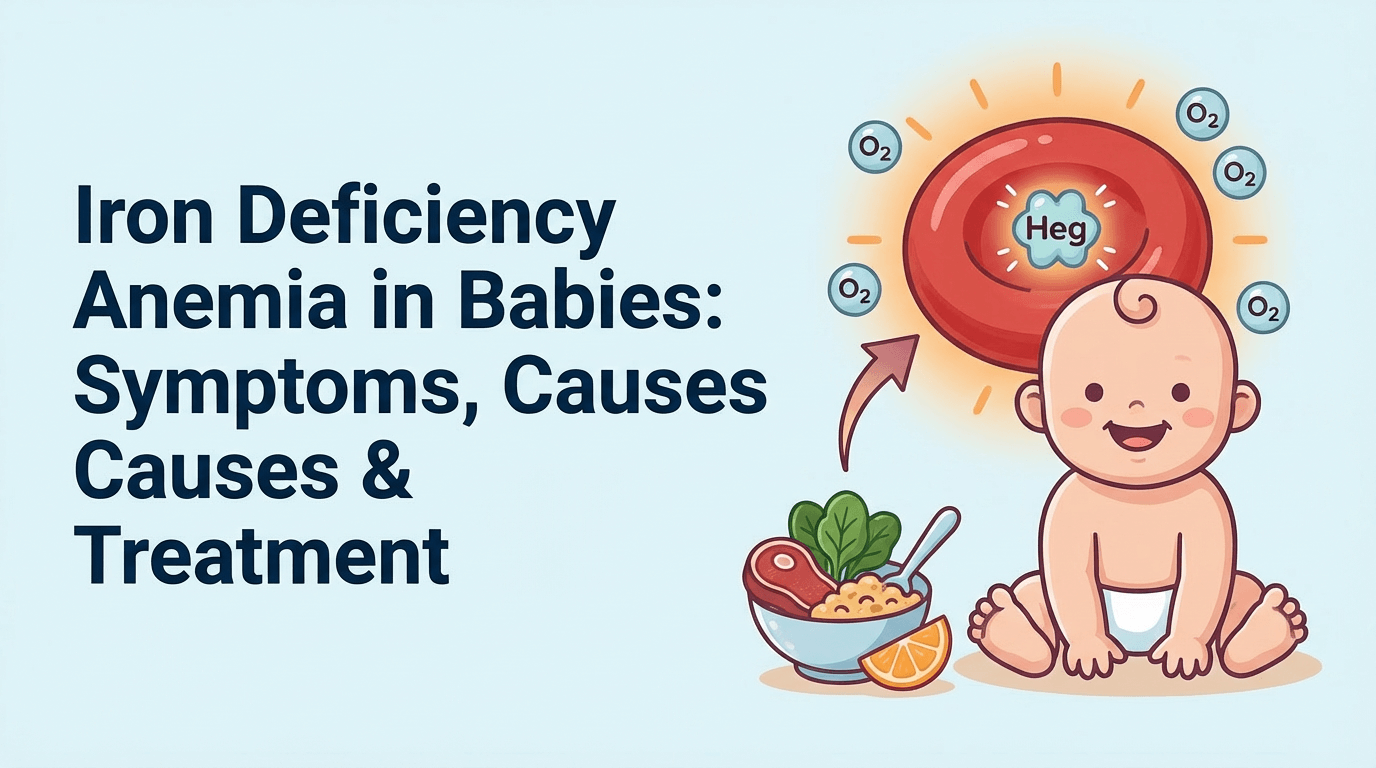
IDA occurs when the body lacks sufficient iron to produce hemoglobin, the vital protein in red blood cells responsible for transporting oxygen from the lungs to every inch of the body. In babies—typically those in the crucial window of 0 to 24 months—this shortfall results in the production of fewer, smaller, and paler red blood cells, impairing life-sustaining functions.
Globally, the statistics are sobering: anemia affects approximately 40% of children aged 6 to 59 months, according to the World Health Organization (WHO). Even in resource-rich nations like the United States, prevalence among toddlers is notable, with about 3.9% experiencing clinical anemia and 7.1% showing iron deficiency in children aged 1 to 5 years (Centers for Disease Control and Prevention). These figures underscore precisely why IDA matters: if left untreated, it can significantly hinder brain development, leading to iron deficiency development delays in cognitive processing, motor skills, and behavioral regulation. Yet, there is profound hope—with early detection and targeted intervention, outcomes improve dramatically.
The Role of Iron in a Baby’s Body: Building the Foundation
Iron serves as a critical cornerstone in the intricate architecture of infant health. This essential mineral facilitates the production of hemoglobin, enabling red blood cells to ferry oxygen from the lungs to every tissue, muscle, and organ. Without adequate iron, oxygen delivery falters, fundamentally compromising a baby’s energy levels and overall vitality.
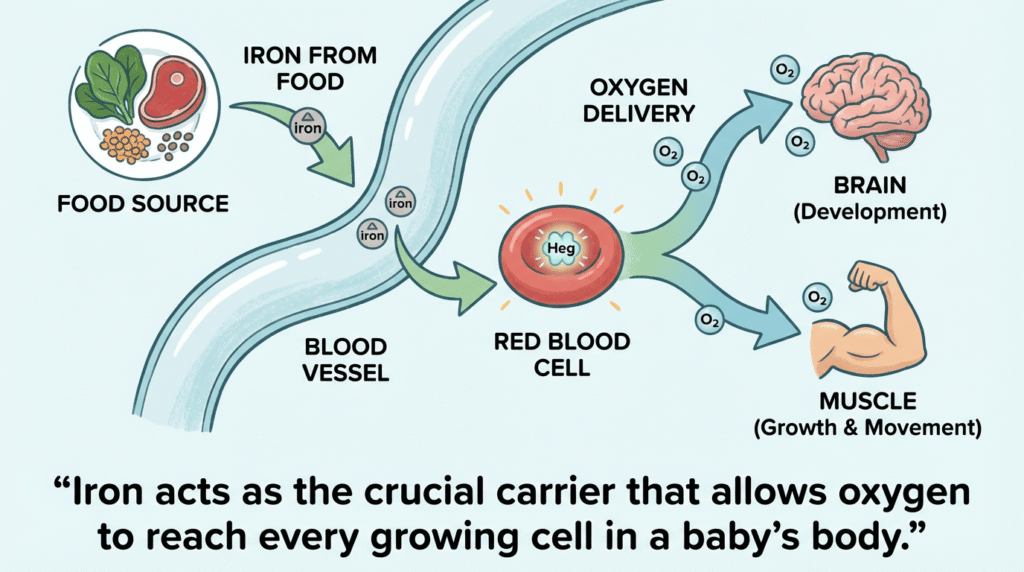
In infancy, iron’s responsibilities extend far beyond simple oxygenation. It bolsters muscle function, providing the stamina needed for physical milestones like rolling over, sitting independently, or grasping toys. More critically, iron is the master architect of early brain development. It contributes directly to myelin formation—the protective, insulating sheath around nerve fibers that ensures swift, efficient signal transmission. Experts from the American Academy of Pediatrics (AAP) highlight that iron is pivotal for complex cognitive processes, influencing a child’s attention span, learning capacity, and emotional regulation.
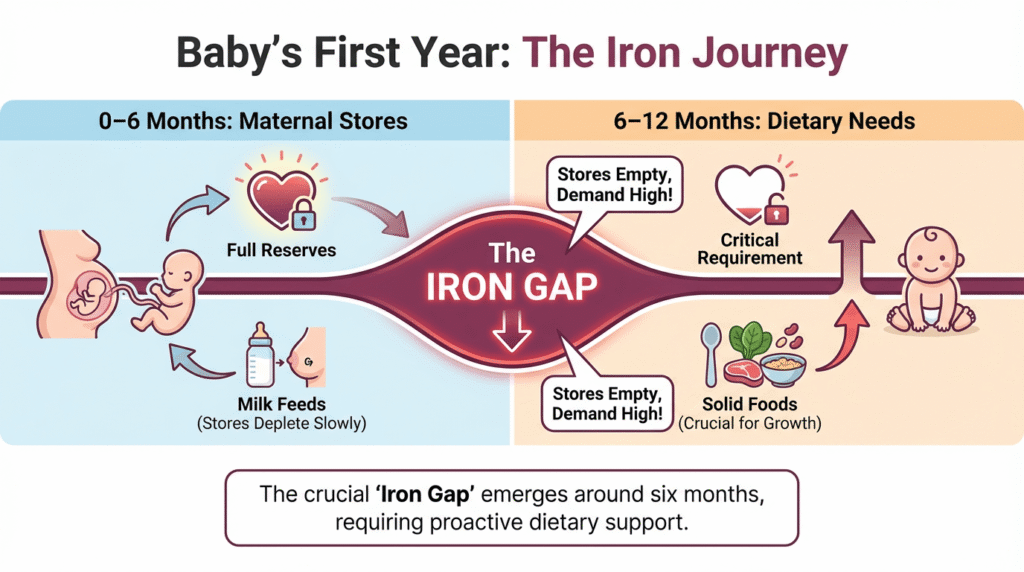
Daily iron requirements peak exceptionally high during this period due to explosive, continuous growth; a healthy baby will often double their birth weight by six months of age. The AAP recommends about 11 mg of dietary iron per day for infants aged 7 to 12 months, a figure that is proportionally much higher than adult needs when considering body weight. Full-term newborns fortunately inherit a four-to-six-month iron reserve from maternal stores during the third trimester of pregnancy, but this reserve depletes rapidly amidst heightened physiological demands.
Tying iron to developmental leaps reveals its profound impact. Sufficient iron correlates strongly with timely achievements like babbling, social smiling, or crawling, simply because it energizes the underlying neural pathways. An innovative lens emerges from recent research: studies, such as a 2025 review in Frontiers in Pediatrics, suggest that iron actually modulates the gut microbiome, potentially enhancing immunity and even mood stability in infants by fostering a healthy balance of beneficial bacteria. This connection implies that iron’s benefits ripple far beyond blood cells, influencing whole-body, holistic well-being.
Iron absorption in babies adds a layer of practical nuance—only 10-15% of the iron consumed in a diet is actually utilized by the body. This absorption is dramatically enhanced by pairing iron with vitamin C (found in citrus fruits, strawberries, or bell peppers) but significantly hindered by calcium-rich foods like cow’s milk. Practical examples illustrate this daily: pairing iron-fortified oatmeal with mashed strawberries boosts the body’s iron uptake, optimizing a baby’s limited intake. Understanding iron’s multifaceted role equips caregivers to intentionally nurture robust foundations for their child’s growth.
Iron Absorption Tip: Always pair iron-rich foods with a source of vitamin C (strawberries, bell peppers, broccoli) to maximize absorption. Avoid serving calcium-rich foods like cow’s milk at the same time, as calcium blocks iron uptake.
Causes & Risk Factors for Iron Deficiency in Infants
Transitioning from iron’s vital physiological functions, we must ask: how does a deficiency occur? The origins of iron deficiency in infants often stem from a fundamental mismatch between supply and surging developmental demand, akin to a vital reservoir draining significantly faster than it can be refilled. Understanding the anemia risk factors in babies helps parents take preventive action early.
Dietary shortfalls are the dominant culprit, particularly post-six months when rapid, exponential growth outpaces the baby’s inherited birth stores. The premature introduction or excessive consumption of cow’s milk—a common pitfall during weaning—profoundly exacerbates this risk. Cow’s milk is notoriously low in iron, and its high calcium content inhibits iron absorption. Furthermore, it can occasionally cause microscopic, undetected bleeding in an infant’s immature gut, further depleting precious iron reserves.
Medical and biological factors compound these risks. Premature or low-birth-weight infants enter the world with abbreviated iron reserves, having missed out on the crucial third-trimester transfer from the mother. They face two to three times higher odds of developing a deficiency. Maternal anemia during pregnancy directly transfers this vulnerability to the child, while chronic early-life infections can reduce how effectively the body utilizes the iron it does have.
Lifestyle and environmental elements introduce broader, systemic vulnerabilities. Socioeconomic challenges can limit a family’s access to consistent, iron-rich foods, amplifying prevalence in low-income settings. Vegetarian or vegan infant diets, if not meticulously planned and monitored, may easily fall short in bioavailable “heme” iron, which is found predominantly in animal sources and is most easily absorbed by the body.
A fresh, modern perspective arises from 2024 research in Nature Scientific Reports, linking environmental factors like air pollution and climate change to globally elevated anemia rates. This occurs through disrupted food security (affecting the nutritional quality of crops) and increased disease burdens. Warmer temperatures, for example, correlate with higher childhood anemia prevalence in certain regions by fostering environments where parasitic infections thrive.
Key anemia risk factors for babies by age:
- Newborns: Maternal anemia, premature birth, low birth weight
- 6–12 months: Delayed introduction of iron-rich solid foods, excessive cow’s milk
- Toddlers (12–24 months): Picky eating, reliance on cow’s milk as a primary beverage, vegetarian diets without careful iron planning
Understanding these highly specific risk windows allows parents to anticipate and mitigate risks before a deficiency can take root.
What Are the Symptoms of Anemia in Babies?
Building on an understanding of causes, early detection hinges entirely on spotting IDA’s often subtle, easily dismissed manifestations. The signs of anemia in babies can masquerade as everyday infant quirks or standard teething fussiness. Knowing what iron deficiency symptoms in infants look like helps parents act quickly.
Common signs of iron deficiency in babies include:
- Pale Skin: Especially on the lips, eyelids, and nail beds
- Unusual Fatigue: Tiring easily during play or feeding
- Irritability or Fussiness: More crankiness than is typical for your baby
- Poor Appetite: A noticeable decrease in desire to eat
- Delayed Milestones: Slower to crawl, walk, or babble
- Pica: Craving non-food items like ice, dirt, or paint chips
Mild baby anemia symptoms emerge gradually: A baby might exhibit unusual fatigue, tiring unusually quickly during active play or tummy time, or display a low-level irritability that stretches beyond typical fussiness. A poor appetite serves as another crucial clue; paradoxically, as the body lacks the energy to digest efficiently, it conserves energy by reducing the desire to eat.
As the deficiency deepens and severity escalates, physical signs become undeniably apparent. Pale skin, noticeably lighter lips, or seemingly colorless nail beds (pallor) directly reflect the diminished volume of red blood cells. A rapid heartbeat or shortness of breath during mild activity, dizzy spells, and pica indicate significant, deeper deficits that require immediate attention.
Developmental red flags include noticeably delayed motor skills, such as slower-than-average crawling or later walking, or cognitive lapses like a reduced ability to focus on a toy or engage in prolonged eye contact. These iron deficiency development delays can become significant if left unaddressed.
Behavioral indicators add complex layers that parents often spot first: chronic crankiness, heavily disrupted sleep patterns, or a susceptibility to recurrent infections stem from an iron-starved, weakened immune system. A recent 2025 PubMed Centralstudy even ties untreated early-childhood IDA to later ADHD-like behaviors, suggesting iron’s profound role in long-term neurotransmitter balance.
Real-world examples clarify these clinical terms: A parent might suddenly notice a once-energetic, bubbly infant becoming listless and withdrawn at a weekly playgroup. Keeping a simple symptom journal aids immensely in consultations with a pediatrician, providing a clear timeline of changes.
How Is Iron Deficiency Diagnosed in Infants?
Once symptoms or risk factors raise suspicions, iron deficiency testing in infants unfolds through a systematic medical evaluation, demystifying what might seem to a worried parent like a complex, daunting process. The AAP firmly advocates for routine hemoglobin screening for all infants at 12 months of age, with earlier, targeted tests for high-risk groups like premature babies.
Core medical assessments involve straightforward blood tests:
- Hemoglobin and Hematocrit: These primary tests gauge actual baby iron levels—specifically, the red blood cells acting in the body. Normal infant hemoglobin levels typically exceed 11 g/dL in children aged 6 to 24 months.
- Ferritin: This crucial test assesses the body’s hidden, stored iron reserves. Low ferritin is often the very first sign of an impending deficiency, catching the problem before true anemia sets in.
- Complete Blood Count (CBC): This reveals the size of the cells—the presence of abnormally small (microcytic) red cells is a classic hallmark of IDA.
Additional diagnostic steps may include comprehensive physical exams, deeply detailed dietary histories taken by the pediatrician, and occasionally stool tests to check for hidden blood loss.
While infants naturally resist blood draws, simple distraction techniques and comfort nursing can help. Furthermore, an innovative breakthrough is on the horizon: recent 2025 studies validate non-invasive optical tools, like the Masimo Rad-67, which offer quick, entirely painless anemia risk assessments using pulse CO-oximetry (similar to a standard oxygen monitor placed on the finger or toe). This technology measures spot-check hemoglobin, potentially revolutionizing easy home or standard clinic screenings in the near future.
Iron Deficiency Anemia Treatment for Infants
With a firm iron deficiency diagnosis in infants confirmed, definitive infant iron deficiency treatment can restore balance efficiently, transforming deep vulnerability back into resilient health.
Iron supplements for babies invariably lead the charge for true deficiencies: The AAP currently endorses targeted doses of 3-6 mg/kg/day for a duration of approximately three months, most often administered as easily measured liquid drops. Administering these drops alongside vitamin C (such as a sip of orange juice or mixed into a fruit puree) dramatically improves iron absorption in babies while simultaneously minimizing common, uncomfortable side effects like constipation or dark stools.
Dietary shifts act as the essential, long-term complement: Parents are guided to purposefully introduce iron-fortified baby food, richly pureed meats (which contain highly absorbable heme iron), and legumes. Critically, breastfed infants should absolutely continue nursing alongside their prescribed supplements, as breast milk remains the ultimate source of varied nutrition and immune support.
Follow-up bloodwork is typically scheduled after one month of treatment to closely monitor baby iron levels, with a full, robust recovery of iron stores typically achieved within 3 to 6 months of diligent care.
A 2025 Frontiers study recently highlighted an exciting adjunct therapy: the use of specific infant probiotics to actively enhance iron absorption in the gut, thereby reducing the low-level gut inflammation that can sometimes accompany supplementation. Practical, daily recipes offer parents easy implementation: serving iron-boosted, blended smoothies with mild spinach and vitamin-C-rich berries can engage entire families in the healing process. Critically, purposely avoiding cow’s milk in the hours immediately surrounding iron doses firmly optimizes the supplements’ efficacy.
Iron-Rich Foods for Babies
| Food Source | Iron Type | Approximate Iron per Serving |
|---|---|---|
| Iron-fortified infant cereal (¼ cup) | Non-heme | ~4.5 mg |
| Pureed beef (2 tbsp) | Heme | ~1.5 mg |
| Pureed chicken thigh (2 tbsp) | Heme | ~0.9 mg |
| Mashed lentils (¼ cup) | Non-heme | ~1.6 mg |
| Mashed white beans (¼ cup) | Non-heme | ~1.8 mg |
| Pureed spinach (2 tbsp) | Non-heme | ~0.8 mg |
| Tofu, soft (¼ cup) | Non-heme | ~1.6 mg |
| Pureed lamb (2 tbsp) | Heme | ~1.2 mg |
Heme iron (from animal sources) is absorbed 2-3x more efficiently than non-heme iron. Always pair non-heme iron sources with vitamin C for maximum iron absorption.
How to Prevent Anemia in Your Baby
Shifting focus proactively, robust iron deficiency prevention in babies erects strong barriers against IDA, leveraging simple, daily nutritional habits to ensure lasting protection.
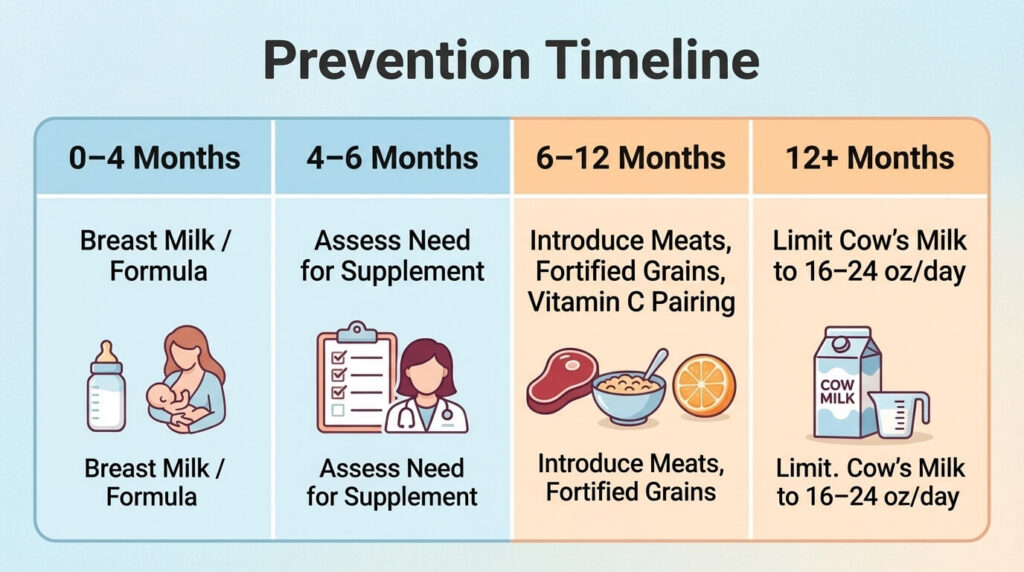
Strict adherence to modern feeding guidelines anchors these preventative efforts: Health authorities champion exclusive breastfeeding for the first six months, followed by the timely, intentional introduction of iron-rich foods for babies. For non-breastfed infants, utilizing standard iron-fortified infant formulas provides excellent, baseline protection.
Iron Supplements for Breastfed Babies
Supplementation timing varies based on individual risk. The AAP specifically suggests that exclusively breastfed babies may benefit from iron supplements starting at four months of age, continuing until they are heartily consuming adequate iron via solid foods. This recommendation is especially important for premature or low-birth-weight infants.
Daily dietary habits heavily emphasize the inclusion of “heme” iron sources, like easily pureed lean meats, poultry, and fish, alongside “non-heme” sources like mashed beans, lentils, and iron-fortified baby food. Crucially, parents must intentionally delay the introduction of whole cow’s milk as a primary beverage until after the baby’s first birthday.
Broader, systemic tactics include emphasizing prenatal maternal iron health and ensuring timely vaccinations to protect against the infections that can deplete infant iron stores. WHO’s ambitious 2025 global initiatives strongly promote broadly fortified infant staple foods, actively addressing widespread global gaps in nutrition. Concurrently, innovative, user-friendly smartphone apps now help modern parents track their baby’s nutrient intake, effortlessly personalizing dietary prevention plans.
Long-Term Effects of Untreated Iron Deficiency in Infants
Despite straightforward prevention’s profound promise, untreated IDA casts devastatingly long shadows, demanding utmost societal awareness of its serious iron deficiency complications in infants.
Immediate, visible risks include physically stunted growth tracks and a deeply compromised immune system, frighteningly heightening an infant’s susceptibility to recurrent, severe infections.
Developmentally, however, the threat of irreversible cognitive delays looms largest: Comprehensive 2025 PubMed clinical reviews consistently link chronic, early-life IDA to permanent 5-10 point drops in standard IQ scores and persistent behavioral challenges. Foundational memory formation, core learning capacities, and sustained attention suffer measurable damage, with some of these iron deficiency development delays remaining irreversible if the deficiency is prolonged through critical brain-wiring windows.
When to Seek Help: Red Flags and Resources
Certain red flags signal an absolute urgency: Severe, sudden pallor or any observable breathing difficulties, even at rest, warrant immediate emergency pediatric care.
However, routine, scheduled pediatric visits are designed to catch much subtler signs of anemia in babies; parents should discuss their family’s specific dietary histories (e.g., vegan households) entirely openly with their providers.
Abundant resources exist to support families: CDC informational hotlines, dedicated AAP infant health apps, and diverse community nutritional support groups provide invaluable, tailored guidance. If language or cultural barriers exist, seeking culturally competent pediatric care bridges critical gaps, ensuring action is taken now to avert unnecessary escalation.
Quick Guide: Protecting Your Baby From Iron Deficiency
- Screening is Key: All babies should be screened for anemia at their 12-month check-up. High-risk infants (premature, low birth weight) should be screened earlier.
- Focus on Iron-Rich Foods for Babies: After 6 months, introduce pureed meats, iron-fortified cereals, and legumes daily.
- Beware of Cow’s Milk: Do not give cow’s milk as a primary drink before age 1. It is low in iron and blocks iron absorption.
- Watch for Baby Anemia Symptoms: Pale skin, fatigue, irritability, and poor appetite warrant a call to your pediatrician.
- Pair with Vitamin C: Serve iron-rich foods alongside vitamin-C-rich fruits and vegetables to maximize absorption.
Conclusion
In retrospect, iron deficiency anemia in babies emerges not as an inevitable disaster, but as a deeply manageable, entirely preventable challenge when families are actively armed with clear knowledge. By understanding iron’s foundational role in building a healthy brain and body, and remaining open to innovative care strategies, parents can fiercely protect their children.
The key, actionable takeaways are simple yet profound: The significant global prevalence of IDA demands loving vigilance. Even mild iron deficiency symptoms in infants warrant prompt pediatric discussion, and structured prevention through varied, iron-rich diets and targeted supplements robustly safeguards a child’s delicate development. The truly irreversible risks of untreated IDA underscore the incredible value of early, proactive intervention.
Actionable daily insights: Intentionally integrate iron-rich foods for babies paired with vitamin C, meticulously schedule those 12-month screenings, and purposefully consult medical professionals. Ultimately, these small, proactive daily steps fuel bright, limitless futures, transforming potential hidden hurdles into powerful stepping stones for vibrant, thriving childhoods.
FAQ
- What are the best iron-rich foods for babies?
- Heme Iron (Best Absorption): Pureed beef, lamb, chicken thighs, and salmon.
- Non-Heme Iron: Iron-fortified baby cereal, lentils, mashed beans, tofu, and spinach.
- Pro-Tip: Always serve iron-rich foods with a source of vitamin C (like a few bites of strawberry or bell pepper puree) to boost iron absorption in babies.
- When do breastfed babies need iron supplements?
According to the AAP, exclusively breastfed babies may need iron supplements starting at four months of age, especially if born prematurely or at high risk. Iron supplements for breastfed babies should continue until they are consuming adequate iron through solid foods. Always ask your pediatrician first. - How can I monitor my baby’s iron levels at home?
Keep a close eye on their daily energy levels, enthusiasm for play, and general appetite. Consider using trusted pediatric nutrition apps to log their intake and spot potential dietary gaps early. If you notice signs of anemia in your baby—such as pallor, fatigue, or irritability—schedule an appointment with your pediatrician promptly. - How much iron does a baby need per day?
The AAP recommends approximately 0.27 mg/day for infants 0–6 months (typically met through breast milk or formula) and 11 mg/day for infants aged 7–12 months. Toddlers aged 1–3 years need about 7 mg/day. These baby iron requirements are proportionally much higher than adult needs relative to body weight. - What does anemia look like in babies?
Baby anemia symptoms can be subtle at first. Look for unusually pale skin (especially lips and nail beds), increased fussiness, fatigue during feeding or play, poor appetite, and slower-than-expected developmental milestones. In more severe cases, you may notice rapid breathing, a fast heartbeat, or pica (craving non-food items). - Can iron deficiency in babies cause long-term problems?
Yes. If left untreated, iron deficiency complications in infants can include permanent cognitive delays, lower IQ scores, and behavioral challenges. However, early detection and prompt infant iron deficiency treatment can prevent nearly all long-term impacts, making regular screening and preventing anemia in babies critically important.